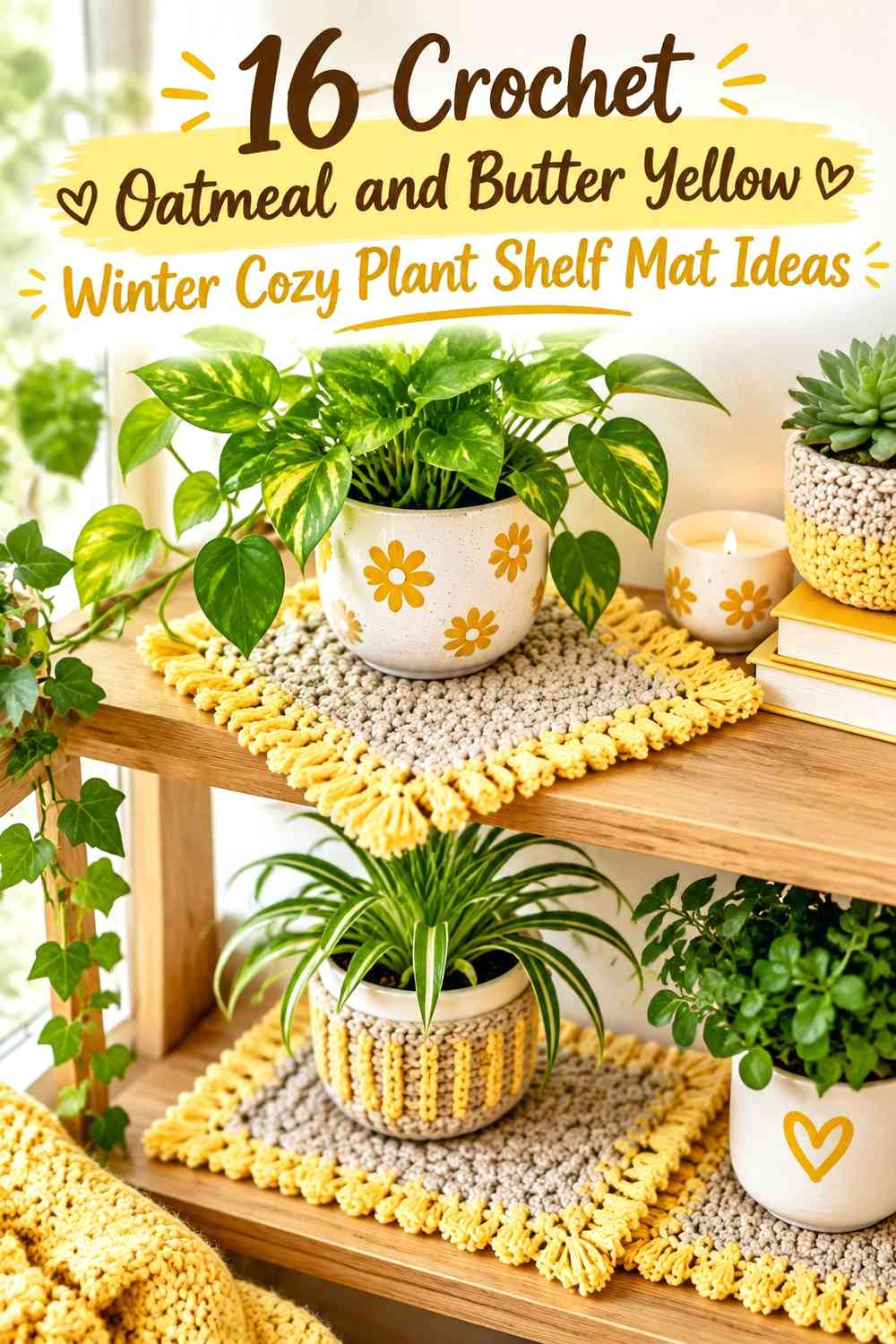

Small crochet mats can soften the look of a winter plant shelf without competing with the plants themselves. Oatmeal makes a useful quiet base because it leaves room for foliage, pots, and shelf decor, while butter yellow can brighten borders, centers, stripes, and motif details without needing to cover the entire mat.
The main decision is not simply which of the two colors you prefer. It is where each color will remain visible after a planter and its saucer are placed on top. A detailed butter yellow center may disappear beneath a wide pot, while the same yellow used around the outer edge can remain visible from across the room. Oatmeal can handle the larger background area, or the balance can be reversed when you want a lighter yellow mat with a neutral frame.
The tutorials credited throughout this list teach flat crochet coasters, mug rugs, placemats, and related mat constructions that can serve as starting points for plant-shelf pieces. The oatmeal-and-butter-yellow palettes are independent color adaptations. Before resizing anything, compare the finished mat area you need with the planter or saucer that will actually sit on it.
Quick List
- Oatmeal Crochet Plant Shelf Mat With Butter Yellow Border
- Butter Yellow Crochet Plant Shelf Mat With Oatmeal Frame
- Oatmeal and Butter Yellow Striped Crochet Plant Shelf Mat
- Oatmeal Crochet Plant Shelf Mat With Butter Yellow Center
- Butter Yellow Crochet Plant Shelf Mat With Oatmeal Scallops
- Oatmeal and Butter Yellow Round Crochet Plant Shelf Mat
- Oatmeal Crochet Plant Shelf Mat With Butter Yellow Corner Blocks
- Butter Yellow Flower-Edge Crochet Plant Shelf Mat With Oatmeal Center
- Oatmeal Leaf Crochet Plant Shelf Mat With Butter Yellow Vein Detail
- Oatmeal and Butter Yellow Ringed Crochet Plant Shelf Mat
- Oatmeal Heart-Edge Crochet Plant Shelf Mat With Butter Yellow Accents
- Butter Yellow Crochet Plant Shelf Mat With Oatmeal Dense Border
- Oatmeal Rectangular Crochet Plant Shelf Mat With Butter Yellow Center Band
- Oatmeal Woven Crochet Plant Shelf Mat With Butter Yellow Lines
- Butter Yellow Sunflower-Style Crochet Plant Shelf Mat With Oatmeal Center
- Oatmeal Flower-Shape Crochet Plant Shelf Mat With Butter Yellow Petal Edge
Let Oatmeal or Butter Yellow Control the Visible Area Around the Planter
Plan color placement after considering how much of the mat a pot or saucer will cover. On a round mat, the center may be almost completely hidden, making the outer rounds the most important color area. On a rectangular shelf mat, the short ends and front edge may stay visible even under a broad planter.
For a quieter shelf, let oatmeal dominate and place butter yellow where it can function as a border, narrow stripe, or motif detail. For a brighter winter display, reverse the proportions and use oatmeal to define the edge. Keeping one color visually dominant also prevents a small mat from looking fragmented beside patterned pots or dense foliage.
Keep Oatmeal and Butter Yellow Mats Decorative Rather Than Treating Them as Water Barriers
A crochet mat should not replace the planter’s normal saucer, tray, or other appropriate protection against watering. Plan the mat around the saucer rather than putting wet drainage directly onto the crochet surface and expecting the fabric to protect the shelf.
This also affects color placement. If a saucer covers the middle, put the strongest butter yellow detail toward the visible perimeter. If the mat extends in front of the planter, oatmeal and yellow bands can be concentrated along that exposed section where they add color without being hidden.
1. Oatmeal Crochet Plant Shelf Mat With Butter Yellow Border
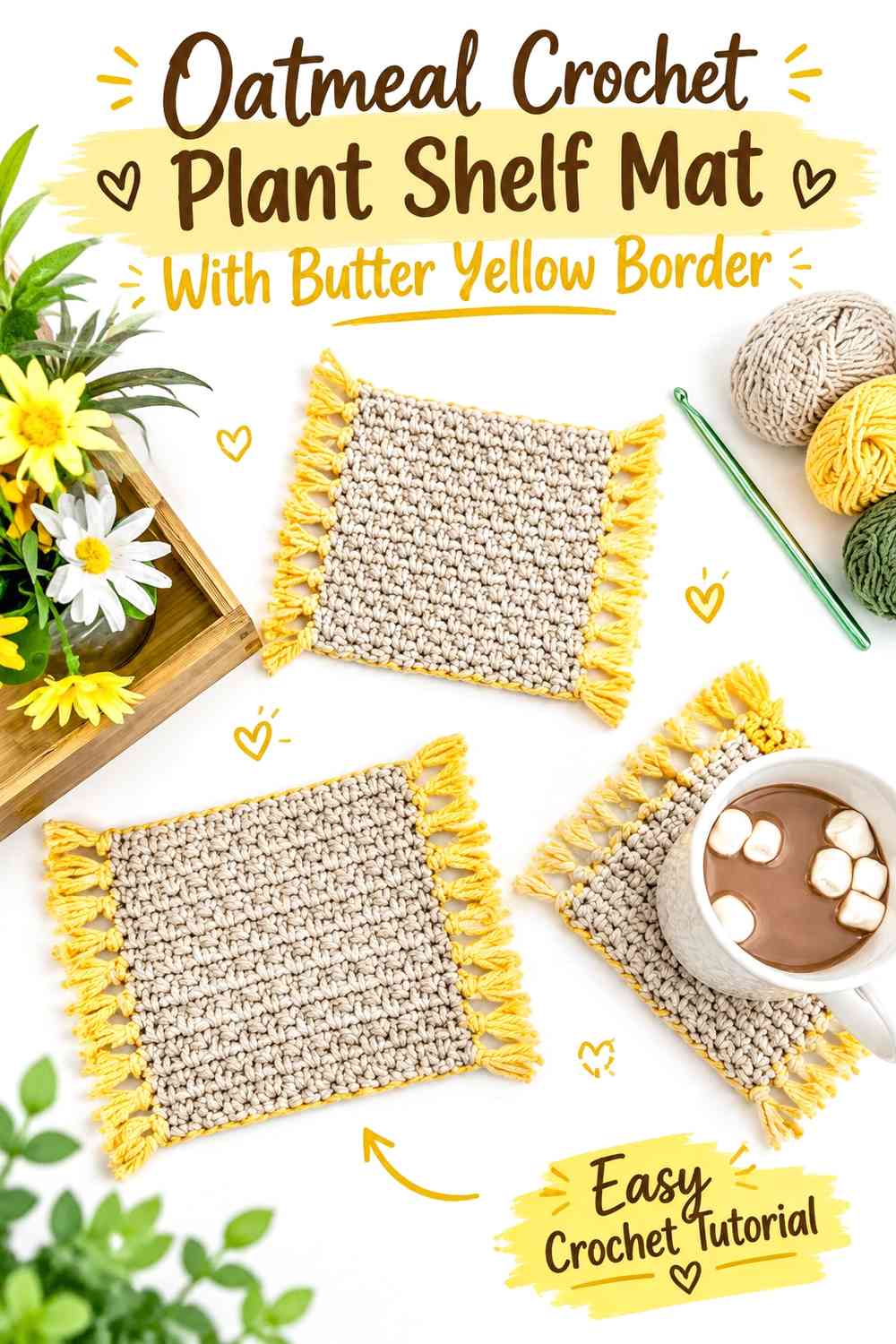
An oatmeal-dominant mat is one of the simplest ways to keep the shelf visually calm while still introducing butter yellow. Let oatmeal cover the area directly beneath the planter and use yellow around the perimeter. The result keeps most of the mat neutral while making the portion that remains visible around the saucer more intentional.
Oatmeal Should Cover the Main Plant Shelf Mat Surface
Use oatmeal through the broad center when the planter itself already has a strong color, pattern, or textured finish. A large neutral field gives the pot room visually and prevents the crochet surface from competing with leaves hanging over the shelf.
Before settling on the proportion, place the pot or saucer on your work in progress. If almost all of the oatmeal center disappears, that is acceptable in this layout because the border is designed to provide the visible color.
Butter Yellow Works Best Where the Oatmeal Mat Extends Past the Saucer
Reserve butter yellow for an outer round or defined border that is wider than the footprint of the planter. That makes the lighter accent visible from the front and sides of the shelf.
If the yellow border feels too prominent, narrow it rather than adding additional oatmeal stripes inside it. A clean oatmeal center with one yellow perimeter keeps this version distinct from the striped ideas later in the list.
Creator Credit: Jo to the World Creations YouTube tutorial
2. Butter Yellow Crochet Plant Shelf Mat With Oatmeal Frame
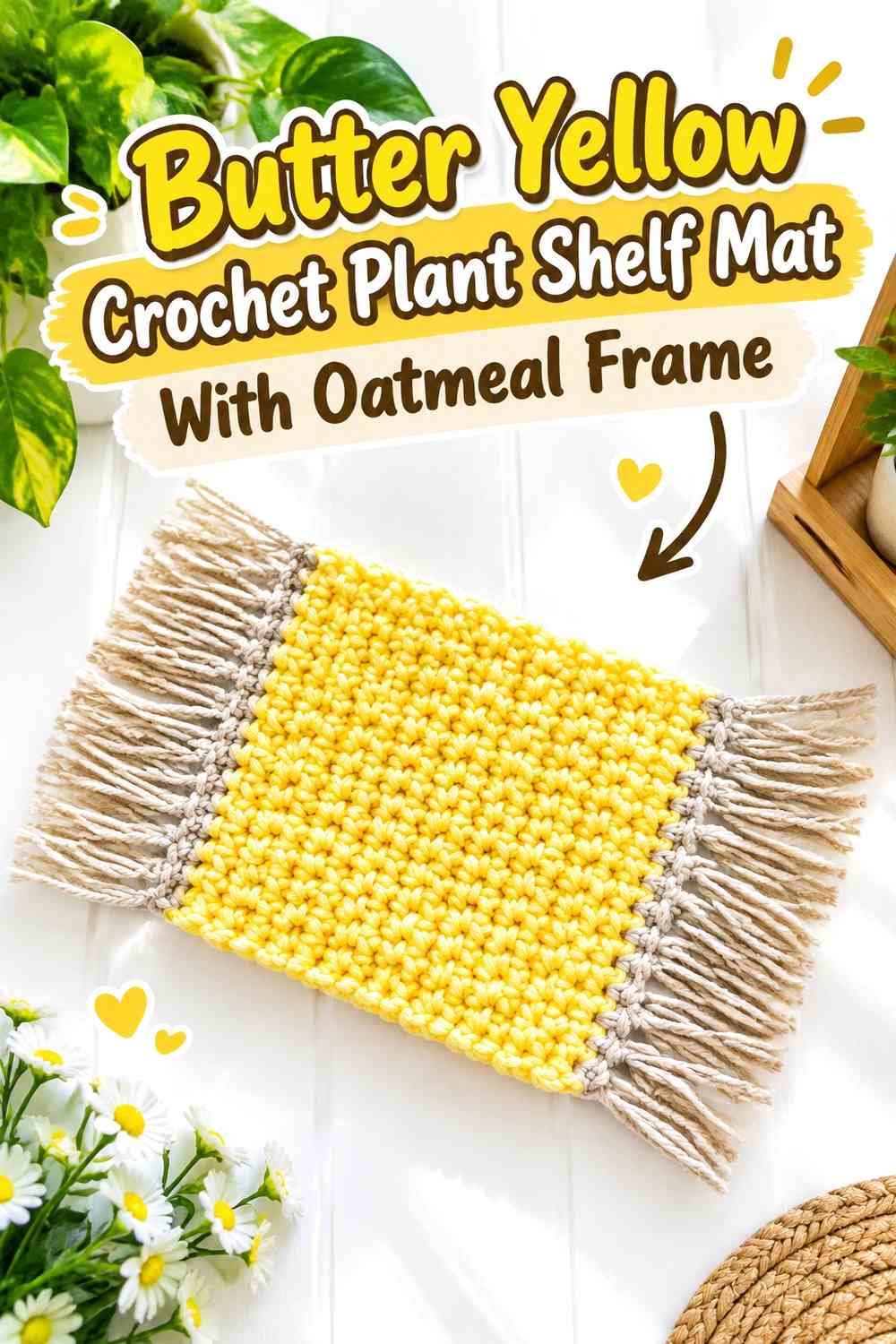
Reverse the first palette and allow butter yellow to occupy most of the mat. Oatmeal becomes the controlling edge color, giving the brighter center a softer boundary against the shelf. This approach is useful when the visible mat needs more color but you still want the perimeter to coordinate with neutral pots and shelving.
Butter Yellow Can Lead Without Covering Every Oatmeal Detail
Keep the center broadly butter yellow rather than interrupting it with frequent oatmeal changes. A continuous field reads more clearly beneath a planter and gives the mat a distinct identity from oatmeal-dominant versions.
If the planter covers most of the middle, allow enough yellow to continue toward the edges so that some remains visible. Otherwise the intended dominant color may disappear once the shelf is styled.
Oatmeal Gives the Butter Yellow Plant Mat a Softer Outer Boundary
Use oatmeal along the final edge or outer band to separate butter yellow from the shelf surface. The neutral border can also prevent the brighter shade from becoming the only color visible around a small pot.
Check the mat against both the shelf and planter. If the oatmeal is too close in value to the shelf finish, increase its visible width so the border still reads as an intentional part of the crochet piece.
Creator Credit: Anita Louise Crochet YouTube tutorial
3. Oatmeal and Butter Yellow Striped Crochet Plant Shelf Mat
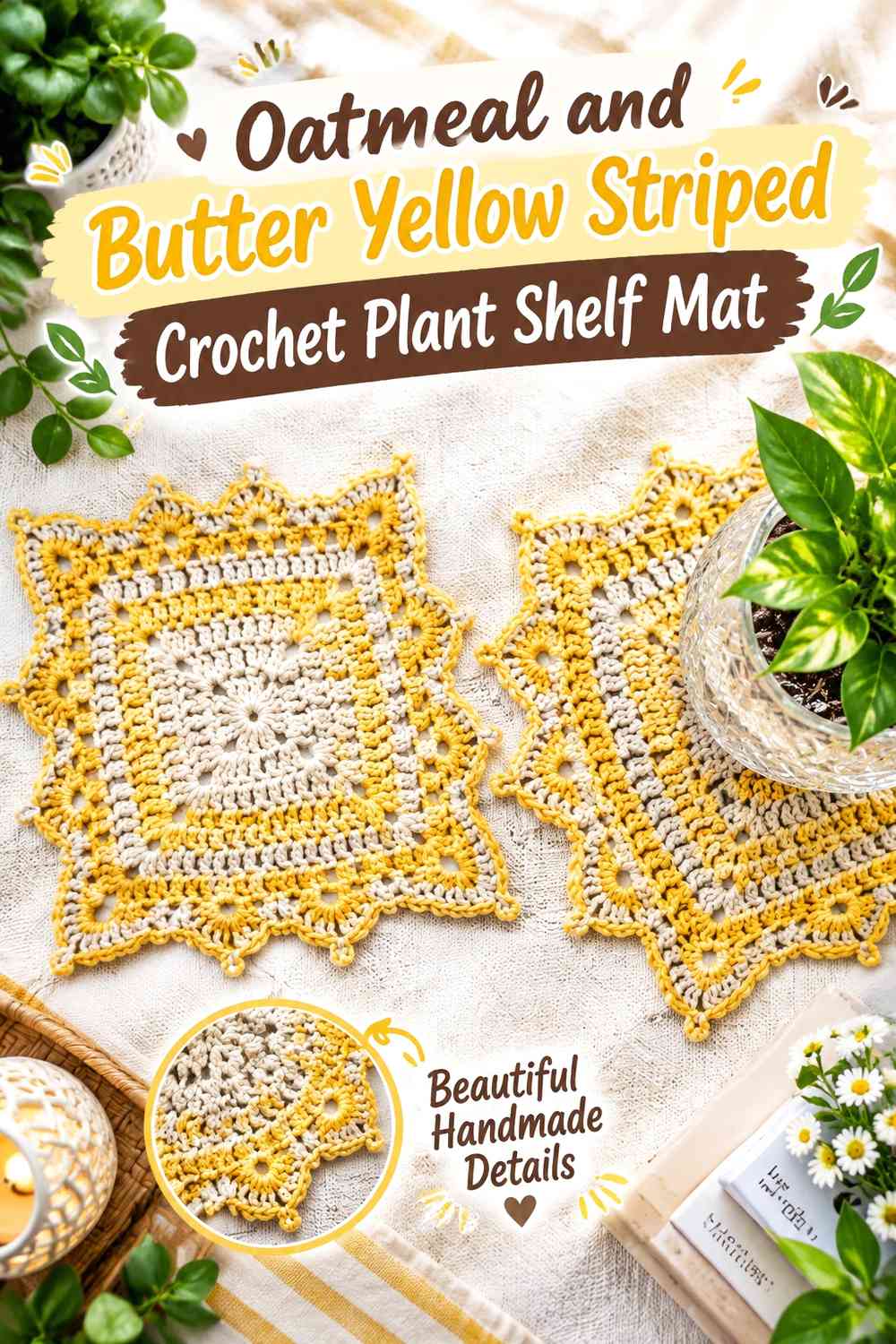
A rectangular or square mat gives stripes enough room to function as visible design bands rather than tiny color changes. Let oatmeal remain the dominant stripe color and use butter yellow at intervals, especially across sections that will extend beyond the planter.
Oatmeal Stripes Should Be Wider Than Butter Yellow for a Calmer Shelf
Use broader oatmeal bands if the plant shelf already contains several pots, trailing foliage, or other decorative objects. Wider neutral sections keep the mat from becoming another competing pattern.
Position at least one butter yellow stripe near the exposed front section. A yellow band hidden completely beneath the pot adds complexity without contributing much to the finished display.
Butter Yellow Stripes Can Mark the Visible Ends of an Oatmeal Mat
A rectangular plant mat often extends to either side of a planter. Butter yellow near those ends helps frame the pot even when the center stripes are concealed.
Keep the yellow repeats consistent enough to feel connected. Random narrow changes can make a small shelf mat look pieced together rather than deliberately striped.
Creator Credit: Kristines Crochets YouTube tutorial
4. Oatmeal Crochet Plant Shelf Mat With Butter Yellow Center
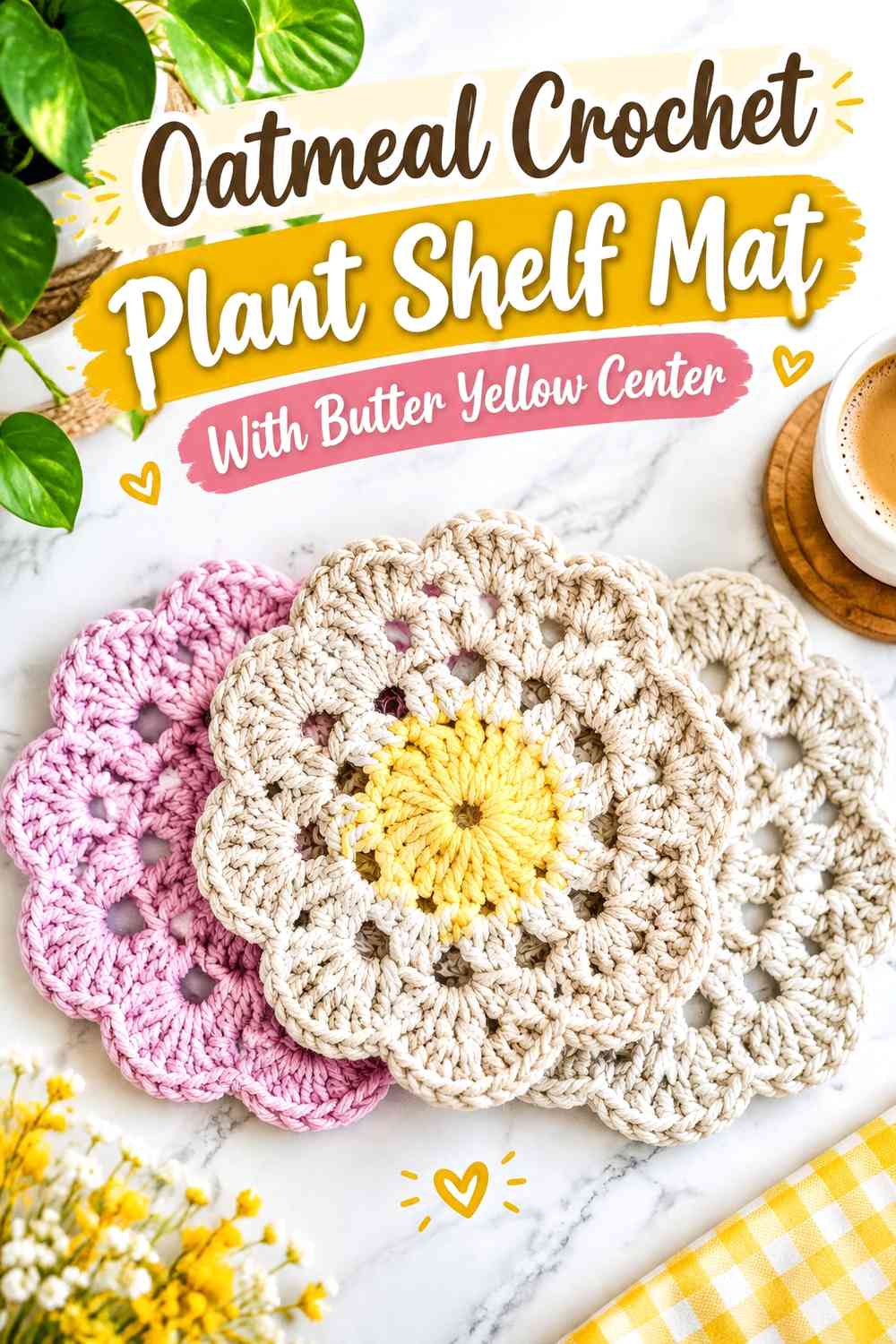
This version puts butter yellow in the least obvious location: directly in the center. It works best with a planter or saucer small enough to leave part of that central color visible. Oatmeal surrounds it and becomes the larger field.
Butter Yellow Needs Enough Open Space Around the Planter to Stay Visible
Measure visually with the actual saucer before investing in an elaborate yellow center. If the entire accent will sit beneath the pot, either enlarge the yellow area or move the color outward.
For a small planter, however, a yellow center can create a useful halo between the pot base and oatmeal background.
Oatmeal Should Extend Beyond the Butter Yellow Center
Give oatmeal enough width to form a clear second zone around the central accent. This prevents the mat from looking like a yellow piece with an incidental neutral edge.
The larger oatmeal field is also where the mat can visually connect with neutral shelving, baskets, or natural-colored plant containers without requiring additional colors.
Creator Credit: Bella Coco YouTube tutorial
5. Butter Yellow Crochet Plant Shelf Mat With Oatmeal Scallops
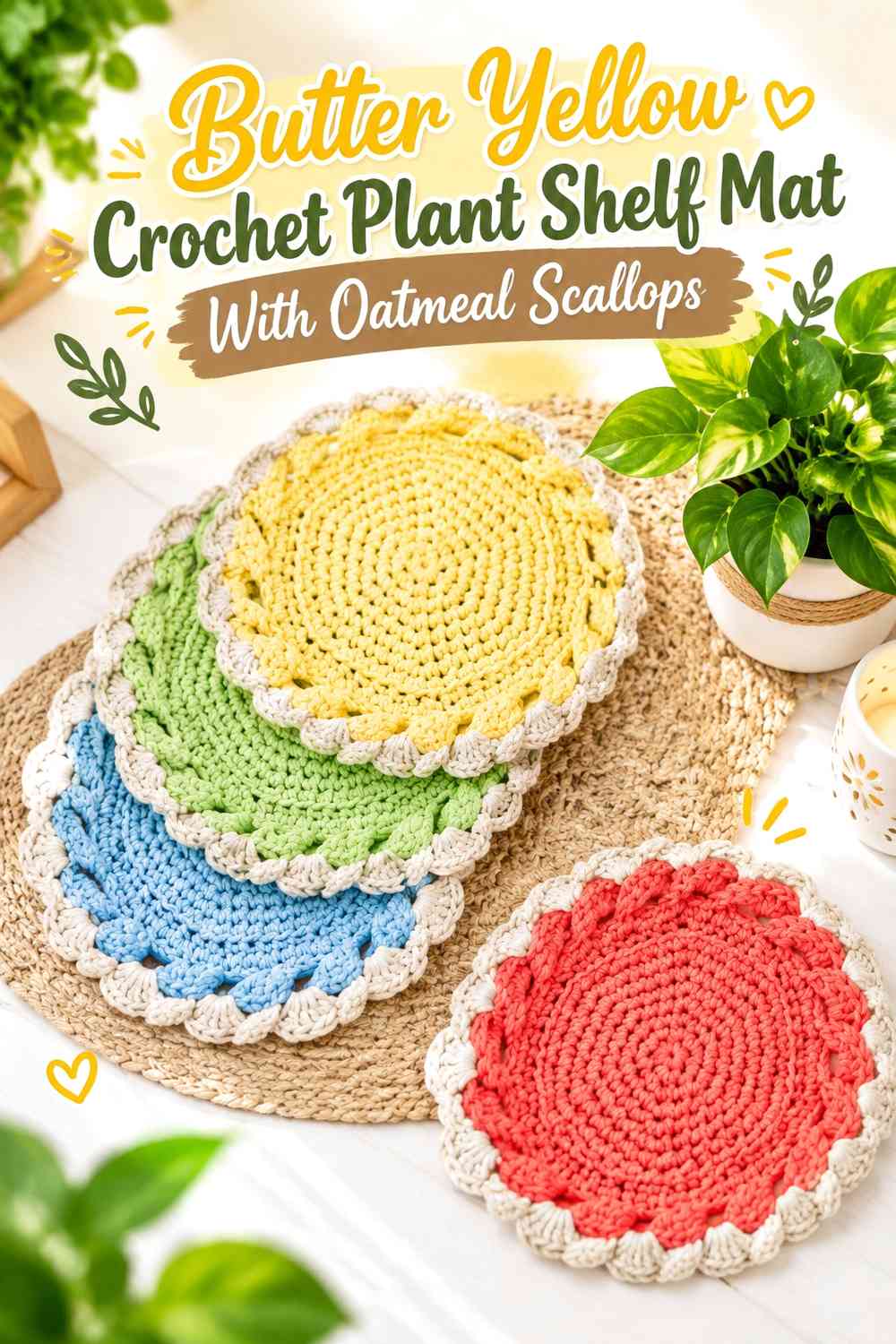
A scalloped or waved edge is already decorative, so it is a strong place to introduce the quieter oatmeal shade. Keep the interior butter yellow and allow oatmeal to define the outer silhouette.
Oatmeal Scallops Can Define a Butter Yellow Plant Mat Without Extra Stripes
Use oatmeal consistently across the decorative edge instead of adding it repeatedly through the center. The contrast then explains the shape of the mat rather than dividing the surface into many competing sections.
This is particularly effective when the scalloped edge projects beyond a round saucer and remains visible.
Butter Yellow Should Stay Simple Inside the Oatmeal Edge
Let the butter yellow interior remain comparatively uninterrupted. A detailed outer border plus several interior color changes can become excessive on a small plant shelf.
If you want to repeat oatmeal inside the mat, use a narrow transitional round rather than creating another full decorative feature.
Creator Credit: The Crochet Crowd YouTube tutorial
6. Oatmeal and Butter Yellow Round Crochet Plant Shelf Mat
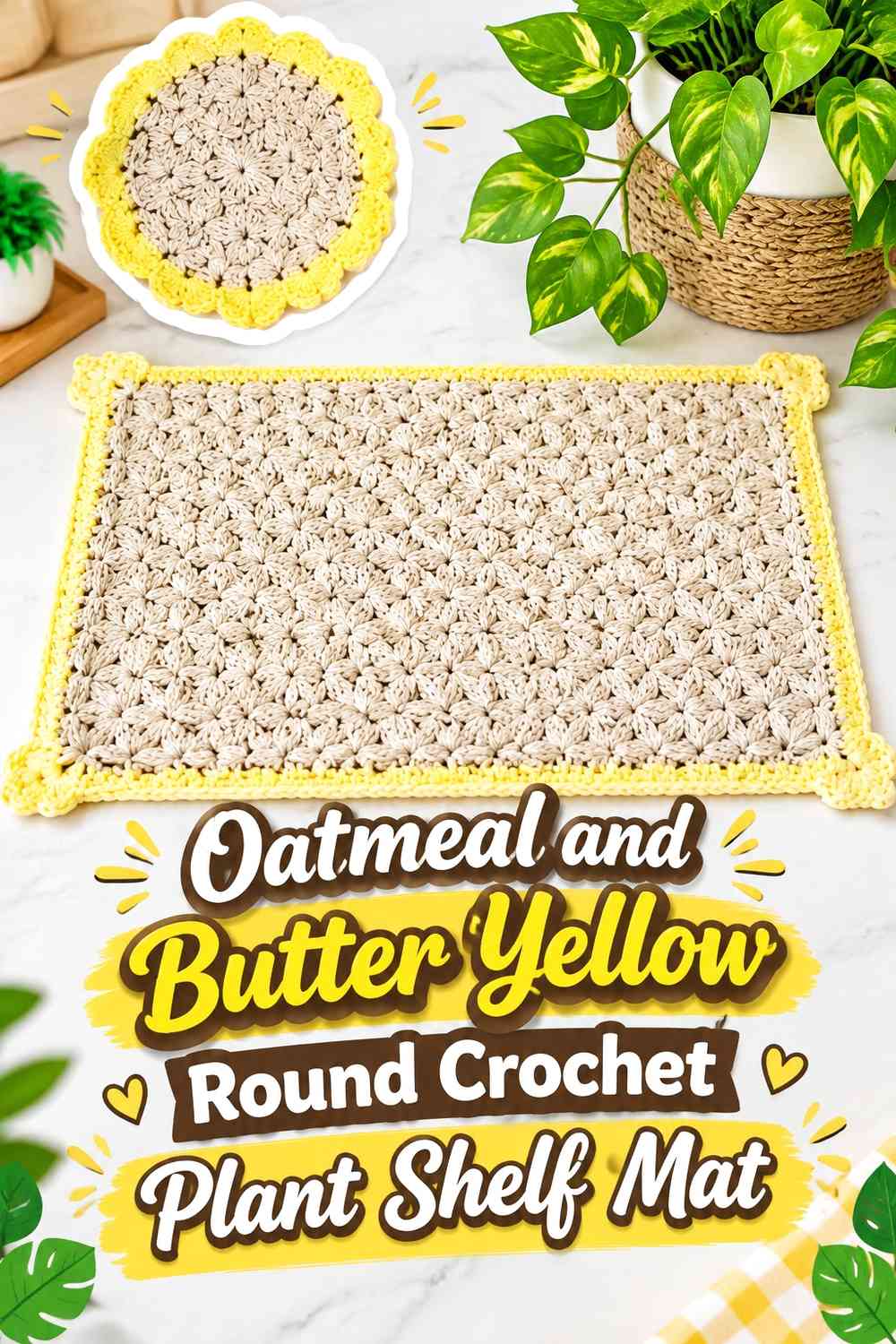
A round mat naturally suits a round planter or saucer, and concentric color placement makes sense because the most visible part is often the outer ring. Use oatmeal and butter yellow in broad circular zones instead of alternating every round.
Oatmeal Can Anchor the Center of a Butter Yellow Ringed Mat
Begin the visible hierarchy with a broad oatmeal center and bring butter yellow into an outer zone. This keeps the area immediately below the planter neutral while allowing color to appear around its footprint.
The yellow ring should extend far enough outward that it is not completely covered by the saucer.
Butter Yellow Rings Should Be Wide Enough to Read Around Oatmeal
A very narrow yellow line may disappear when viewed from standing height. If butter yellow is supposed to be a meaningful part of the palette, give the ring enough visual area to remain noticeable around the planter.
Use oatmeal again at the very edge only when you want a framed look. Otherwise ending with yellow creates a clearer, brighter perimeter.
Creator Credit: Bag-O-Day Crochet YouTube tutorial
7. Oatmeal Crochet Plant Shelf Mat With Butter Yellow Corner Blocks
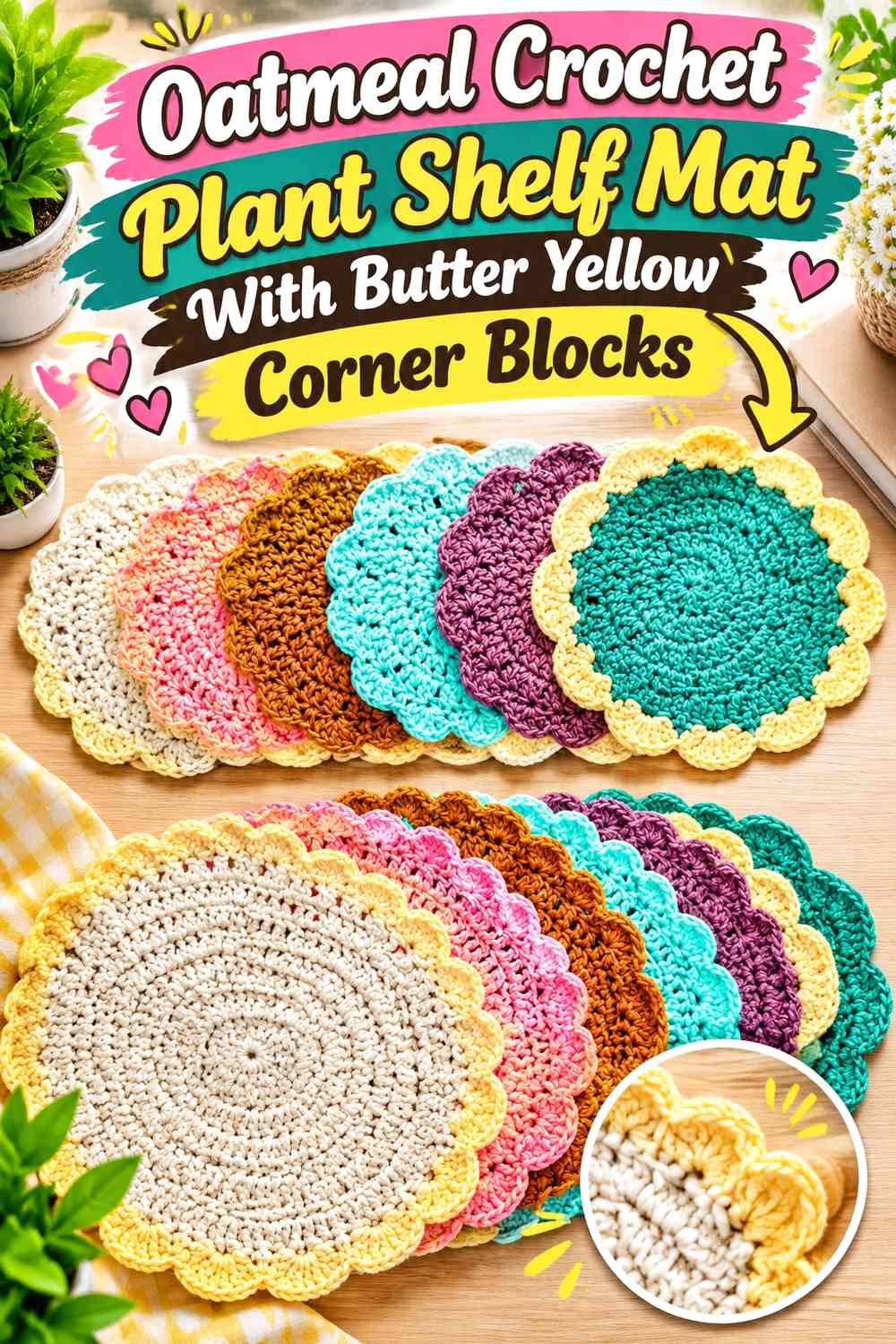
Square mats can carry color in the corners rather than around the entire edge. An oatmeal center keeps the planter area neutral, while butter yellow corners remain visible around a round saucer.
Butter Yellow Corners Stay Visible Around a Round Planter on Oatmeal
This placement takes advantage of the space a circular pot cannot cover on a square mat. Instead of hiding yellow beneath the planter, concentrate it where the square extends beyond the pot’s curve.
Keep the four yellow areas related in size so the planter appears centered rather than visually pulled toward one side.
Oatmeal Should Connect the Butter Yellow Corners Across the Mat
Maintain oatmeal through the central field and along enough of the sides to keep the yellow corners from becoming separate floating accents.
If the planter is slightly off-center for shelf clearance, check the color balance after positioning it. You may prefer larger yellow exposure on the front corners than on those hidden near the wall.
Creator Credit: TL Yarn Crafts YouTube tutorial
8. Butter Yellow Flower-Edge Crochet Plant Shelf Mat With Oatmeal Center
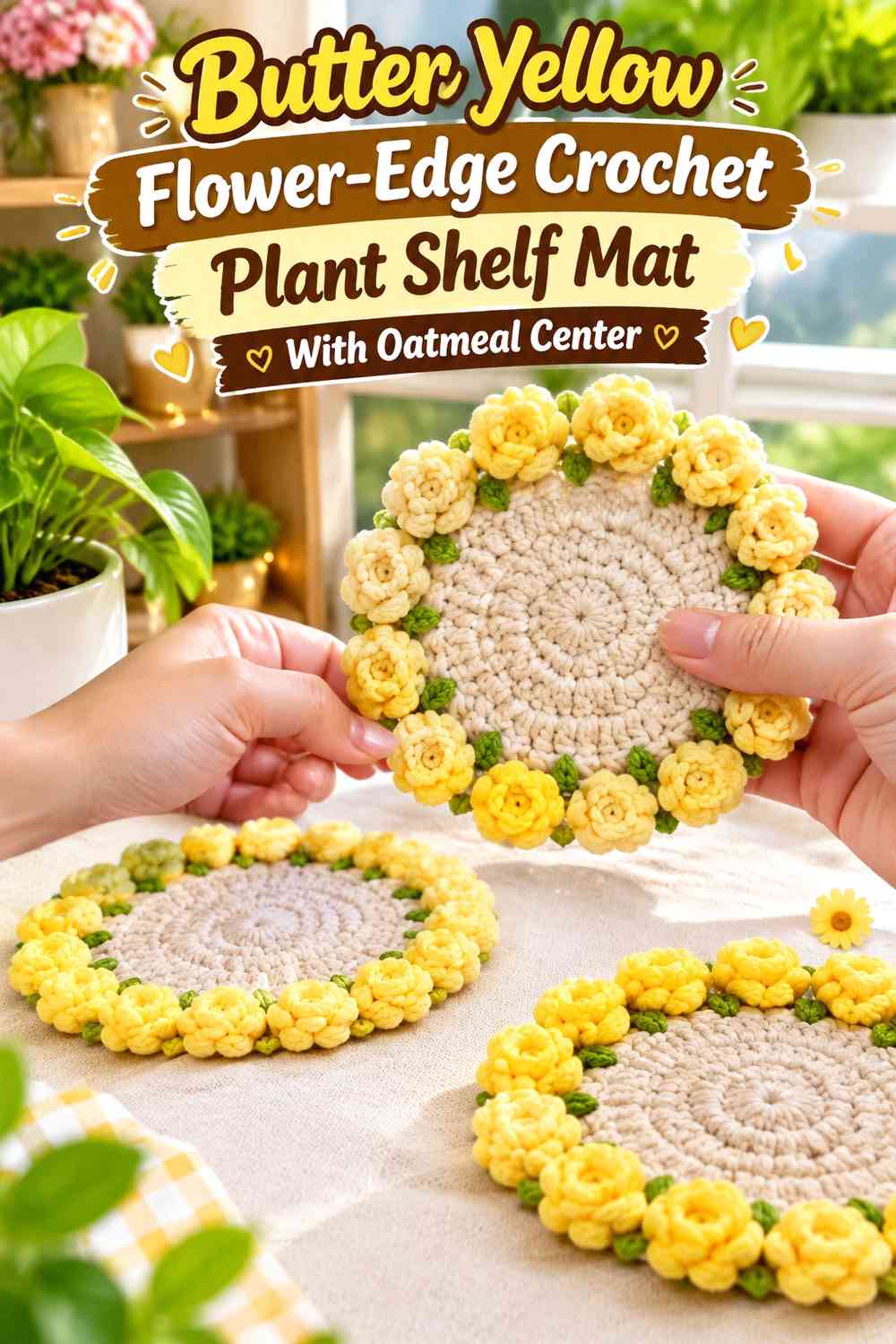
A flower-shaped coaster construction translates naturally into a decorative small plant mat because the outer petals can remain visible around the pot. Oatmeal works well in the center while butter yellow defines the floral outline.
Butter Yellow Petals Should Extend Beyond the Oatmeal Planting Area
Keep the yellow at the outer flower edge where a planter cannot easily conceal every petal. That turns the mat shape into the main source of color instead of hiding the accent underneath the pot.
Avoid covering a pronounced decorative edge with an oversized planter. If the petals are barely visible, choose a smaller pot for that mat or scale the mat up using your own measurements.
Oatmeal Keeps the Butter Yellow Flower Mat From Becoming Too Bright
An oatmeal center gives the pot a quieter background and separates the yellow petals from any strong planter color.
If the planter itself is yellow, increase the oatmeal area between pot and petals so the two yellow elements do not merge into one continuous block.
Creator Credit: Thao’s Homemade Crochet YouTube tutorial
9. Oatmeal Leaf Crochet Plant Shelf Mat With Butter Yellow Vein Detail
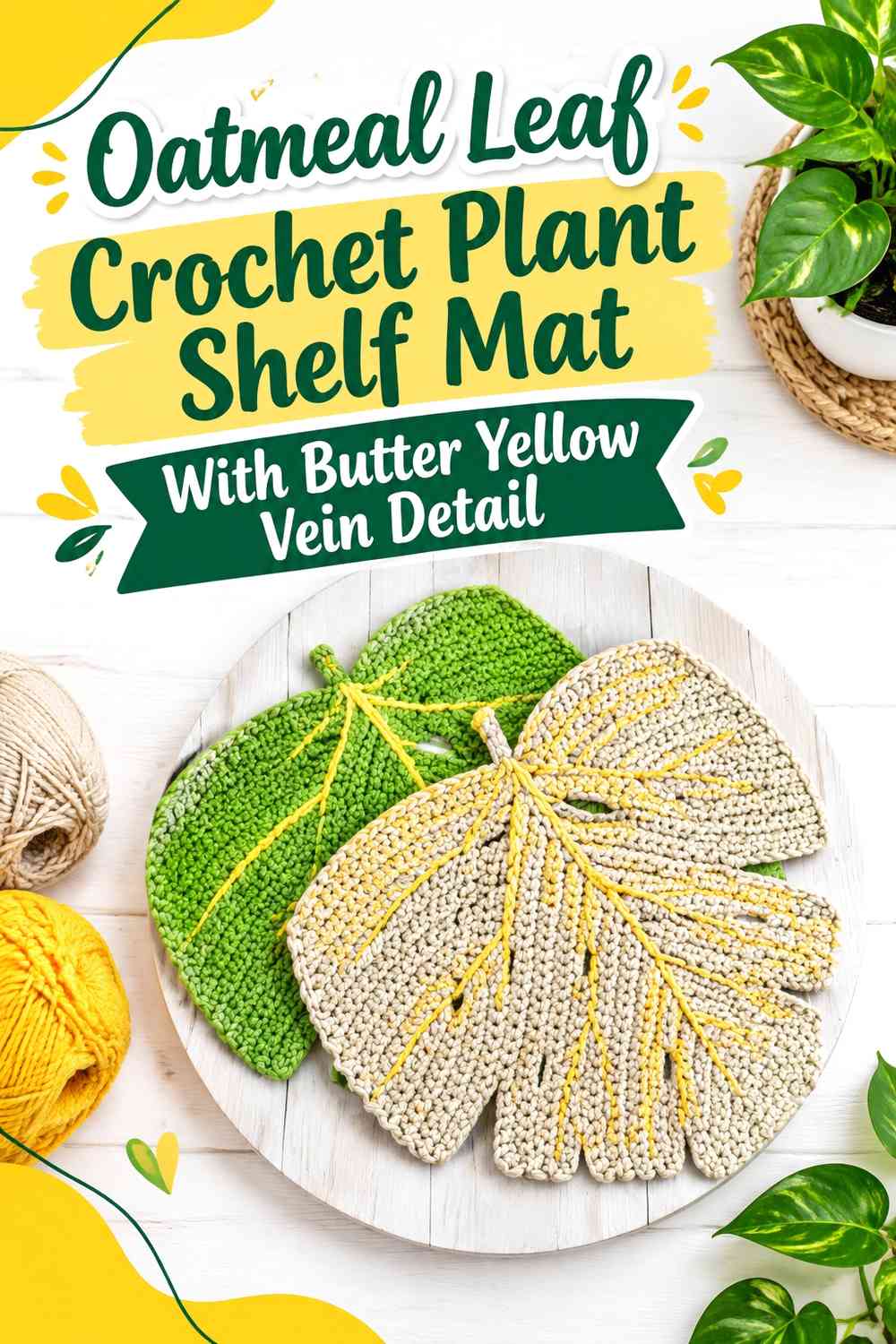
A leaf-shaped mat already connects visually with plants, so the palette can stay restrained. Use oatmeal for most of the leaf and butter yellow only where it emphasizes the central vein, edging, or another clearly repeated structural detail.
Oatmeal Lets the Leaf-Shaped Plant Mat Support Real Foliage Quietly
Keeping the main leaf oatmeal prevents the crochet motif from competing with the plant’s actual greens and variegation. This is particularly useful on shelves holding several foliage plants.
Position the planter so enough of the leaf tip or outer lobes remain visible. Otherwise the distinctive shape may be lost beneath the saucer.
Butter Yellow Can Trace the Oatmeal Leaf Without Filling Every Section
Use butter yellow selectively along the visual spine, edge, or another repeated feature. A small controlled accent reinforces the shape more effectively than dividing each leaf section into a different color.
Check contrast before committing. If your oatmeal and butter yellow are close in lightness, the yellow may need slightly more surface area to remain visible within a textured leaf construction.
Creator Credit: Crocheting with White Owl YouTube tutorial
10. Oatmeal and Butter Yellow Ringed Crochet Plant Shelf Mat
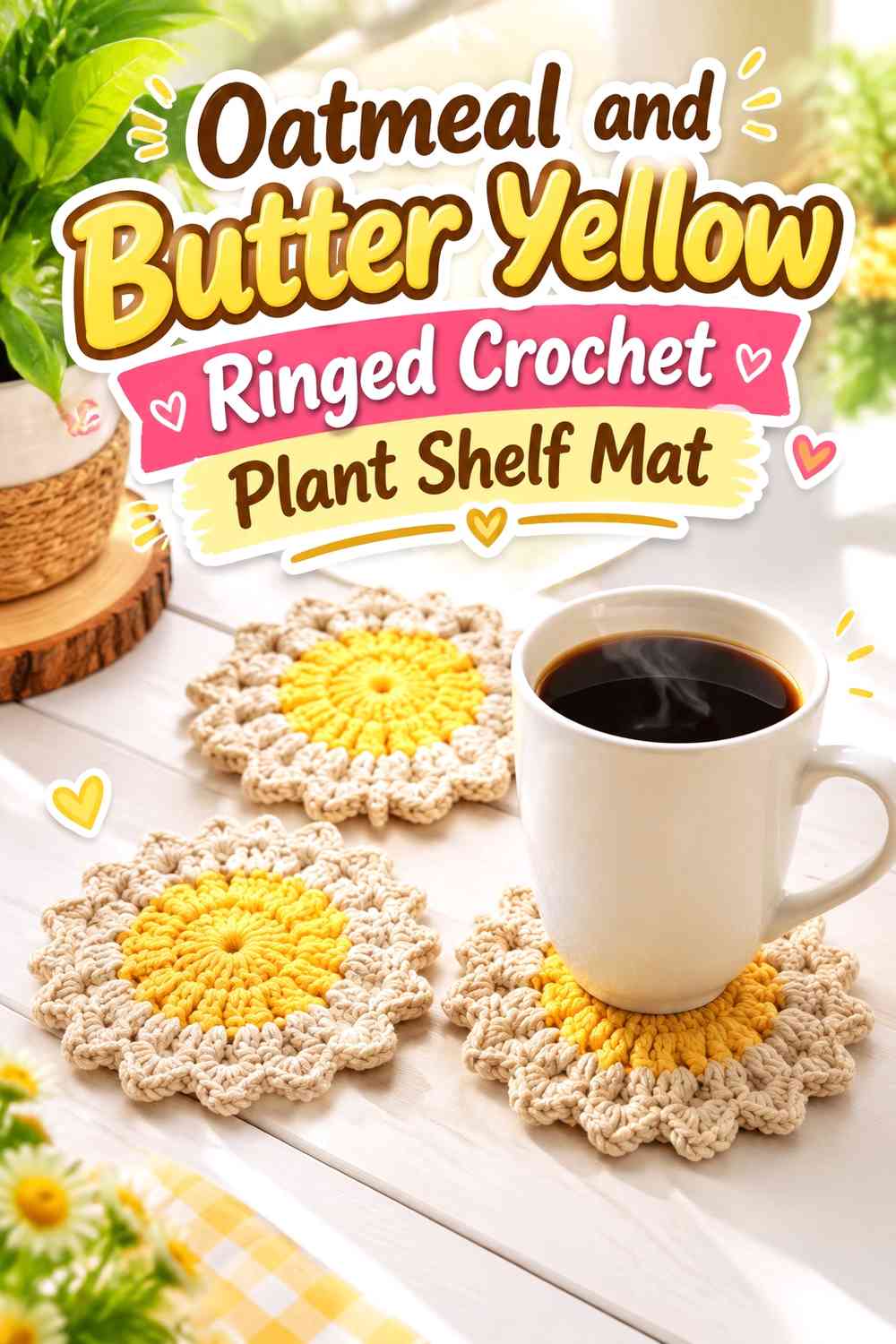
This version uses repeated circular bands rather than a single border. The difference from Idea 6 is hierarchy: instead of one broad accent ring, oatmeal and butter yellow repeat in a controlled sequence.
Oatmeal Should Occupy More Rings Than Butter Yellow
Give oatmeal the greater visual share so the repeated rings do not become too busy beneath a small planter. Yellow can appear at planned intervals, with the final visible ring receiving particular attention.
The center rings matter less if they will sit beneath the saucer, so concentrate the strongest color decisions farther outward.
Butter Yellow Rings Need Consistent Spacing Against Oatmeal
Repeat the yellow at a recognizable rhythm instead of changing color unpredictably. Consistency makes the circular construction easier to read from above.
If the outermost yellow ring is the only one visible after styling the shelf, that is a sign to reconsider the planter-to-mat proportion before completing additional hidden colorwork.
Creator Credit: Jayda InStitches YouTube tutorial
11. Oatmeal Heart-Edge Crochet Plant Shelf Mat With Butter Yellow Accents
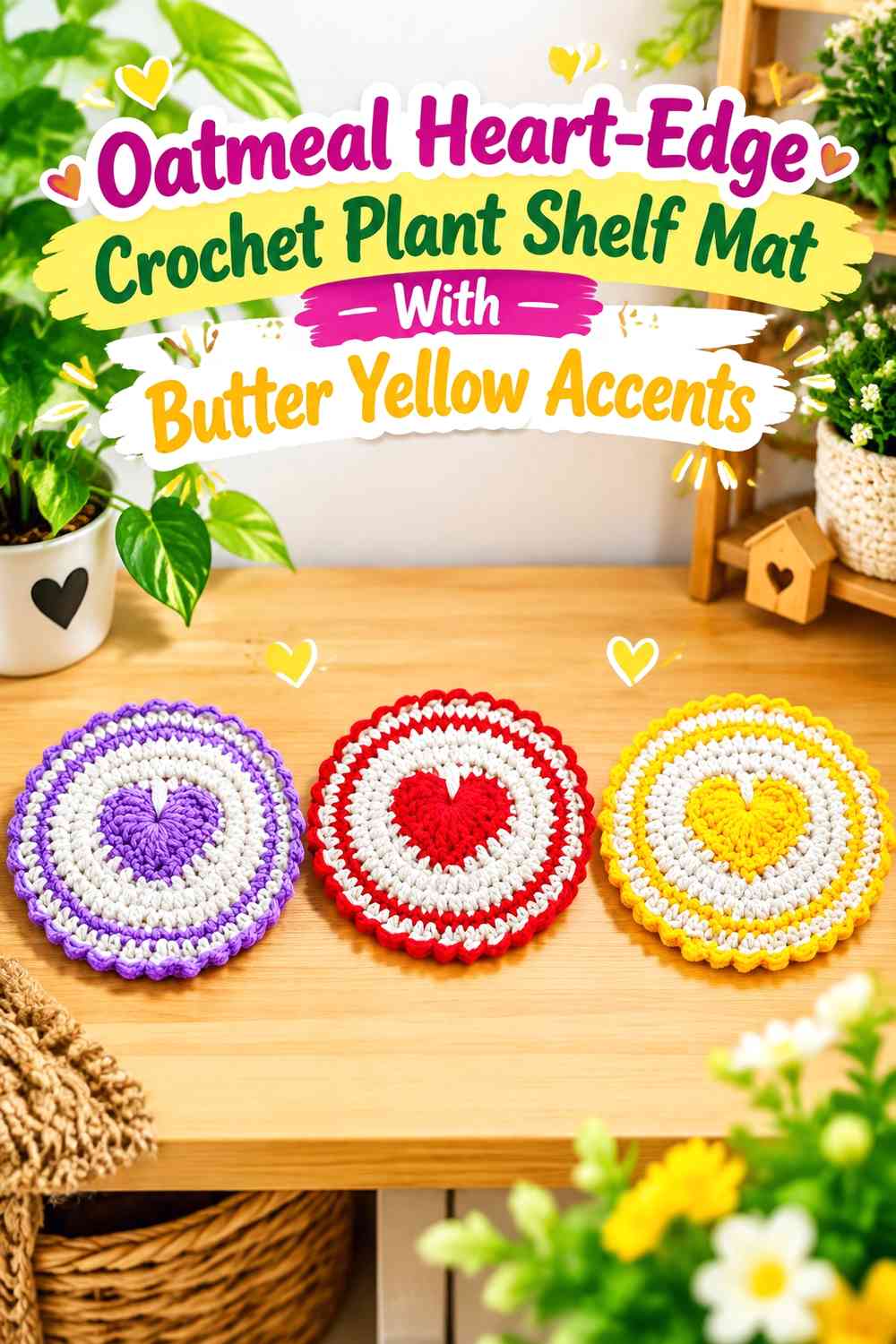
A heart-influenced coaster shape can become a playful mat for one small planter. Keep oatmeal as the main field and use butter yellow around the curves or selected heart details so the decorative outline remains visible.
Oatmeal Should Dominate the Heart-Shaped Plant Shelf Mat
A mostly oatmeal heart keeps the concept subtle enough for year-round shelf use. The plant still reads as the focal object rather than competing with a strongly colored motif underneath it.
Center the pot carefully so the top curves and lower point remain visible. Those exposed areas communicate the shape more clearly than decoration hidden under the saucer.
Butter Yellow Should Emphasize the Oatmeal Heart Outline
Use yellow on the edge, upper curves, or another repeated outline detail. This lets the accent follow the recognizable silhouette instead of becoming a disconnected patch.
For a narrow shelf, check that the pointed end does not project beyond the edge where it could be easily snagged.
Creator Credit: Crochet Rainbows & Butterflies YouTube tutorial
12. Butter Yellow Crochet Plant Shelf Mat With Oatmeal Dense Border
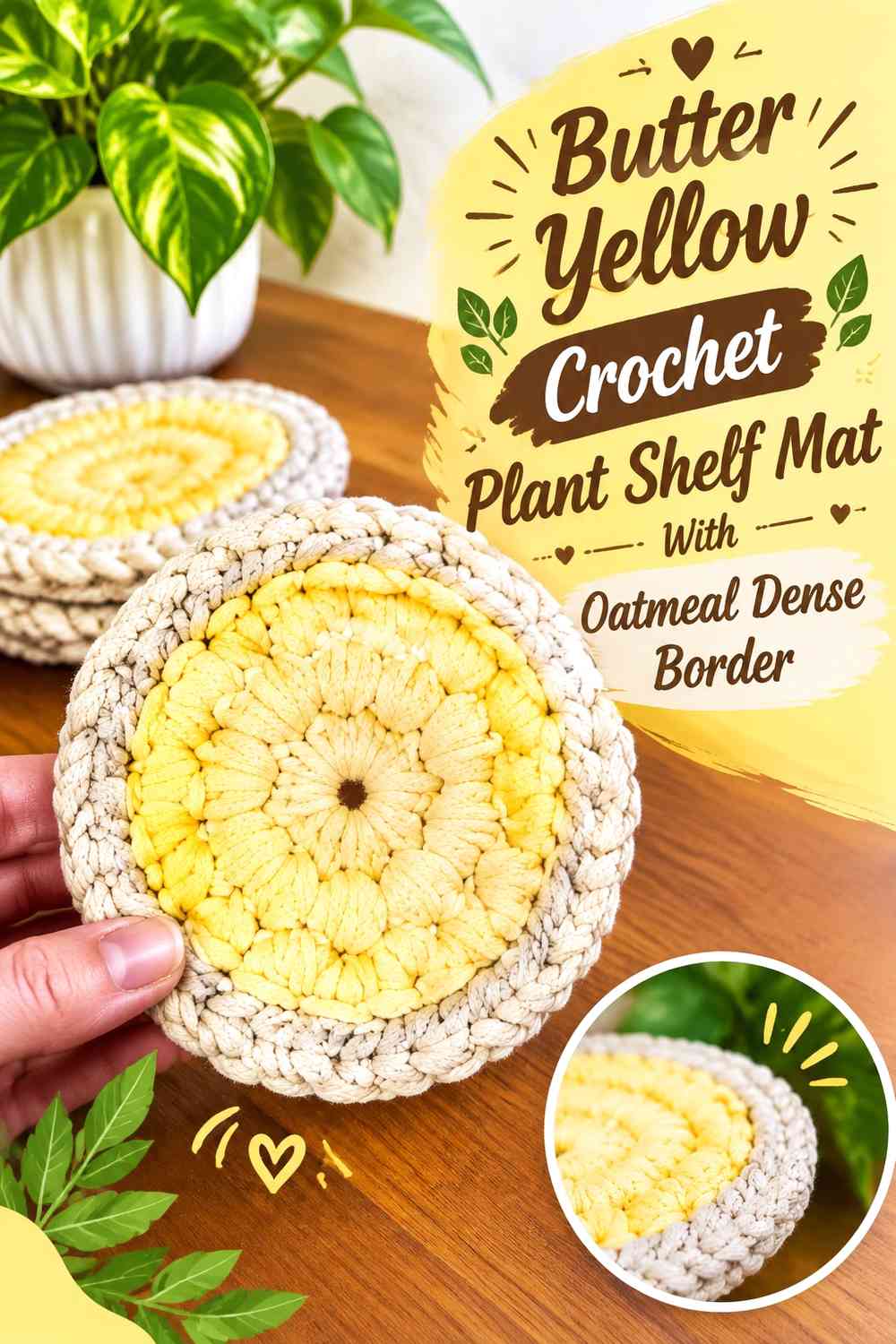
A denser coaster construction can provide a visually solid base beneath a pot. Use butter yellow through the center and oatmeal around the perimeter to keep the bright shade contained.
Butter Yellow Works Well as One Solid Plant Mat Field
Avoid unnecessary internal color changes if the stitch pattern already creates a dense, noticeable surface. One broad yellow area provides enough color for a small shelf.
Place the pot temporarily before finishing so you can judge whether the yellow remains visible or needs to extend farther toward the border.
Oatmeal Can Calm a Dense Butter Yellow Crochet Edge
Use oatmeal as a simple outer frame rather than adding another heavily textured feature. The neutral boundary separates the yellow mat from both the pot and shelf.
If the oatmeal border is very narrow, view the mat from normal standing distance. Increase its width if it disappears visually.
Creator Credit: Ned & Mimi YouTube tutorial
13. Oatmeal Rectangular Crochet Plant Shelf Mat With Butter Yellow Center Band
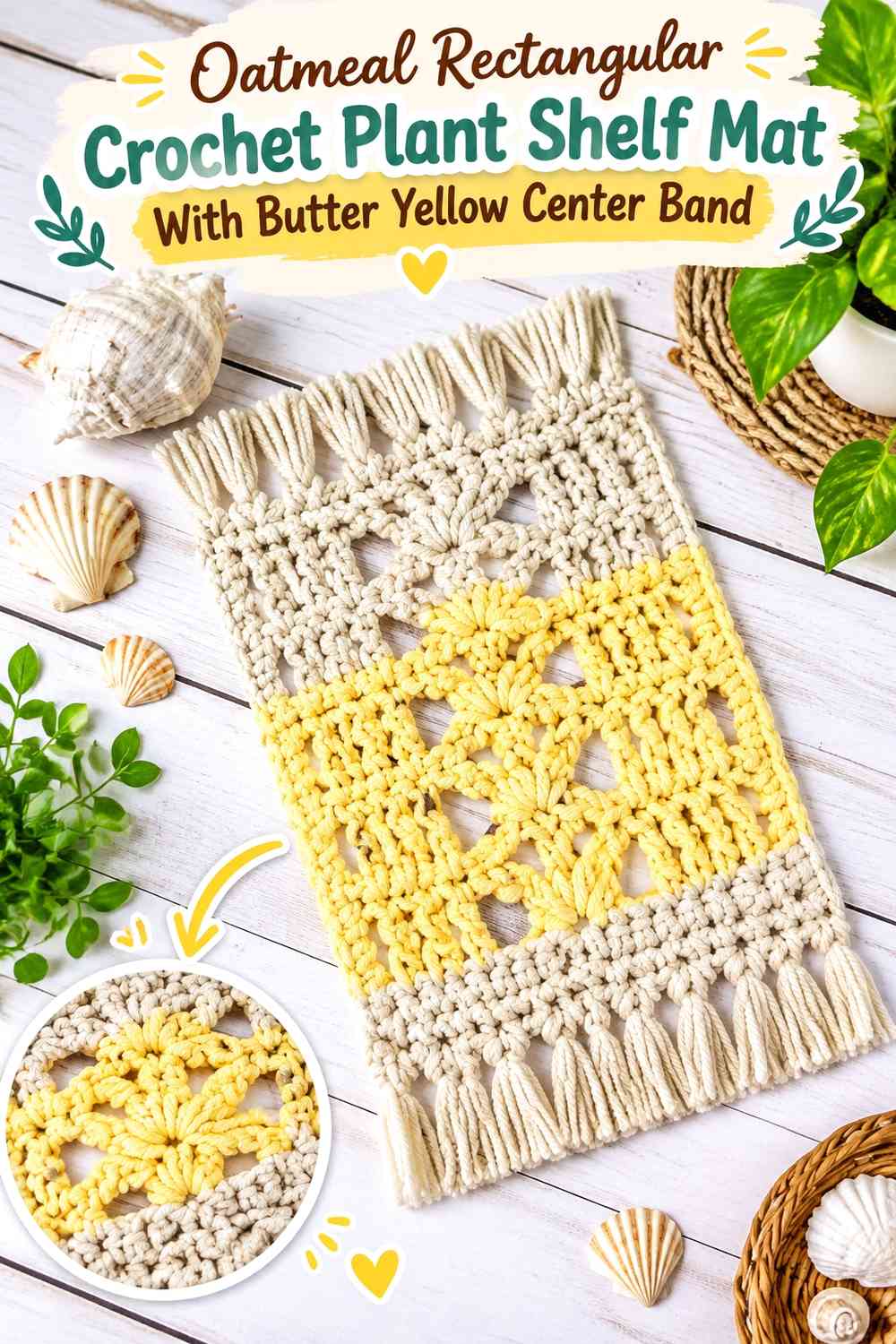
A rectangular mug-rug style mat is useful when a planter sits on a long, narrow shelf and you want crochet to extend visibly on either side. Oatmeal can cover most of the length while one butter yellow band crosses the exposed area.
Oatmeal Gives a Rectangular Plant Mat Room Around the Pot
Keep oatmeal through both ends so the mat can visually stretch beyond the planter without turning the shelf into a large yellow block.
This also makes the format useful for two small pots placed together, provided the mat dimensions and shelf depth suit the arrangement.
Butter Yellow Should Cross an Exposed Oatmeal Section
Place the yellow band where it will still be seen once the plant is positioned. On a long mat, that may mean shifting the accent away from the geometric center.
Color placement based on actual pot position is more useful here than forcing perfect symmetry that will later disappear under a planter.
Creator Credit: Desert Blossom Crafts YouTube tutorial
14. Oatmeal Woven Crochet Plant Shelf Mat With Butter Yellow Lines

A woven or grid-like surface provides many natural places for a second color. Keep the structural field oatmeal and use butter yellow as controlled linear accents rather than filling every opening or crossing.
Oatmeal Should Remain the Main Woven Plant Mat Structure
Let oatmeal establish the overall grid so the piece still reads as one mat beneath the planter. This is especially important when the crochet pattern itself already contains intersecting visual lines.
If every structural line changes color, the surface can become more dominant than the plant.
Butter Yellow Lines Can Direct the Eye Across Oatmeal
Use yellow in selected horizontal, vertical, or woven-looking paths. On a shelf, lines running toward the visible front edge can make the accent easier to notice than detail concentrated beneath the planter.
Keep the yellow repetition consistent. One clear system is stronger than adding accent lines wherever an empty space appears.
Creator Credit: Nicki’s Homemade Crafts YouTube tutorial
15. Butter Yellow Sunflower-Style Crochet Plant Shelf Mat With Oatmeal Center
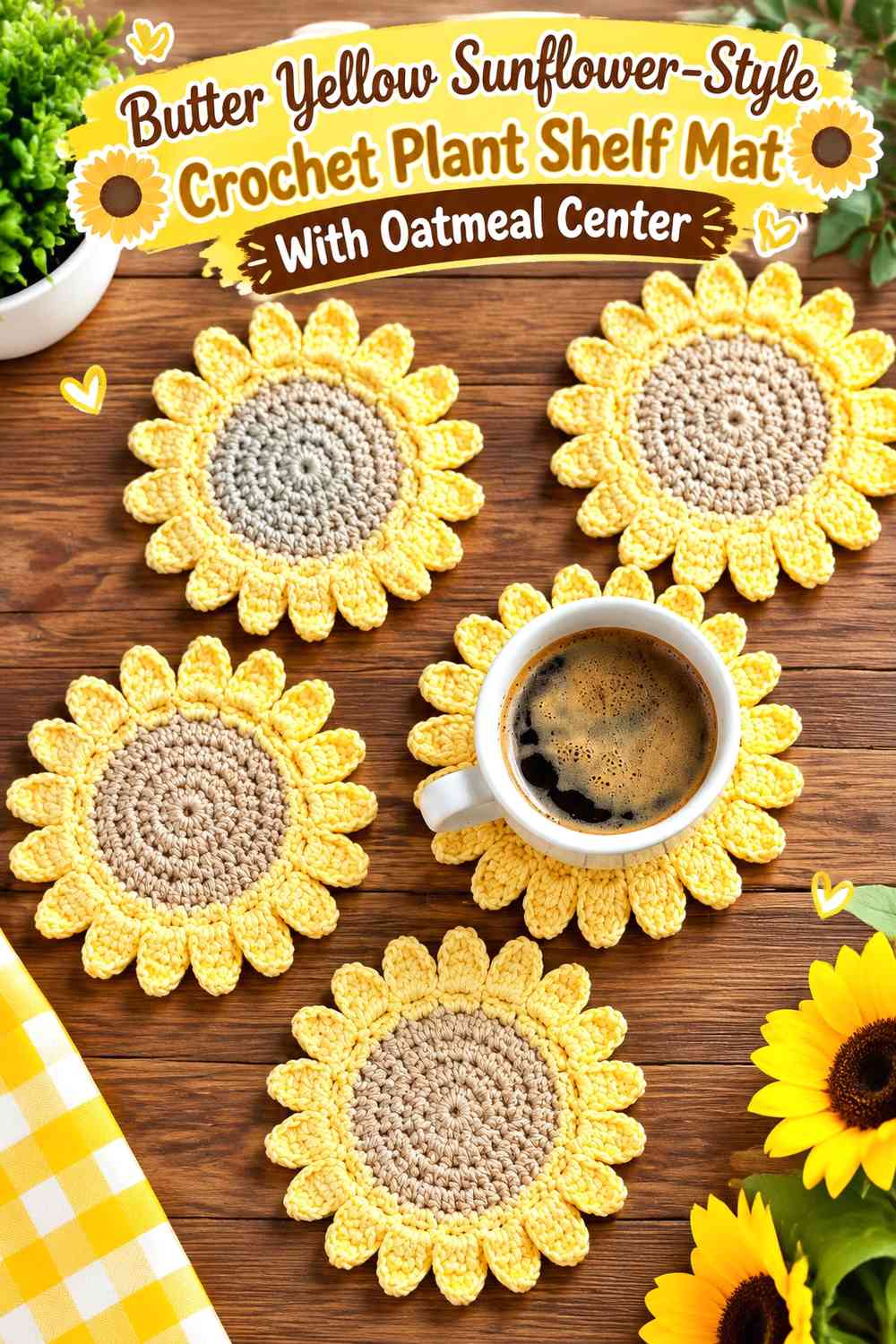
A sunflower-inspired coaster construction naturally suggests a yellow outer section, but switching the conventional dark center to oatmeal creates a softer winter palette. The flower concept stays recognizable through shape and color placement without introducing another brown or green.
Butter Yellow Should Carry the Outer Petals Around Oatmeal
Use butter yellow where the petal structure remains visible beyond the pot. A broad planter may hide the center, but the yellow outline can still create a flower-like frame around the saucer.
Choose the planter size carefully so the petals are not reduced to tiny disconnected tips.
Oatmeal Softens the Center of a Butter Yellow Flower Mat
An oatmeal center gives the planter a neutral base and keeps the palette limited to the requested two colors. It also distinguishes this idea from a completely yellow floral mat.
If the pot covers the entire center, repeat a small amount of oatmeal at the outer edge only if you need the neutral shade to remain visibly represented.
Creator Credit: Irina Tsokalo YouTube tutorial
16. Oatmeal Flower-Shape Crochet Plant Shelf Mat With Butter Yellow Petal Edge
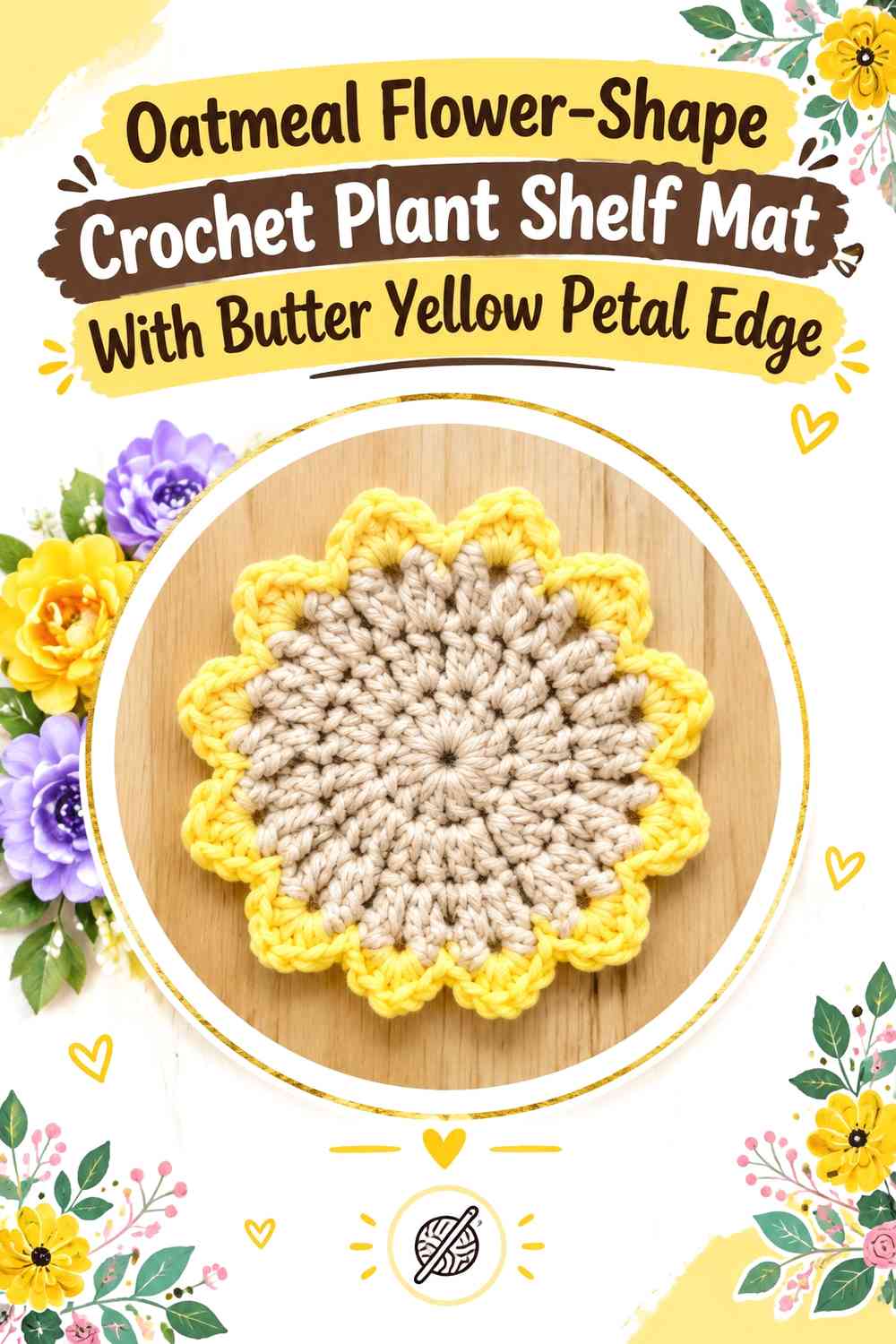
The final idea reverses the floral balance: oatmeal makes up most of the flower while butter yellow appears only along the petal tips or finishing edge. This creates the quietest floral option in the collection.
Oatmeal Petals Keep the Plant Shelf Mat Neutral
Allow oatmeal to cover most of each petal and the center so the flower silhouette, rather than intense color, provides the decorative interest.
This works well when the planter itself is patterned or brightly colored because the mat does not introduce another large competing color field.
Butter Yellow Can Highlight Only the Oatmeal Petal Tips
Place yellow at the outermost petal edge where it remains visible around the planter. A narrow accent is enough because every petal repeats the same color placement.
If the yellow tips disappear beneath the saucer, either increase the mat-to-pot size difference or move the yellow slightly farther inward while keeping the oatmeal dominant.
Creator Credit: Jess Crafting YouTube tutorial
Comparing the Oatmeal and Butter Yellow Plant Shelf Mat Ideas
For the most neutral result, Ideas 1, 3, 7, 9, 11, 13, 14, and 16 give oatmeal the larger visual role. These work well when you want the mat to support the plant display without becoming the first thing you notice.
Ideas 2, 5, 8, 12, and 15 give butter yellow more authority. They are useful when a winter shelf needs a clearer light-color accent, particularly around neutral planters.
Ideas 6 and 10 make the relationship more balanced through concentric color placement, while Idea 4 concentrates the yellow in the center. Choose the center-focused version only when enough of that area will remain visible around your particular planter.
Shape also matters. Rectangular mats can extend along narrow shelving, while round pieces align naturally with circular saucers. Leaf, heart, and flower shapes need slightly more visible space around the planter so their outlines are not completely hidden.
Conclusion
The most useful oatmeal-and-butter-yellow plant shelf mat is the one whose color placement still makes sense after the planter is in position. If you want a quiet winter shelf, start with oatmeal across most of the surface and move butter yellow toward borders, corners, petals, or narrow bands. For a brighter display, let butter yellow lead and use oatmeal to frame the edge.
Also consider what remains exposed. Decorative centers work with smaller planters, while border-focused palettes are more reliable beneath wide saucers. Rectangular mats make sense on long shelves, and shaped floral or leaf mats need enough room around the pot for their silhouettes to be appreciated.
Use the credited tutorials for their original crochet construction, but plan the final dimensions around your own planter, saucer, and shelf. Keep normal water protection beneath the pot rather than relying on the crochet mat itself, and place the two colors where they will actually remain visible in the finished arrangement.
Frequently Asked Questions
Should oatmeal or butter yellow be the main color for a crochet plant shelf mat?
Choose according to how prominent you want the mat to appear. Oatmeal creates a quieter background that leaves more attention on the plant and pot, while butter yellow produces a brighter visible accent. For a busy shelf, an oatmeal-dominant ratio is often easier to coordinate.
Where should butter yellow go if the planter covers most of the oatmeal mat?
Move butter yellow toward the perimeter, front edge, corners, petals, or outer rings. Color concentrated in the center may disappear beneath a wide saucer, while an outer accent can remain visible around it.
Can I use a crochet coaster tutorial to make an oatmeal and butter yellow plant mat?
A flat coaster can provide a useful construction concept for a small planter mat, but compare its finished shape and dimensions with your own planter and saucer. Do not assume that changing yarn, hook, stitch, or size will preserve the tutorial’s original measurements.
How can I check whether oatmeal and butter yellow have enough contrast?
Place the yarns side by side and look at them from a short distance. You can also photograph them in grayscale to compare their light-dark values. If they merge more than you want, choose either a lighter butter yellow or a slightly deeper oatmeal while preserving the soft neutral-and-yellow direction.
Should the plant pot sit directly on the crochet oatmeal and butter yellow mat?
Use the normal saucer, tray, or other suitable protection required by the planter rather than treating crochet as a waterproof barrier. The mat is best planned as a decorative layer around or beneath that protected setup.
Are round or rectangular oatmeal and butter yellow plant shelf mats more useful?
Round mats make visual sense beneath circular pots and saucers, especially when the outer border is the main color feature. Rectangular mats can work better on narrow shelves or when you want crochet to remain visible on both sides of the planter.
How can I make an oatmeal and butter yellow plant mat look less busy?
Give one shade a clear dominant role. Keep the second color to one repeated purpose—such as the border, corners, rings, petal tips, or a center band—rather than changing colors in every available section.