

Crochet doily bags can take several forms. Some use a literal round or mandala panel as the body of the bag, while others create the same delicate effect through flower medallions, shells, granny motifs, or open lace. That range gives you choices far beyond making the same circular purse in different colors.
The 35 ideas below include round crossbodies, handled handbags, floral shoulder bags, airy market totes, and more structured options. Some credited tutorials are direct circular or mandala bag projects; others are useful construction references for adapting compatible doily-like motifs into a practical bag. The comparisons focus on shape, openings, stretch, lining, strap support, motif placement, and other decisions that affect how the finished bag actually functions.
Quick List
- Classic Round Crochet Doily Crossbody Bag
- Clustered Circle Crochet Doily Purse
- Laurel-Style Circular Crochet Handbag
- Zippered Round Crochet Doily Purse
- Spoke-Texture Crochet Lunaria Handbag
- Retro Colorwork Crochet Circle Bag
- Chunky Round Crochet Crossbody Bag
- Ribbed Circle Crochet Shoulder Bag
- Daisy-Medallion Crochet Mini Bag
- Raffia Crochet Doily Summer Bag
- Jasmine-Stitch Crochet Round Handbag
- Transparent-Panel Crochet Mandala Bag
- Colorful Crochet Mandala Tote Bag
- Shell-Lace Crochet Shoulder Bag
- Flower-Motif Crochet Patchwork Tote
- Floral Granny-Motif Crochet Tote Bag
- Join-As-You-Go Crochet Flower Bag
- Flower-Appliqué Crochet Shoulder Bag
- Acorn-Lace Crochet Market Bag
- Striped Lace Crochet Market Tote
- Lightweight Crochet Lace Market Bag
- Pretty-Stitch Crochet Beach Market Bag
- Bookshop-Style Crochet Openwork Tote
- Wide-Mouth Crochet Market Mesh Bag
- Reusable Crochet Net Market Bag
- Granny-Bottom Crochet Doily Tote
- Structured Single-Crochet Market Tote
- Three-Square Crochet Motif Shoulder Bag
- Sunburst Crochet Festival Crossbody Bag
- Retro Granny-Square Crochet Cross Bag
- Soft Boho Crochet Crossbody Bag
- Zippered Fashion Crochet Crossbody Bag
- Foldover Textured Crochet Crossbody Bag
- Simple Structured Crochet Handbag
- Textured-Flower Crochet Handle Handbag
What Makes a Crochet Bag Look Like a Doily Bag?
A literal vintage doily is only one route. In bags, the doily effect usually comes from radial construction, repeating petals, shells, spokes, flower medallions, or deliberately open lace. A round panel makes the resemblance especially obvious because the crochet grows outward from a center point.
That distinction matters when choosing tutorials. A circular bag tutorial can provide the sidewall, strap, opening, and joining logic even when its decorative panel is denser than the motif you want. Likewise, a lace market bag may already have the delicacy you want without using a separate doily panel. When adapting motifs, compare the blocked dimensions, edge shape, density, and orientation rather than assuming two attractive circles will automatically behave the same way.
Choose Structure Before Decorative Stitching
The prettiest openwork is not automatically the most practical bag fabric. Large lace openings allow more stretch and can let small contents work through the fabric. A lining can change that behavior substantially, but it also changes drape and requires the opening and interior dimensions to be planned together.
Straps deserve separate attention. Long unsupported crochet straps can lengthen when the stitch pattern or fiber stretches, especially once the bag contains more than its own weight. A denser strap, reinforcement, or a separate manufactured handle may therefore make sense even when the main body is intentionally lacy. For round bags, also look at how the two panels meet: a narrow join creates a flatter purse, while a side section or gusset can produce more usable depth.
Plan the Motif Edge and Bag Opening Together
A doily-style panel needs to stay reasonably flat before it becomes part of a bag. If the outer edge waves significantly, forcing it into a second panel or sidewall can create puckering. If it cups inward, the finished bag may become more bowl-shaped than intended. Blocking can help you evaluate the actual panel dimensions before committing to assembly.
The opening is another important checkpoint. A zipper, button, drawstring, or completely open top each needs a different kind of edge. If you substitute your own doily motif for the tutorial’s original panel, confirm that the usable section along its outer edge can accommodate the chosen opening. For paired circular panels, make both pieces compatible in blocked size before joining rather than relying on an aggressive seam to correct a mismatch.
Classic Round Crochet Doily Crossbody Bag
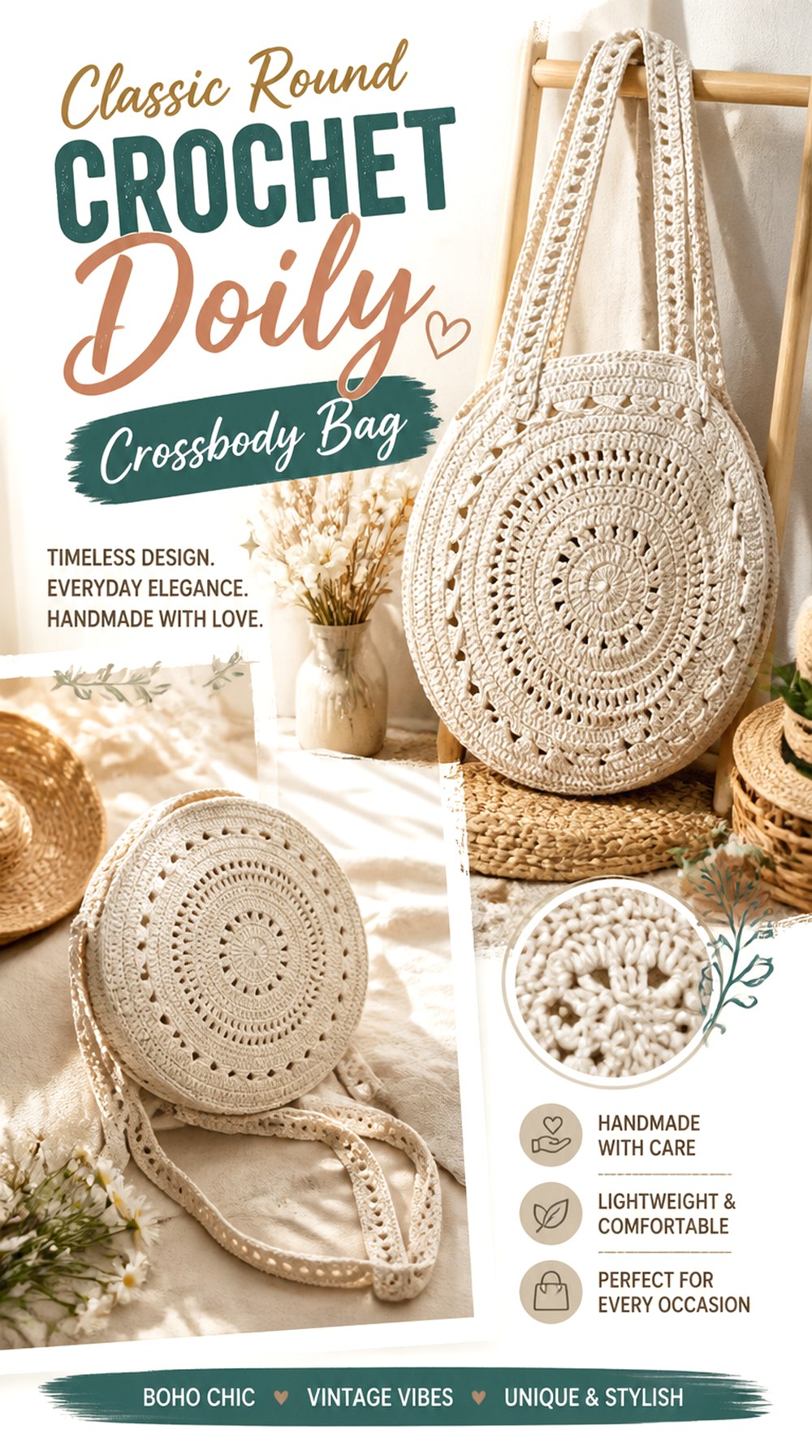
A symmetrical round bag is one of the clearest ways to translate the look of a crochet doily into an everyday accessory. This idea uses two visually balanced circular faces and keeps the silhouette compact enough for a crossbody format. The Chompu Handicrafts tutorial is specifically a round-bag project, making it a useful reference when your priority is understanding how a flat circle becomes an actual bag rather than simply crocheting a decorative motif.
For a stronger doily appearance, the decorative interest can come from radial color changes or a compatible lace circle while the underlying bag construction stays practical.
Keep Both Circular Faces Equally Flat
Two round panels reveal size differences quickly. Block or otherwise evaluate both pieces before joining and compare the outer circumference, not merely the center. A slightly ruffled decorative circle may look attractive on its own but can distort the seam when paired with a flatter second panel. Correcting the panel first usually gives you more control than trying to hide excess fabric in the joining edge.
Let the Strap Support the Circle Instead of Distorting It
On a circular crossbody, strap attachment points concentrate tension on relatively small sections of the perimeter. Consider whether the decorative outer rounds are dense enough to accept that stress. If your chosen doily motif finishes with very open arches or picot-like details, attaching the strap through a more stable structural edge can protect the visual border and help the round silhouette stay recognizable.
Clustered Circle Crochet Doily Purse
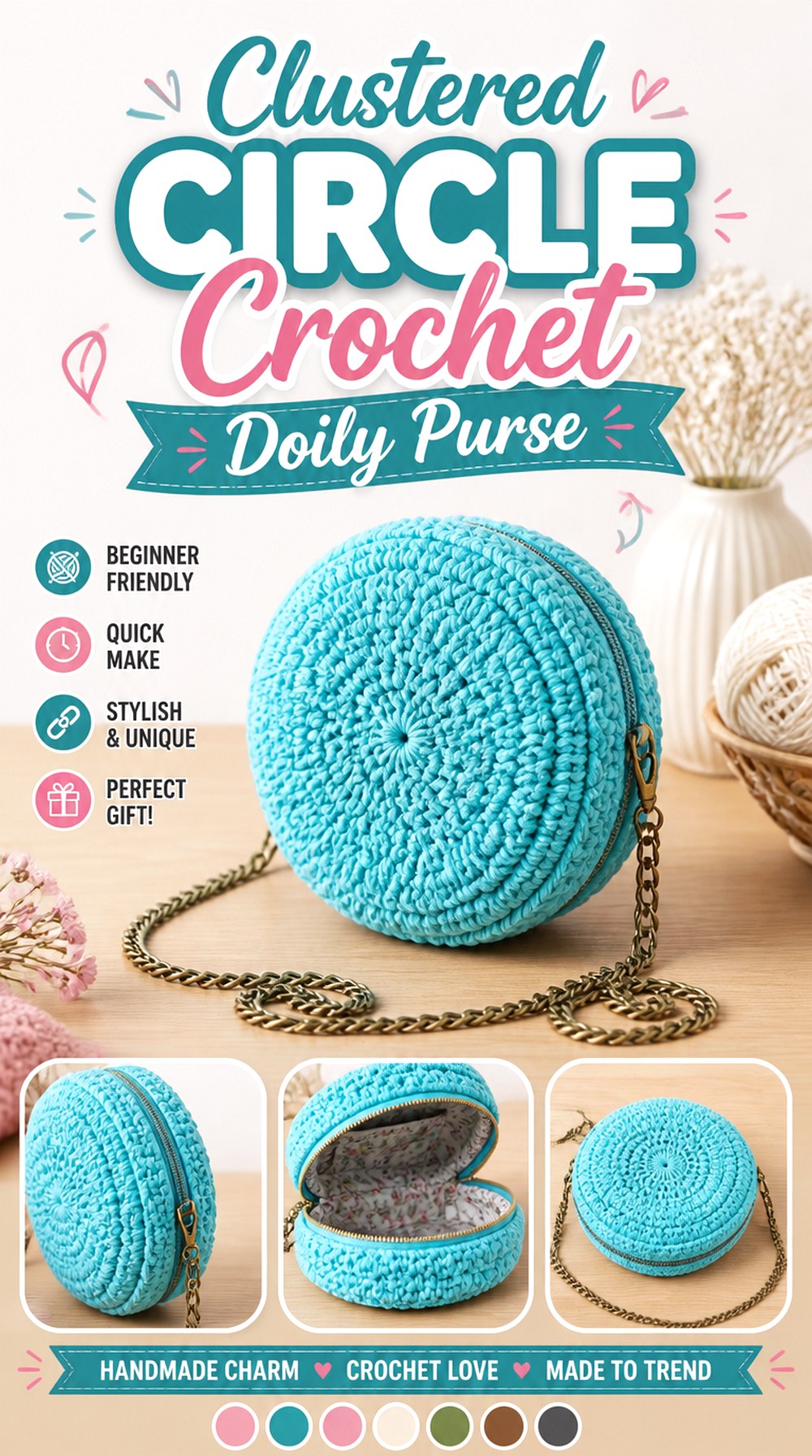
This purse direction gives the round shape more surface texture instead of relying primarily on open lace. KnitcroAddict’s circle-purse tutorial provides a useful reference for a compact circular accessory, while the article concept pushes the surface toward a clustered doily look through texture and radial emphasis.
It suits readers who like the recognizable geometry of a doily but want a bag that appears more substantial than a fine openwork market tote. The important choice is how much texture to add before the round panel becomes too thick or heavy-looking for the scale of the purse.
Raised Texture Changes the Panel’s Flexibility
Clusters and other dimensional stitches consume more yarn and can create a firmer surface than flat lace. That can help a circle keep visual definition, but it may also make the edge less willing to conform to a narrow sidewall. Make a judgment based on the finished fabric rather than the stitch name: the useful question is whether the panel bends cleanly where the bag construction expects it to.
Use Openwork as an Accent Rather Than Everywhere
A doily effect does not require every round to be transparent. Alternating visually solid areas with more decorative rounds can preserve the radial look while giving the opening, strap attachments, or lower edge a firmer foundation. This is particularly useful if you want to skip lining but still need to consider whether small items could escape through the fabric.
Original Tutorial and Creator Credit
Creator: KnitcroAddict
Laurel Style Circular Crochet Handbag
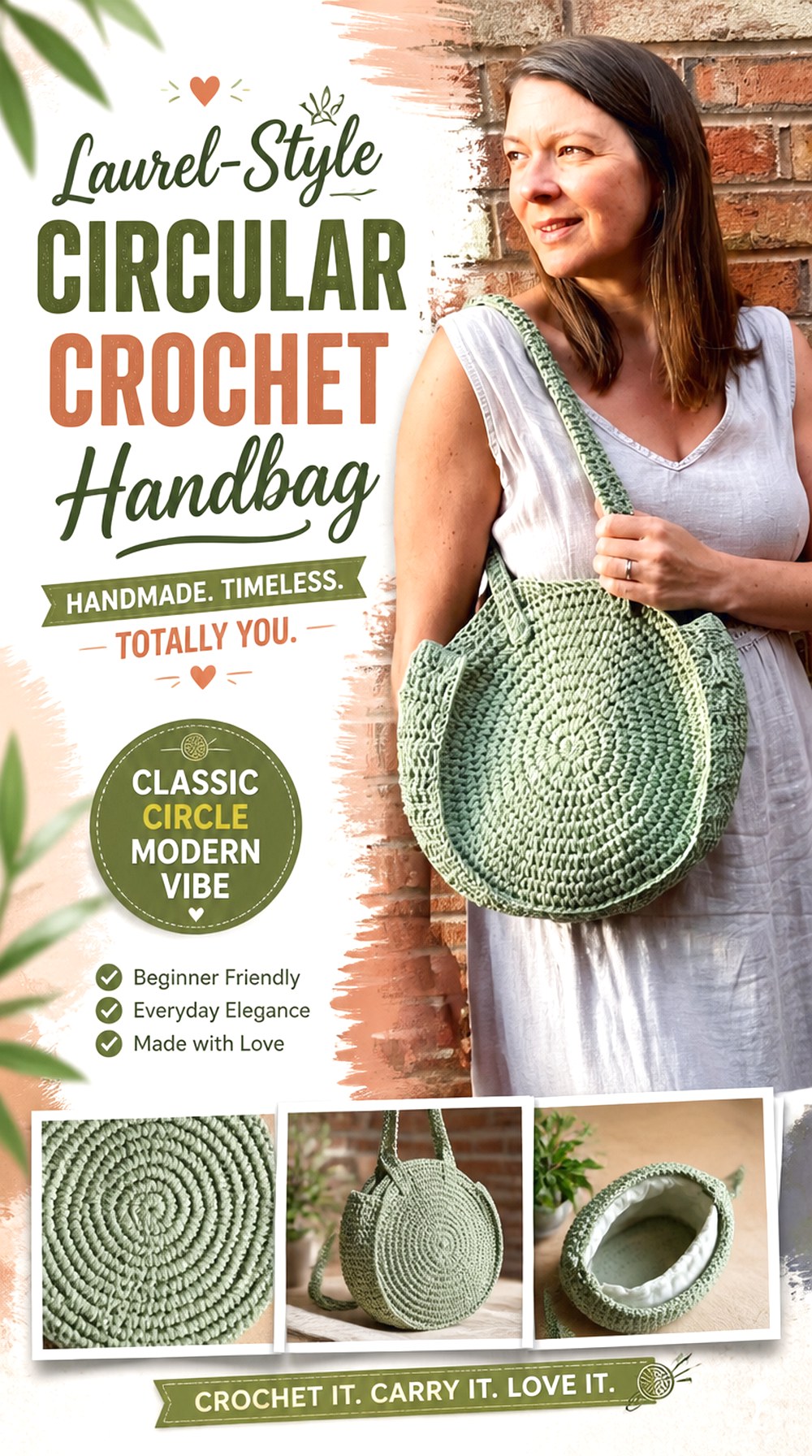
A circular handbag carried closer to the hand has different design priorities from a long crossbody. Ophelia Talks Crochet’s Laurel Bag tutorial provides the foundation for this interpretation: a visibly circular handbag whose silhouette makes radial stitch work the main feature.
For a doily-inspired version, think of the front panel as the decorative focal point and keep the surrounding construction visually quieter. This approach works well when you want a statement circle without turning the entire bag into loose open mesh. It also gives the bag a dressier feel than many expandable market-bag designs in this collection.
A Hand-Carried Shape Can Tolerate Less Drape
A soft market tote benefits from expansion, but a circular handbag generally looks more intentional when its edge remains defined. If you substitute yarn or a more open motif, compare how much the blocked panel collapses when held vertically. A lining or firmer edge treatment may be worth considering when maintaining the circle is more important than creating a lightweight, foldable bag.
Keep the Decorative Center Visually Centered After Assembly
Radial designs draw the eye directly to the center, so even a small shift becomes noticeable. Before permanently attaching handles, side sections, or other hardware, hold the assembled bag in its carrying position. Check whether the motif still faces upright and whether the center sits where you intended rather than rotating toward one side under the pull of the handle.
Original Tutorial and Creator Credit
Creator: Ophelia Talks Crochet
Zippered Round Crochet Doily Purse
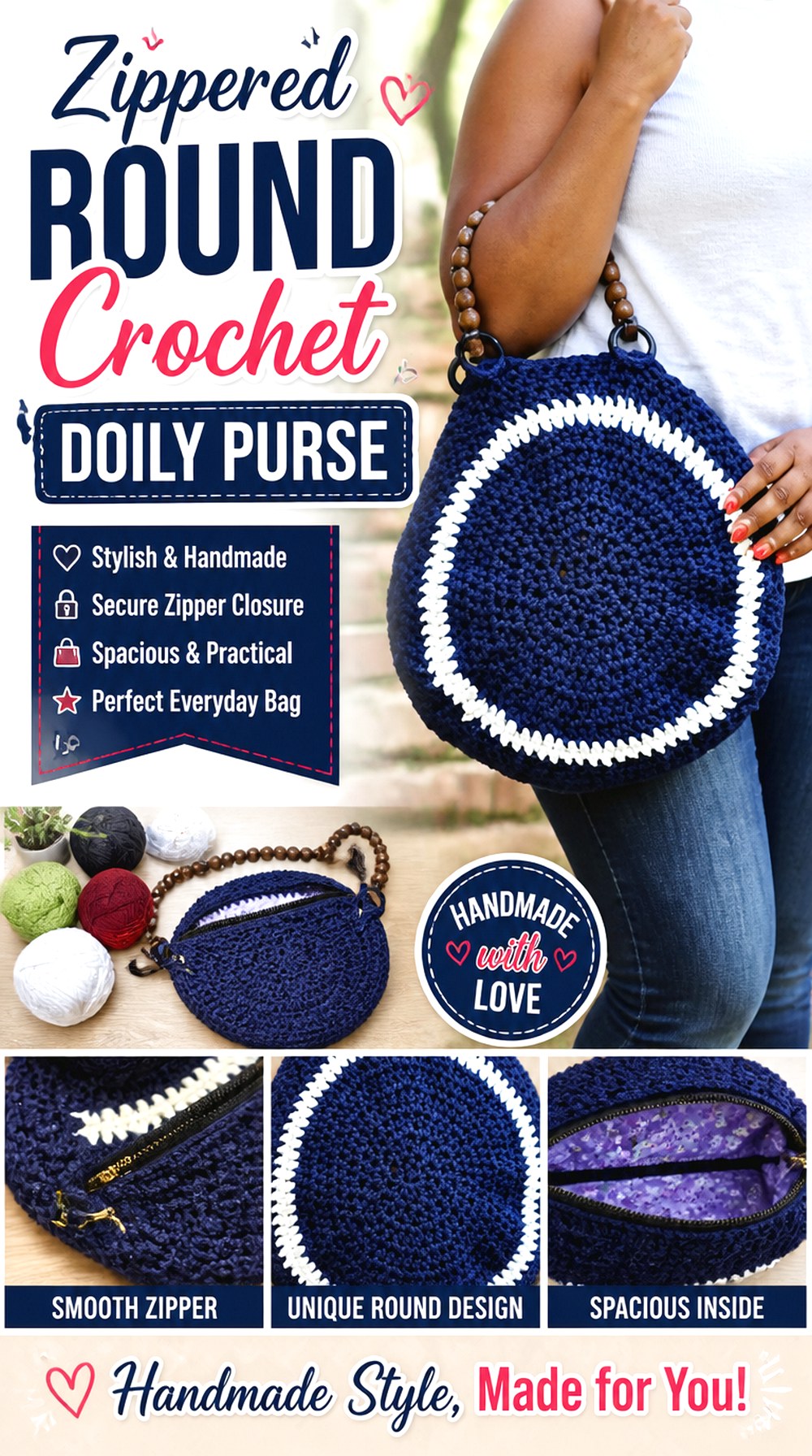
A zipper changes a decorative circle into a more contained purse, and Ahsel Anne’s tutorial is particularly relevant because the project combines a round crochet body with a zipper and handles.
That makes this idea a strong choice for anyone who loves openwork or radial decoration but does not want an unrestricted opening. The decorative panel can stay visually doily-like while the top edge becomes more functional. Before adapting a lace motif, however, make sure the section receiving the zipper is stable enough for sewing and is not composed only of loose decorative loops.
Give the Zipper a Predictable Edge
A zipper is easier to position against a firm, even section than against deep scallops. If your favorite doily finishes with pronounced points or arches, consider whether the bag construction allows a straighter structural edge around the opening. The goal is not to flatten every decorative detail; it is to prevent the zipper tape from pulling an ornamental border into an uneven line.
Handles Should Not Compete With the Closure
Handle placement can affect how easily a zippered round purse opens. Before final attachment, test the opening with the handles temporarily positioned and make sure they do not fold directly across the zipper path. This is also a useful moment to check visual balance: the handles should frame the circular motif rather than obscure its most interesting section.
Original Tutorial and Creator Credit
Creator: Ahsel Anne by Felicia
Spoke Texture Crochet Lunaria Handbag
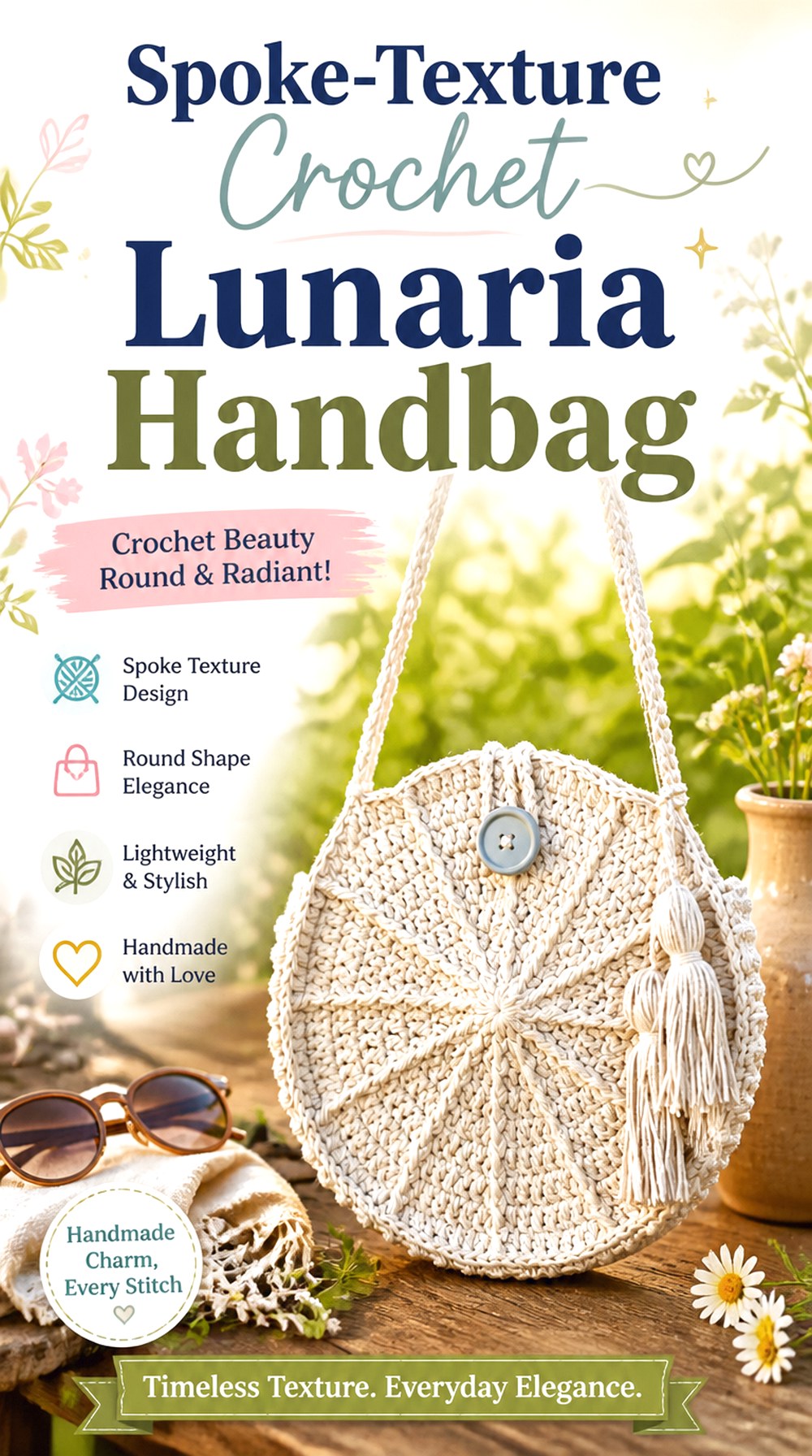
Radial spokes create a doily impression even when the fabric itself is comparatively dense. Naztazia’s Lunaria Round Bag uses a circular handbag format with a visibly radiating surface, making it a helpful bridge between delicate doily aesthetics and a more structured purse. The tutorial also addresses finishing features beyond the decorative circle.
This style works particularly well when you want the center-to-edge movement of a traditional doily but prefer fewer large openings. A single color can emphasize shadows and stitch relief, while carefully planned color changes can make the spoke pattern more graphic.
Spokes Need to Stay Radial at the Carrying Point
Before adding hardware or a closure, rotate the finished panel until the spoke arrangement looks balanced in the position the bag will be carried. A technically round piece can still appear tilted if a prominent spoke or color division lands awkwardly beside the top opening. Marking the visual top before assembly helps preserve the intended orientation.
Dense Radial Fabric Offers More Interior Options
Because this approach does not depend on very large lace holes, you have more flexibility over whether lining is primarily decorative, protective, or unnecessary for your intended contents. Still evaluate the fiber and stitch density rather than assuming a visually solid surface cannot stretch. A lining can also help preserve the round outline when the bag is carried.
Original Tutorial and Creator Credit
Creator: naztazia
Retro Colorwork Crochet Circle Bag
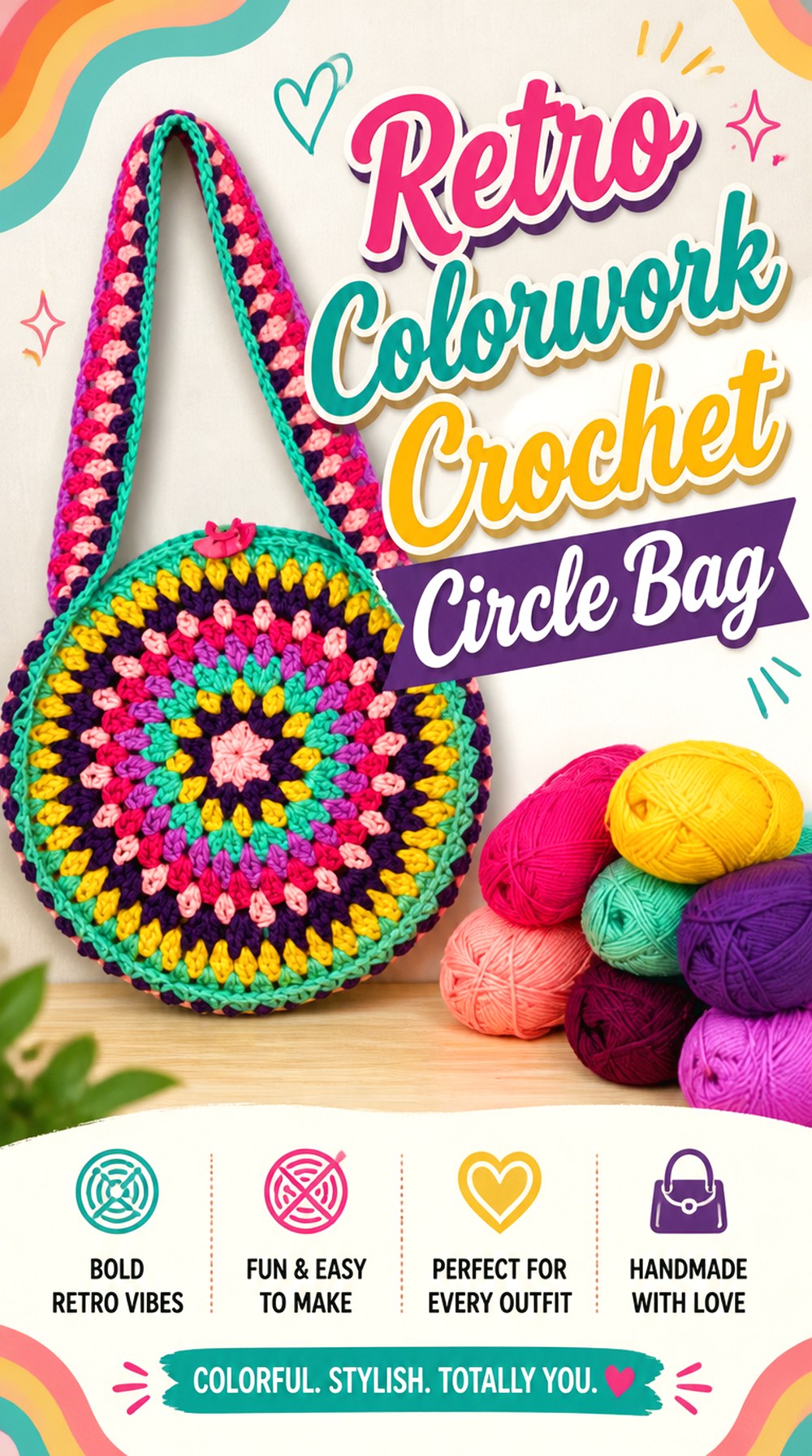
Littlejohn’s Yarn provides a circle-bag reference with a distinctly retro visual direction. That makes this option useful when you want the repeated rings of a doily but prefer bold color separation instead of fine monochrome lace.
Colorwork can help reveal the circular architecture from a distance, particularly when different rounds or motif areas are clearly contrasted. The main planning challenge is avoiding a front panel that feels visually busy once straps, closures, and side joins are added. A simpler back panel is also an option if you want the front to carry most of the decorative work.
Color Changes Can Clarify the Doily Geometry
Instead of choosing colors only for variety, assign them to structural zones: center, expanding motif area, border, and attachment edge. That makes the radial construction easier to read. If you introduce several colors, view the panel from a few feet away before assembly; very narrow stripes can visually merge, while wider sections may make the circle appear more graphic.
Let the Border Calm a Busy Center
A multicolor center benefits from an outer edge that visually contains it. A quieter border can also provide a better location for joining and strap attachment than the most decorative rounds. When adapting another circular motif, compare the last few rounds carefully—the border often determines whether the finished piece behaves like a bag panel or continues to read mainly as a decorative mat.
Original Tutorial and Creator Credit
Creator: Littlejohn’s Yarn
Chunky Round Crochet Crossbody Bag
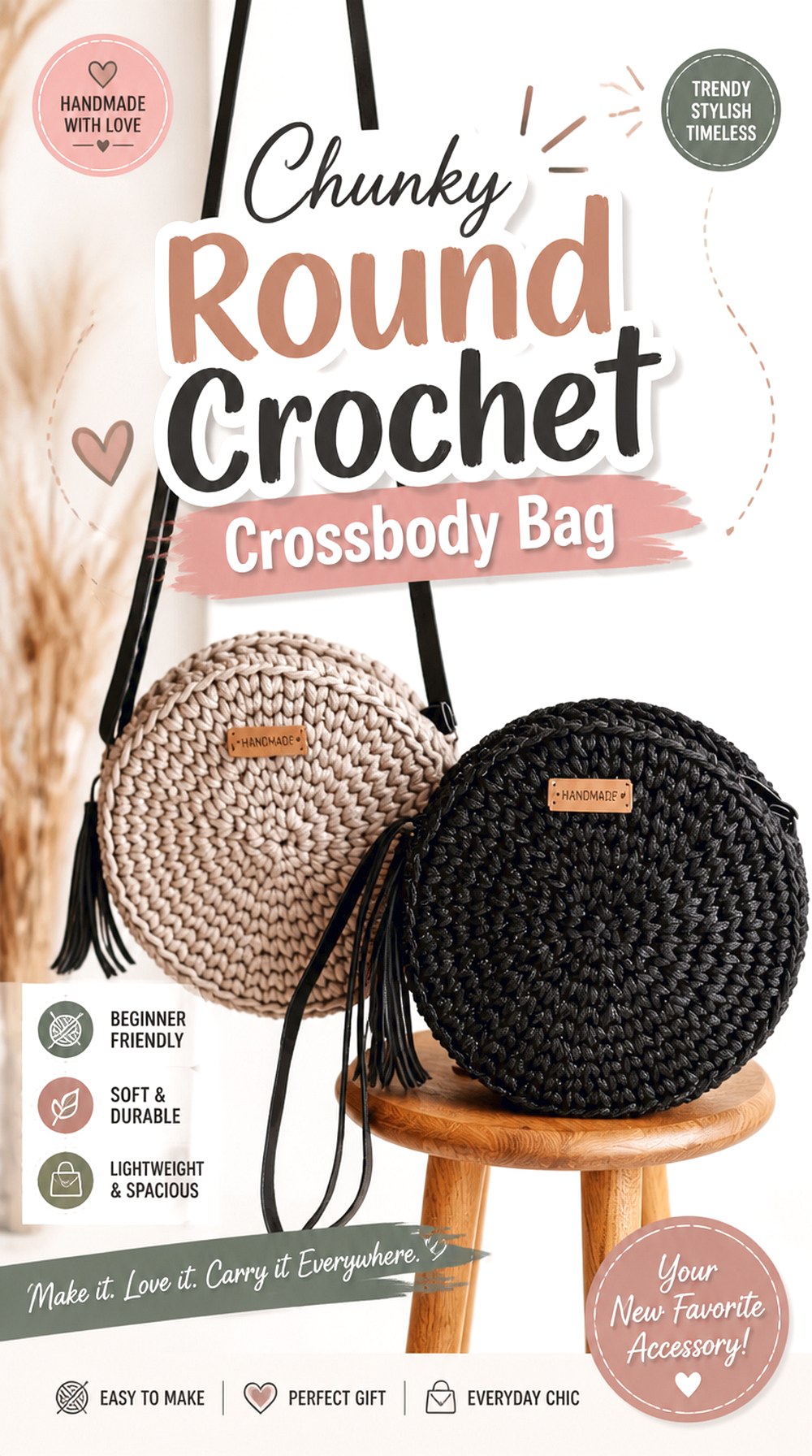
A thicker round crossbody offers almost the opposite experience of a fine thread doily: the radial form remains, but the stitches become bold and architectural. Crochet Designer Simona’s “Knox dream” bag provides a circle-shaped crossbody reference with a clearly wearable format.
This is a useful idea if you like doily geometry more than delicate doily scale. Enlarging the visual language allows the center and expanding rounds to become statement texture. It also makes yarn choice especially important because a thicker fabric can move from pleasantly structured to bulky if the side depth and strap are not kept in proportion.
Large Stitches Magnify Any Uneven Circle
With chunkier material, differences in tension become easier to see. Lay the panel flat periodically and judge the outer edge. A little movement may block out, but persistent cupping or flaring can affect how two panels align. Avoid assuming a strong seam will fix the problem; a mismatched pair of circles usually remains visibly mismatched after assembly.
Keep the Strap Visually Proportional
A substantial round body can make a very narrow crochet strap look disconnected, while an oversized strap can dominate the circle. Compare the strap width and texture against the finished panel before committing. If you prefer a separate adjustable strap, make sure its attachment points are supported by stable fabric rather than the most decorative outer loops.
Original Tutorial and Creator Credit
Creator: Crochet Designer Simona
Ribbed Circle Crochet Shoulder Bag
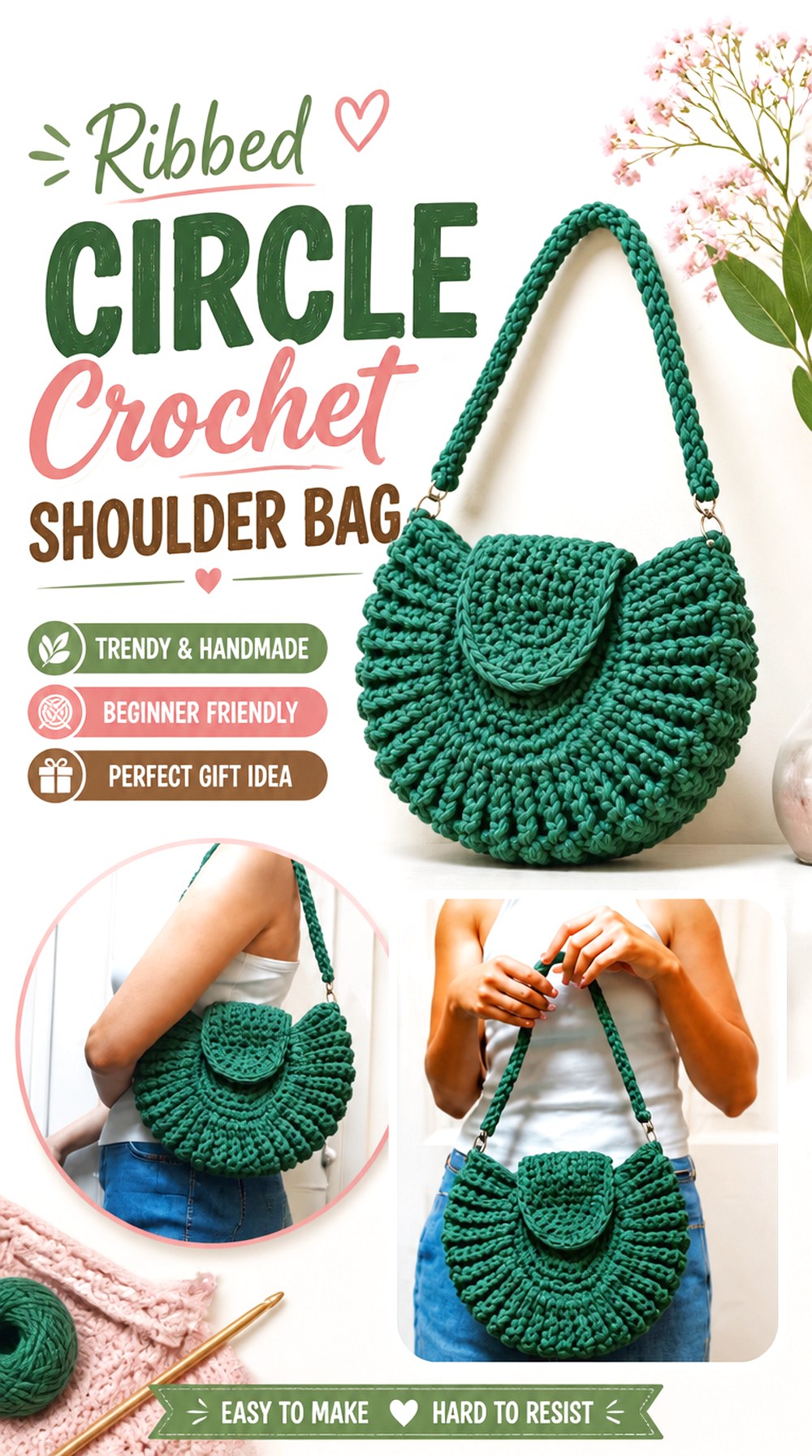
A round shoulder bag can evoke a doily through repetition without being openly lacy. Thao’s Handmade Crochet demonstrates a simple circle-shaped shoulder bag, giving you a useful construction base for a more restrained doily interpretation.
For this version, focus on regular radiating lines or subtle ribbing and let the circular silhouette do much of the decorative work. It is a good contrast to highly floral bags because it can coordinate with more everyday outfits while still keeping the center-out structure that defines this collection. The shorter shoulder carry also changes how the bag hangs compared with a long crossbody.
Shoulder Carry Changes the Top Edge
A shoulder strap pulls more directly upward than many long crossbody straps, which can draw the upper part of a soft circle inward. Hold the unfinished bag from temporary attachment points and watch what happens to the silhouette. If the top collapses more than you like, a firmer border or supported opening may be more useful than simply tightening the strap.
Use Ribbing to Add Interest Without Extra Holes
If a lace doily seems too transparent for your intended use, raised or back-loop texture can maintain repeated visual lines while keeping the fabric more closed. The trade-off is a different drape. Compare the textured panel with your preferred lining and closure plan early, because a thick surface plus a heavy lining can make a small shoulder bag feel unnecessarily rigid.
Original Tutorial and Creator Credit
Creator: Thao’s Handmade Crochet
Daisy Medallion Crochet Mini Bag
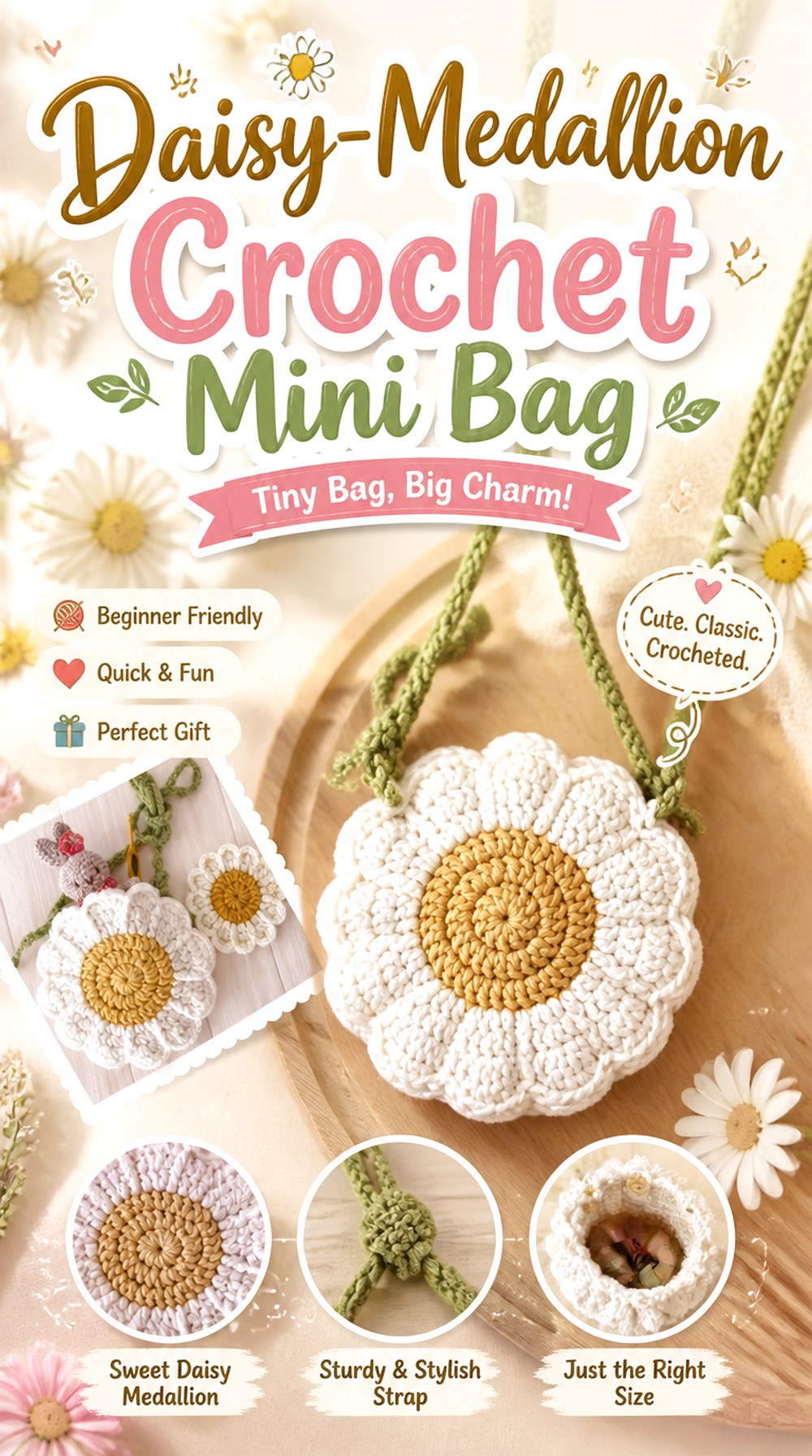
A small daisy bag turns the floral center of a doily into the main event. Ichigocrochet’s daisy pochette tutorial provides a compact flower-focused bag reference, making this idea distinctly different from the larger circle handbags and market totes elsewhere in the list.
Because the scale is smaller, the motif can read almost like a wearable medallion. This is a good place to use stronger petal contrast or a decorative border without overwhelming the finished object. The limited interior space also means the opening and closure deserve careful thought; there is little benefit in maximizing visual delicacy if the contents are poorly contained.
Scale the Flower to the Whole Bag, Not Just the Front
A daisy that fills nearly the entire face creates a bold medallion effect, while a smaller flower surrounded by several border rounds resembles a traditional doily more closely. Decide which proportion you want before adding decorative rounds. Continuing outward simply because the motif allows it can move the project past the compact pochette scale you originally intended.
Small Openings Make Closure Placement More Noticeable
On a mini bag, even a small button, flap, or drawstring can become a major visual element. Test the closure against the flower before permanently installing it. If it lands directly over the most detailed petal work, shifting the opening orientation may preserve the motif more effectively than trying to disguise hardware afterward.
Original Tutorial and Creator Credit
Creator: Ichigocrochet
Raffia Crochet Doily Summer Bag
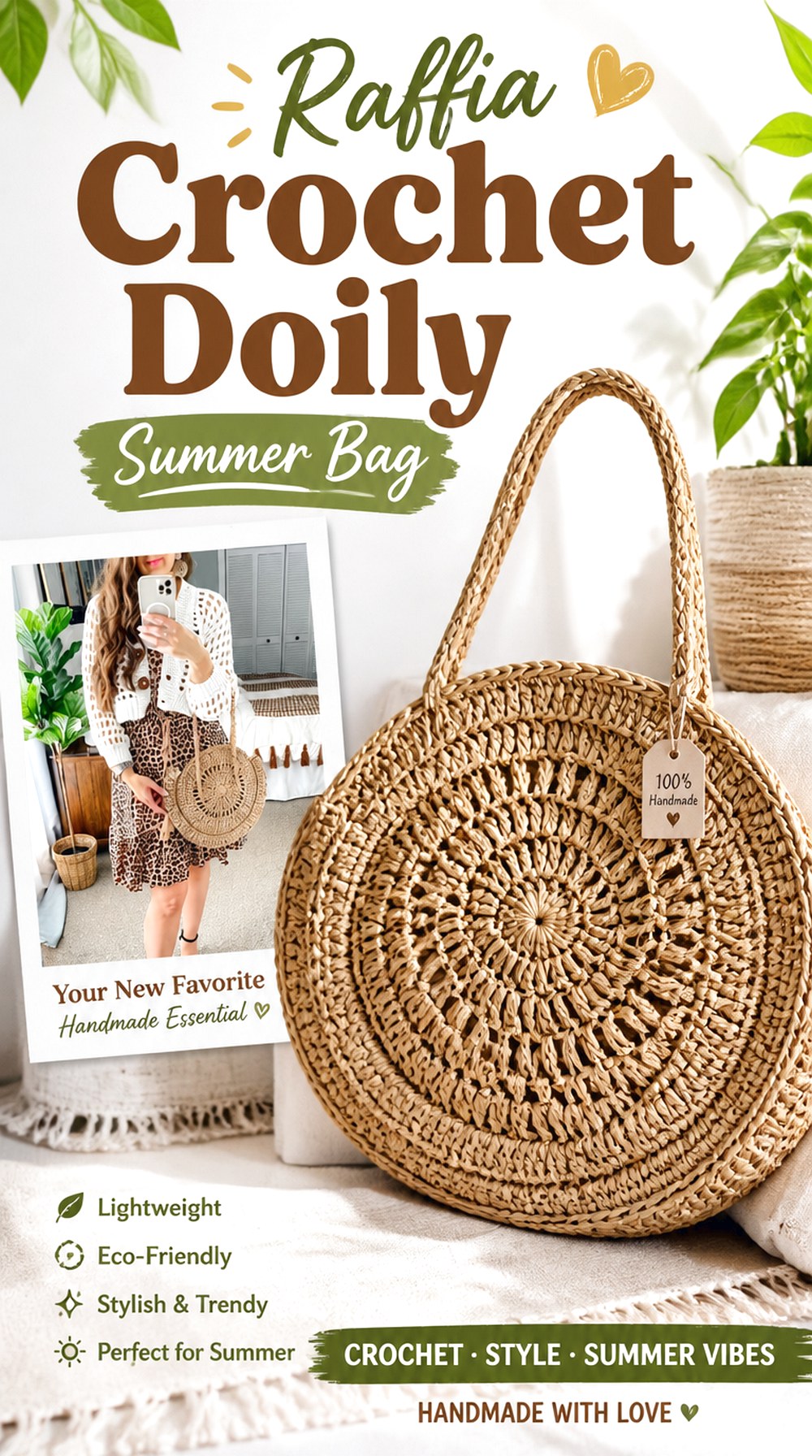
Raffia gives a round crochet bag a crisp, warm-weather character and can make radial stitch work look almost woven. MJ’s Off The Hook Designs’ Reel Deal Summer Bag uses raffia ribbon, two round pieces, a gusset, and a dedicated crochet strap technique, so it offers useful construction context for a structured doily-style summer bag.
This version works especially well with a relatively bold motif rather than extremely fine lace. The material itself provides texture, so the decorative circle can remain simple enough to preserve the bag’s shape. If substituting materials, remember that a softer yarn may not reproduce the same structural behavior.
A Gusset Gives the Decorative Circles Room to Function
Two circles joined directly produce a flatter purse. Adding a side section creates depth and means the front doily panel does not have to distort as much around the contents. If you adapt another round motif, compare its circumference with the planned gusset connection rather than focusing only on diameter. The join needs compatible edges around the portion that will actually be enclosed.
Raffia-Like Materials Reward Cleaner Motif Planning
A crisp material tends to make every expansion, join, and change in direction visible. That can be beautiful in a radial design but less forgiving of an uneven edge. Make your material choice before committing to a complicated doily motif and test a representative section if possible; a design that looks fluid in soft yarn may appear much more architectural in ribbon-like material.
Original Tutorial and Creator Credit
Creator: MJ’s Off The Hook Designs
Jasmine Stitch Crochet Round Handbag
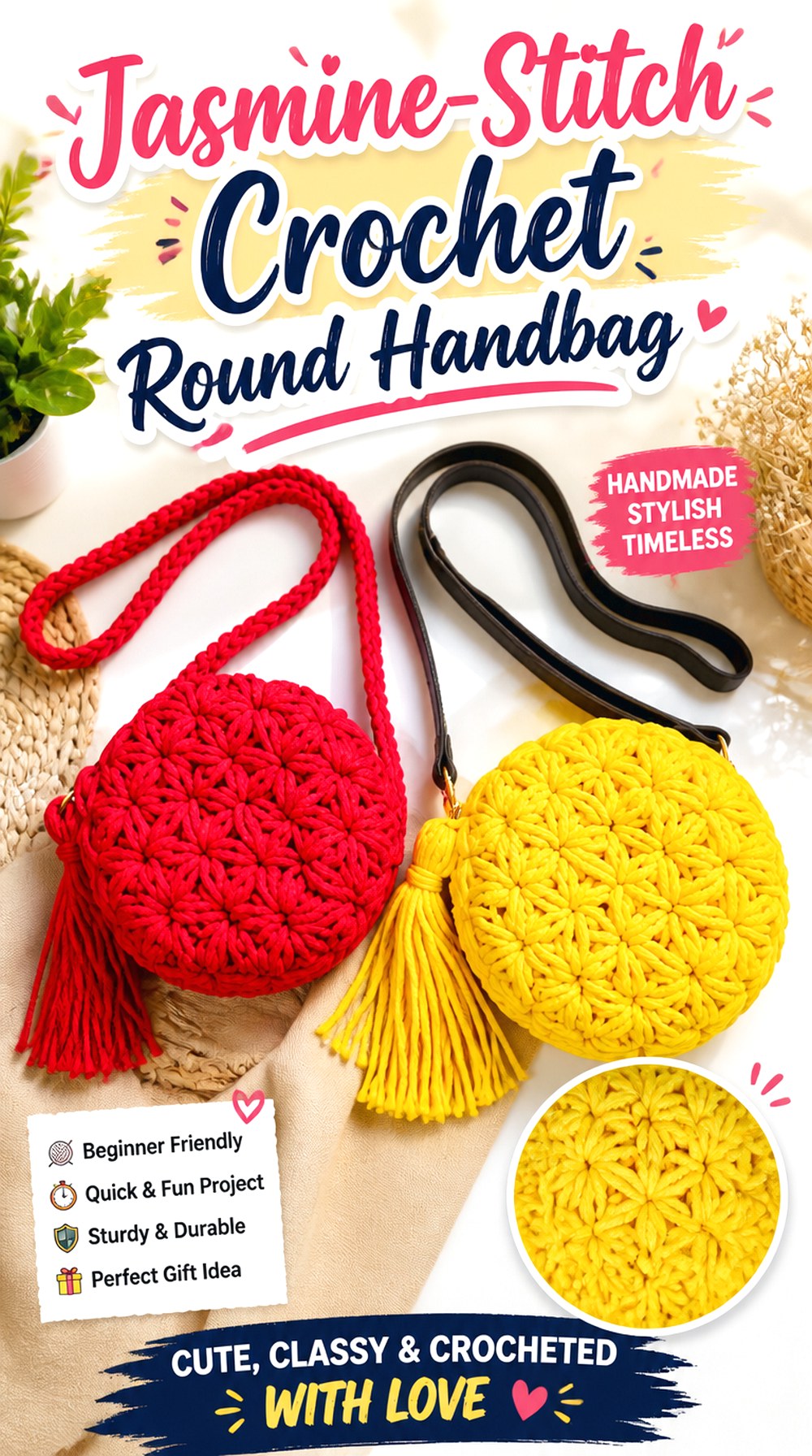
MirrymasCrafts’ round-bag tutorial uses Jasmine stitch and macramé cord, giving this idea a dense floral texture that resembles an oversized dimensional doily rather than traditional open lace.
The repeated starry surface makes the whole circle decorative, so this project does not need extra appliqués or elaborate color changes to stand out. It suits readers who want flower-like texture with stronger visual structure. Because a dimensional stitch changes thickness as well as appearance, compare the finished panel against your chosen handles and closure rather than selecting those components before you know how substantial the fabric will be.
Dense Florals Need Enough Edge Definition
When texture covers the entire panel, the perimeter can visually disappear into the stitch pattern. A clear outer edge helps the round silhouette remain readable and gives you a more controlled place for joining. If you adapt the concept using another flower-like stitch, consider whether the last decorative repeat produces a predictable circumference or an irregular scalloped edge.
Hardware Can Provide a Useful Visual Counterpoint
A richly textured circle already contains a lot of detail. Simple handles or an understated zipper can prevent the finishing components from competing with it. Before attaching anything, place the hardware against the completed panel and judge the balance at normal viewing distance. This is a design decision as much as a construction one.
Original Tutorial and Creator Credit
Creator: MirrymasCrafts
Transparent Panel Crochet Mandala Bag

Katy Handmade’s Mandala bag makes the decorative center unmistakable. The tutorial pairs a central crochet mandala with transparent inner panels, allowing the motif to stay open and visually light while the bag gains a contained interior.
That construction raises an interesting alternative to conventional fabric lining: instead of hiding the back of the lace, a transparent support layer can preserve the see-through appearance. It is one of the most literal doily-bag ideas in this collection and a strong choice when the motif itself is more important than a soft textile feel.
Transparent Support Preserves Negative Space
A normal opaque lining changes how lace is perceived because the lining color fills every opening. A transparent layer does something different: it can support the bag while leaving the mandala’s negative space visually legible. If exploring a similar approach, confirm that the support material is suitable for your intended construction and that its edges can be finished cleanly without becoming more noticeable than the crochet.
Make the Mandala the Front-Facing Priority
When a bag has one very elaborate centerpiece, orient closures and handles around that focal point instead of allowing hardware to determine the composition by accident. Assemble the components temporarily and view the bag upright. A small rotational change can determine whether the mandala reads as centered and deliberate or slightly off balance.
Avoid Overloading the Border With More Decoration
The mandala already supplies color, holes, and radial movement. An elaborate border, decorative handle, tassels, and contrasting hardware all at once can obscure its geometry. Choose one or two finishing features to support the centerpiece. A simpler perimeter also gives the transparent internal structure and the crochet panel a cleaner place to meet.
Original Tutorial and Creator Credit
Creator: Katy Handmade
Colorful Crochet Mandala Tote Bag
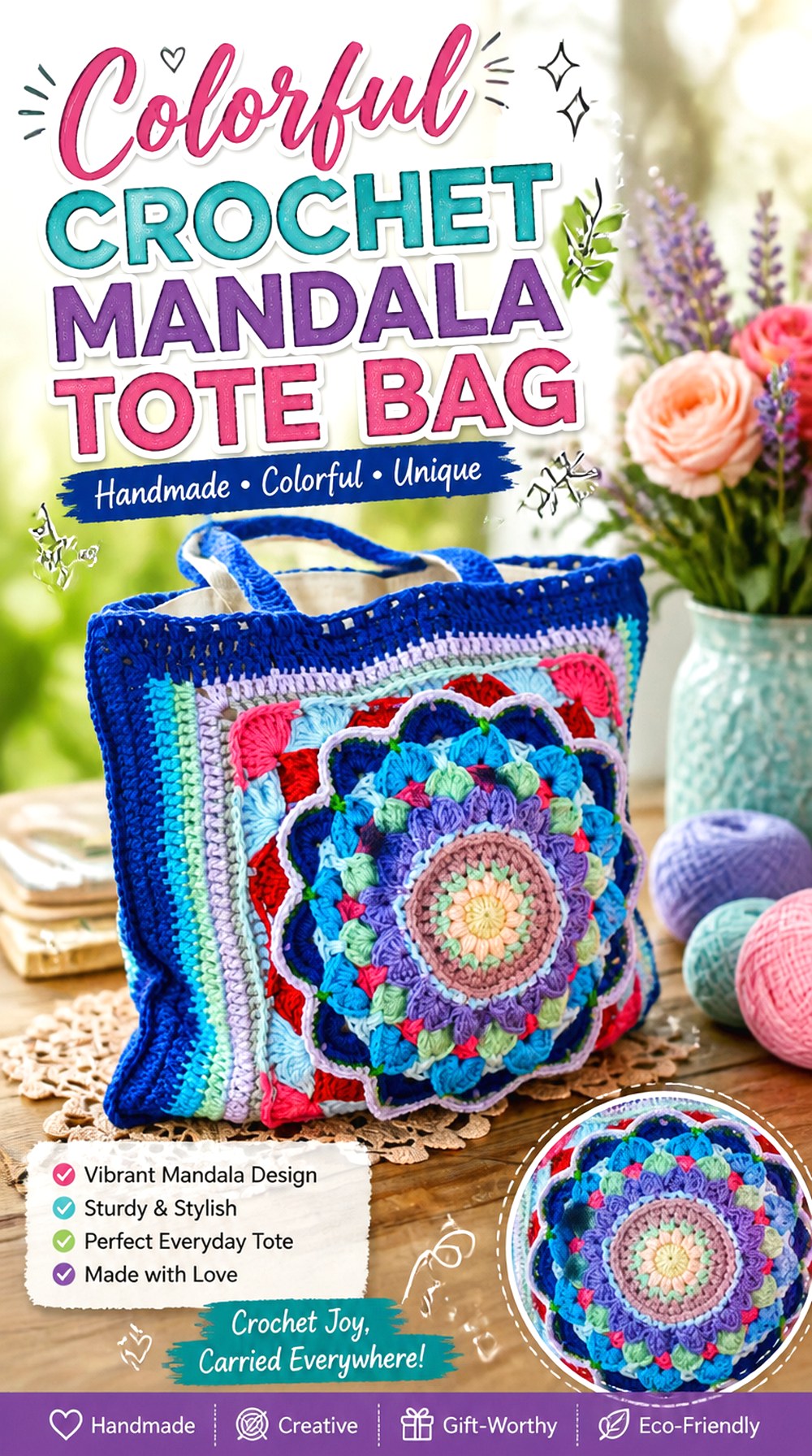
Hablemos de Magia Crochet offers another genuine mandala-bag direction, but its colorful presentation gives this project a more playful identity than the transparent-panel version above.
This is a good choice when you want the doily idea to feel lively rather than vintage. Radial color placement can highlight each expansion of the mandala and make the front panel easy to read from a distance. A multicolor project also offers a practical advantage for stash planning, but only combine yarns that behave compatibly enough for the panel to remain even after finishing.
Repeat Color Intentionally Around the Center
Random color can be charming, but a mandala becomes easier to read when color supports its radial structure. Consider repeating a limited palette or reserving the strongest contrast for important motif transitions. Photograph the panel in progress and view it small on a screen; if one round overwhelms everything around it, you can reconsider the balance before the bag is assembled.
Keep Companion Pieces Quieter
When the mandala front carries several colors, the strap, back, or side section does not need equal complexity. Repeating one color from the motif can make those pieces feel connected while allowing the decorative face to stay dominant. This also reduces the risk of multiple stitch patterns and color changes competing in a relatively small accessory.
Original Tutorial and Creator Credit
Creator: Hablemos de Magia Crochet
Shell Lace Crochet Shoulder Bag
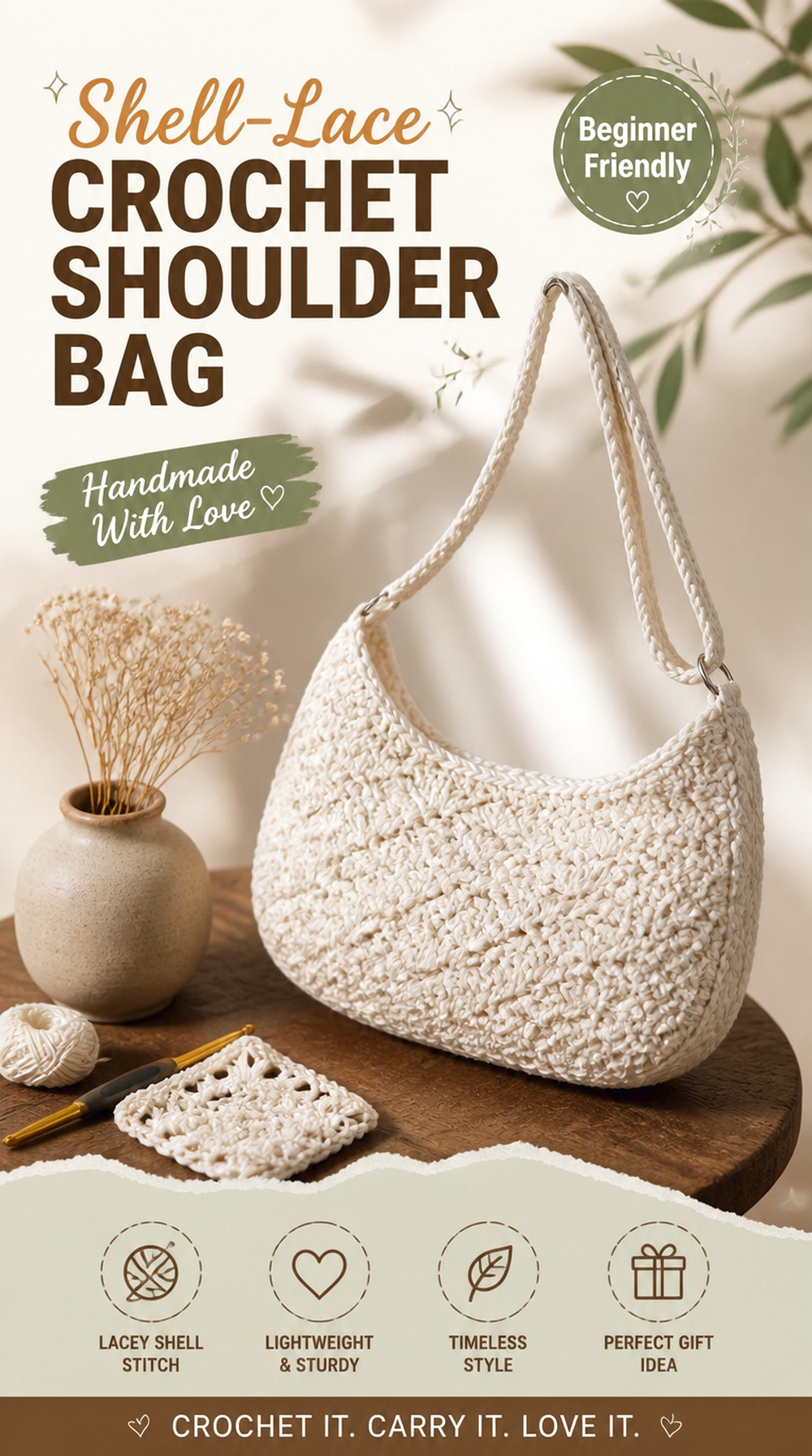
Shell stitches naturally create the fan-shaped repetition associated with many crochet doilies. Anna crochet’s shell-bag tutorial provides a bag-specific reference for turning that decorative vocabulary into a wearable accessory rather than a flat household motif.
This option is less dependent on a perfect circle, so it suits readers who like the delicacy of doilies but prefer a conventional shoulder-bag silhouette. Shell density can vary considerably, which gives you room to choose between a more open decorative fabric and a closely packed surface with only modest gaps.
Let the Shells Establish a Consistent Vertical Rhythm
On a noncircular bag, the eye follows repeated shells across rows or sections rather than outward from a center. Pay attention to how the final repeats land at the side edges and opening. Uneven partial motifs can make a symmetrical bag look accidental, especially if a contrasting lining shows clearly through the openwork.
A Lining Can Become Part of the Color Design
Shell openings reveal whatever sits behind them. An opaque lining close to the yarn color makes the texture subtler, while a contrasting lining emphasizes every opening. Decide which effect you want before choosing fabric. This is more than an interior finishing choice: on an open shell bag, the lining can significantly change the exterior appearance.
Original Tutorial and Creator Credit
Creator: anna crochet
Flower Motif Crochet Patchwork Tote
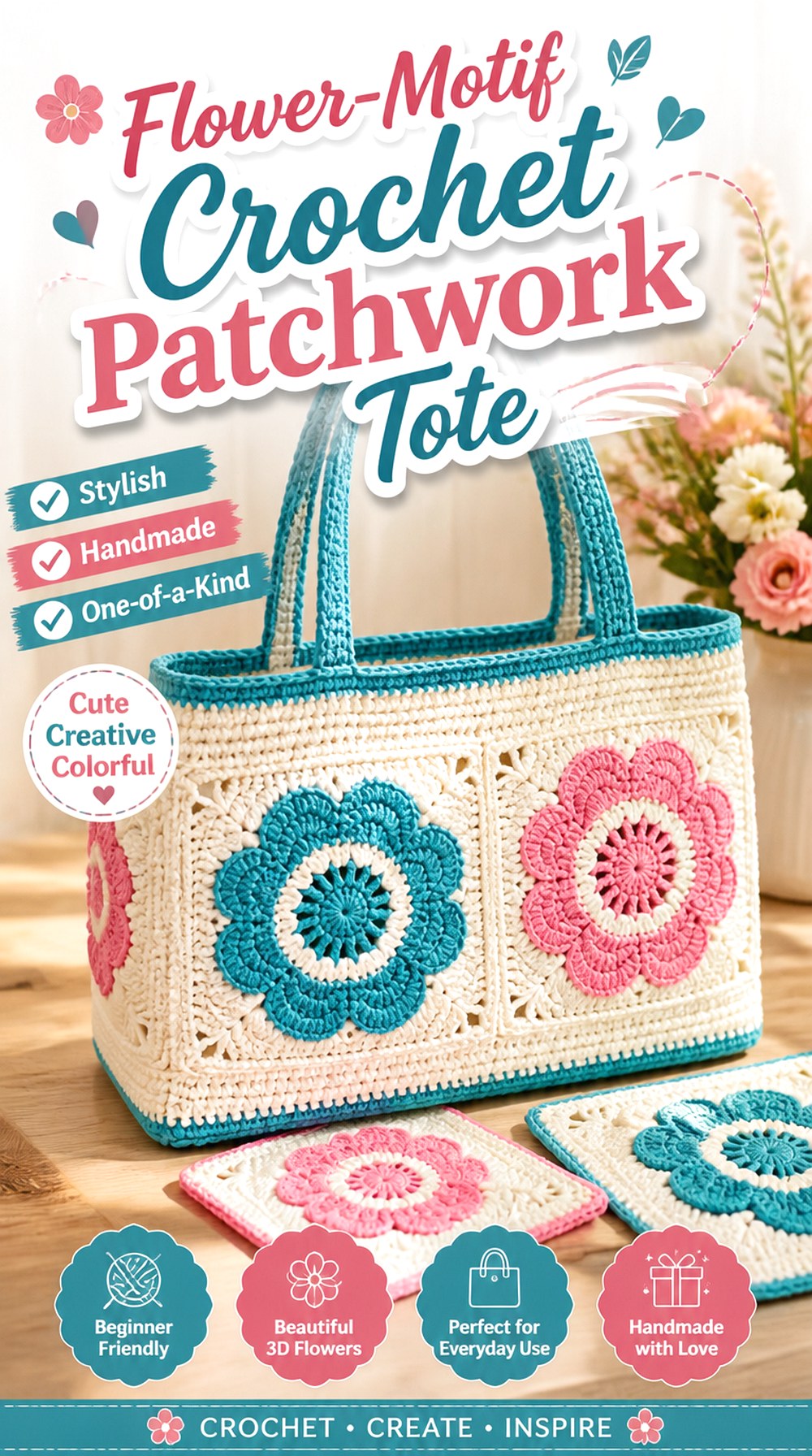
Individual flower motifs create a doily-like surface through repetition rather than one large radial panel. The flower-motif bag from ニコ編み Smiley Crochet is a useful reference for this modular approach.
A motif tote gives you more control over placement than a single circle: flowers can cover the entire body, form a panel, or be restricted to one statement area. The trade-off is that consistency matters across many pieces. Before joining, compare the blocked dimensions and edge behavior of every motif that needs to fit the same grid.
Sort Motifs by Actual Size Before Joining
Even motifs made from the same instructions can finish slightly differently because of tension or yarn behavior. Lay the blocked pieces together and identify any obvious outliers before assembly. Correcting a single motif is much easier than asking the finished tote to absorb several mismatched squares through stretched joins.
Use the Join as Part of the Patchwork Design
Joining does not have to disappear. A contrasting or visually defined join can frame each flower and make the patchwork structure clearer, while a quieter join lets the motifs blend into one larger lace field. Choose deliberately; changing join appearance midway through a large grid can make the bag seem divided into unrelated sections.
Original Tutorial and Creator Credit
Creator: ニコ編み Smiley Crochet
Floral Granny Motif Crochet Tote Bag

Dani Suni’s flower-motif granny-square tote gives the doily concept a more geometric frame. Each floral center is contained within a square, producing a tidy grid instead of an uninterrupted field of lace.
This style is particularly adaptable because the square edges make panel planning straightforward. It also creates a useful contrast with round mandala bags: the flowers provide decorative softness while the overall tote remains rectangular. If you plan to substitute another floral granny design, the most important compatibility check is the finished blocked square size and edge stitch distribution.
Square Borders Can Stabilize Elaborate Flowers
A dimensional or open flower center may be difficult to join directly to another flower. Squaring the motif creates a more predictable perimeter and can reduce distortion at the seams. If your chosen floral center is unusually raised, lay several finished squares together before committing to a full tote and make sure the surface does not become too bulky where corners meet.
Plan Which Motifs Land at the Top Edge
The opening cuts across one of the most visible rows of a tote. Decide whether you want full flowers right beneath that edge or a quieter upper band for handles and closure. A decorative motif can lose impact if handle attachments cover its center, so mapping the top row before assembly can protect the strongest parts of the design.
Original Tutorial and Creator Credit
Creator: Dani Suni
Join As You Go Crochet Flower Bag
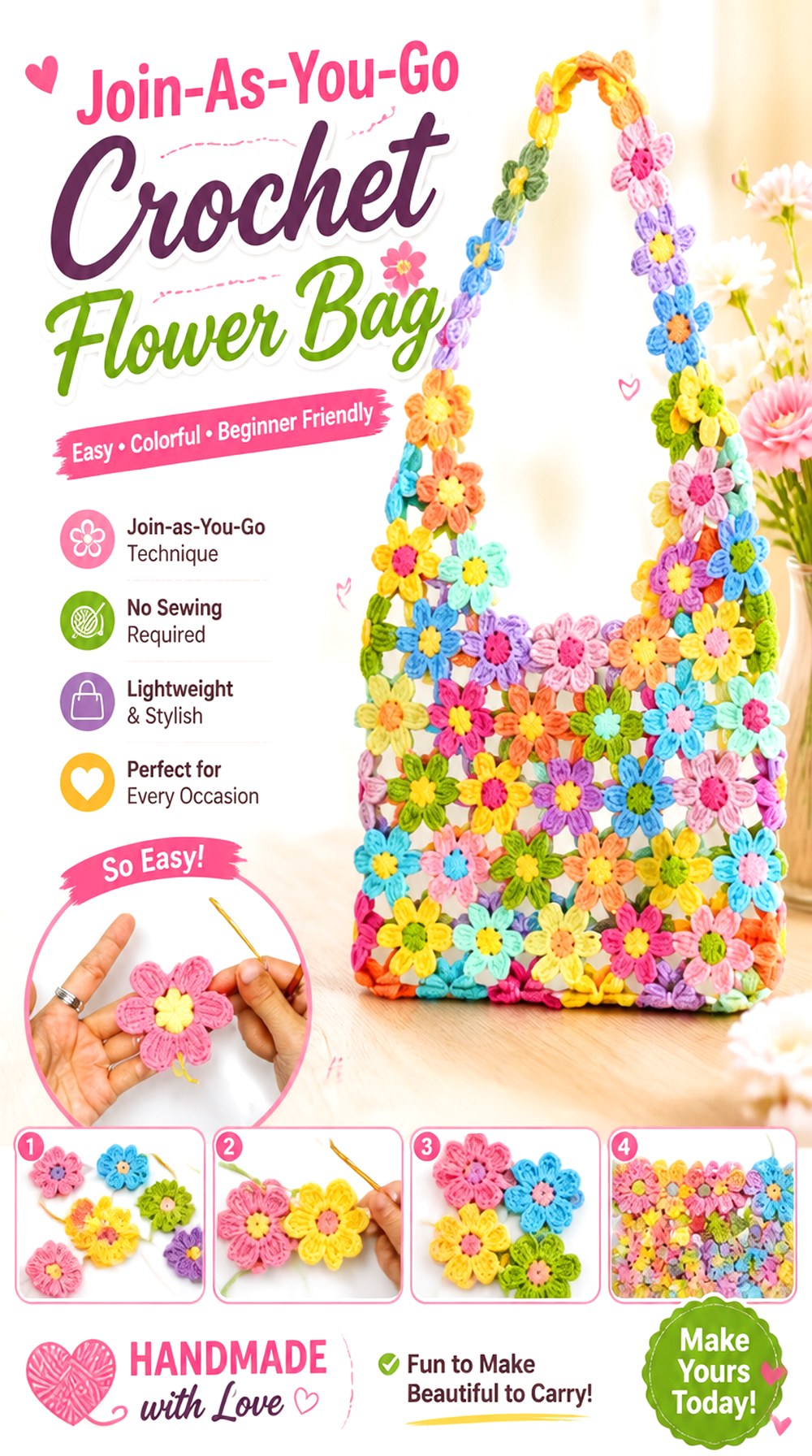
The Crochet Channel’s flower-bag tutorial specifically emphasizes joining as you go, giving this idea a different workflow from making an entire stack of motifs before assembly.
For a doily-style bag, that approach can make the joining lines feel integrated with the motif field instead of added afterward. It is particularly useful if you enjoy continuous visual progress and want to see the bag shape develop while motifs are being added. The important planning requirement is layout: because motifs become connected sooner, changing their positions later is less convenient.
Finalize the Color Map Before Joining Early
When motifs are connected during construction, spontaneous rearrangement becomes more limited. Lay out the intended color sequence first or make a simple placement sketch. This matters most when a few high-contrast flowers are intended as accents; accidentally clustering them can make one side of the bag look visually heavier than the other.
Watch Junctions Where Several Flowers Meet
The spaces where multiple motifs connect determine whether the finished fabric lies smoothly. Compare those junctions as the panel grows. If one motif consistently pulls its neighbors inward, investigate the size or joining tension early rather than assuming the final border will flatten everything later.
Original Tutorial and Creator Credit
Creator: The Crochet Channel
Flower Appliqué Crochet Shoulder Bag
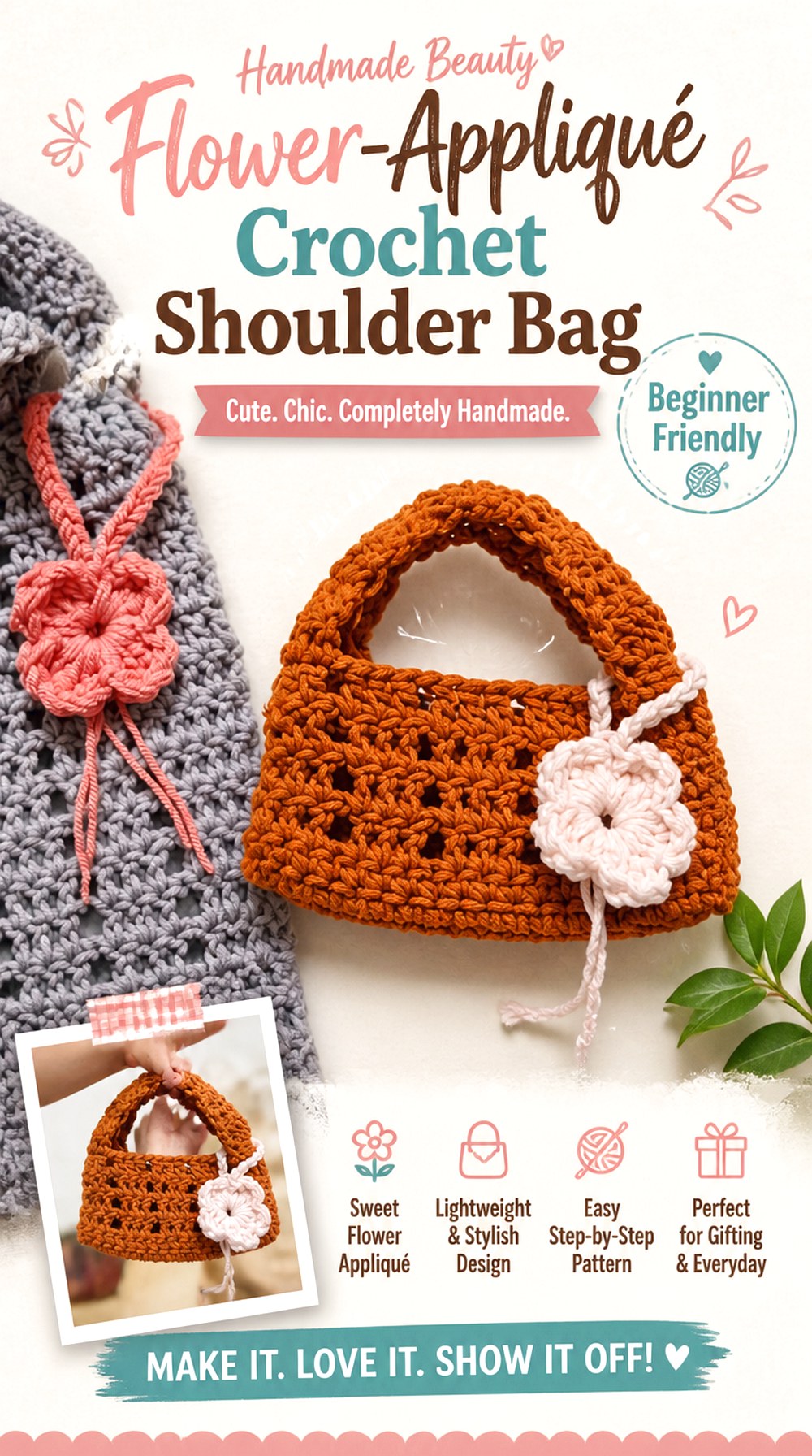
SandraStitches Crochet takes a different route: the floral detail is applied to the bag rather than defining the entire structural fabric. The tutorial is explicitly a crochet bag with flower appliqué, making it a helpful idea for readers who want the look of a decorative doily element without committing to an all-over lace body.
An appliqué can also be easier to position strategically. A single medallion, partial doily, or flower cluster can sit on the front while the back and opening remain comparatively dense. That separation between decoration and structure offers useful freedom when lining or stretch is a concern.
Position the Flower After the Bag Has Its Final Shape
A motif that looks centered on a flat panel may shift visually once the bag gains depth and hangs from a strap. Pin or temporarily secure the appliqué after the body is assembled, then view the bag upright. This lets you compensate for side curvature and ensures the flower appears centered in use, not merely when the panel lies flat.
Secure Decorative Edges for Real Bag Use
Raised petals and open loops are more exposed on a bag than on wall decor. Consider where the accessory will rub against clothing, furniture, or other objects. If your appliqué has long unsupported points, decide whether additional discreet attachment is appropriate while preserving the dimensional look.
Original Tutorial and Creator Credit
Creator: SandraStitches Crochet
Acorn Lace Crochet Market Bag
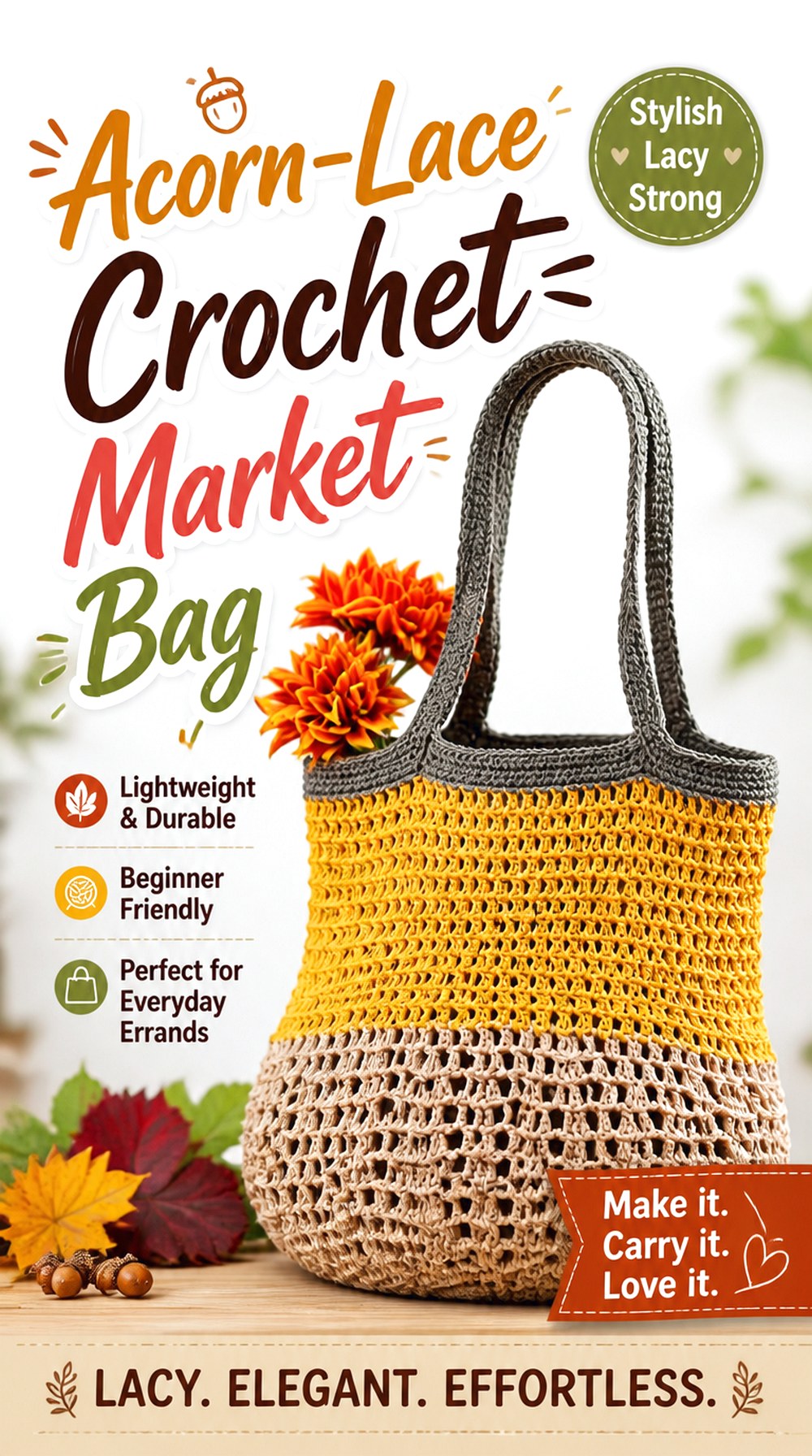
HandmadebyRaine’s Acorn Market Bag introduces a nature-inspired lace pattern into an expandable market-bag format.
This option is useful if the word “doily” makes you think of repeating ornamental lace rather than circular shape. A market bag can accommodate a much larger field of openwork, and the changing silhouette when filled becomes part of the design. That same expansion, however, means the empty bag is not a reliable guide to its loaded proportions. Pay attention to how the fabric stretches vertically and laterally before deciding on handle length or decorative border placement.
Let the Lace Repeat Expand Without Losing the Top Edge
The center of a market bag can be flexible while the opening remains more controlled. A stable upper band gives the handles a firmer place to attach and visually contains the decorative repeat. If adapting another doily-inspired lace, consider stopping the open motif before the top rather than carrying large spaces directly into the handle area.
Expect the Motif to Look Different When Filled
Open lace often appears compact when empty and much more legible once stretched around contents. Judge the design in both states. If the motif becomes excessively elongated, a different fiber, denser repeat, or smaller amount of openwork may better match your intended use.
Original Tutorial and Creator Credit
Creator: HandmadebyRaine
Striped Lace Crochet Market Tote
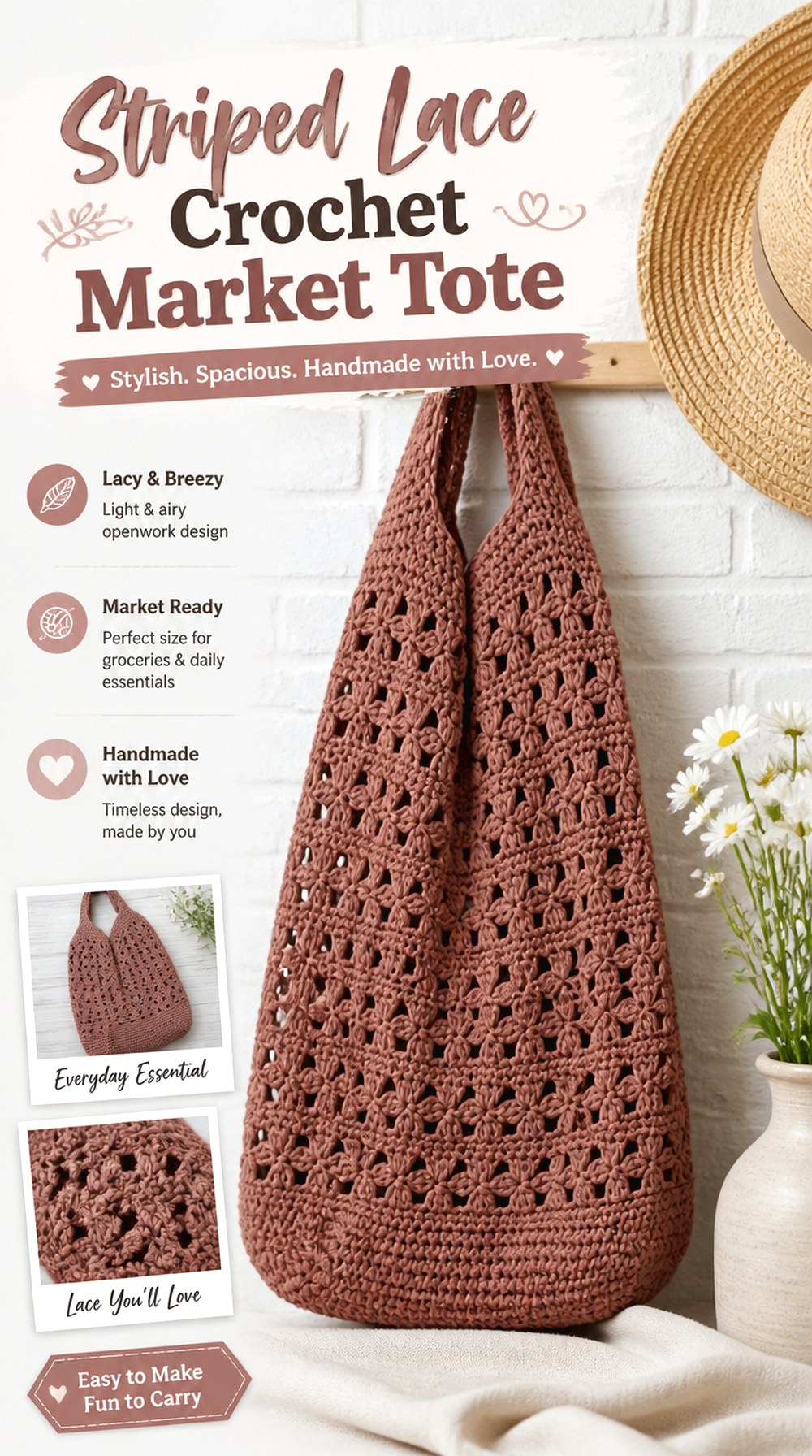
Rich Textures Crochet’s Lucky Stripes Market Bag combines lacy sections with solid single-crochet rounds for stability, making it especially relevant to the central design problem of a doily bag: how much openness is useful before structure suffers.
The striped organization also makes the lace easier to control visually. Rather than one uninterrupted mesh field, the bag can alternate decorative and structural areas. This is a strong direction for readers who want a delicate appearance but are hesitant about an extremely stretchy net bag.
Alternate Solid and Open Sections for Different Jobs
A solid band can do more than provide visual contrast. Place denser fabric where the bag needs a reliable edge or where contents are more likely to press against the crochet. Keep the most open lace where drape and expansion are desirable. Thinking in functional zones produces a more purposeful bag than scattering solid rows purely for decoration.
Use Stripes to Control Visual Stretch
When a market bag lengthens, horizontal bands provide visual reference points. If the spaces between them become dramatically taller when the bag is loaded, that tells you something about the fabric’s stretch behavior. Use that observation when deciding whether you want a shorter handle, a denser body, or a lining for a future variation.
Preserve a Stable Handle Transition
The point where open lace becomes a handle is a common weak-looking area in expandable bags. Even without making any unsupported capacity claim, you can evaluate whether the fabric around the handle base feels substantially more open than the rest of the top. A controlled transition can help keep the decorative body from pulling into narrow peaks.
Original Tutorial and Creator Credit
Creator: Rich Textures Crochet
Lightweight Crochet Lace Market Bag
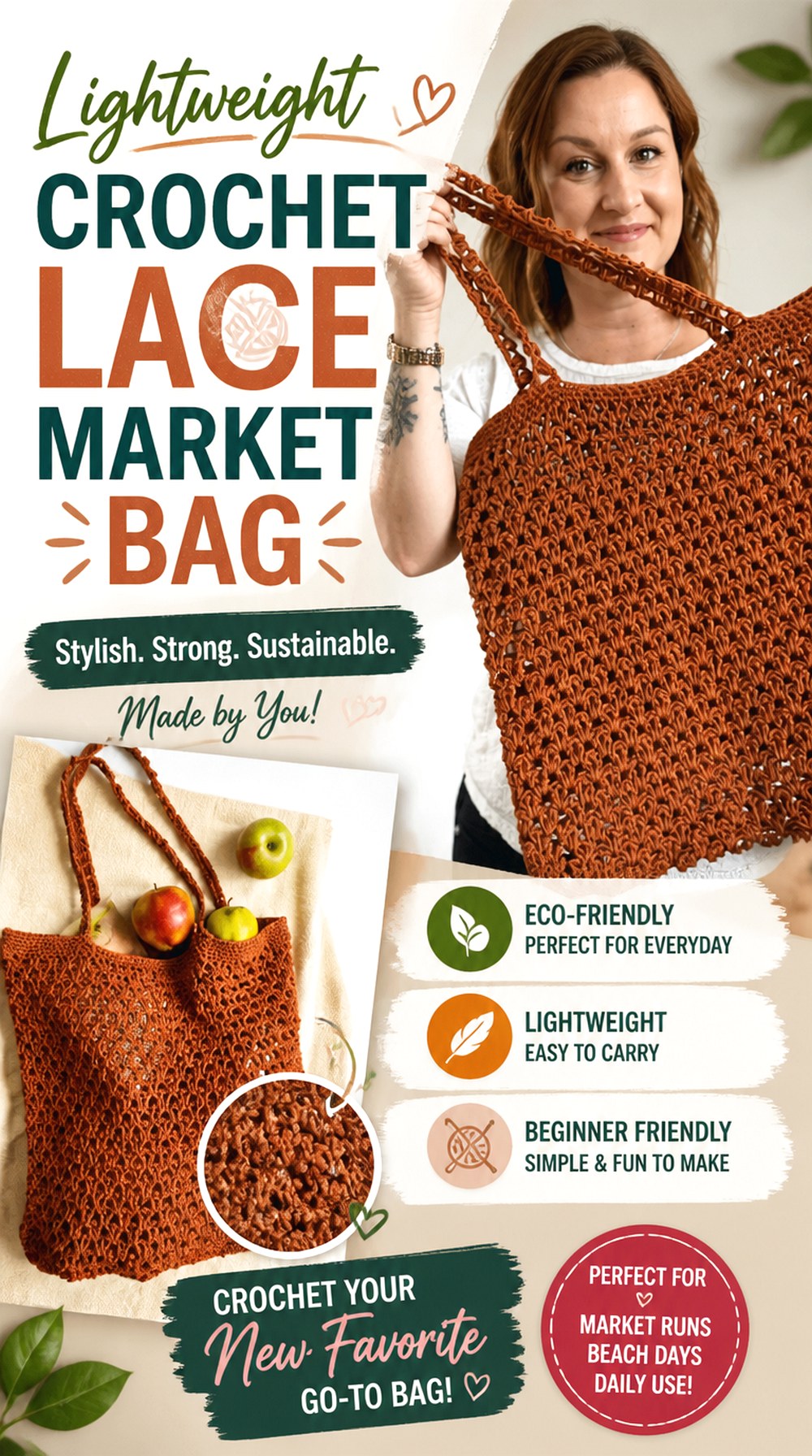
Blue Star Crochet | Veronika Cromwell provides a dedicated lace market-bag tutorial, making this one of the clearest choices for readers who want a doily-like fabric without a separate circular motif.
The overall appeal comes from lightness and visible negative space. That also means your decisions about what the bag will carry matter more than with a densely stitched purse. If you intend to add a lining, remember that doing so changes the character significantly: the bag will no longer expand or reveal the open pattern in quite the same way.
Keep the Lace Consistent Across the Widest Area
Repeated openwork is most noticeable through the main body of the bag. Watch for unplanned changes in tension that make one section visibly tighter. Unlike dense fabric, large lace openings create strong geometric lines, so a few distorted repeats can draw attention even when the overall dimensions remain usable.
Decide Whether You Want Expansion or Containment
An unlined market bag can exploit the elasticity of open crochet, while lining favors a more fixed interior shape. Neither choice is universally better. Select based on the intended role, then choose the decorative lace density around that decision rather than adding lining as an afterthought solely because the holes appear large.
Original Tutorial and Creator Credit
Creator: Blue Star Crochet | Veronika Cromwell
Pretty Stitch Crochet Beach Market Bag
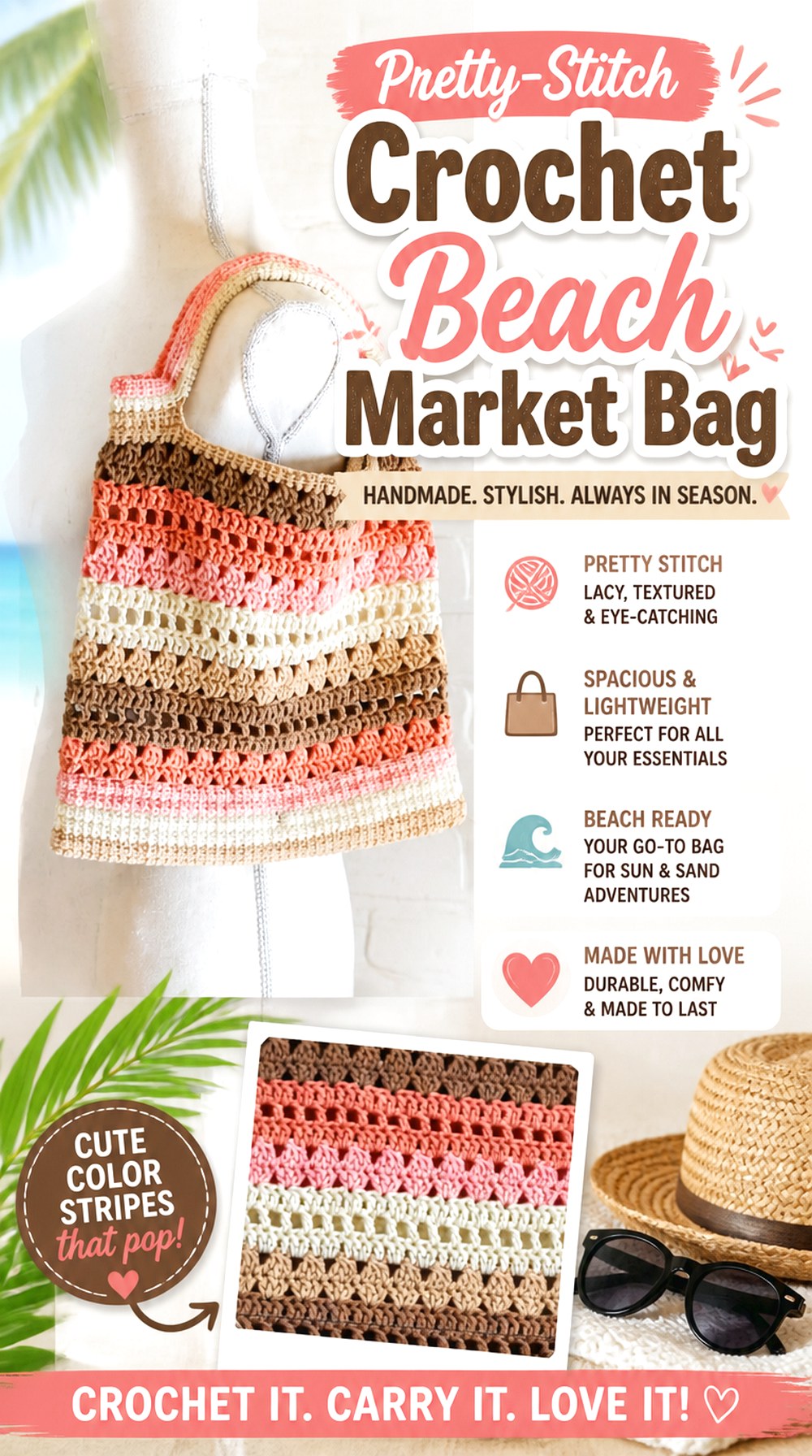
Winding Road Crochet’s market and beach bag uses a decorative stitch design in a roomy tote format.
This is a useful doily-bag direction when your priority is a larger casual carry shape rather than a compact purse. Decorative open stitches have more room to repeat across a broad body, and the result can feel airy without depending on a circular front panel. A beach-oriented silhouette also invites a wider opening, so it is worth considering how much privacy or containment you actually need before choosing between completely open construction and an added interior solution.
A Broader Bag Shows Stitch Repetition Clearly
Large uninterrupted panels make inconsistencies easier to see. Before committing to a complex doily-like stitch across the full body, make enough fabric to judge the repeat in width as well as height. Some lace patterns look balanced in a small swatch but develop strong diagonal movement or unexpected stretching when repeated over a larger area.
Keep the Opening Appropriate to the Bag’s Role
An open beach-style tote benefits from fast access, while an everyday shoulder bag may need more containment. If adapting this silhouette, treat closure as a functional choice rather than a decorative afterthought. A button loop, zipper, lining, or unchanged open top will each alter how the upper edge behaves and how much of the lace remains visible.
Original Tutorial and Creator Credit
Creator: Winding Road Crochet
Bookshop Style Crochet Openwork Tote
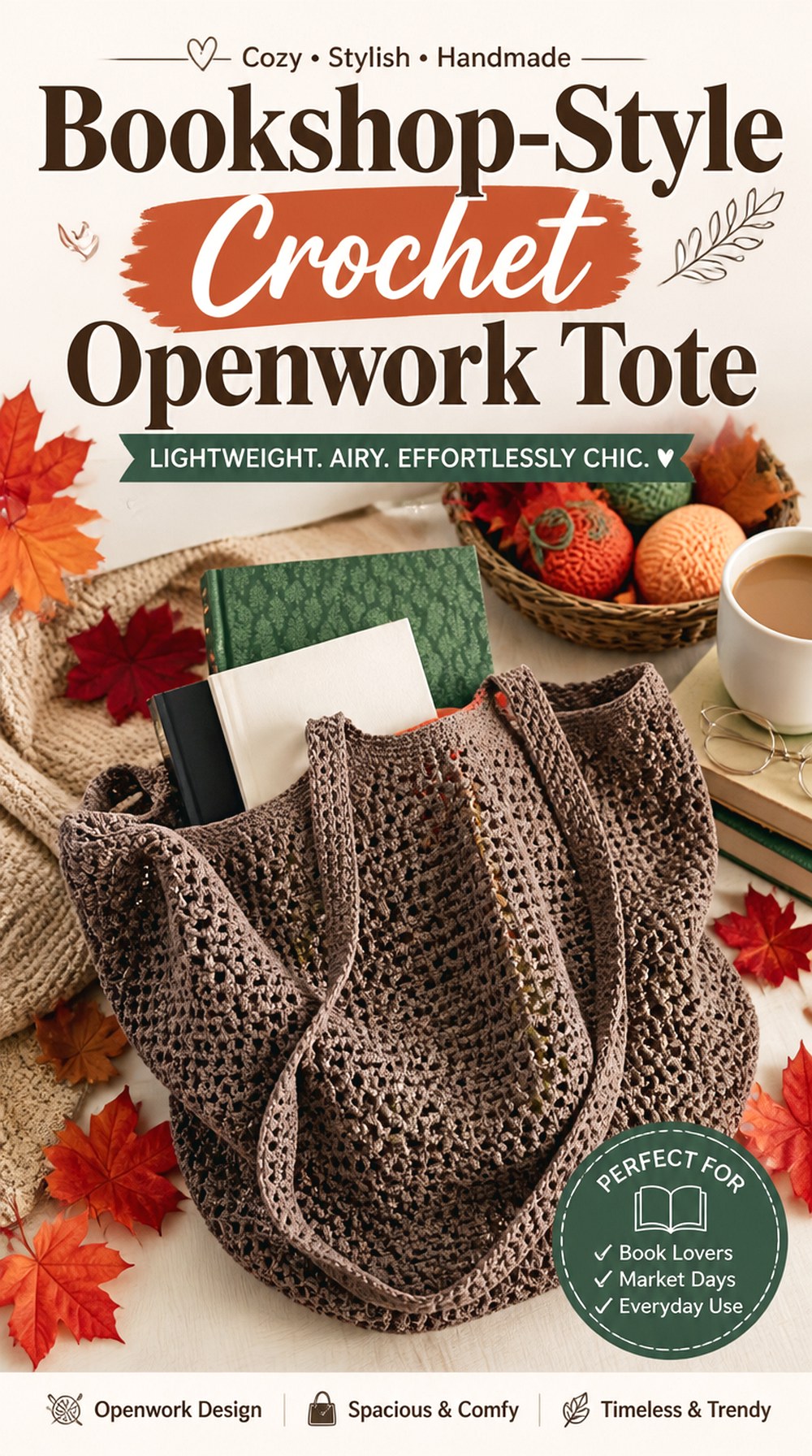
Just Be Crafty’s market-bag tutorial provides a classic openwork tote reference that can be interpreted with a more refined doily-inspired stitch palette.
This direction is for readers who want a bag that feels casual and useful first, decorative second. The open body can echo traditional lace while a simpler base and handles keep the design grounded. Because book-shaped and other angular contents can push against mesh differently from rounded groceries, consider your actual intended use rather than assuming every market-bag construction behaves identically with every load.
Protect the Base From Excessive Openness
The bottom determines how the rest of the tote hangs. A relatively stable base can prevent small items from forcing their way into large holes and can give the expanding lace above it a cleaner foundation. When substituting a more decorative stitch, consider starting the strongest openwork after the base rather than making every part of the bag equally transparent.
Long Contents Can Change the Tote’s Silhouette
A tall rectangular item stretches mesh in a different pattern from several small soft items. Place representative objects inside a sample or existing mesh bag to understand the shape you prefer. That can inform whether the doily-like openings should be large and flexible or smaller and more controlled.
Original Tutorial and Creator Credit
Creator: Just Be Crafty
Wide Mouth Crochet Market Mesh Bag

The Crochet Crowd’s market-bag tutorial gives this idea a straightforward mesh foundation and a generous tote-style opening.
A wide mouth is practical for loading the bag, but visually it also creates a strong upper boundary that can frame doily-like mesh below. This style is less purse-like than the circular options and more focused on expansion. If you prefer a decorative motif near the opening, make sure it does not narrow the usable top unintentionally; the broad access is one of the shape’s defining advantages.
Maintain the Width You Chose at the Opening
Decorative edging can pull inward if its tension is tighter than the body. Measure or simply compare the opening before and after any adapted border. If the bag suddenly puckers, the border may be fighting the intended silhouette. A pretty finish is not useful if it makes the bag noticeably harder to open.
Mesh Makes Handle Placement Part of the Shape
Handles attached too narrowly can pull a broad opening into a sharp central peak. Before finalizing them, lift the empty bag from temporary points and see how the upper edge responds. Moving the attachments outward or supporting a larger section of the edge may preserve a more balanced shape.
Original Tutorial and Creator Credit
Creator: The Crochet Crowd
Reusable Crochet Net Market Bag

Stephanie Zed’s market bag emphasizes a reusable, washable format in its tutorial title and presentation, providing another practical route for open crochet.
For doily-bag inspiration, think of this as the most stripped-back interpretation: the negative space itself becomes the decoration. Instead of a flower or mandala dominating the surface, the repeated net creates pattern through rhythm. Fiber care should still be confirmed for the actual yarn you choose; a tutorial’s project concept does not make every substitute yarn equally suitable for the same care routine.
Netting Prioritizes Flexibility Over a Fixed Outline
If you want a crisp rectangular tote, very open net fabric may frustrate you because it changes shape readily. If you like a bag that folds down and expands, that behavior can be an advantage. Decide which quality matters first, then use border and handle choices to add only as much structure as you need.
Fiber Care Matters More on Frequently Used Bags
A reusable market bag may encounter more dirt and abrasion than a special-occasion purse. Check the care instructions for your chosen yarn instead of assuming any cotton-looking or synthetic-looking fiber can be washed the same way. If you add lining, hardware, or decorative trim, those components also need to be compatible with the care method you intend to use.
Original Tutorial and Creator Credit
Creator: Stephanie Zed
Granny Bottom Crochet Doily Tote
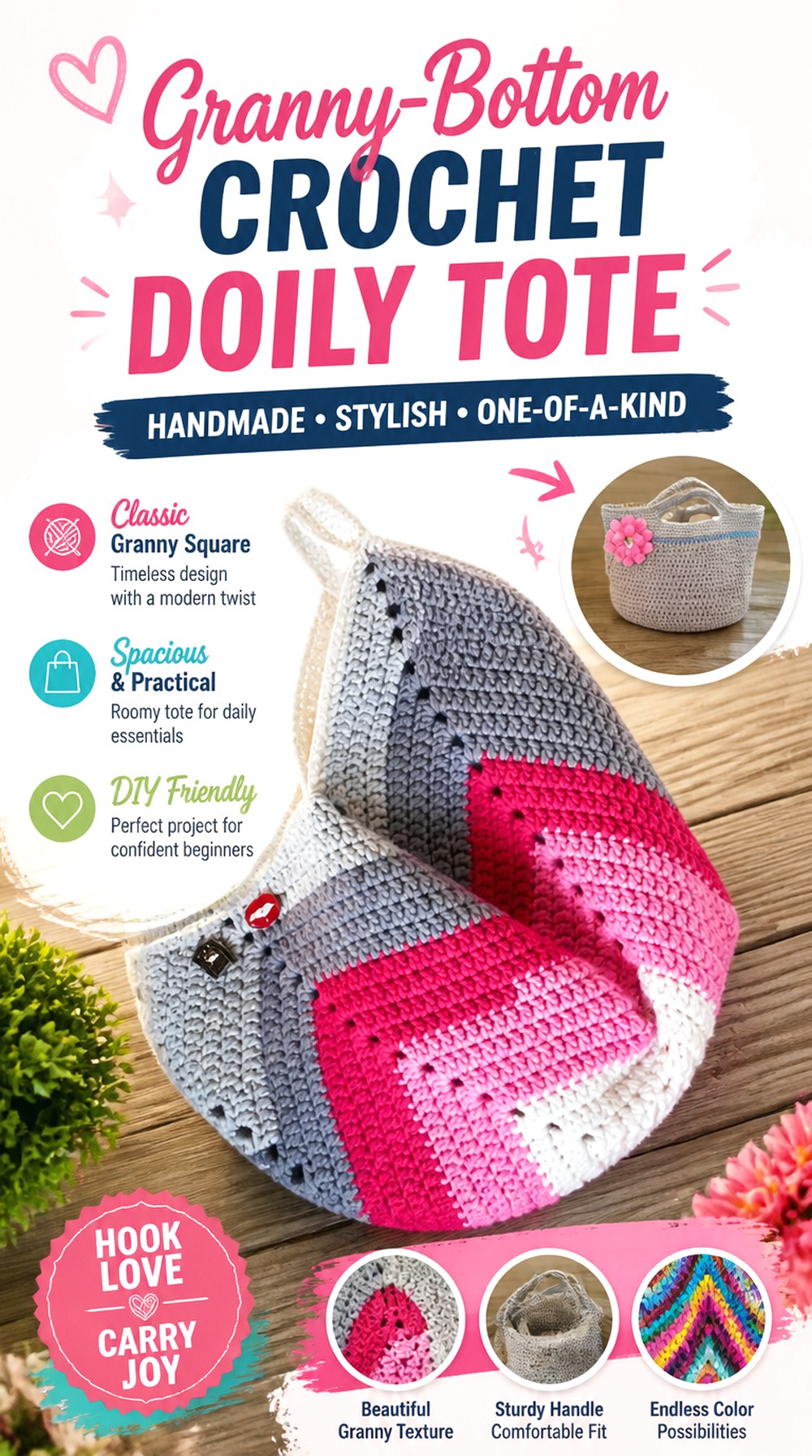
Crochet with Clare’s granny-square-bottom bag changes the usual motif placement by concentrating recognizable granny geometry at the base of the construction.
For a doily-inspired adaptation, that suggests an interesting design strategy: let a decorative square, floral motif, or lace medallion influence the bottom, then transition into a simpler bag body. It is a strong alternative when you love motif crochet but do not want dozens of separate pieces. The base must still behave as a functional foundation, so extremely delicate lace may need to be reserved for visible upper areas instead.
The Bottom Motif Determines How the Bag Opens Out
A square-based structure distributes width differently from a circular or oval base. If substituting a more decorative motif, examine its blocked shape closely. Rounded corners or deeply scalloped edges may not transition cleanly into the intended body. A visually similar motif is not automatically structurally interchangeable.
Keep the Most Fragile Lace Away From High-Abrasion Areas
The underside of a tote encounters more contact than a decorative front panel. If your chosen doily motif contains long loops, raised petals, or delicate open arches, consider whether it truly belongs at the base. You can preserve the concept by using a denser related motif below and repeating the more delicate detail higher on the bag.
Original Tutorial and Creator Credit
Creator: Crochet with Clare
Structured Single Crochet Market Tote
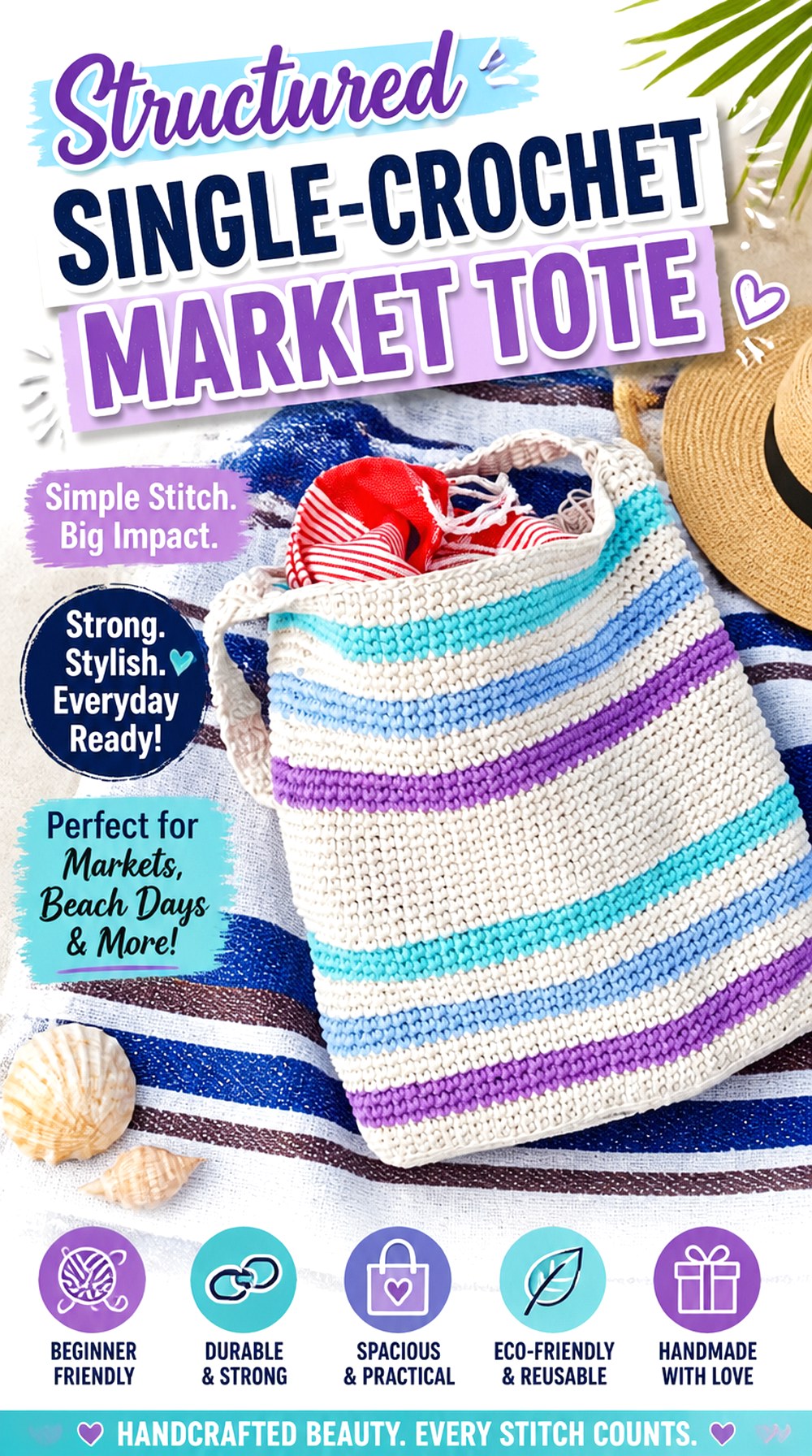
Sigoni Macaroni’s single-crochet tote offers an intentionally denser counterpoint to the lace-heavy ideas above.
Why include it in a doily-bag collection? Because it provides a useful structural framework for anyone who wants to apply a separate crochet doily, medallion, or lace panel to a stable tote body. Instead of asking the decorative motif to perform every functional job, the dense bag carries the structure while the doily becomes surface design. This separation is particularly useful when your favorite vintage-style motif has large openings or an irregular edge.
Treat the Doily as a Panel Rather Than the Bag Wall
A dense tote lets you attach a decorative medallion without exposing the contents through the motif. Center it after the bag body has reached its finished shape, then secure it in enough places to prevent sagging or curling. Avoid stretching a round motif into a square-looking space simply to make it fill more of the panel.
A Stable Body Lets You Use More Delicate Decoration
Because the underlying fabric handles the shape, the applied motif can prioritize visual detail. That does not mean every delicate thread doily is appropriate for heavy wear, but it does give you more options than asking open lace to support the entire bag. Consider abrasion and cleaning before attaching an especially fine or sentimental piece.
Original Tutorial and Creator Credit
Creator: Sigoni Macaroni
Three Square Crochet Motif Shoulder Bag

VivCrochets’ tutorial shows a granny-square shoulder bag that can be made at different sizes, making it a useful modular framework for doily-like square motifs.
Rather than covering a large tote with many small motifs, this idea uses a limited number of larger statement squares. That gives each floral or lace center more room to be seen and reduces visual repetition. It can also simplify color planning because each panel carries more importance. If replacing the tutorial’s squares, blocked size and corner shape are the key compatibility checks.
Larger Motifs Make Small Size Differences More Obvious
When only a few squares form the bag, each seam has a major effect on the silhouette. Compare the blocked pieces side by side before assembly. If one is noticeably larger, the finished shoulder bag can twist or develop an uneven opening because there are fewer neighboring motifs available to distribute the difference.
Orient Every Statement Center Before Seaming
A floral square may have a clear visual top even when its outer border is technically symmetrical. Lay all pieces in their eventual orientation and check petals, color changes, or directional details before joining. A rotated motif is particularly noticeable when only three or four large squares dominate the bag.
Scale the Strap After the Bag Body Is Real
Because motif size can change the overall bag dimensions, deciding on strap proportion too early can lead to an awkward result. Assemble or at least lay out the body first, then judge whether you want a close shoulder carry or a longer strap. This is safer than assuming the same strap proportions will suit every enlarged or reduced motif.
Original Tutorial and Creator Credit
Creator: VivCrochets
Sunburst Crochet Festival Crossbody Bag

Day’s Crochet uses sunburst granny squares in a festival-style bag that can be carried in several hands-free ways. The tutorial also discusses lining, which is particularly relevant for an open floral motif.
Sunburst squares fit the doily theme naturally because their centers radiate outward like miniature medallions. Compared with a large market tote, the smaller festival format lets the motifs read as jewelry-like decoration. It is a good option when you want a bright statement bag without a large amount of crochet hanging from the shoulder.
Sunburst Centers Need Visual Balance Across the Front
High-contrast centers attract the eye immediately. If several motifs are used, decide whether every center will match or whether colors will alternate deliberately. Random variation can work, but check the complete panel before joining; one unusually dark or bright center can unintentionally dominate a compact crossbody.
Lining Helps Separate Decoration From Containment
A lining is especially relevant when sunburst or granny motifs leave noticeable spaces. Beyond keeping smaller contents behind the crochet, it also provides a background color for the design. Pin a few fabric options behind the finished motifs first—the same crochet can look dramatically different against a light, dark, or closely matching lining.
Original Tutorial and Creator Credit
Creator: Day’s Crochet
Retro Granny Square Crochet Cross Bag
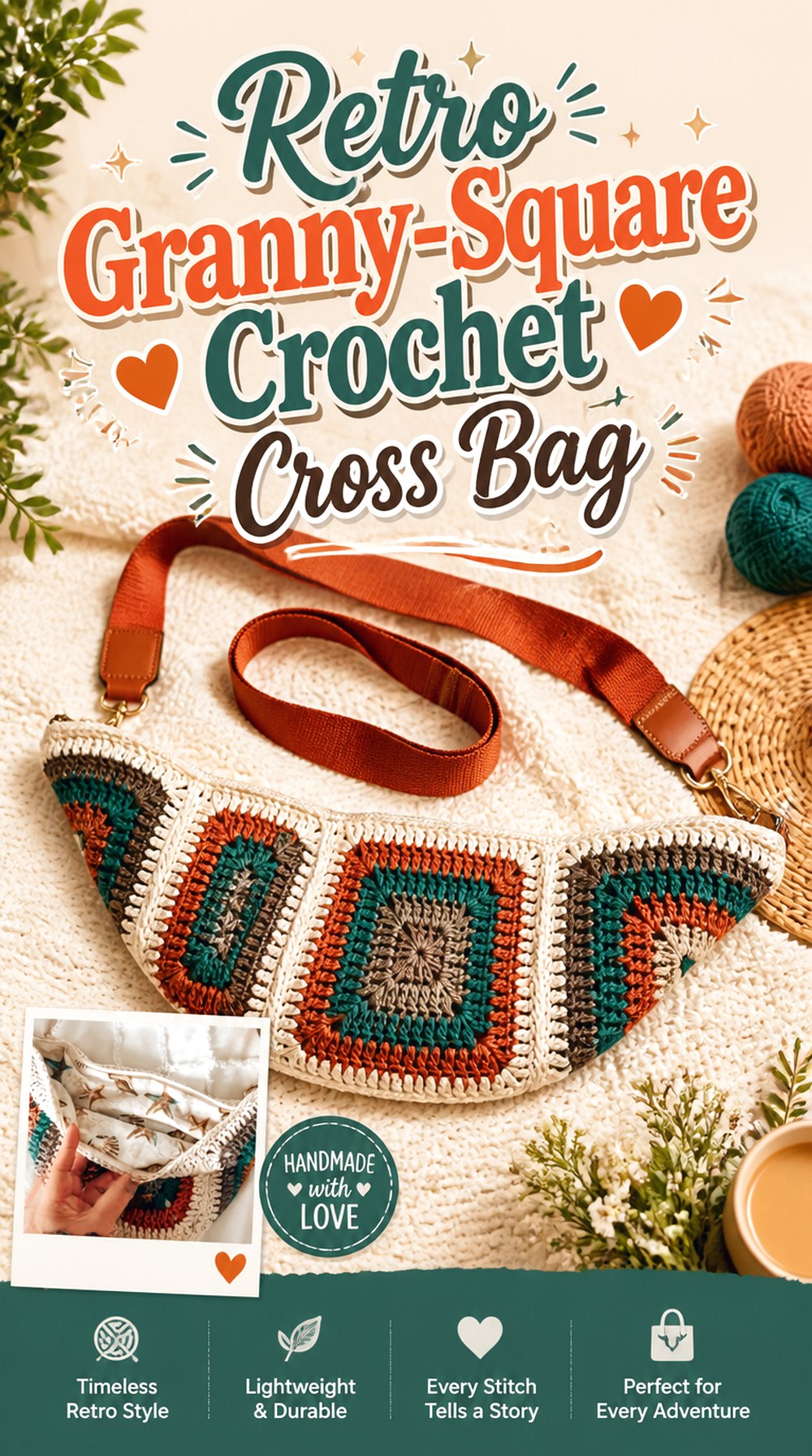
CJ Design’s granny-square cross bag gives the collection another modular option, but with a more classic granny aesthetic than the sunburst festival version.
This style can be pushed toward a doily look by choosing squares with lace centers, delicate borders, or controlled negative space while keeping the overall crossbody shape intact. It suits readers who want a recognizable motif bag but prefer angular geometry over a perfectly round purse. The corners provide natural assembly points, which can be simpler to manage than joining scalloped circular motifs directly.
Use Corner Strength to Your Advantage
Square motifs naturally concentrate joining at corners and straight edges. If your selected doily-like granny square has very open corners, inspect them before assembly because those areas may carry more structural responsibility than the decorative center. A small design change at the border can sometimes preserve the lace effect while giving the join a more predictable edge.
Avoid Hiding the Most Detailed Square Under the Flap or Strap
Map the front-facing surface before choosing motif placement. A beautiful center loses much of its value if a strap connection or closure crosses directly over it. Put quieter squares where hardware will sit and reserve the strongest motifs for uninterrupted areas.
Original Tutorial and Creator Credit
Creator: CJ Design
Soft Boho Crochet Crossbody Bag
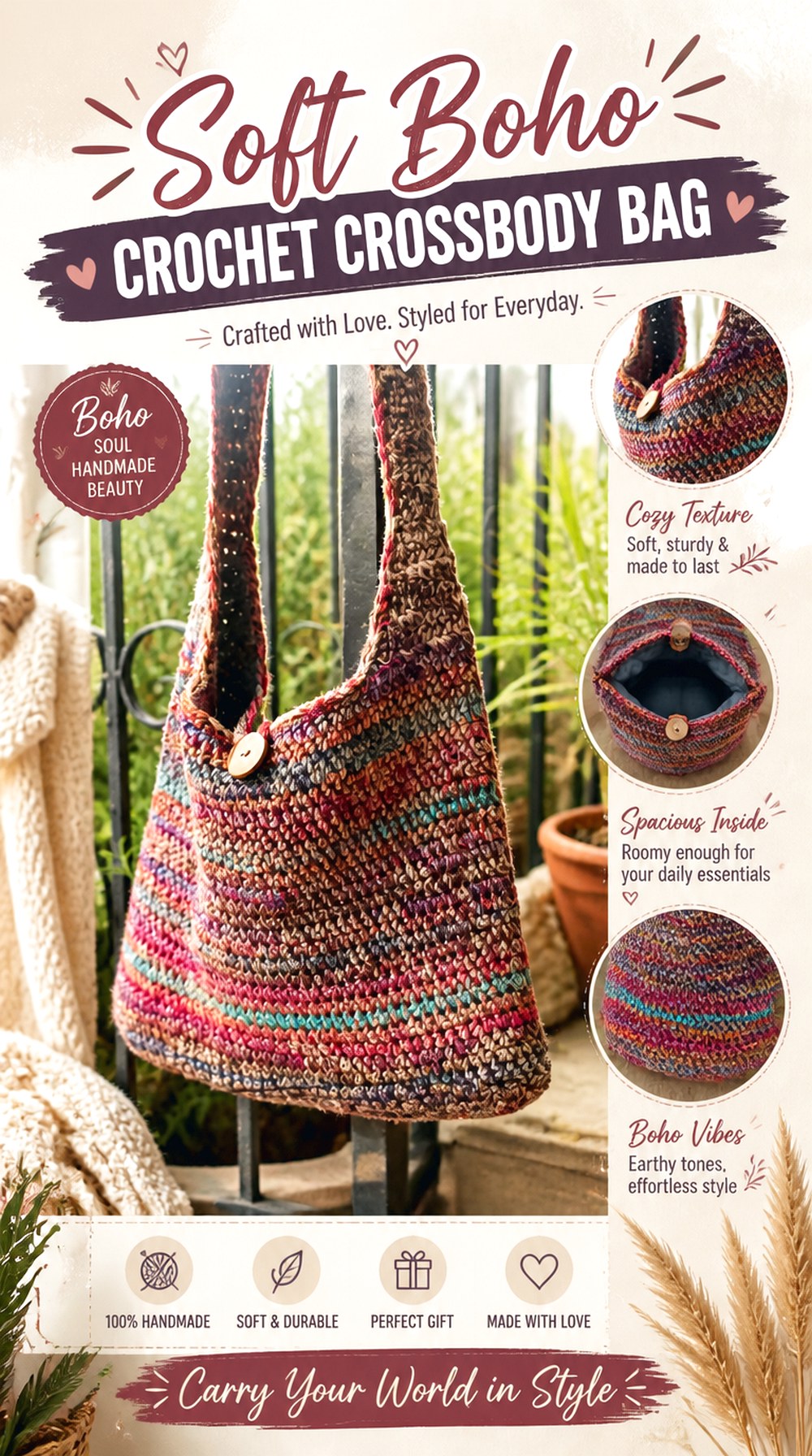
Jolie Knots Crochet’s boho crossbody provides a softer, more relaxed framework for doily-inspired decoration.
Instead of making the entire bag a rigid circle or motif grid, this idea lets a decorative lace panel, scalloped edge, or medallion sit within a slouchier silhouette. That can be a good match for crocheters who enjoy vintage doily details but want the finished accessory to feel casual. Because a softer body changes shape when worn, decorative placement should be evaluated while the bag is hanging, not only while it lies flat.
Place the Focal Motif Where the Bag Does Not Fold
A soft crossbody can crease around its contents. Pin the intended medallion or doily accent to the assembled body and wear or hang the bag before stitching it permanently. If the motif sits directly across a natural fold, the center may buckle. Moving it slightly can preserve its shape without changing the overall design.
Fringe and Lace Need Visual Separation
Boho details can accumulate quickly. If you add fringe, tassels, a doily panel, and an open stitch pattern simultaneously, each feature may lose definition. Decide which element should dominate. A strong circular motif often looks clearer above a relatively simple fringe or against a quieter body fabric.
Original Tutorial and Creator Credit
Creator: Jolie Knots Crochet
Zippered Fashion Crochet Crossbody Bag
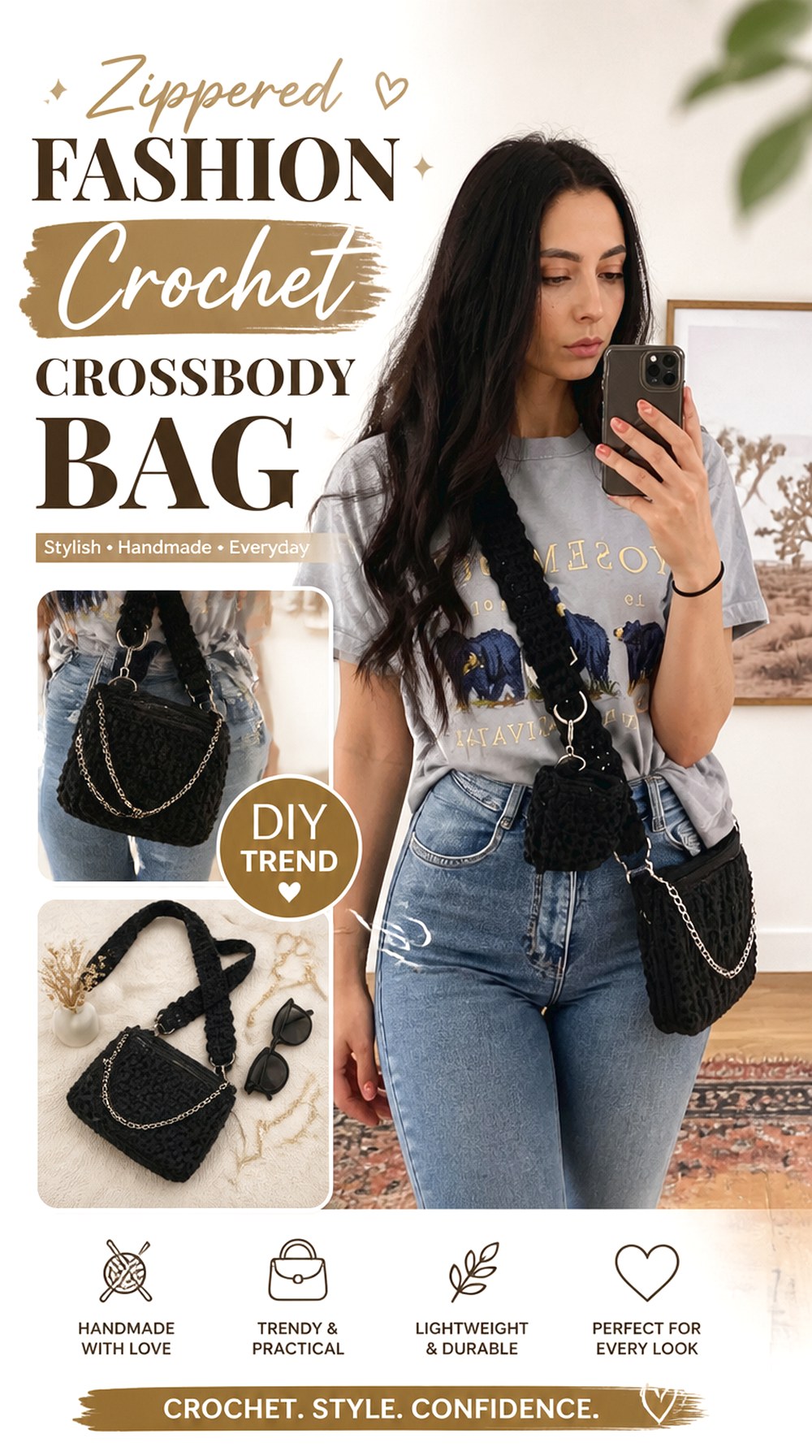
Dana B’s crossbody tutorial takes the collection toward a more fashion-oriented, zippered silhouette. The source notes that the tutorial does not teach the zipper-sewing portion, so anyone choosing this route should plan that finishing skill separately.
For a doily version, use a decorative crochet panel or carefully placed medallion while retaining the cleaner bag outline. The contrast can be effective: a traditional lace element feels more contemporary when framed by a crisp closure and restrained shape. This is also a good example of why checking tutorial scope matters before starting.
Confirm the Missing Zipper Step Before You Commit
If a secure zipper is important to your final bag, make sure you already have a compatible method for installing one or locate separate guidance before reaching the finishing stage. Do not assume a bag tutorial covers every hardware operation simply because the finished sample includes that feature.
Keep the Doily Detail Clear of the Zipper Seam
A lace border placed too close to the opening can interfere visually and physically with zipper installation. Leave a calmer structural zone near the top and concentrate the decorative motif lower on the face. That separation also makes the doily element read like intentional surface design rather than an edge that accidentally became trapped by the closure.
Original Tutorial and Creator Credit
Creator: Dana B
Foldover Textured Crochet Crossbody Bag
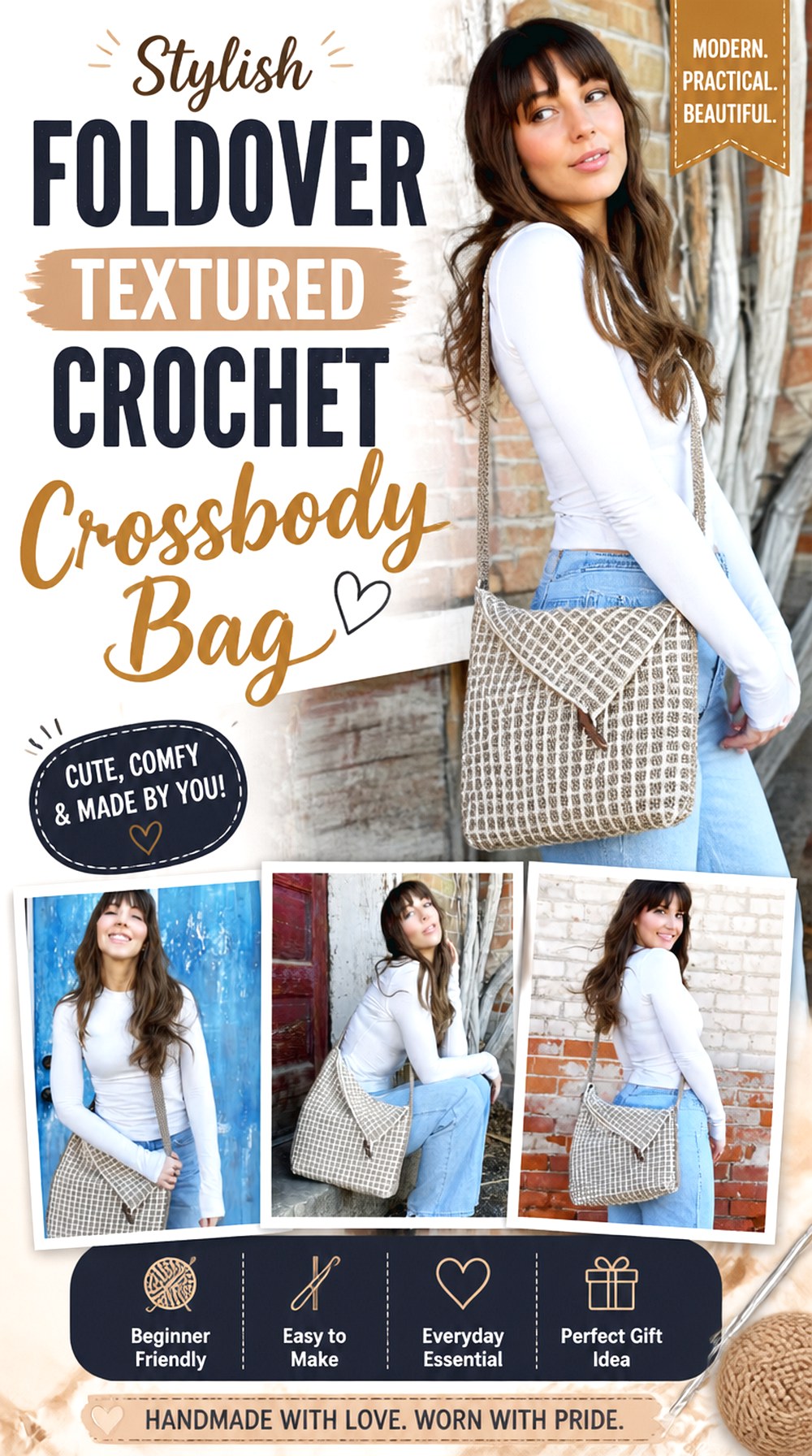
Evelyn And Peter Crochet’s Cade Crossbody offers a compact crossbody construction that moves away from round panels and toward a more conventional folded bag silhouette.
That makes it useful for a doily accent rather than an all-over doily structure. A half-doily, lace flap, or centered floral medallion can transform the surface while the body remains straightforward. It is a particularly good direction if you have a decorative motif you want to showcase but do not want to calculate an entire circular sidewall or matching second panel.
A Foldover Area Can Frame a Half-Doily Naturally
Semicircular lace motifs often look awkward when forced into the middle of a rectangular bag, but a flap gives them a natural architectural role. Align the straight edge with the fold or flap base and let the curved decorative edge remain visible. Check that any scallops stay clear of the closure so they do not catch during regular opening.
Match Texture to the Smaller Scale
A compact crossbody does not have much visual space. Large raised motifs can overwhelm it quickly. Hold your chosen doily or sample against the bag dimensions before committing and decide whether the full motif, only its center, or a partial section creates the best proportion.
Original Tutorial and Creator Credit
Creator: Evelyn And Peter Crochet
Simple Structured Crochet Handbag
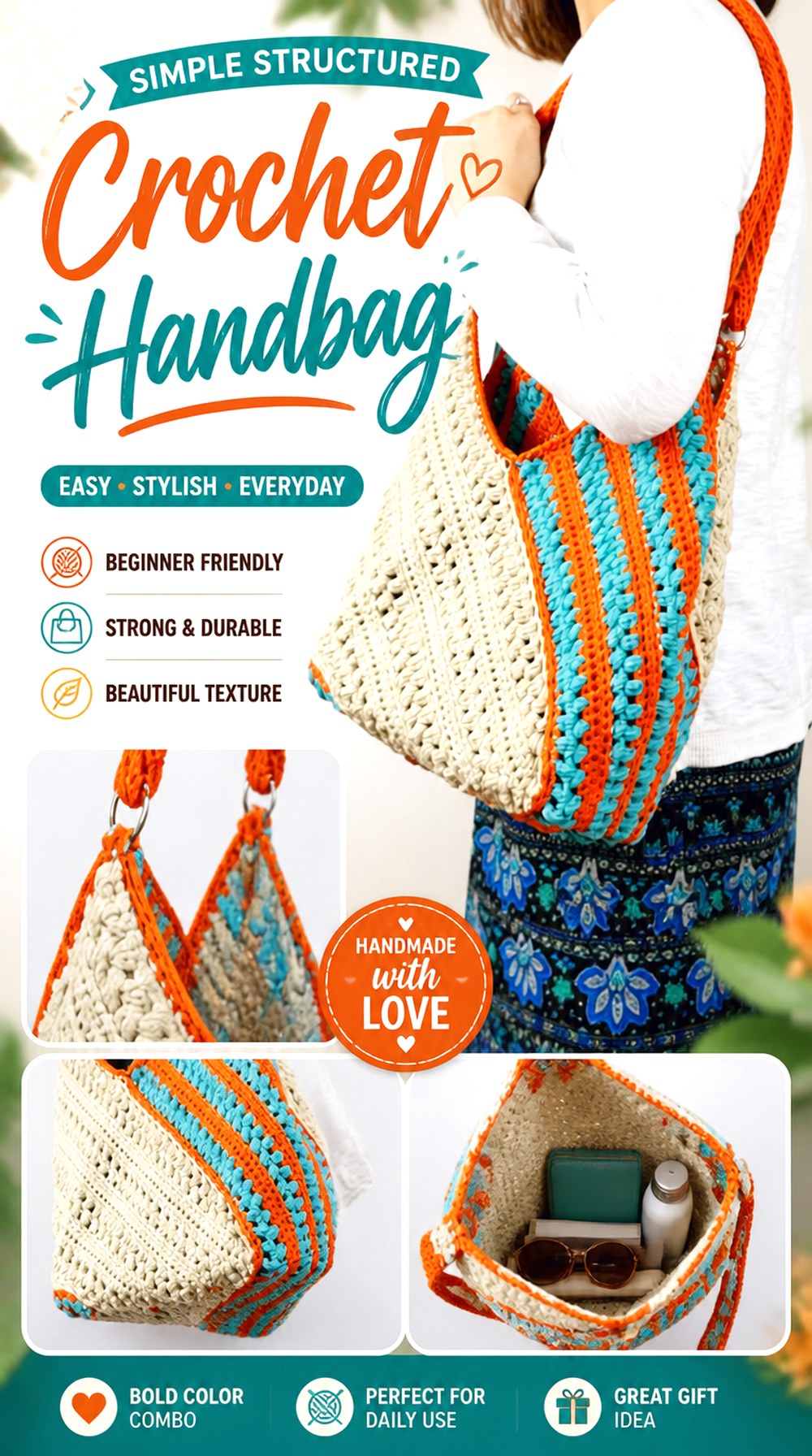
Handmade By Mei’s bag tutorial provides a comparatively simple handbag framework that can act as a neutral background for a statement doily panel.
This is the choice for readers who already have a decorative motif in mind and mainly need the surrounding bag to stay visually quiet. Instead of forcing an elaborate doily to become the structural fabric, attach or integrate it as the focal surface. That approach also lets you change the decoration later in the planning process, after you can see the actual body proportions.
Let One Medallion Carry the Decoration
A simple handbag does not need lace everywhere. One well-proportioned round or oval crochet medallion can create a stronger doily reference than several unrelated trims. Center it based on the finished bag, accounting for the opening and handles, and leave enough plain fabric around it for the design to breathe.
Structure Can Protect a More Delicate Motif
When a decorative doily is supported by a denser bag body, it does not have to bear the full tension of the contents. It can still experience abrasion, however. Secure it appropriately and consider whether highly raised loops or very fine thread suit the way you expect to use and clean the bag.
Original Tutorial and Creator Credit
Creator: Handmade By Mei
Textured Flower Crochet Handle Handbag
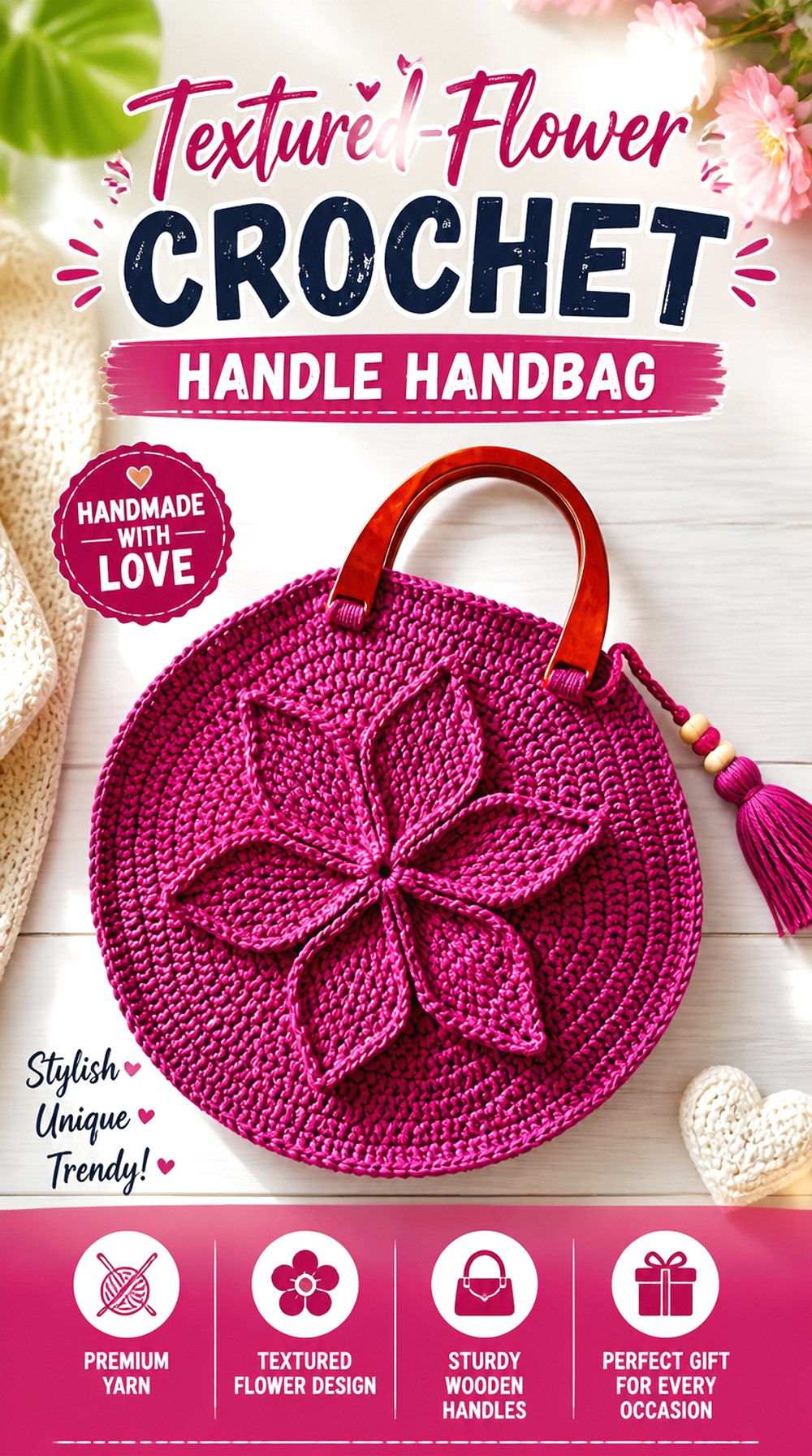
The Lazy Hobbyhopper’s round handbag centers a textured flower and pairs the crochet body with rigid-style handles, bringing several recurring doily-bag ideas together in one project: radial shape, floral surface design, and clearly defined hardware.
This is a fitting final option for readers who want a statement handbag rather than a flexible market tote. The handles create a strong visual top, while the flower makes the round panel read as more than a plain circle. Because both features are prominent, proportion is especially important; neither should visually swallow the other.
Let the Flower and Handle Share the Visual Weight
Place the selected handles above the finished floral panel before attachment and view the combination upright. Large handles can dwarf a small central flower, while an oversized dimensional motif can make delicate handles look incidental. Adjust the decorative scale or choose quieter hardware until the two elements feel intentionally related.
Protect Dimensional Petals Near the Carrying Zone
Raised flower texture can brush against handles, clothing, or the wearer’s hand. Inspect which petals sit closest to those contact areas and make sure they are secured according to the construction you choose. If the flower is highly dimensional, keeping the handle attachment slightly away from its outermost edges can also preserve the shape.
Which Crochet Doily Bag Style Should You Choose?
If the doily itself should be the star, start with the classic round, mandala, Jasmine-stitch, or textured-flower handbags. They preserve radial construction and make the center-to-edge motif highly visible.
For more interior flexibility, the flower-square and sunburst bags divide decoration into modules that can be arranged around a conventional bag shape. If you mainly want lightness and expansion, the lace and mesh market bags use negative space across the entire body rather than one statement motif.
Choose a dense tote or structured crossbody when you already have a delicate doily you want to apply as decoration. That approach separates structural work from ornamental work and avoids asking fragile-looking lace to perform every job in the finished bag.
Conclusion
The most useful way to choose among these 35 crochet doily bag ideas is to decide what you want the decorative crochet to do. A round mandala or flower circle makes the motif part of the bag’s structure, while granny motifs provide modular control. Lace market totes prioritize openness and expansion, and denser handbags give you a stable surface for a separate doily accent.
Before choosing, compare the opening, panel shape, expected stretch, strap attachment, and whether lining would improve or undermine the effect you want. Once you select a direction, use the credited original tutorial for its exact construction details rather than assuming one circle, square, or lace repeat can be substituted directly for another.
Frequently Asked Questions
Does a crochet doily bag need a lining?
Not always. A dense round panel or closely stitched handbag may already provide enough containment for its intended use. Large lace openings create a different situation because smaller contents can show through or work into the gaps. A lining can add containment and may reduce visible stretching, but it also changes drape and places a color behind the lace. Decide based on how you want the finished bag to function and look.
How can I keep a round crochet doily bag from ruffling?
Evaluate the circle while it is still flat rather than waiting until assembly. Persistent waves around the outer edge indicate that the panel is not lying as evenly as you need, while pronounced cupping creates the opposite problem. Blocking may help depending on the yarn and design, but do not rely on a tight joining seam to correct a severely distorted circle. Two-panel bags work more cleanly when both pieces already have compatible blocked dimensions.
Can I turn an existing crochet doily into a bag panel?
Potentially, but first judge it as fabric rather than only as decoration. Check its finished size, fiber condition, outer edge, openness, and whether it can tolerate the abrasion expected on a bag. A delicate vintage or sentimental doily may be better applied to a supportive tote than used as the entire structural wall. Avoid stretching a smaller motif aggressively to make it fit a predetermined bag shape.
What yarn qualities work well for a doily-style crochet bag?
The answer depends on whether you want crisp structure or soft drape. A firmer material can emphasize radial geometry and help a circle remain clearly defined, while a softer yarn can create more movement in lace and mesh. Very stretchy fibers may also affect straps and openings. Check the actual yarn’s care instructions and make a representative sample when changing material from a tutorial, because appearance alone does not predict finished behavior.
How can I reduce stretching in a crochet bag strap?
Start by treating the strap as a structural component rather than simply an extension of the decorative stitch pattern. Dense crochet, reinforcement, or a separate manufactured strap may be worth considering when the bag body is very open or stretchy. Also inspect the attachment points: a strong strap connected only to delicate outer loops can still distort the bag. Test the hanging shape before permanently finishing those connections.
What should I check before adding a zipper to a doily bag?
Look for a stable, reasonably even edge that can accommodate the zipper without forcing scallops or large lace loops into a straight line. Confirm the zipper length and installation method against the actual finished opening rather than an unblocked motif measurement. If the tutorial you are following does not cover zipper installation, find suitable separate guidance before assembly so you do not reach the finishing stage without a compatible plan.


