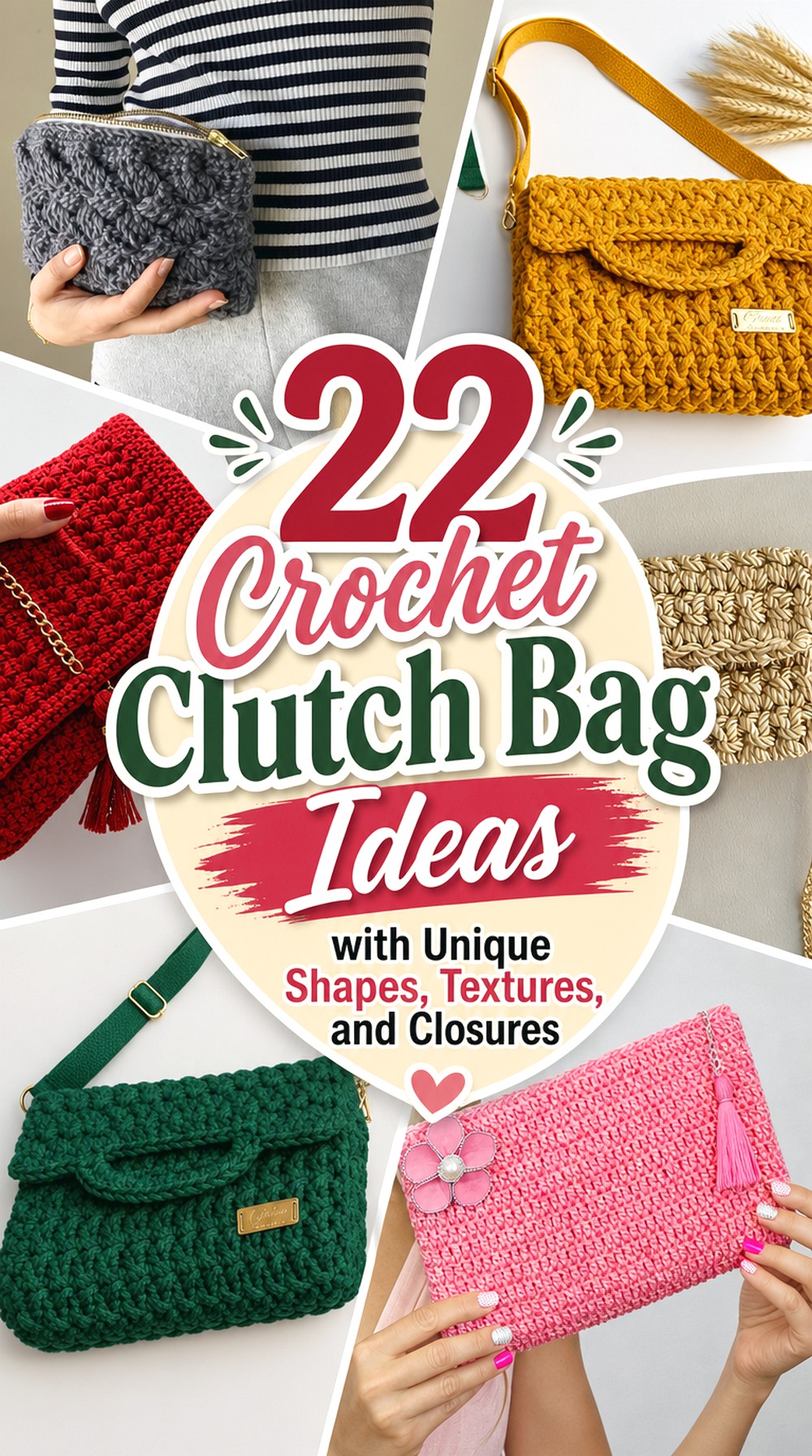

A crochet clutch can be much more than a flat rectangle folded into a purse. Depending on the construction, it can have an envelope flap, rigid frame, zipper, curved body, dimensional texture, colorwork, or a removable strap that lets it switch between a clutch and small shoulder bag.
These 22 crochet clutch bag ideas cover noticeably different approaches rather than repeating one shape in different colors. You’ll find raffia, cord, T-shirt yarn, tapestry crochet, bobbles, basket weave, star stitch, thermal stitch, structured mesh, and several closure styles. Along with the inspiration, the comparisons below explain what each design means for stretch, security, lining, structure, and everyday use. For exact construction details, each idea points to an original YouTube tutorial from a different creator.
Quick List
- Raffia Foldover Crochet Clutch
- Envelope-Flap Crochet Clutch with Chain Strap
- Bobble-Texture Crochet Clutch
- Tapestry Colorwork Crochet Clutch
- Arrow-Flap Crochet Clutch
- One-Stitch Structured Crochet Clutch
- One-Piece Wallet-Style Crochet Clutch
- Cord Crochet Clutch with Removable Strap
- Thermal-Stitch Crochet Pouch Clutch
- Mesh-Reinforced Crochet Clutch
- Boho Chain-Strap Crochet Clutch
- Bow-Front Crochet Clutch
- Metallic Lace-Panel Crochet Clutch
- Cotton Foldover Crochet Clutch
- Lined Zipper Crochet Evening Clutch
- Half-Moon Crochet Hand Clutch
- Bubble-Stitch Pyramid Crochet Clutch
- Sparkle Jumbo-Yarn Crochet Clutch
- Leather-Base Rope Crochet Clutch
- Metal-Frame Crochet Clutch
- Star-Stitch Crochet Hand Clutch
- Basket-Weave Crochet Clutch
Choose the Structure Before the Stitch Texture
The opening and body shape usually affect a clutch more than its color. An envelope flap gives a broad decorative surface but needs a closure positioned where the flap naturally lands. A zipper offers more complete containment, while a metal frame creates a defined opening and can make the top feel much more structured.
Curved and pyramid shapes introduce another consideration: usable interior space does not always match the bag’s outside dimensions. If you need a clutch for a particular phone, glasses case, or other essential, compare those items with the finished interior before committing to the design. For foldover clutches, also notice how much of the crocheted panel is consumed by the flap rather than becoming storage space.
Yarn Choice Changes Stretch, Weight, and Shape
A clutch has no large garment-style fit requirement, but yarn behavior still matters. Softer yarns can create pleasant fabric while allowing a long clutch to sag or stretch around its contents. Cord, raffia, T-shirt yarn, and dense crochet fabrics generally create a different structural effect from lightweight, flexible yarn.
Changing yarn can also change the apparent scale of the texture. Large bobbles worked in a thick material may dominate a small clutch, while intricate tapestry or star stitches usually depend on enough stitch definition for the design to remain visible.
Whenever you substitute yarn, use the tutorial’s finished fabric as the real reference. Matching only the hook size does not guarantee the same dimensions, density, flap length, or compatibility with purchased hardware.
Decide on Lining, Closure, and Straps Early
A lining is not automatically necessary for every crochet clutch, but it becomes more useful when the crochet fabric has visible openings, when small objects will be carried, or when you want the interior to stretch less. A zipper requires more planning than an open pouch because its length and placement have to work with the finished opening.
Removable straps are worth considering before finishing, too. A chain or wrist strap can make a clutch easier to carry without permanently changing the hand-held silhouette. Check whether the selected tutorial already includes appropriate attachment points. Adding hardware afterward can place concentrated stress on stitches that were never intended to support it.
Raffia Foldover Crochet Clutch
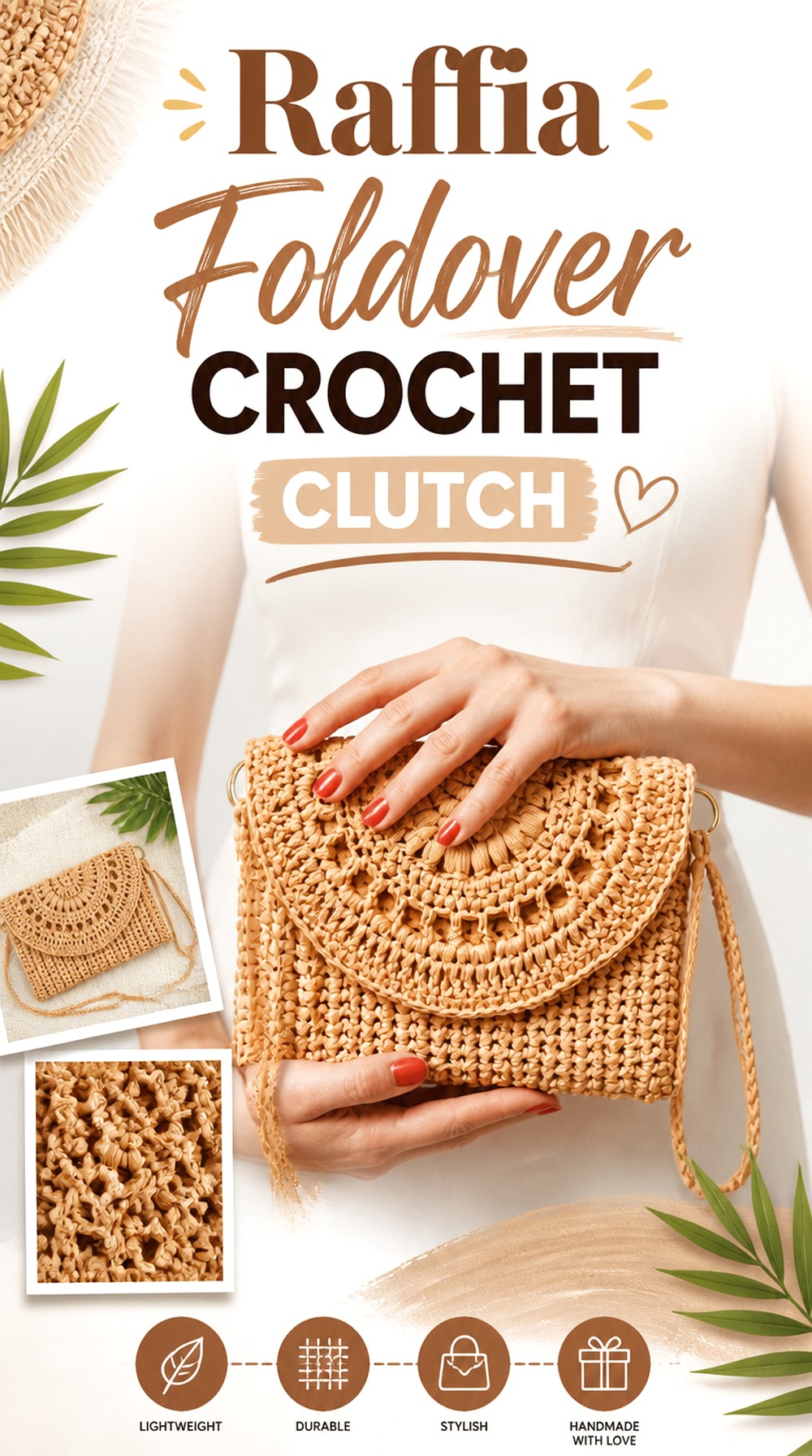
Raffia gives this clutch a noticeably different character from soft yarn bags. The tutorial from Crochetclubstore produces a compact summer-style clutch with a prominent flap and a relatively crisp surface. The flatter yarn structure helps the stitches read more like woven material, making this a strong option when you want a crochet bag that looks tailored rather than plush.
This design is particularly suited to warm-weather styling, but the practical reason to choose it is structure. A foldover silhouette benefits from fabric that does not collapse completely when the flap is closed.
Raffia Makes the Flap Shape More Visible
A broad flap becomes one of the main design elements, so uneven edges or inconsistent tension can be more noticeable than they would be inside a highly textured bag. Before committing to the full piece, see how your chosen raffia behaves around turns and edges. A substitute that is much softer could create a noticeably different silhouette even when the basic construction remains the same.
Check the Fold Before Final Finishing
Do not evaluate only the flat crocheted panel. Fold the developing fabric approximately where the finished flap will sit and check whether it closes without buckling. This is especially important after substituting another raffia or paper-style yarn, since a change in stiffness can affect both the body and how naturally the top bends.
Envelope Flap Crochet Clutch with Chain Strap

This version uses the instantly recognizable envelope silhouette: a rectangular body finished with a pointed or angled flap. Mille Creazioni’s tutorial also incorporates bag hardware, including a chain and magnetic closure, giving the finished clutch the option of being carried rather than held continuously by hand.
An envelope clutch works well when you want the closure to become part of the design. The flap occupies a large percentage of the visible front, so yarn texture and edge quality have greater visual impact than they do on a zipper pouch.
The Flap Point Needs to Stay Centered
With an envelope silhouette, a small skew becomes easy to spot because the flap naturally directs the eye toward the center of the bag. Before attaching the magnetic closure, place the flap in its resting position and confirm that the point aligns with the body. Hardware should follow the finished fabric rather than forcing an uneven flap into position.
A Chain Changes Where the Bag Carries Weight
The optional chain makes the clutch more versatile, but it also transfers weight to small attachment areas. Check those points before assuming any substitute yarn will behave like the tutorial material. If your fabric stretches more, the corners may distort under a strap even though they look perfectly straight when the clutch is carried by hand.
Original Tutorial and Creator Credit
Creator: Mille Creazioni
Bobble Texture Crochet Clutch
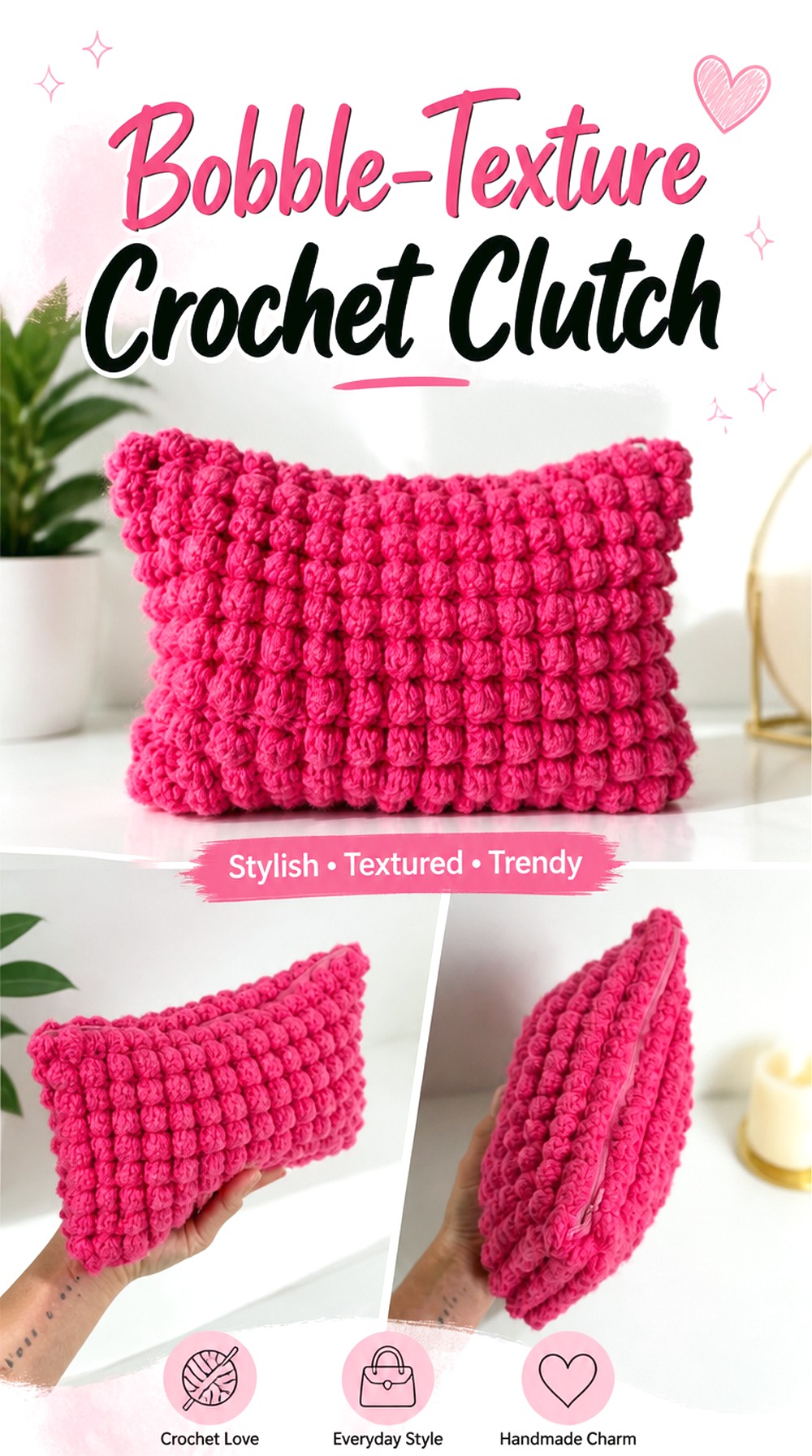
Kenikse Crochet’s clutch places bobble texture across a simple rectangular form, allowing the raised stitches to become the dominant feature. This is a useful contrast to sleek raffia and cord bags because the interest comes from the crocheted surface rather than complicated hardware or shaping.
A strongly textured clutch can work as a small statement accessory, but those same bobbles add thickness. If you regularly carry the bag under your arm, consider whether you prefer dimensional texture across the entire surface or only on the most visible panel.
Raised Bobbles Change the Effective Thickness
Exterior dimensions do not tell the full story with dimensional stitches. Bobbles project from the base fabric, making the clutch feel thicker than a flat-stitch version of similar measurements. That can be attractive for a soft, tactile finish, but it is worth considering if you want a very slim evening bag that disappears neatly under the arm.
Stitch Definition Matters More Than Color Complexity
A highly variegated yarn can compete with pronounced bobbles, while a yarn with clear stitch definition lets the texture read from farther away. Before choosing a multicolor material, make a small textured sample and view it at normal bag distance. If the bobbles visually disappear, the yarn may be better reserved for a simpler stitch pattern.
Original Tutorial and Creator Credit
Creator: Kenikse Crochet
Tapestry Colorwork Crochet Clutch
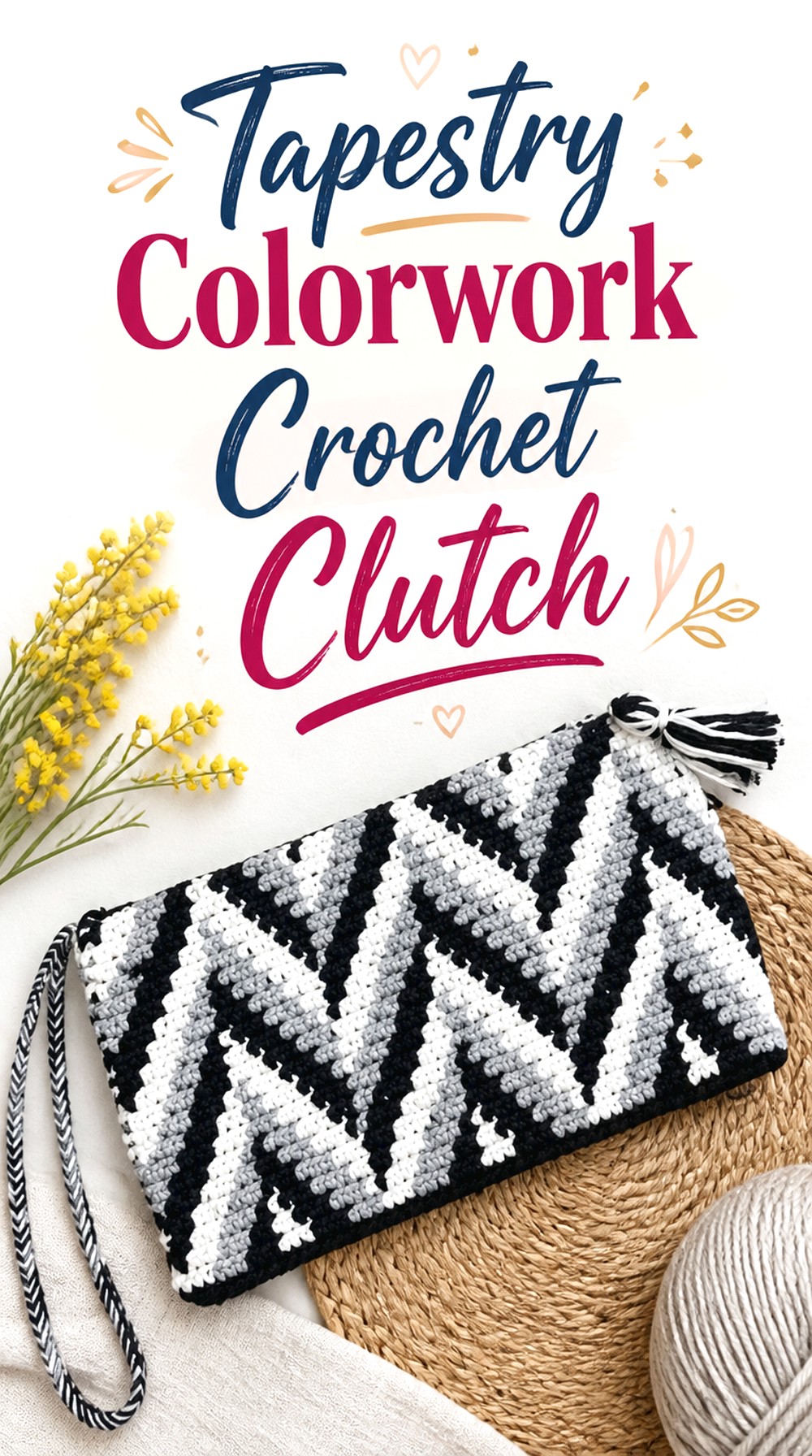
This clutch from Lanas y ovillos uses tapestry crochet to make the color pattern part of the bag fabric rather than adding decoration afterward. The finished tutorial project has a boho-influenced graphic appearance and can function as either a clutch or small handbag.
Tapestry construction is a good choice when you want a flat surface with visual complexity. Unlike bobbles or basket weave, the pattern does not rely on large raised areas. That makes it easier to keep the overall profile relatively streamlined while still creating a distinctive front.
Color Changes Need Consistent Fabric Density
Tapestry crochet can become noticeably uneven if tension changes every time a new color is introduced. The main checkpoint is not simply whether the motif looks correct; compare the width of the fabric across different color sections. If one area contracts, correct the tension before progressing far enough that the distortion affects the clutch outline.
Plan the Motif Around the Finished Front
A graphic motif can lose impact if an important portion disappears around a side seam, fold, or opening. Before adapting the colorwork, identify which part of the crocheted panel will actually form the visible front. Centering the strongest motif there usually matters more than creating a perfectly symmetrical pattern across fabric that will later be folded or joined.
Original Tutorial and Creator Credit
Creator: Lanas y ovillos
Arrow Flap Crochet Clutch
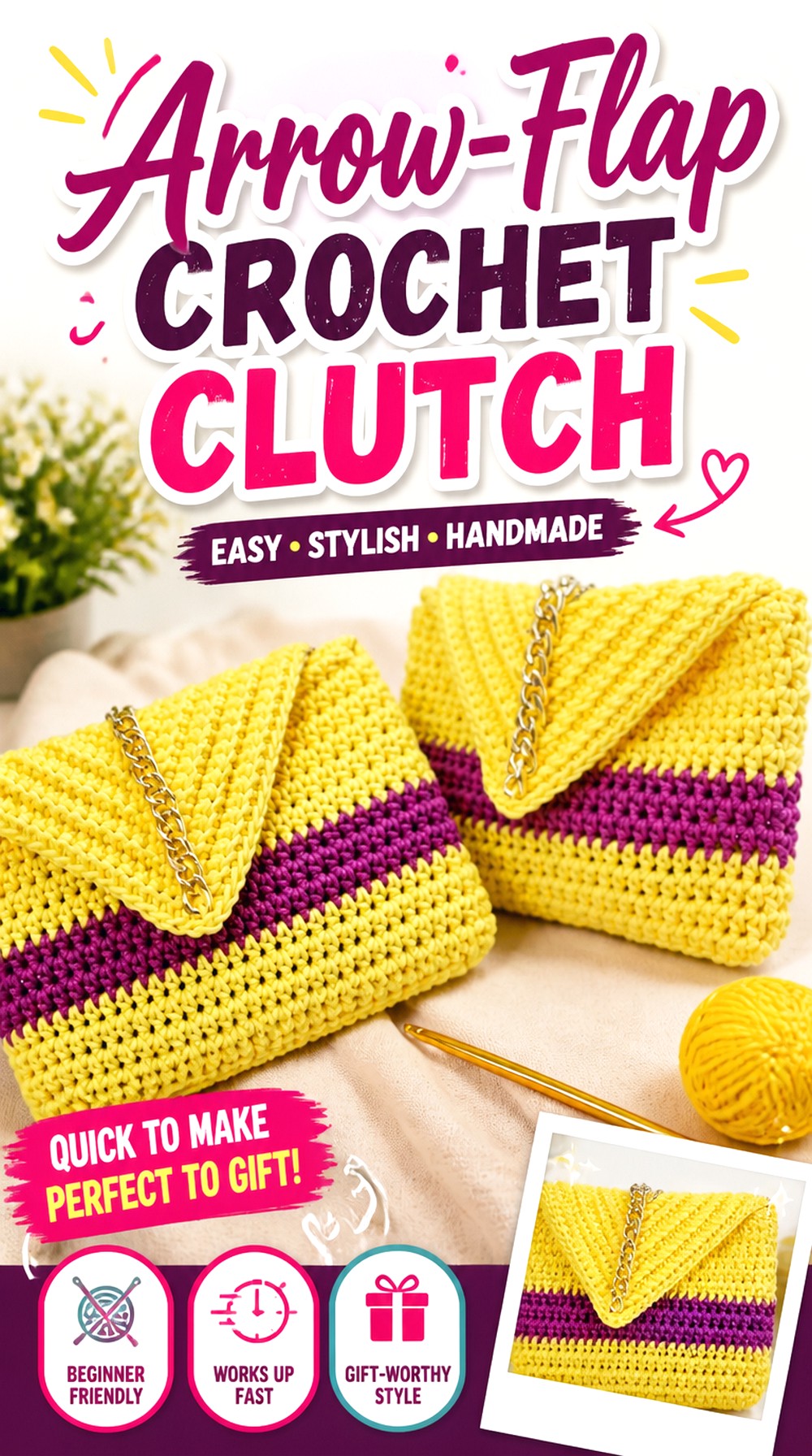
TSUNAMI – Crochet Makers uses an angular flap treatment that gives this clutch a more graphic outline than a standard straight foldover. The tutorial begins from the flap and keeps the construction connected rather than treating the flap as a decorative piece added at the end.
Choose this style when the shape of the closure matters as much as the stitch pattern. The directional flap creates a focal point without requiring large embellishments, making it well suited to solid colors where the silhouette remains easy to read.
Starting at the Flap Puts Shaping First
When a tutorial begins with the most visible shaped section, it is worth checking that portion carefully before continuing into the larger body. If your substitute material produces a flap that is too stiff, too narrow, or too soft, the problem will remain visible after the rest of the clutch is completed.
Let the Arrow Shape Be the Main Detail
This construction already creates a strong front focal point. Adding busy appliqués, multiple hardware pieces, and dramatic texture at the same time can make the front feel crowded. If you want customization, consider changing edging, a closure detail, or one contrasting section rather than covering the angular flap that distinguishes the design.
Original Tutorial and Creator Credit
Creator: TSUNAMI – Crochet Makers
One Stitch Structured Crochet Clutch
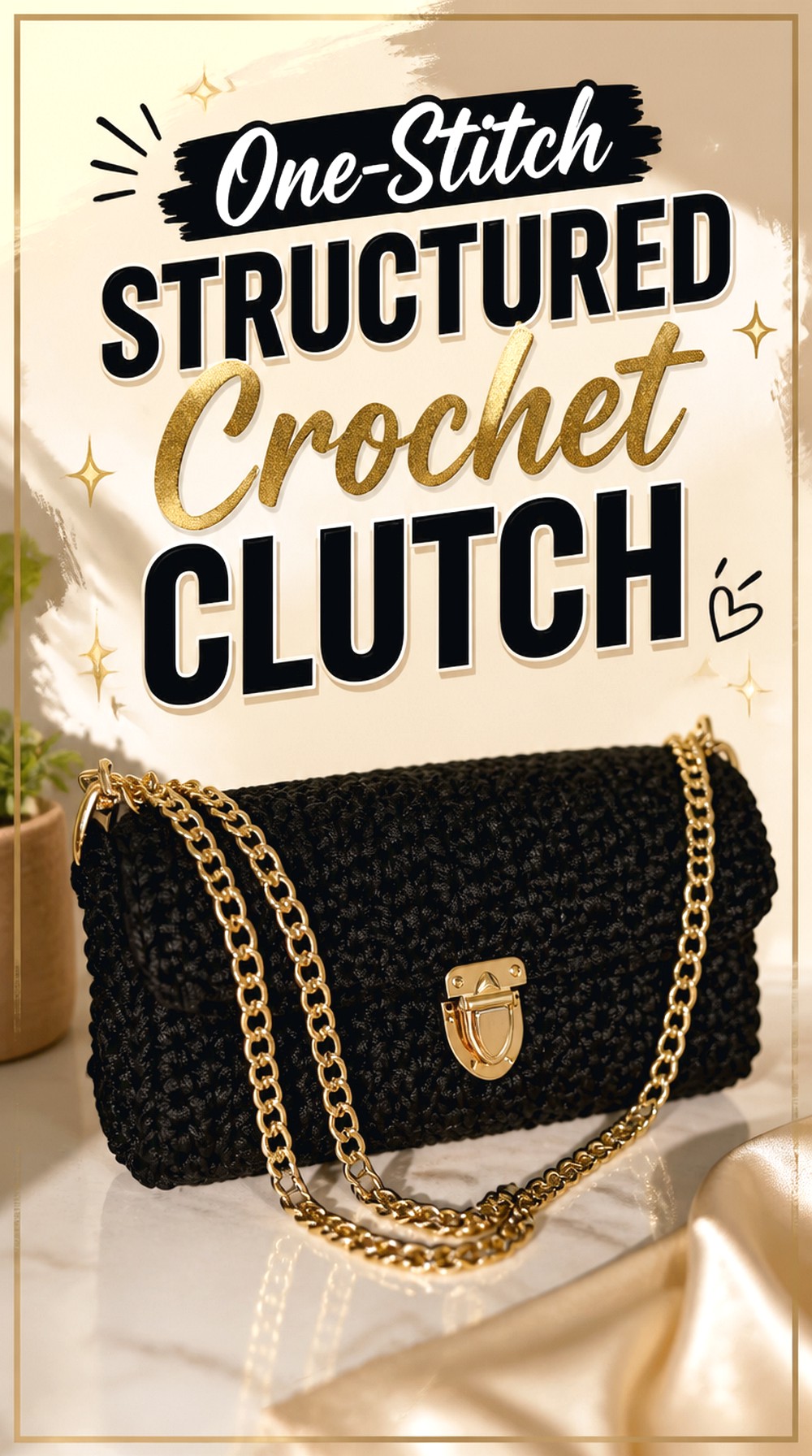
Dress it up Debra’s clutch keeps the crocheted fabric straightforward and puts more emphasis on finishing choices. The tutorial’s supply list includes fabric, a purse chain, closure hardware, and bag components in addition to the crocheted body. This makes the idea useful for anyone more interested in building a finished accessory than showcasing a complex stitch pattern.
A restrained fabric can also make hardware look intentional rather than secondary. It is a good direction when you want your color, lining, clasp, or strap to do more of the styling work.
Simple Crochet Makes Finishing Quality More Noticeable
When the main fabric is visually quiet, uneven side edges, poorly centered hardware, or a puckered lining have nowhere to hide. Spend more time checking the final fold, corner alignment, and closure placement. A basic stitch surface can look polished precisely because the lines remain clean and uninterrupted.
Coordinate the Lining Before the Bag Is Closed
If you plan to use a noticeable print or contrasting fabric, decide how much should be visible when the clutch opens. Cutting the lining only after the crochet has been fully assembled can make fitting more awkward. Measure the actual finished interior rather than relying on theoretical dimensions from the tutorial when your yarn or tension differs.
Original Tutorial and Creator Credit
Creator: Dress it up Debra
One Piece Wallet Style Crochet Clutch
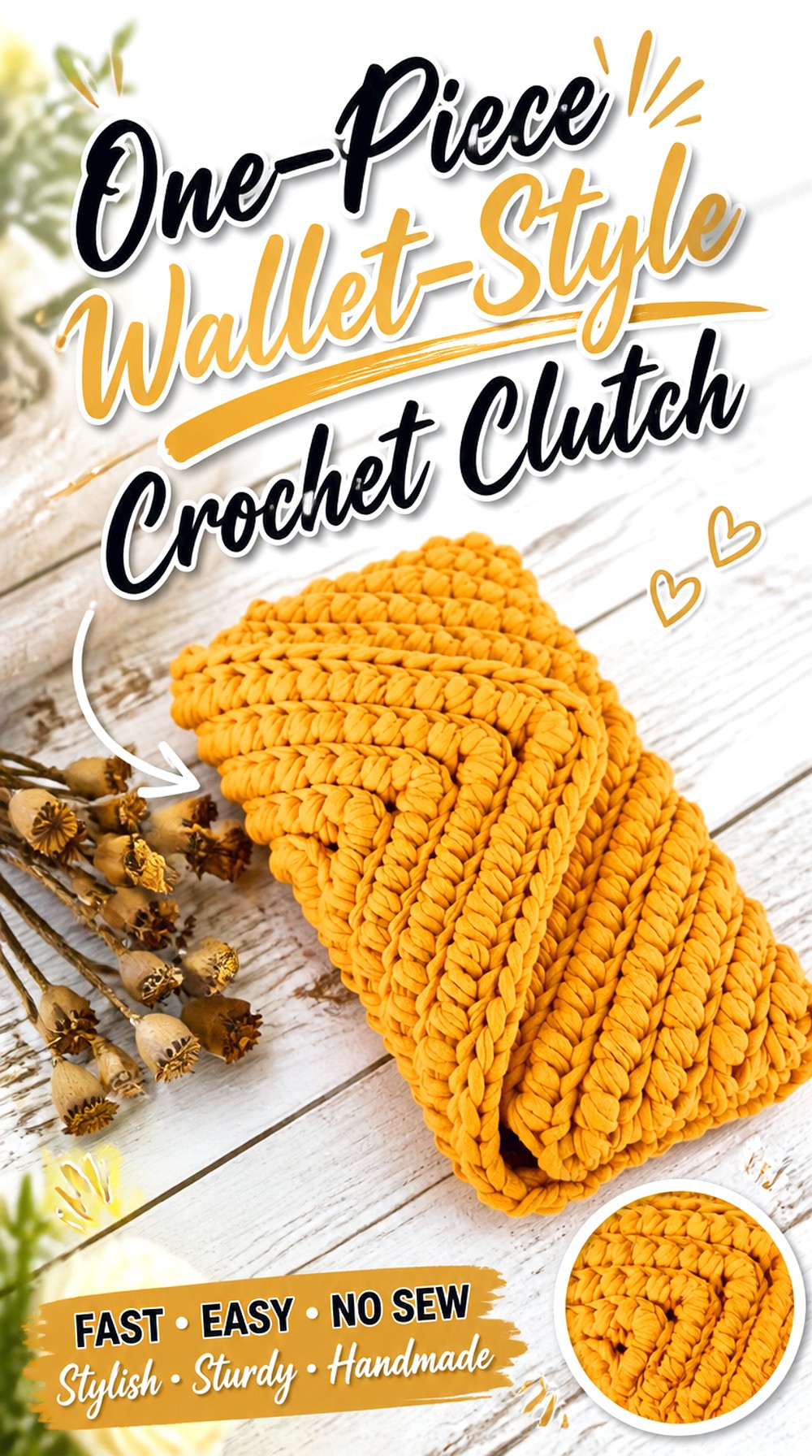
Peppytess presents a long, compact clutch that is worked as one piece and uses a magnetic snap. The tutorial uses T-shirt yarn, which gives the narrow wallet-like silhouette more body than a loosely worked soft yarn would provide.
This is one of the better directions for readers who like a low-profile clutch rather than a deep pouch. The elongated shape naturally favors flat essentials, so think about what you actually intend to carry before assuming a slim silhouette will be as practical as a deeper bag.
A Wallet Shape Favors Flat Contents
Long clutches can look spacious from the front while offering limited depth. If you routinely carry thick keys, a bulky glasses case, or several cosmetic items, compare their depth with the finished bag before settling on this construction. For cards, a phone, and other flat items, the narrow proportion can feel much more streamlined.
T-Shirt Yarn Can Change the Fold
The tutorial uses T-shirt yarn, and switching to a thinner or softer yarn may affect both thickness and the way the flap rests. Test a folded sample rather than judging only the flat swatch. A fabric that feels dense on the table can still stretch more than expected once the magnetic closure repeatedly pulls against it.
Original Tutorial and Creator Credit
Creator: Peppytess
Cord Crochet Clutch with Removable Strap
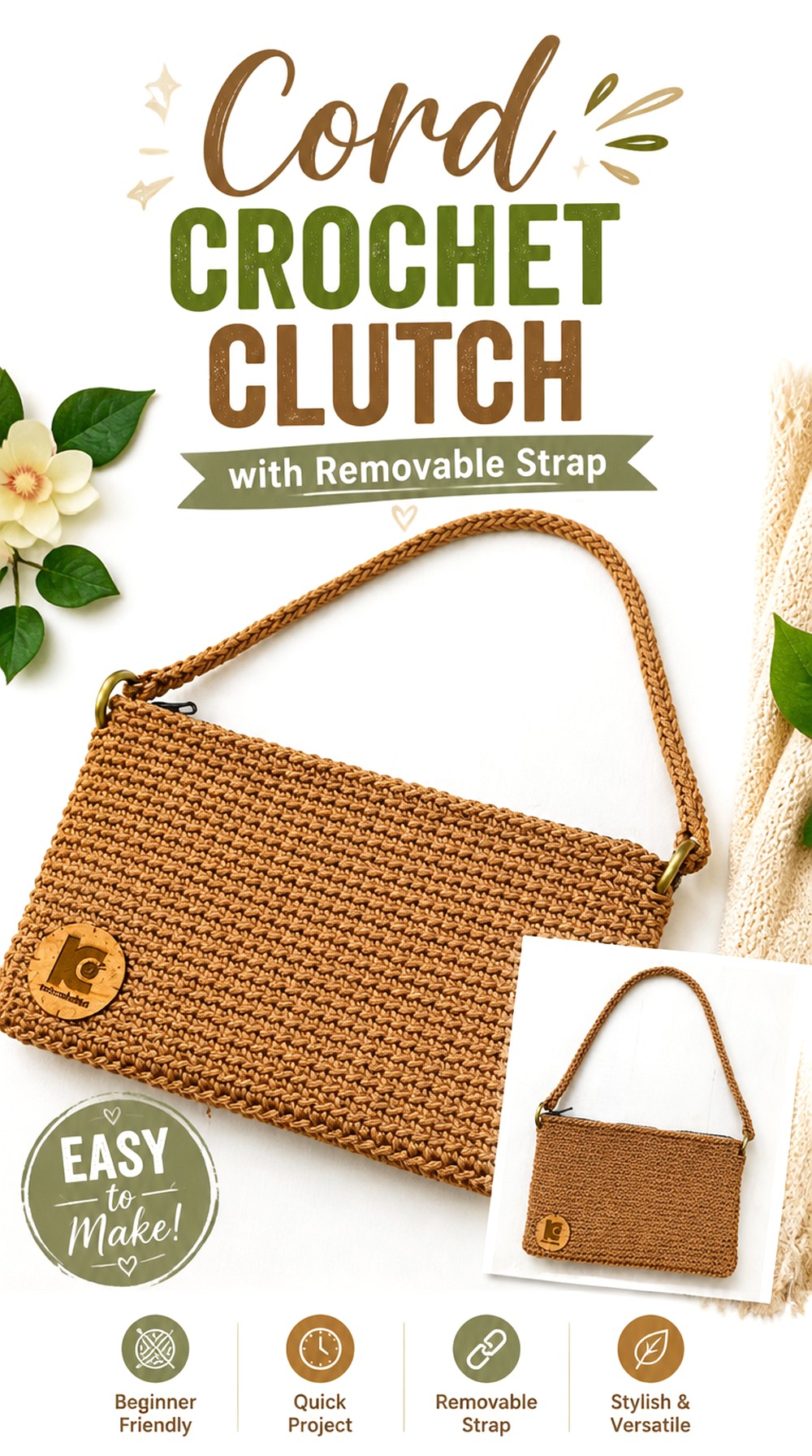
KnitcroAddict’s small purse uses polyester cord and can be carried with its strap or used without it as a clutch. The creator also references a separate lining tutorial, so this design gives you room to decide how much finishing you want to add.
The relatively clean, modern shape makes this a useful middle ground between an evening clutch and a casual everyday purse. Cord contributes clear stitch definition and structure, while the removable-strap concept keeps the same bag useful in more than one carrying situation.
Removable Hardware Adds Flexibility Without Changing the Body
If you like the look of a true hand-held clutch but sometimes need your hands free, removable strap hardware is a practical compromise. Position attachment points symmetrically and check whether the finished fabric feels firm enough around them. The clutch should still retain a clean outline when the strap is removed rather than looking as if something is missing.
Lining Can Control Cord-Fabric Stretch
Cord itself may produce a fairly defined surface, but the amount of stretch still depends on the exact material and stitch tension. If the bag elongates when loaded, a fitted lining can help limit how far the interior expands. Construct the lining from the actual finished clutch measurements rather than assuming your substitute cord behaves exactly like the source material.
Original Tutorial and Creator Credit
Creator: KnitcroAddict
Thermal Stitch Crochet Pouch Clutch
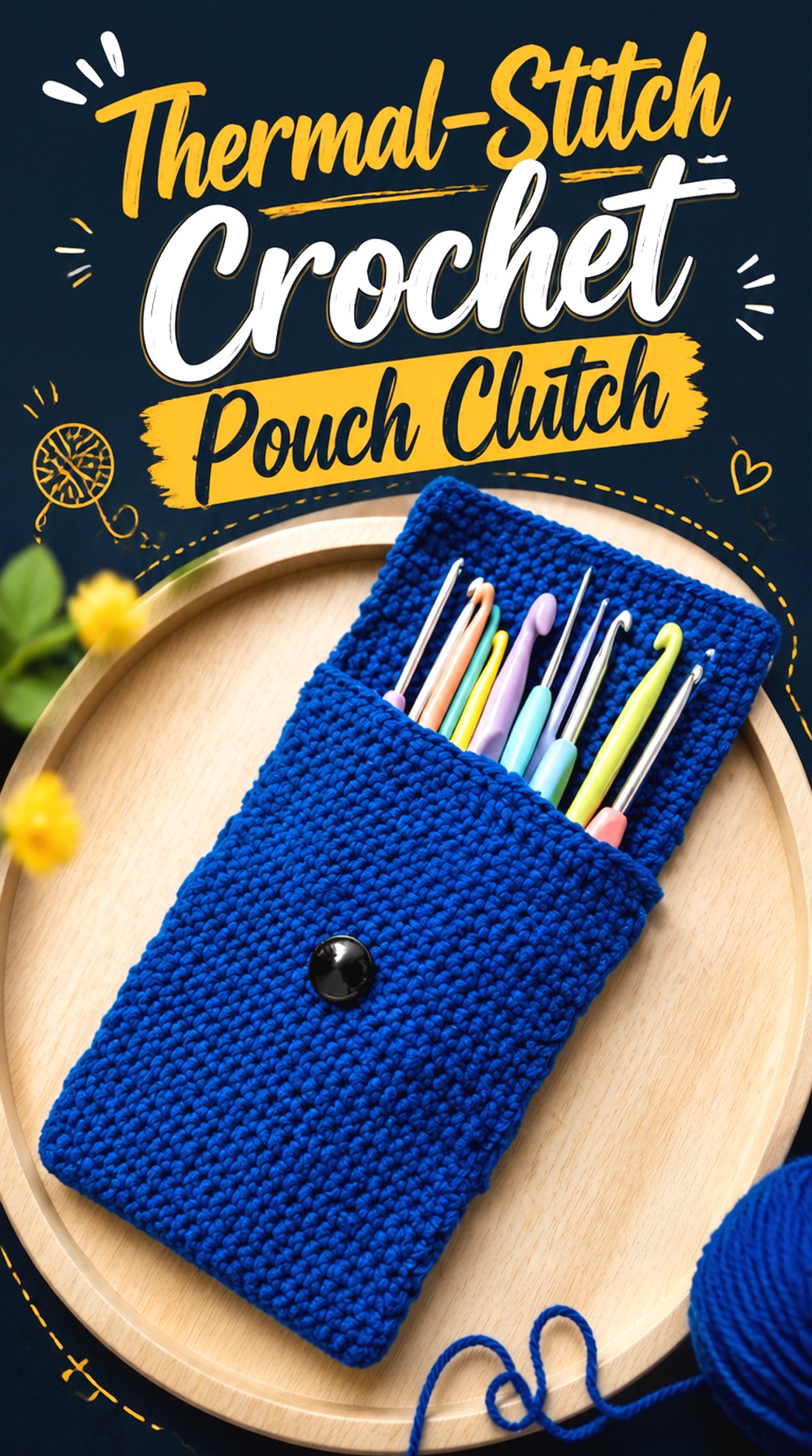
The Club Crafteria tutorial uses thermal stitch to create a dense rectangular piece that is folded and joined into a pouch. Thermal stitch produces a different tactile effect from decorative bobbles or openwork because its value is the substantial fabric itself.
This makes the idea appealing when you prefer a simple silhouette but still want the crochet to feel distinctive. Because the basic form is compact and unfussy, it can also serve as a useful base for your own closure choice if the original opening does not suit how you intend to use the clutch.
Dense Fabric Can Reduce the Need for Decorative Structure
A thick stitch pattern may allow the clutch to feel more substantial without separate stiffening. That does not automatically make it suitable for every use, so test your fabric by holding it vertically with a few representative items inside. If the opening collapses or the sides bow noticeably, additional lining or support may still be useful.
Decide Whether an Open Pouch Is Secure Enough
The tutorial focuses on the pouch construction, so consider your intended contents before treating the finished piece as an everyday clutch. If you carry small valuables, you may prefer a compatible zipper, snap, button, or other closure. Choose that before final decoration so the hardware can be positioned without competing with edging or surface details.
Original Tutorial and Creator Credit
Creator: Club Crafteria
Mesh Reinforced Crochet Clutch
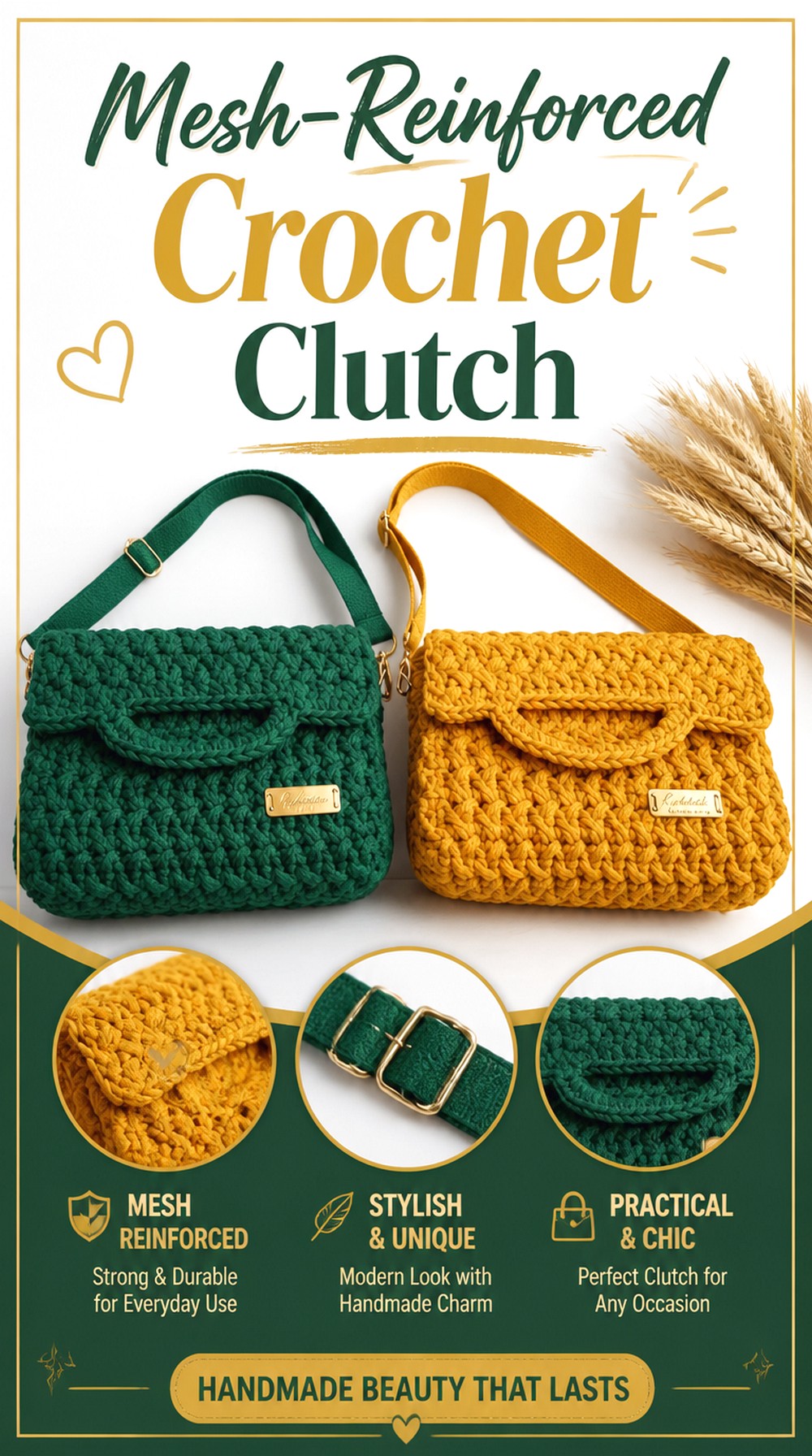
Gleizi Crochê’s tutorial introduces plastic mesh, lining fabric, strap hardware, and crochet into the same small bag project. That makes this option structurally different from clutches that rely only on yarn to hold their shape.
Mesh reinforcement is worth considering when straight sides and predictable dimensions matter to you. The trade-off is that the clutch becomes more of a mixed-material construction project. Crocheting is still central, but precise finishing and fitting around the support layer play a larger role in the final result.
Reinforcement Limits How Much the Body Can Deform
Plastic mesh can help prevent a small bag from stretching unpredictably around its contents. That is particularly useful for a rectangular clutch where bowed sides would be easy to notice. Before covering or lining the support, check that its edges are smooth and that the crocheted layer fits without being pulled so tightly that the stitches distort.
A Structured Interior Needs Accurate Lining
The more defined the shell becomes, the more noticeable an oversized or undersized lining can be. Fit the fabric to the completed interior rather than copying dimensions blindly. A lining that is too large may bunch inside a rigid body, while one that is too tight can pull against the opening and change the finished shape.
Original Tutorial and Creator Credit
Creator: Gleizi Crochê
Boho Chain Strap Crochet Clutch
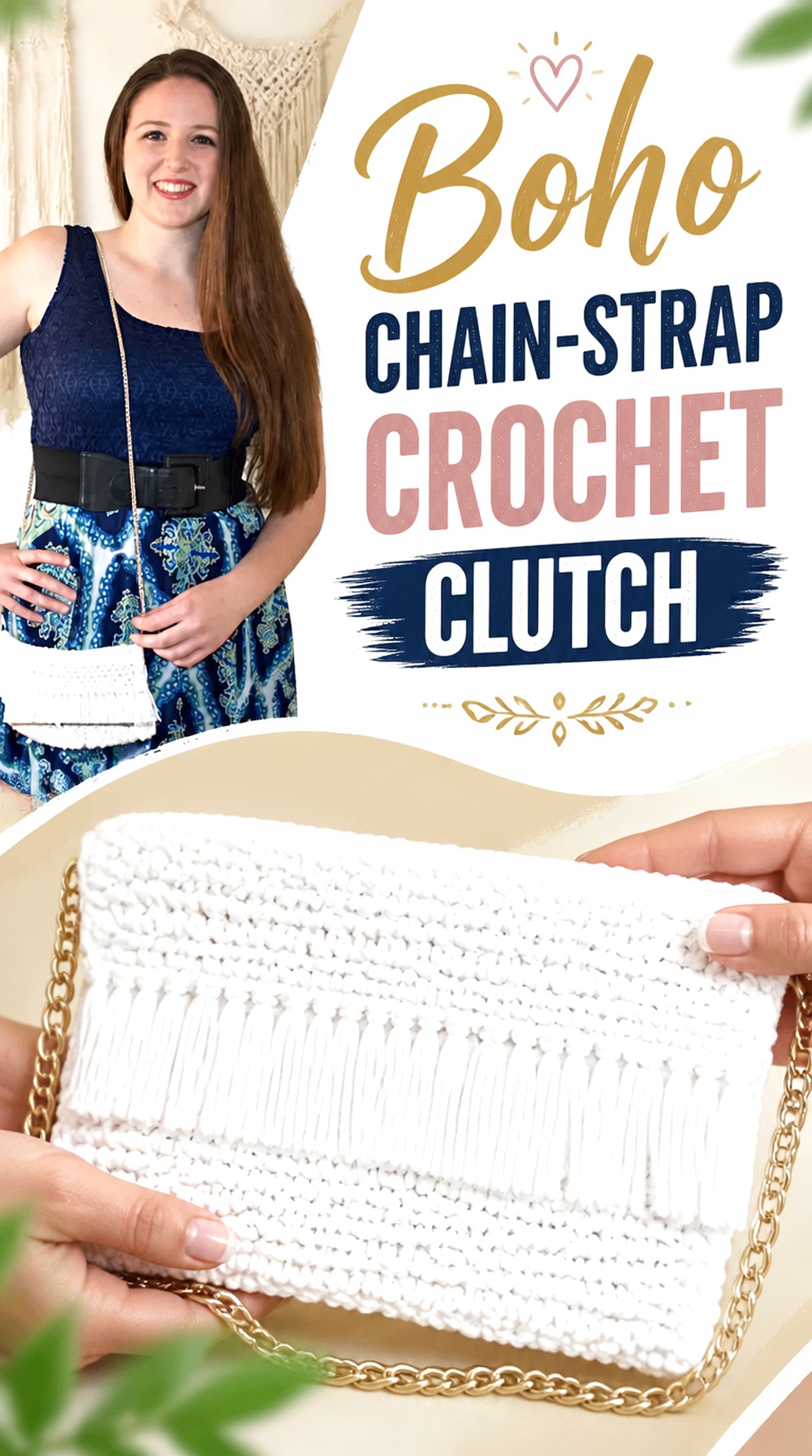
All Craft TV’s boho clutch is designed to work as a hand-held purse or as a bag when a chain is added. This makes styling versatility the main attraction. Rather than relying on a rigid frame, the project retains the handmade character of a crochet clutch while allowing metal hardware to shift it toward an evening-bag look.
This is a good choice if you prefer relaxed styling and want room for embellishment. Boho details can be added selectively, but the finished bag will usually look more cohesive when one element—texture, trim, fringe, or hardware—takes the lead.
Keep Decorative Additions Away From the Opening
Fringe and charms can add movement, but decorations near a flap or closure may get trapped each time the clutch opens. Place temporary markers where you think embellishments should sit, then open and close the bag several times. This simple check can prevent a decorative choice from becoming an everyday annoyance.
Test the Bag Both With and Without the Chain
A convertible clutch should look intentional in both configurations. Check whether rings or attachment loops protrude awkwardly when the chain is removed. If you plan to use the clutch mostly by hand, subtle hardware may suit the design better than oversized rings that become the most noticeable feature.
Original Tutorial and Creator Credit
Creator: All Craft TV
Bow Front Crochet Clutch
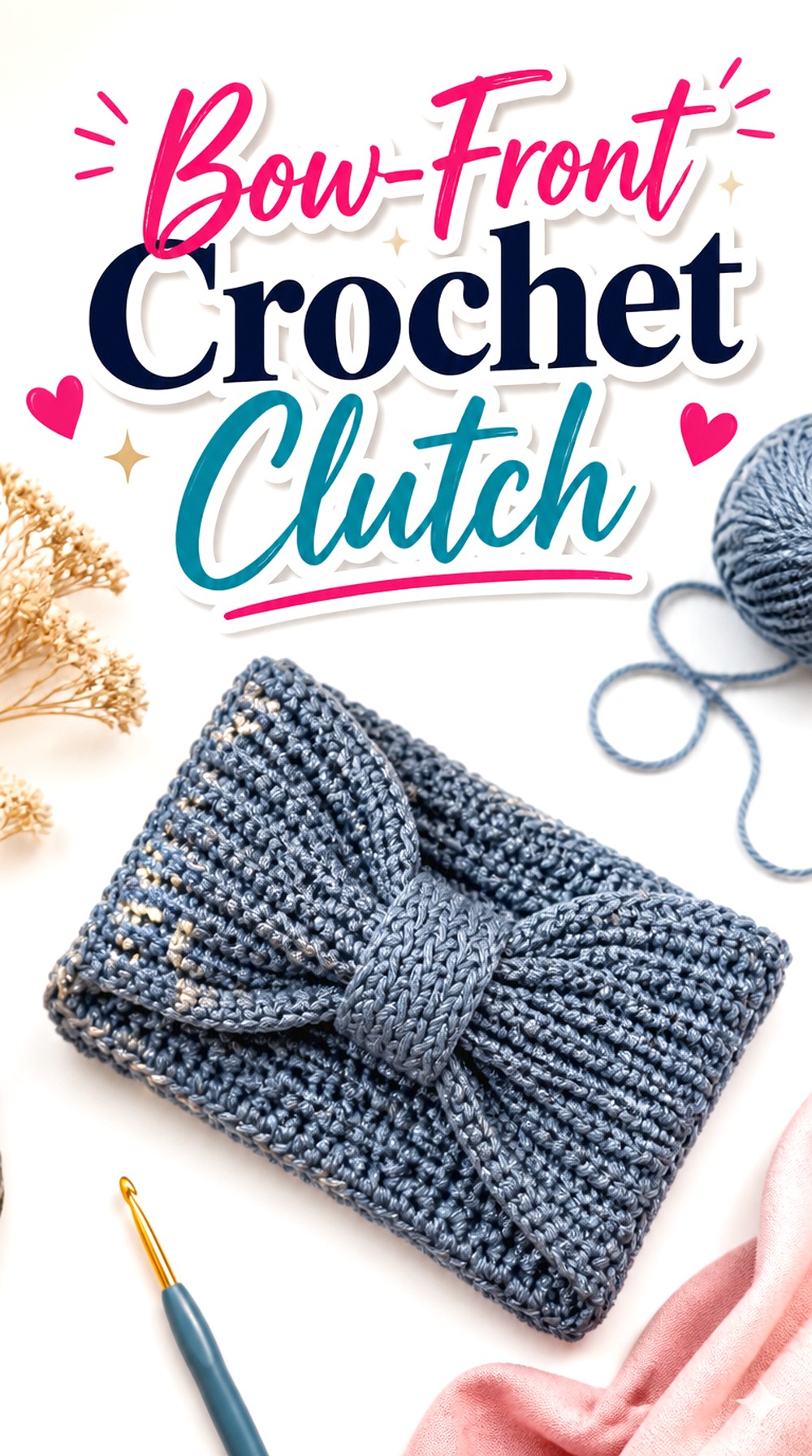
Sirin’s Crochet turns a bow into the dominant front detail of this clutch. The tutorial clearly presents it as a complete clutch bag rather than a bow appliqué added to an unrelated pouch. That gives the project a playful silhouette without requiring tapestry colorwork or an elaborate frame.
Because the bow occupies so much visual space, this design is best chosen because you actually want the decoration to be the focal point. It can work in one color for a sculptural effect or with controlled contrast if you want the bow to stand apart.
The Bow Should Not Overpower the Opening
A dimensional front detail can become inconvenient if it interferes with where your hand naturally grips or opens the bag. When adapting the proportions, temporarily position the bow before permanently securing it. Make sure you can access the opening comfortably and that the decoration does not force the clutch to sit unevenly when placed flat.
Solid Colors Highlight the Three-Dimensional Shape
A bow already creates shadows, folds, and visual movement. Busy striping can make those contours harder to see. If the dimensional effect is your main reason for choosing this project, start with a yarn that offers clear stitch definition and enough contrast between light and shadow for the bow shape to remain visible.
Original Tutorial and Creator Credit
Creator: Sirin’s Crochet
Metallic Lace Panel Crochet Clutch
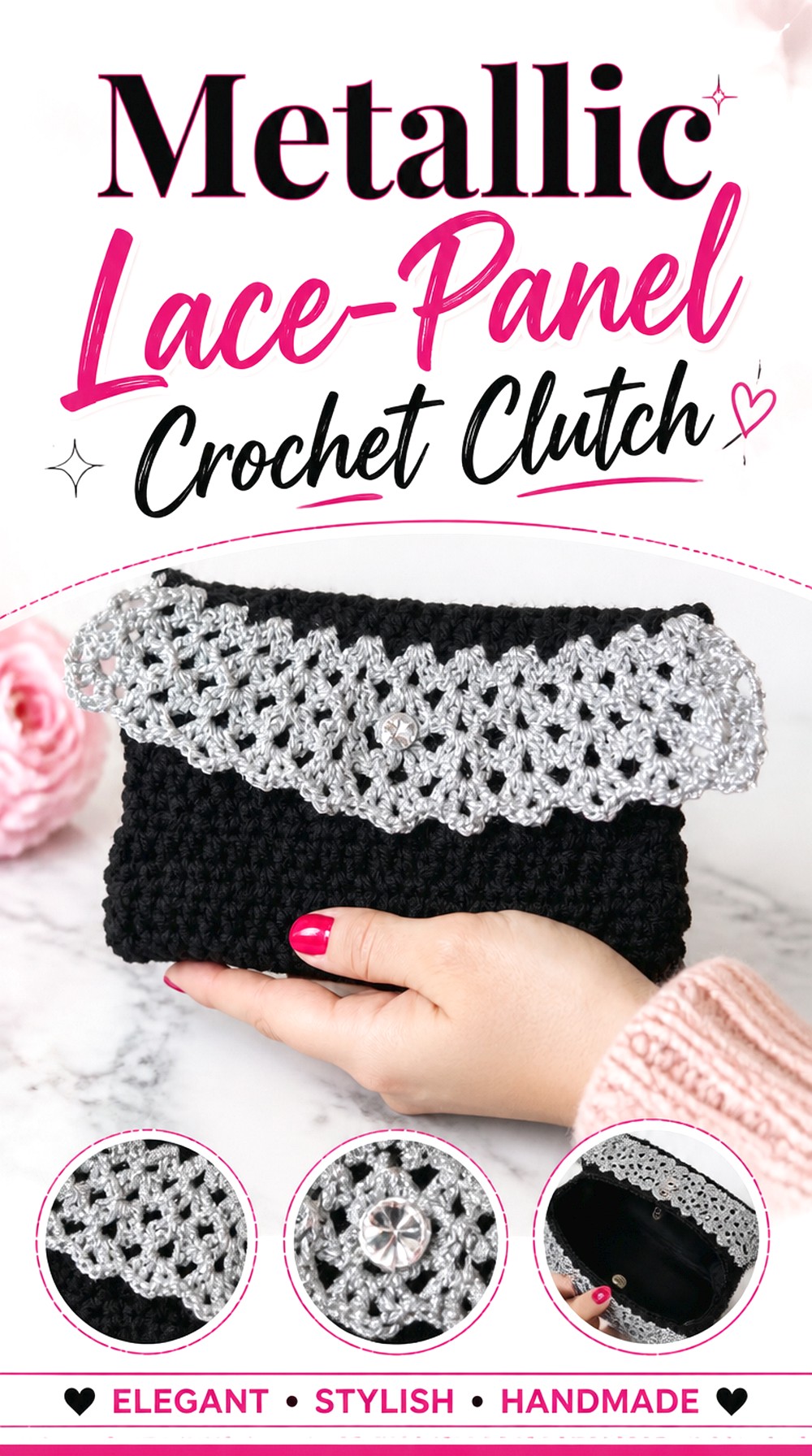
Fiber Flux’s Precious Metal Clutch combines contrasting sections, including a more open decorative area at the flap. The original project also uses a button closure, allowing the lacy section to participate in the fastening rather than serving only as decoration.
The result has more visual contrast than a uniformly dense pouch. This idea works especially well when you want a special-occasion clutch without introducing a rigid purse frame. Metallic-looking yarn can amplify that effect, but the construction can also be interpreted in quieter colors for a less formal result.
Openwork Changes What the Interior Reveals
A lace-like section may expose the lining or contents beneath it. If you want a clean, deliberate contrast, place your intended lining color behind a sample of the openwork before finishing the bag. A bright lining can emphasize the pattern; a close color match can make the openings much less obvious.
Confirm the Button Fits the Actual Opening
When crochet holes double as part of a closure, the exact button size matters. Do not assume any decorative button will work. Check that it passes through the intended opening without excessively stretching the stitches and that it remains large enough not to slip out during normal handling.
Original Tutorial and Creator Credit
Creator: Fiber Flux
Cotton Foldover Crochet Clutch
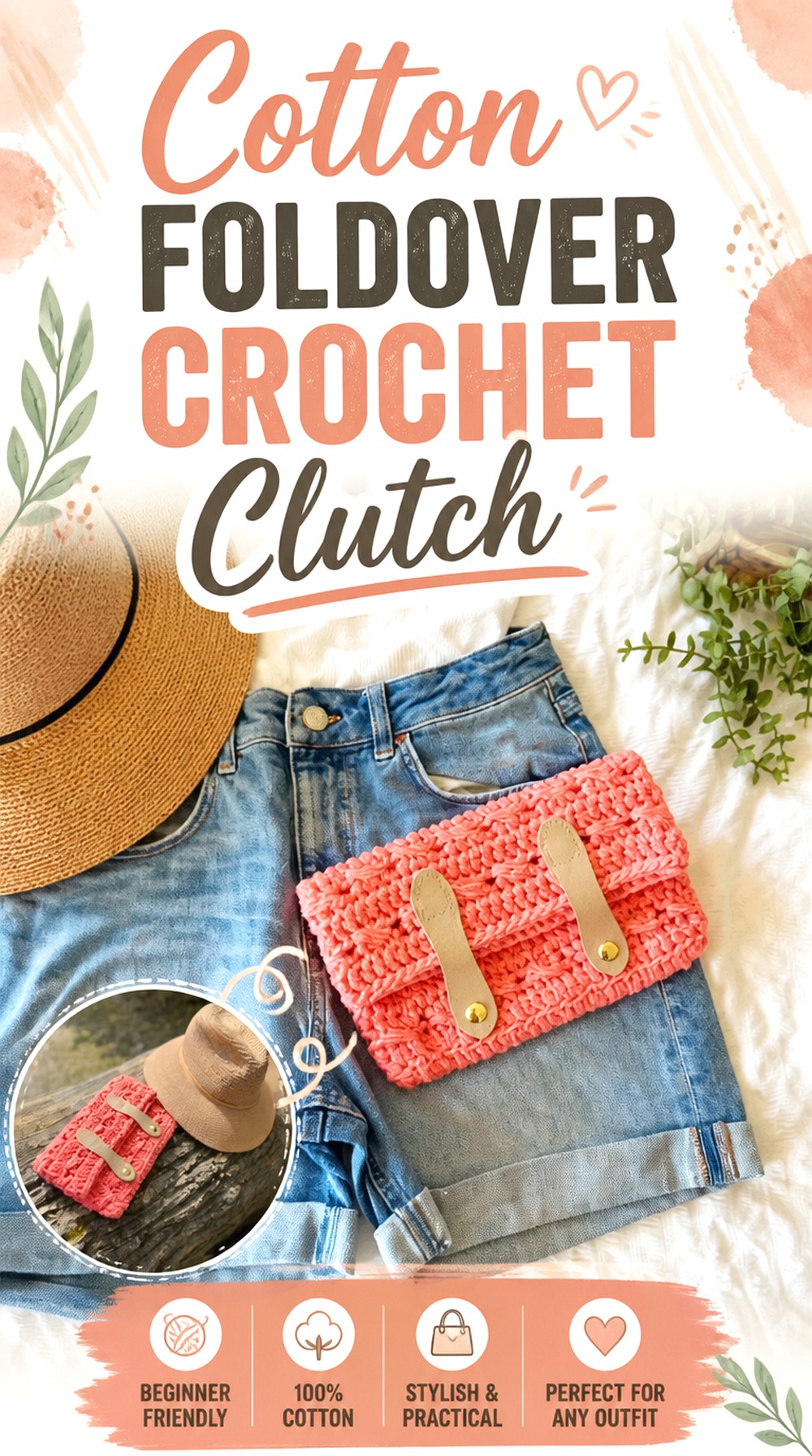
HanJan Crochet’s Coco design uses a clean foldover silhouette and a relatively restrained stitch pattern, producing a clutch that feels more modern than heavily embellished. The source project uses cotton yarn held in a way that contributes extra body and texture.
This is a strong choice if you want an adaptable neutral accessory rather than a novelty-shaped bag. The simple front also leaves room for optional hardware, but it does not depend on a large decorative clasp or motif to look finished.
Cotton Can Feel Firm Without Becoming Rigid
Cotton often gives crochet bags useful stitch definition, but different cotton yarns vary considerably in softness and elasticity. If your substitute drapes more than the tutorial fabric, the flap may hang differently and the body may lose some of its crisp outline. Compare the behavior of your sample vertically, not only while it lies flat.
Clean Silhouettes Make Edge Tension Important
A minimal clutch depends on straight edges and an even fold. Watch for the outermost stitches becoming looser than the center of the fabric, particularly if you turn at the same point repeatedly. Blocking may improve minor irregularities, but it cannot fully correct a panel whose two sides have developed noticeably different lengths.
Original Tutorial and Creator Credit
Creator: HanJan Crochet
Lined Zipper Crochet Evening Clutch

Naztazia’s tutorial stands out because the creator covers both a fabric lining and a zipper in the same evening-bag project. That makes this one of the more function-focused options in the list.
A zipper is particularly useful when you want the opening secured across most of its width rather than relying on a single button or magnetic snap. The lining also helps separate the contents from the crocheted surface. This combination makes sense for a clutch carrying small items that could otherwise slip through or catch on stitches.
Fit the Zipper to the Finished Opening
A zipper is less forgiving than a button. Finish and measure the actual bag opening before committing to placement, especially if you changed yarn or hook size. Forcing a zipper that is too long into a shorter opening can cause rippling, while one that is too short may leave awkward gaps at the ends.
The Lining Should Support, Not Reshape, the Crochet
A good lining sits inside the crocheted shell without pulling it inward. When fitting the fabric, allow the outer crochet to determine the shape. If the lining is significantly smaller, it can make the sides pucker; if excessively large, loose fabric may bunch near the zipper and interfere with opening the clutch.
Original Tutorial and Creator Credit
Creator: naztazia
Half Moon Crochet Hand Clutch
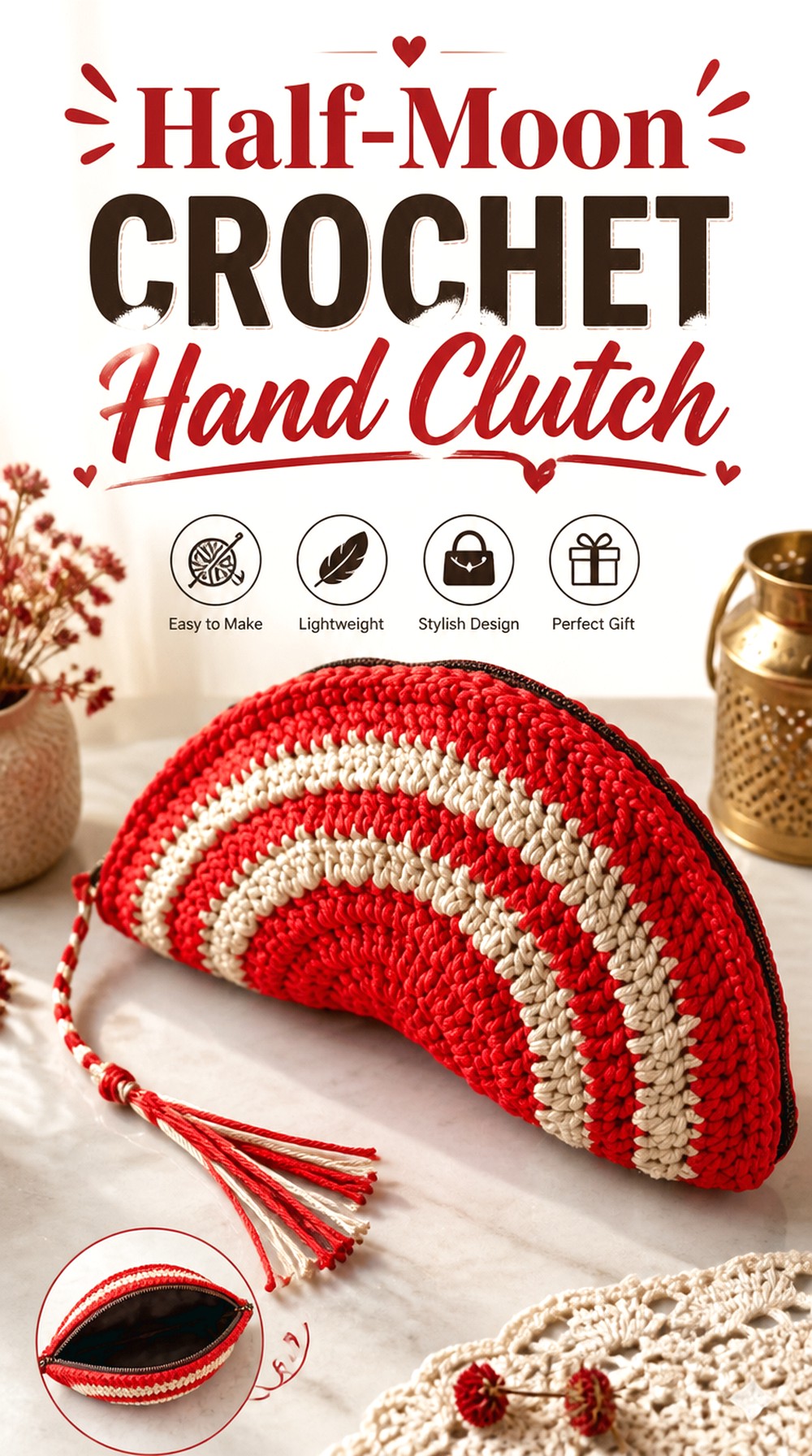
Instead of another rectangular pouch, this project from sangita’s craft uses a half-moon form. The tutorial identifies it as a hand purse and uses cord for the crocheted body. The curved lower edge immediately separates it from envelope and foldover designs.
A half-moon shape can make a small accessory feel softer and more sculptural, but it also changes interior organization. The corners available in a rectangular clutch disappear, so long or rigid items may fit differently even when the overall width looks similar.
Curved Bags Need Different Capacity Checks
Do not assess this clutch by maximum width alone. A half-moon gradually narrows toward its edges, so the usable footprint is smaller than a rectangle with the same widest measurement. If a particular item must fit, place it against a paper outline approximating the finished silhouette before you start.
Edge Consistency Defines the Crescent Shape
The curve is the main visual feature, which means irregular shaping can be more noticeable than on a straight-sided pouch. As the body develops, lay it flat occasionally and compare both sides. Correcting a developing asymmetry early is easier than trying to disguise an uneven half-moon with edging later.
Original Tutorial and Creator Credit
Creator: sangita’s craft
Bubble Stitch Pyramid Crochet Clutch
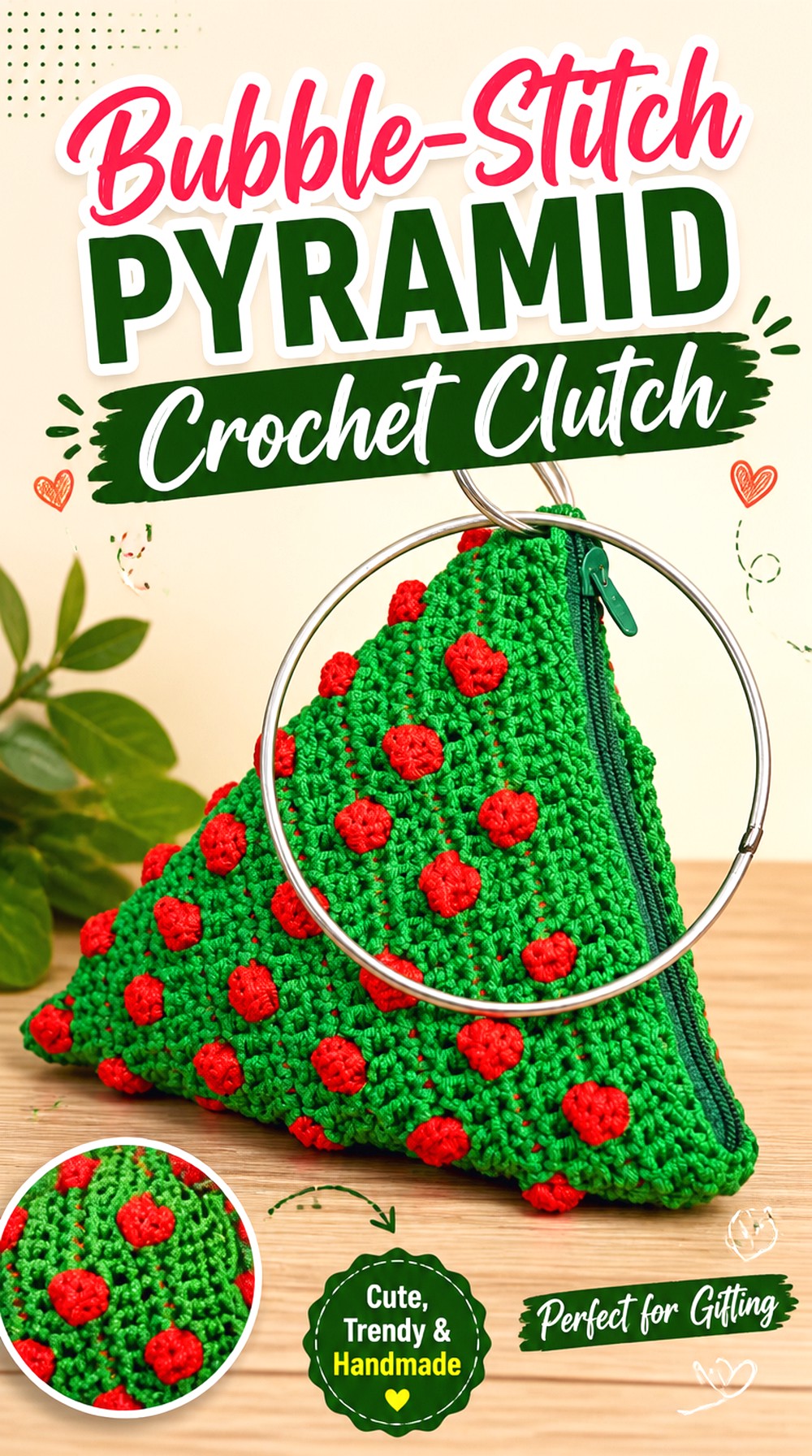
Kesar crochet’s project combines bubble texture with a triangular pyramid form, making it one of the most unconventional clutches in the collection. The video specifically describes the finished object as a bubble-stitch pyramid purse/clutch bag.
The shape is the real reason to consider this idea. A pyramid pouch behaves very differently from a flat envelope clutch: it occupies more three-dimensional space and creates a distinctive profile even without additional decoration. It can be an interesting option for a small novelty clutch or gift when conventional rectangular storage is not the priority.
A Pyramid Uses Interior Space Differently
The widest exterior points do not translate into a flat rectangular storage area. Small loose items may fit comfortably, while rigid objects can be harder to position. Decide what the clutch will carry before changing the scale. Enlarging every dimension may make the pyramid much bulkier, not simply a slightly larger version of the same accessory.
Bubble Texture Amplifies an Already Dimensional Form
Both the silhouette and stitch surface add volume. If you substitute a very thick yarn, the combination may become visually heavy. A small sample can show whether the bubbles remain distinct without overwhelming the pyramid edges. When adapting the design, it may be better to change color than to increase texture further.
Original Tutorial and Creator Credit
Creator: kesar crochet
Sparkle Jumbo Yarn Crochet Clutch
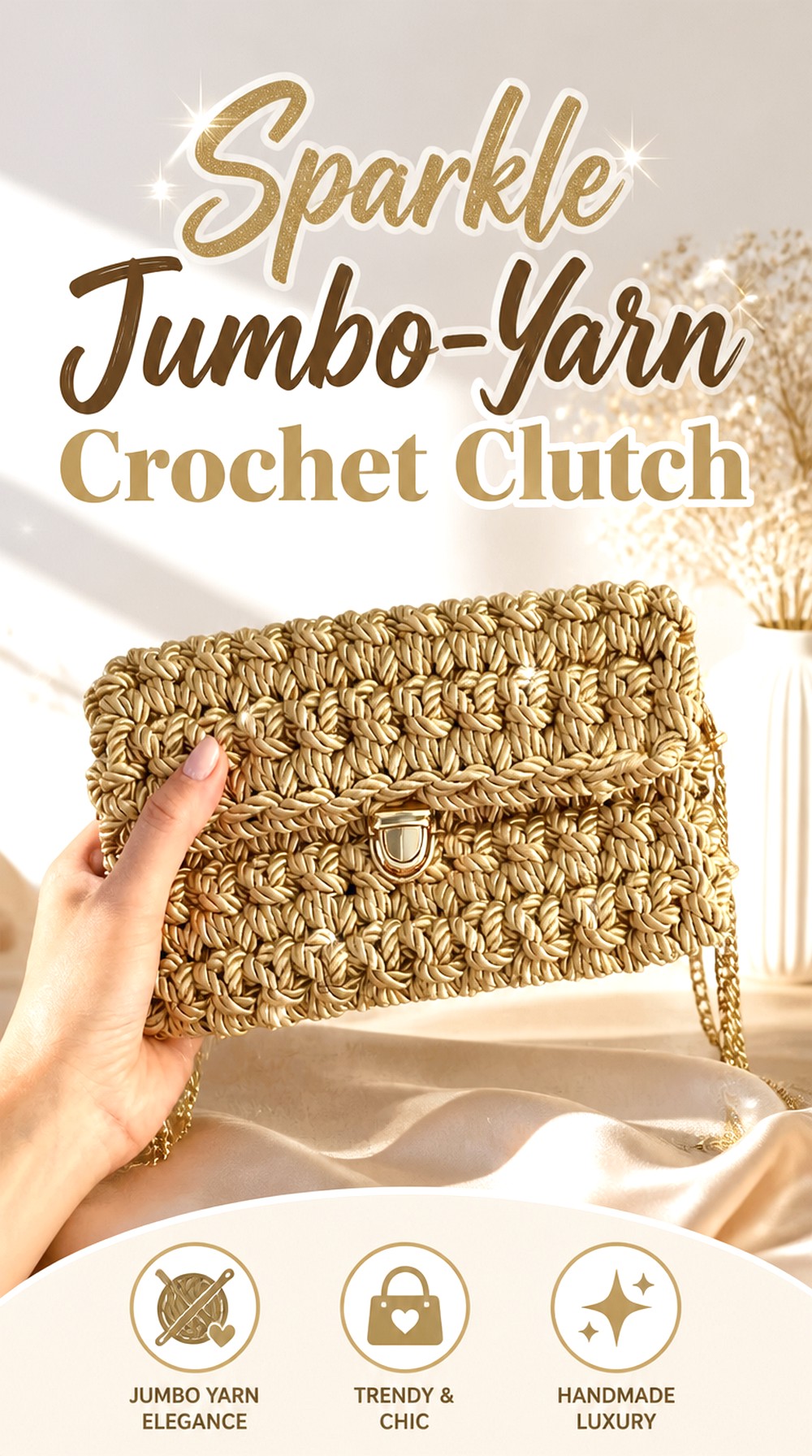
Wilma Westenberg’s clutch keeps the construction intentionally simple so an extra-thick, sparkly yarn becomes the visual focus. The published tutorial is titled “EASY CROCHET CLUTCH – FREE PATTERN,” and the accompanying project information identifies it as the Paparazzi Clutch.
This is a statement-yarn project rather than a complicated texture project. The oversized stitches and bold material can create an evening-bag effect with relatively clean shaping. If you substitute another yarn, remember that the scale of the stitches is part of the finished look, not merely a construction detail.
Jumbo Yarn Can Make a Small Bag Feel Substantial
Thick yarn adds visual and physical volume quickly. Before enlarging the clutch, consider whether the existing scale already provides enough presence. A large bag made from very bulky yarn can become cumbersome and may no longer read as an evening clutch. Compare the proposed dimensions with an actual clutch you already find comfortable to hold.
Let the Yarn Supply the Decoration
A glittery or highly textured jumbo yarn already creates strong surface interest. Extra appliqués or multiple contrasting trims can compete with it. If you want customization, hardware is often a cleaner place to make the change because the clasp or chain can complement the yarn without covering the oversized stitch texture.
Original Tutorial and Creator Credit
Creator: Wilma Westenberg
Leather Base Rope Crochet Clutch
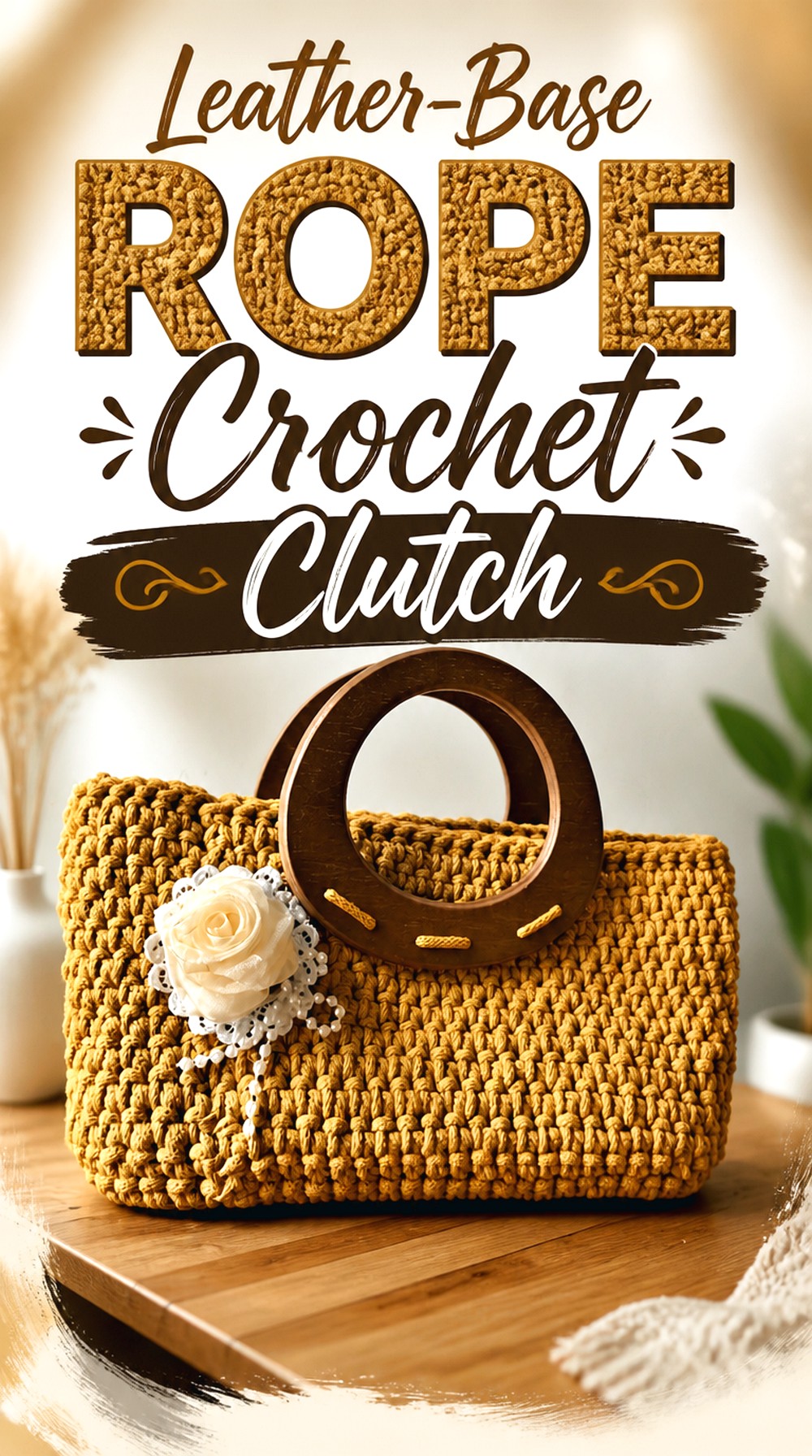
Whizzy Crafts -By Naina combines rope cord with a separate leather base, giving the clutch a mixed-material foundation rather than building the entire body from crochet alone. The source project is presented as a party-style handmade purse and also includes a decorative flower element.
A premade or separate base changes how the bag behaves: the bottom can remain more defined while the crocheted section supplies the walls and surface texture. This is useful if you like crochet but want a straighter, more controlled lower edge.
The Base Determines More Than the Bottom Shape
Once a rigid or semi-rigid base is introduced, its dimensions influence the entire body. Do not buy a different base assuming the rest of the project will scale automatically. Check hole spacing, perimeter, and how your chosen cord sits around the edge before committing to the full clutch.
Keep Added Decoration Proportional to the Hardware
The tutorial includes decorative finishing, but a mixed-material bag already has several visual elements: cord, base, closure, and possibly a chain or charm. If you personalize it, test embellishments temporarily first. Removing one decoration can sometimes make the leather-and-crochet contrast look more deliberate.
Original Tutorial and Creator Credit
Creator: Whizzy Crafts -By Naina
Metal Frame Crochet Clutch

Begincrafts’ clutch uses a metal frame across the opening, immediately giving it a more structured purse-like finish than a soft foldover. The tutorial is a full public watch video specifically focused on a crochet clutch bag with a metal frame.
Frame hardware can make a handmade clutch look highly defined, but it also creates a non-negotiable dimension at the top. Unlike a button, you cannot casually move the entire frame after the bag is finished. Choosing compatible hardware before finalizing the body is therefore one of the most important planning decisions.
Let the Frame Set the Opening Dimension
If you already own the frame, treat it as a fixed design constraint. The crochet needs to meet the attachment area without being severely gathered or stretched unless the tutorial intentionally creates that effect. A body that looks attractive on its own may still be incompatible with the hardware if the top edge is the wrong length.
Check Frame Weight Against the Fabric
Metal hardware adds concentrated weight at the opening. Hold the finished or nearly finished crochet fabric beneath the frame before attachment and see whether the top begins to collapse. A very soft yarn may need additional support, while a dense cord or firmer material may integrate more naturally with structured hardware.
Original Tutorial and Creator Credit
Creator: Begincrafts
Star Stitch Crochet Hand Clutch
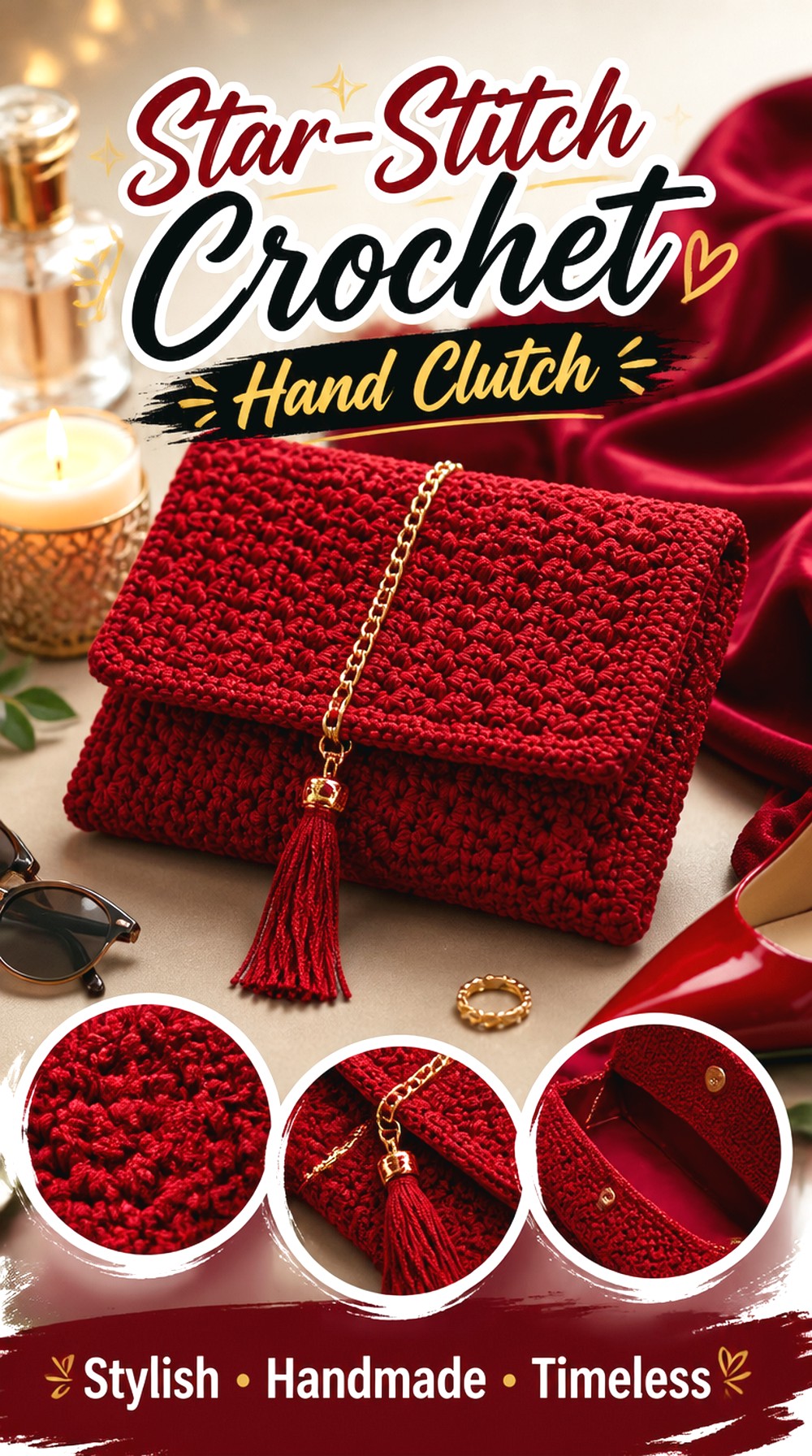
Cathérine Crochet’s design uses star stitch across an elegant hand-held clutch, with rope yarn and optional chain hardware included in the creator’s material information. Star stitch offers a flatter form of texture than bobbles while still creating a clearly recognizable repeated surface.
This makes the project attractive when you want intricate stitch definition without a highly three-dimensional bag. The texture is decorative enough to carry the design on its own, so it can work particularly well in a single color where every star remains visible.
Star Stitch Needs Enough Definition to Read Clearly
A fuzzy yarn can blur the points that make the stitch recognizable. Before choosing a substitute, crochet a small section and view it in normal lighting from a few feet away. If the stars merge into a general textured surface, decide whether that softer effect is acceptable or whether a smoother cord-like yarn would better preserve the design.
Watch the Side Edges of a Repeated Texture
Complex textures sometimes encourage crocheters to focus on the center repeat and overlook the outer edges. On a clutch, uneven sides become obvious after folding and assembly. Check width periodically and confirm that the first and last portions of each row remain consistent before the piece becomes long enough to form the bag.
Original Tutorial and Creator Credit
Creator: Cathérine Crochet
Basket Weave Crochet Clutch
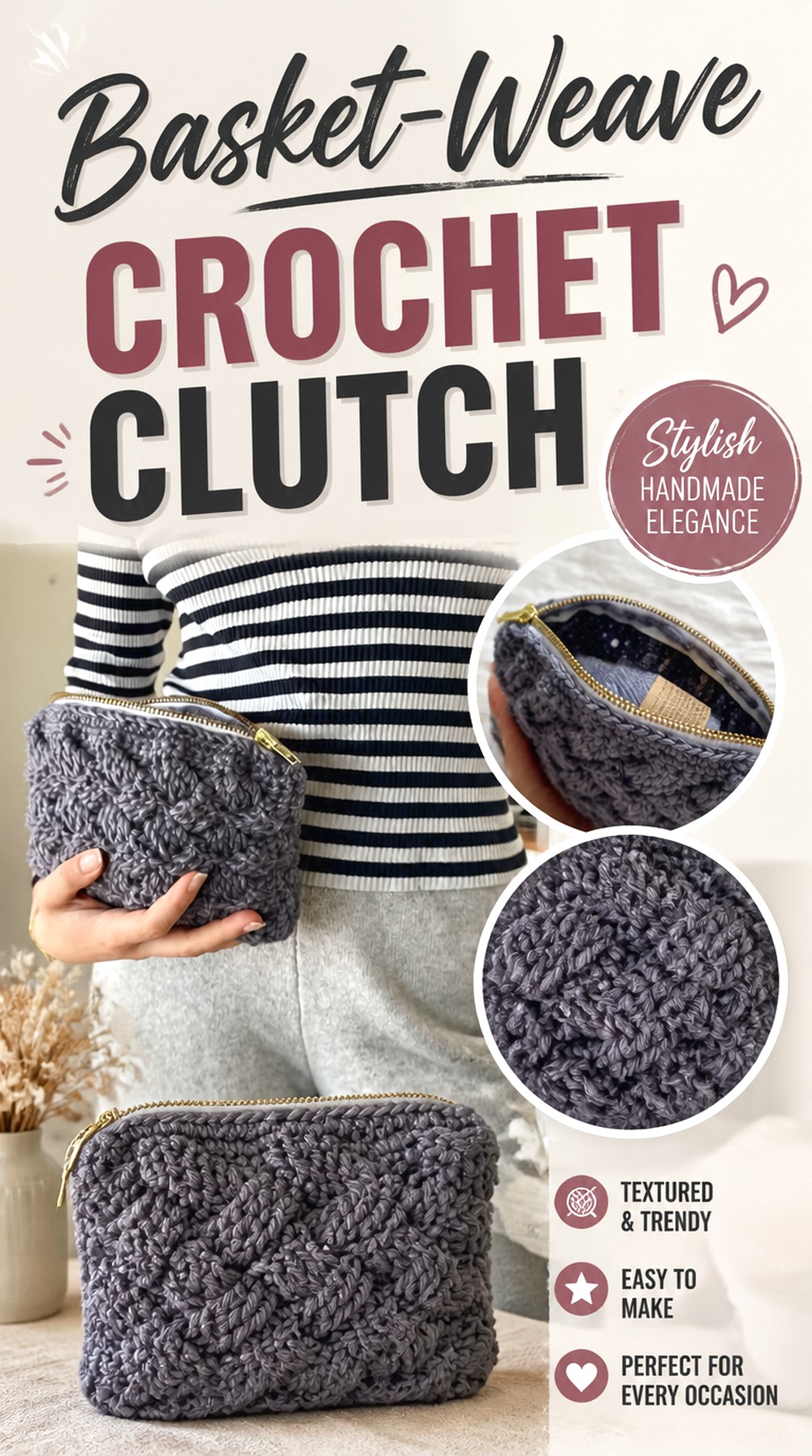
The basket-weave clutch from carla.bycarla closes the list with a strongly architectural texture. The public tutorial is devoted specifically to a basket-weave crochet clutch rather than using the stitch only as a demonstration swatch.
Basket-weave texture can create a substantial surface even when the overall bag remains a straightforward clutch shape. Visually, it sits between the pronounced depth of bobbles and the flatter definition of tapestry colorwork. This is a strong option when you want the crochet technique itself to be the primary design feature.
Basket-Weave Texture Can Contract the Fabric
Raised post-style textures do not always produce the same width as simpler stitches worked with the same yarn and hook. If you are adapting the dimensions, base decisions on an actual basket-weave sample rather than a plain stitch swatch. That is especially important when you need the finished top edge to align with a closure.
Avoid Hiding the Pattern Under Excess Trim
The woven effect already creates repeated horizontal and vertical movement. A large amount of fringe, appliqué, or contrasting edging can cover the feature that makes this clutch distinctive. If you want a more decorative finish, a restrained clasp, tassel, or lining color can add interest without competing with the basket-weave surface.
Original Tutorial and Creator Credit
Creator: carla.bycarla
YouTube Video: Basket Weave Crochet Clutch Tutorial
YouTube Video Link: Watch on YouTube
The tutorial is especially useful for seeing how pronounced basket-weave texture works across a complete clutch rather than a small stitch sample.
Which Crochet Clutch Style Fits Your Use?
| If you want… | Start with… | Main point to check |
|---|---|---|
| A crisp summer look | Raffia Foldover Crochet Clutch | Whether your raffia bends cleanly at the flap |
| Better security for small items | Lined Zipper Crochet Evening Clutch | Zipper length and lining fit |
| A highly structured opening | Metal-Frame Crochet Clutch | Hardware compatibility with the top edge |
| Strong surface texture | Bobble, Star-Stitch, or Basket-Weave Clutch | Thickness, stitch definition, and final width |
| An unusual shape | Half-Moon or Pyramid Crochet Clutch | Usable interior space rather than outside width |
| A convertible hand/shoulder bag | Cord or Boho Chain-Strap Crochet Clutch | Strap attachment strength and hardware placement |
| Graphic color instead of dimensional texture | Tapestry Colorwork Crochet Clutch | Motif centering and consistent tension |
| A reinforced rectangular body | Mesh-Reinforced Crochet Clutch | Fit between crochet, support layer, and lining |
Conclusion
The most useful way to choose among these 22 crochet clutch bag ideas is to start with function rather than color. For a secure small bag, the zipper and metal-frame options make sense to compare first. Raffia, mesh reinforcement, cord, and structured hardware suit readers who want stronger shape definition, while bobble, basket-weave, star stitch, and tapestry designs put more emphasis on the crocheted surface.
For unusual silhouettes, the half-moon and pyramid clutches move farthest from the standard rectangle. If versatility matters, look at the removable-chain and strap options. Once you choose the construction that fits your needs, use the credited original tutorial for the creator’s exact stitches, measurements, assembly, and finishing details.
Frequently Asked Questions
What type of yarn is better when I want a crochet clutch to hold its shape?
Rather than looking for one universal fiber, compare the density and stretch of the finished fabric. Cord, raffia, some T-shirt yarns, and other firm materials can create more structure than soft, loosely crocheted yarn, but the exact result also depends on stitch choice and tension. Make a sample, hold it vertically, and see how much it deforms before deciding whether you also want lining or reinforcement.
Should every crochet clutch bag have a lining?
No. A dense clutch may function well without one, especially if you carry larger items. Lining becomes more useful when the crochet has open spaces, the bag stretches noticeably, or you want to carry small objects that could catch on stitches. It can also create a cleaner interior. If you add one, fit it to the actual finished crochet rather than relying on assumed measurements.
Is a zipper better than a magnetic snap for a crochet clutch?
They solve different problems. A zipper closes most or all of the opening and is useful when containment is the priority. A magnetic snap is visually discreet and quicker to open, but parts of the opening may remain accessible depending on the bag shape. Choose based on what you will carry, then plan the closure before final finishing so its placement works with the completed fabric.
How can I keep a crochet clutch strap from distorting the corners?
First check whether the original construction was designed to accept a strap. A long strap places repeated tension on small attachment areas, and very stretchy fabric may elongate there. Hardware, reinforcement, a lining, or a firmer yarn may help depending on the design. Avoid attaching a heavy chain to a few unsupported stitches simply because the finished clutch has room for a ring.
Can I change the yarn used in a crochet clutch tutorial?
Usually you can experiment, but a different yarn can change far more than color. Thickness, elasticity, surface texture, and stiffness can alter the finished dimensions, flap behavior, hardware compatibility, and interior capacity. Make a sample in the actual stitch pattern and compare its fabric with the tutorial result. When a frame or zipper is involved, recheck measurements before buying or permanently attaching the hardware.
What should I measure before resizing a crochet clutch?
Start with what must fit inside the finished bag, then consider width, usable height, and depth—not just the dimensions of a flat panel. Foldover flaps consume part of the fabric, curved bags narrow toward the edges, and thick textures reduce usable interior space. If the project uses purchased frames, bases, or zippers, those components may also limit how freely the design can be resized.


