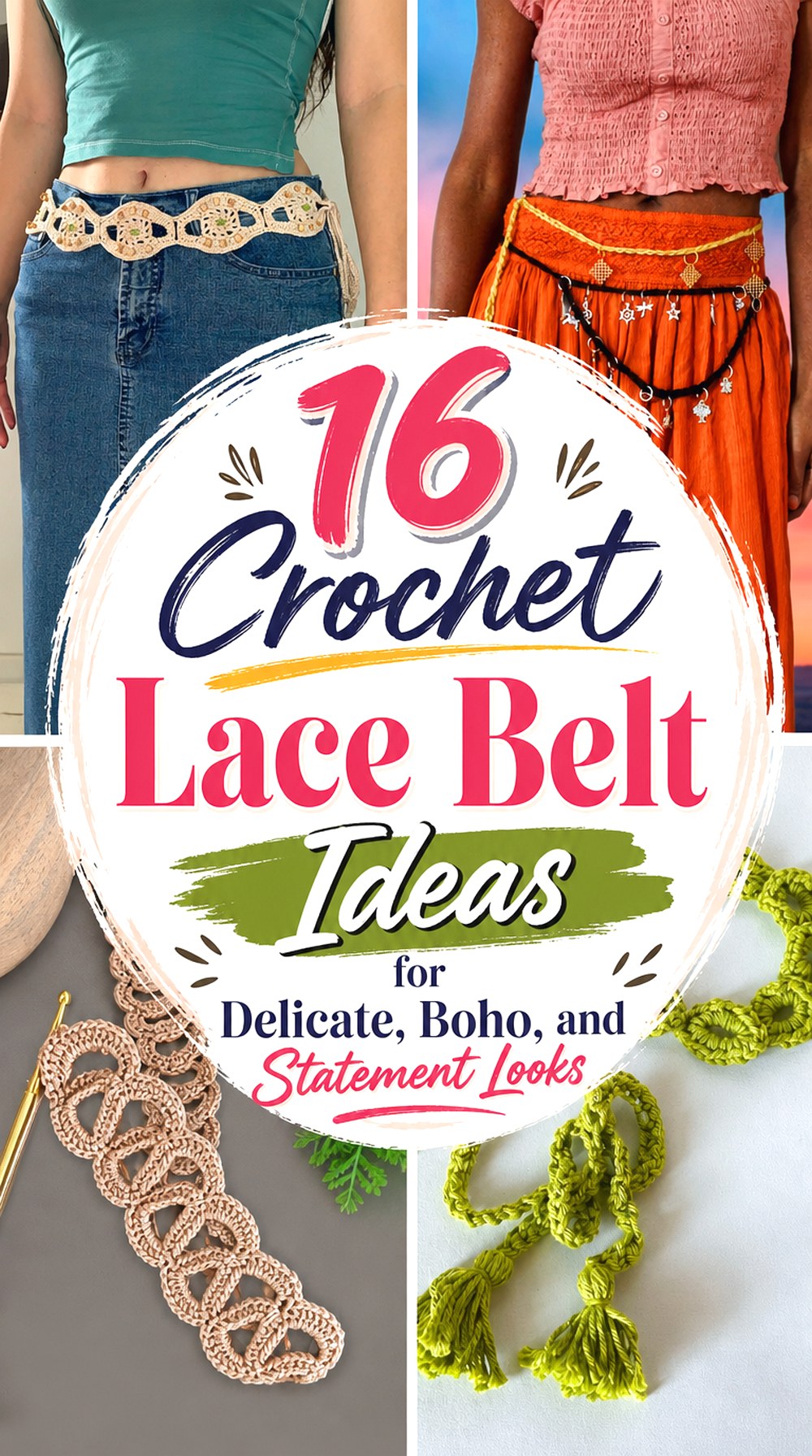

A crochet lace belt can be barely there and decorative, or wide enough to become the focal point of an outfit. The most useful differences are not simply color. Construction changes how a belt hangs, adjusts, closes, and holds its shape: compare a long openwork tie with linked flowers, a heart chain, a buckled band, or a corset-inspired waist piece.
The ideas below cover true open lace, shells, botanical motifs, rings, beads, chains, tassels, and laced closures. A few tutorials teach a structured belt or multi-use cord rather than traditional crochet lace; those are included because their closure and fitting approaches can help when you want more support around an openwork design. Use the comparisons to choose a format first, then follow the credited creator for the exact construction.
Quick List
- Crochet Fan-Lace Tie Belt
- Crochet Scalloped Shell Waist Belt
- Crochet Flower-Square Motif Belt
- Crochet Corset-Laced Waist Belt
- Crochet Recycled-Buckle Tunisian Belt
- Crochet Slim Buckle Belt with Cord Structure
- Crochet Boho Tassel Tie Belt
- Crochet Leaf-Motif Wrap Belt
- Crochet Chain-and-Charm Belt
- Crochet Beaded Summer Belt
- Crochet Heart-Chain Belt
- Crochet Wide Clasp Waist Belt
- Crochet Romanian-Cord Skinny Belt
- Crochet Flower-Chain Belt
- Crochet O-Ring Lace Belt
- Crochet Lacy Pointed-End Sash Belt
Choose the Lace Structure Before You Choose the Color
Start by deciding what the belt needs to do. A fan, shell, flower, heart, or ring design puts negative space on display, so it works primarily as a decorative layer. Long tie ends also give you flexibility about where the belt sits because you are not restricted to fixed buckle holes.
Motif belts behave differently. Repeated flowers, squares, leaves, or rings create visible units, which means spacing and motif size affect the entire composition. Buckled and clasped belts offer a cleaner, more tailored finish, but they demand closer attention to finished length and stretch. Corset-style belts add width and lacing, making them more noticeable over dresses or loose layers. Decide between fluid decoration and firmer waist definition before investing time in embellishment.
Fit, Stretch, and Closure Need to Be Planned Together
Do not rely on an unblocked strip laid flat to decide final fit. Crochet fabric can lengthen when worn, particularly when the construction is narrow, open, or made from a fiber with substantial give. Check the belt around the actual garment or waist position where you intend to wear it.
Tie belts are forgiving because the ends provide adjustment. Repeating motifs can also be adaptable, but adding or removing one full motif may create a noticeable change in length. A buckle or fixed clasp has less room for error, so the closure needs to be considered while sizing the crocheted section rather than after it is finished. For an open lace belt, also check whether the edges stay reasonably flat under light tension; severe curling or narrowing can change both appearance and comfort.
Crochet Fan Lace Tie Belt
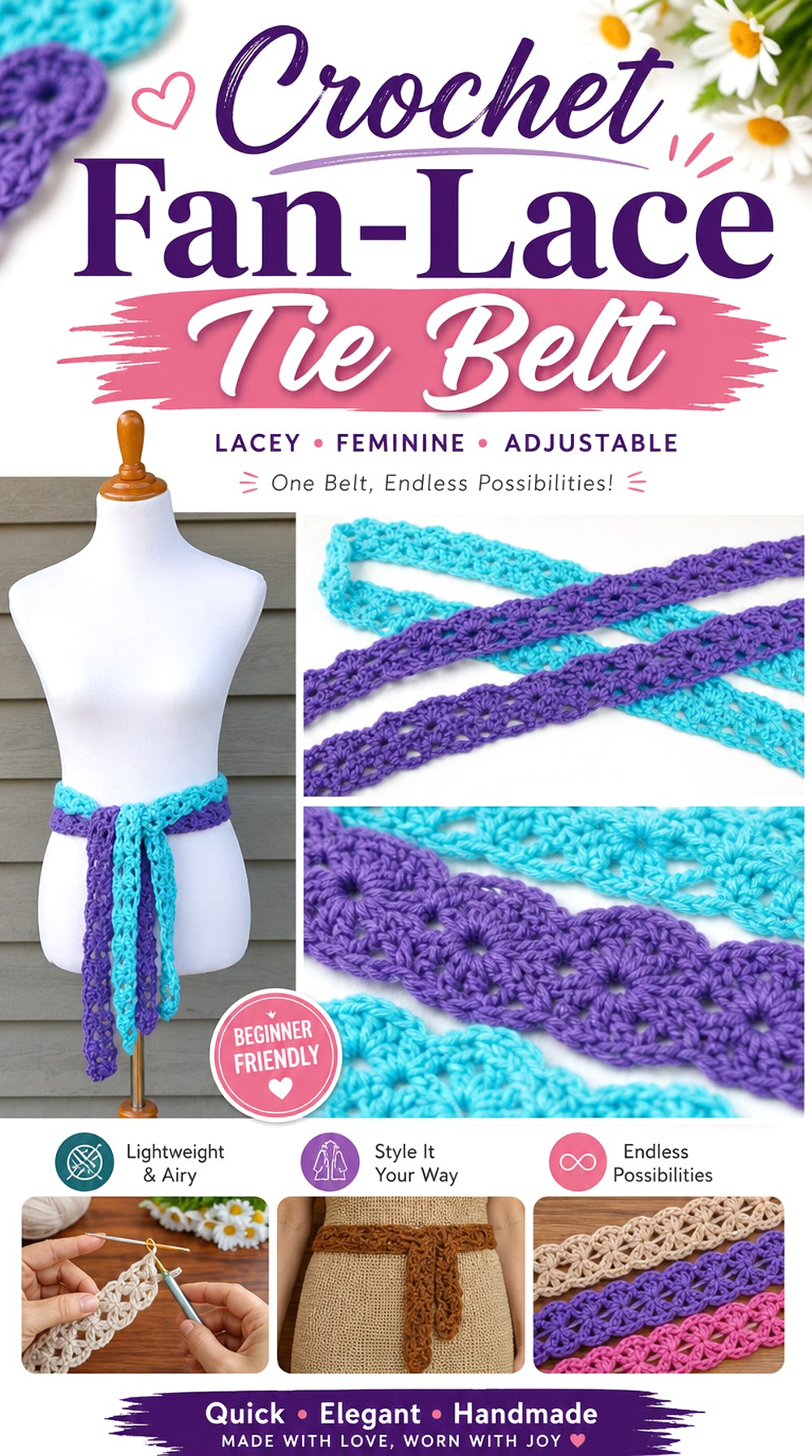
This long, narrow belt is one of the clearest examples of lace doing all the visual work. Fiber Flux’s finished design uses an airy repeating fan-like fabric and leaves the belt free of bulky hardware, so the ends can simply be wrapped or tied. That makes it a useful choice for dresses, long shirts, and other garments where a soft decorative waist line is more important than firm support.
Because the belt is relatively open, yarn character will remain highly visible. A smooth yarn emphasizes the repeating openings, while a fuzzy surface can soften their definition. The long horizontal format also makes consistent tension particularly noticeable.
A Long Tie Gives the Lace Room to Drape
A lace tie can be worn with different amounts of overlap without moving a buckle or repositioning hardware. Before deciding on the final length, test how much tail you actually want after tying it around your intended garment. A belt meant to hang with dramatic ends needs different proportions from one intended for a small, discreet knot.
Fan Openings Make Tension Changes Easy to See
Repeated open sections act almost like a visual ruler: if tension gradually tightens, the belt may narrow or the motifs may become compressed. Periodically laying the work flat is a useful checkpoint. If the edge begins pulling inward, address the tension change before completing the full length rather than expecting finishing alone to correct a pronounced difference.
Crochet Scalloped Shell Waist Belt
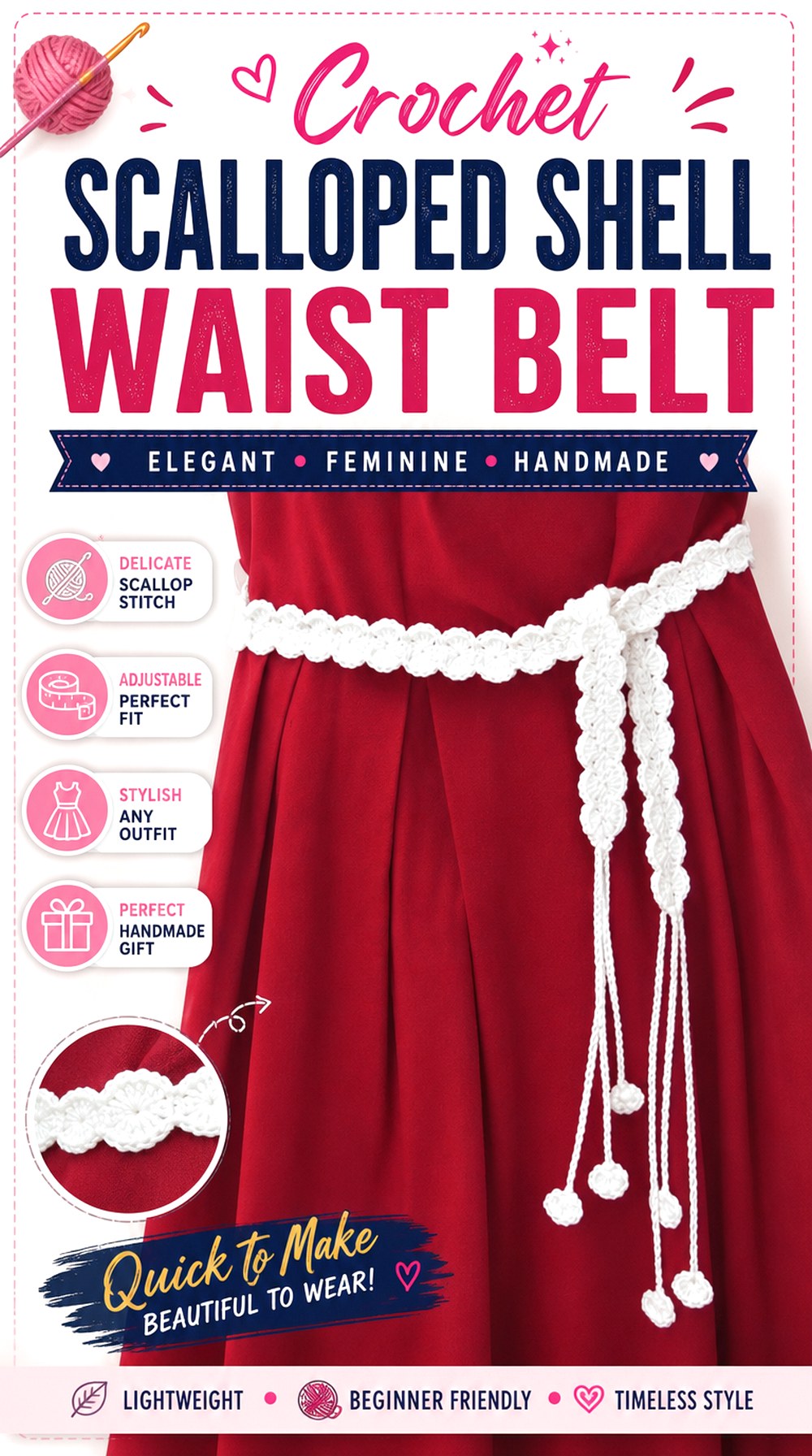
Gloriarte’s crochet belt builds its character around repeated shell shapes, creating a more scalloped and ornamental surface than a plain straight band. The finished object still reads as a narrow accessory rather than a heavy waist cincher, making this approach well suited to outfits that need texture without a broad block of crochet.
The tutorial uses cotton suitable for the demonstrated hook size, which also makes the source useful for observing how a relatively smooth fiber shows the shell definition. If you adapt the overall look with another yarn, compare the clarity of the scallops before committing to the entire belt.
Scalloped Edges Become Part of the Silhouette
Unlike a perfectly straight belt edge, shells create a repeating outline that remains visible against the garment underneath. Try a sample against the types of fabric you wear most. A highly patterned dress may compete with intricate scallops, while a simpler background allows each curved repeat to remain legible.
Smooth Yarn Keeps the Shells Visually Separate
Heavy halo can blur the boundaries between neighboring shells. If crisp lace is the priority, look for a yarn that lets the stitch structure remain visible. Also consider how the fiber behaves after finishing: the belt should have enough flexibility to wrap the body without losing the recognizable scalloped profile.
Original Tutorial and Creator Credit
Creator: Gloriarte
Crochet Flower Square Motif Belt
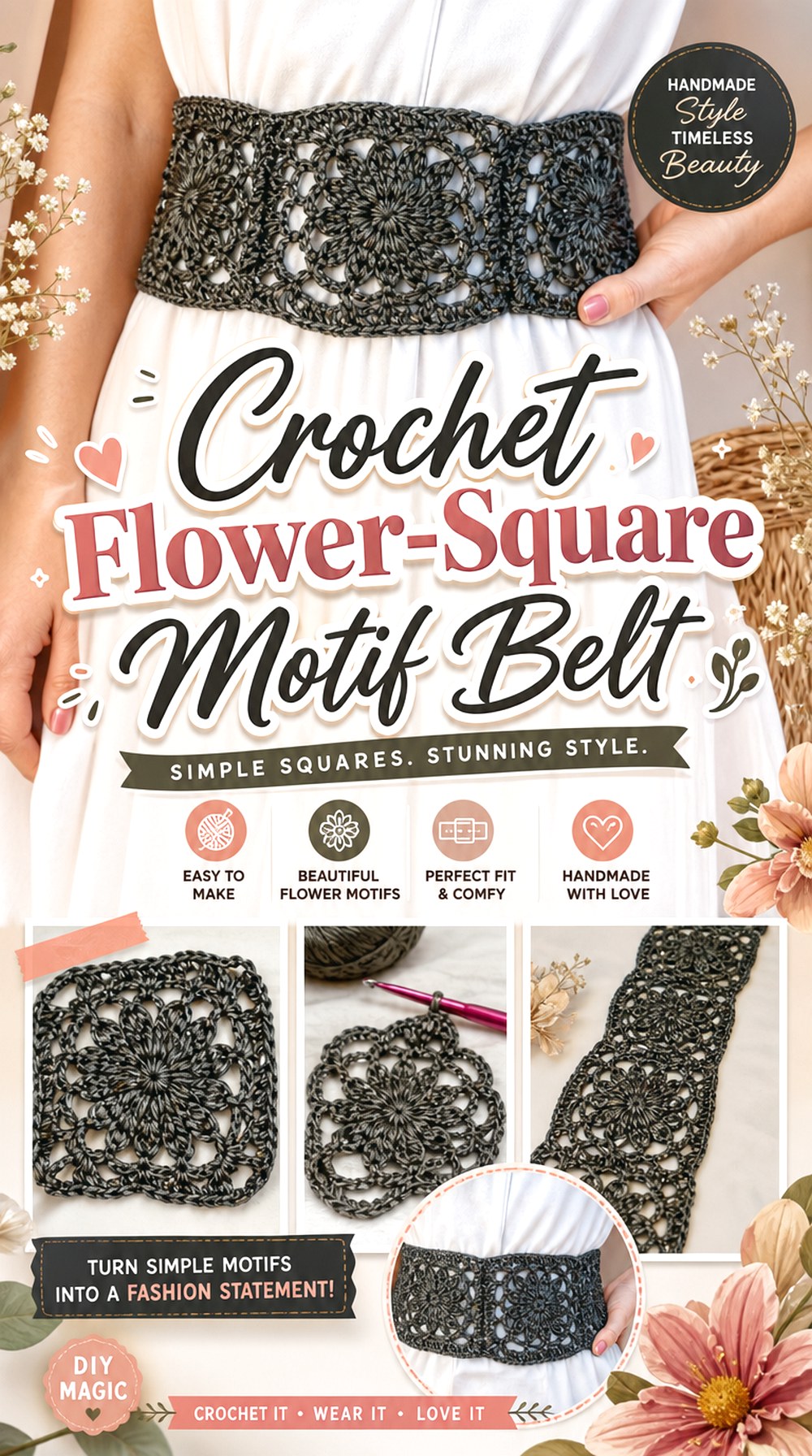
Instead of one uninterrupted lace strip, this design builds the waistline from individual flower-in-square motifs. That changes the planning process completely. Each square acts as a visible module, and the joins become part of the finished design rather than disappearing into a continuous repeat.
Nebeska Crochet with Love demonstrates the belt as a row of floral squares and notes several possible fastening approaches, including hardware or crocheted ties. This option makes sense when you want the belt to feel more like wearable motif work and less like narrow trim.
Block the Flower Squares Before Judging the Belt Span
Motifs that look approximately equal straight off the hook can settle into different dimensions. Compare them after the same finishing treatment before joining the complete strip. A succession of small differences can create a belt that bows, ripples, or gradually changes width even when each individual square looks acceptable on its own.
The Join Should Not Overpower the Flower Centers
A motif belt already contains several visual elements: central flowers, square frames, gaps, and joins. Decide whether the connections should blend into the background or become another decorative feature. Strongly contrasting joins can divide the belt into obvious blocks, while quieter connections let the flowers read as the main continuous theme.
Closure Choice Changes the Character of the Motifs
A buckle gives a row of floral squares a more structured finish, while long crochet ties preserve a relaxed handmade appearance. Before adding either, try the joined motifs around the intended waist position. This prevents the closure from becoming a late addition that makes the floral section sit off-center.
Original Tutorial and Creator Credit
Creator: Nebeska Crochet with Love
Crochet Corset Laced Waist Belt
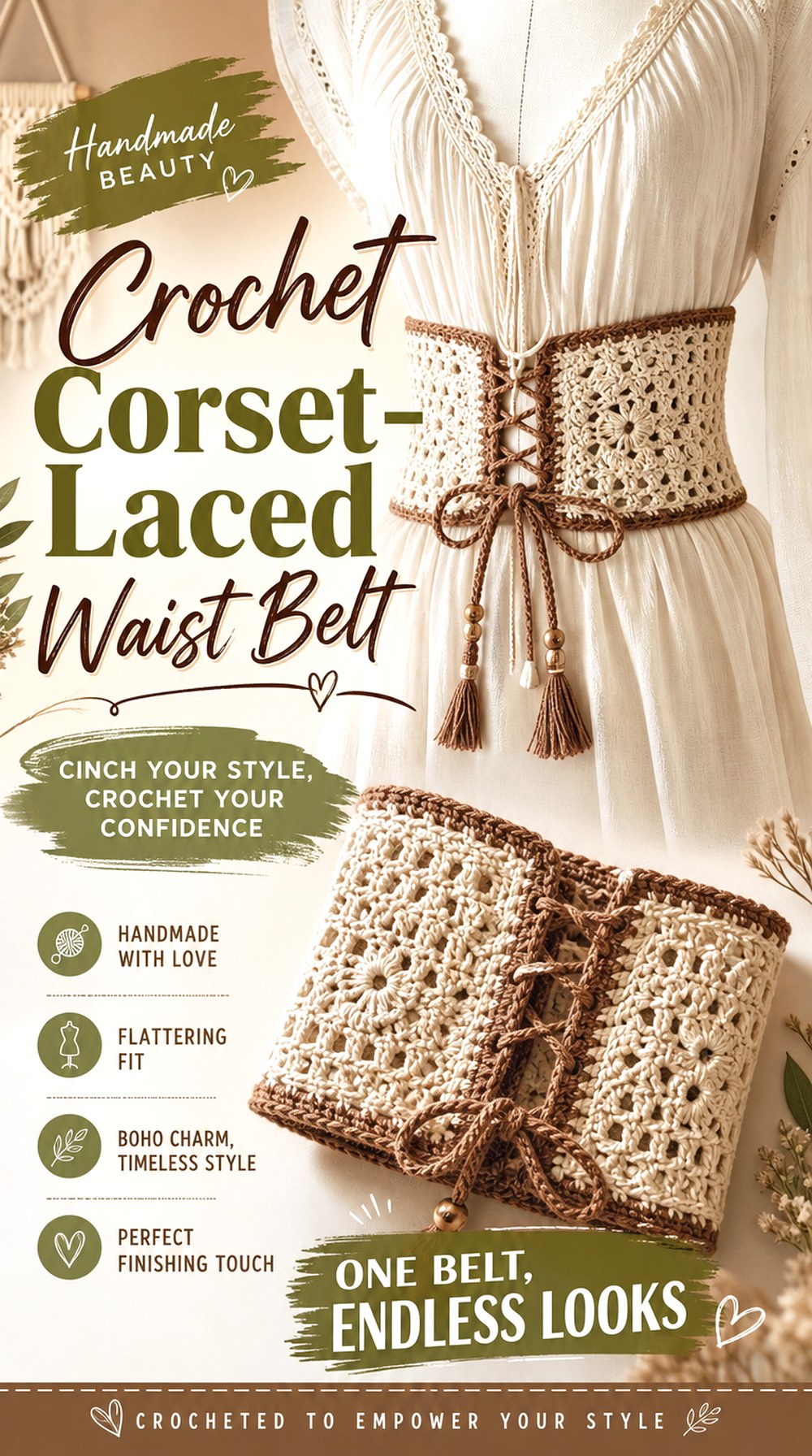
A corset-style belt moves away from delicate skinny lace and uses open lacing as the central design feature. Kemunto crochets demonstrates a shaped waist piece with sections that change to accommodate the body, followed by loops and lacing. The result is much broader and more architectural than the fan or shell belts above.
Choose this direction when you want visible waist definition over a dress, shirt, or other layer. Because the body of the belt covers more area, yarn thickness, flexibility, and the placement of the lacing all have greater consequences for comfort.
Wide Coverage Makes Vertical Placement Important
A narrow tie can shift slightly without changing an outfit much. A wide corset belt cannot. Check where the upper and lower edges fall when you sit as well as stand. If the finished piece is intended for a particular dress or shirt, fitting it over that layer provides more useful information than measuring only against the body.
Lacing Creates Adjustment but Not Unlimited Fit
A lace-up opening gives some room to fine-tune circumference, but it should not compensate for a main panel that is dramatically too short or too long. Look at the gap you want the lacing to create and keep the two sides visually balanced. Excessive pulling can also distort the edge loops.
Edge Stability Matters Around the Tie Points
The laced ends receive repeated tension whenever the belt is tightened. Before wearing it regularly, inspect the loop area for stretching and make sure both sides respond similarly. If you change yarn from the tutorial, pay particular attention to how easily that fiber elongates under tension.
Original Tutorial and Creator Credit
Creator: Kemunto crochets
Crochet Recycled Buckle Tunisian Belt
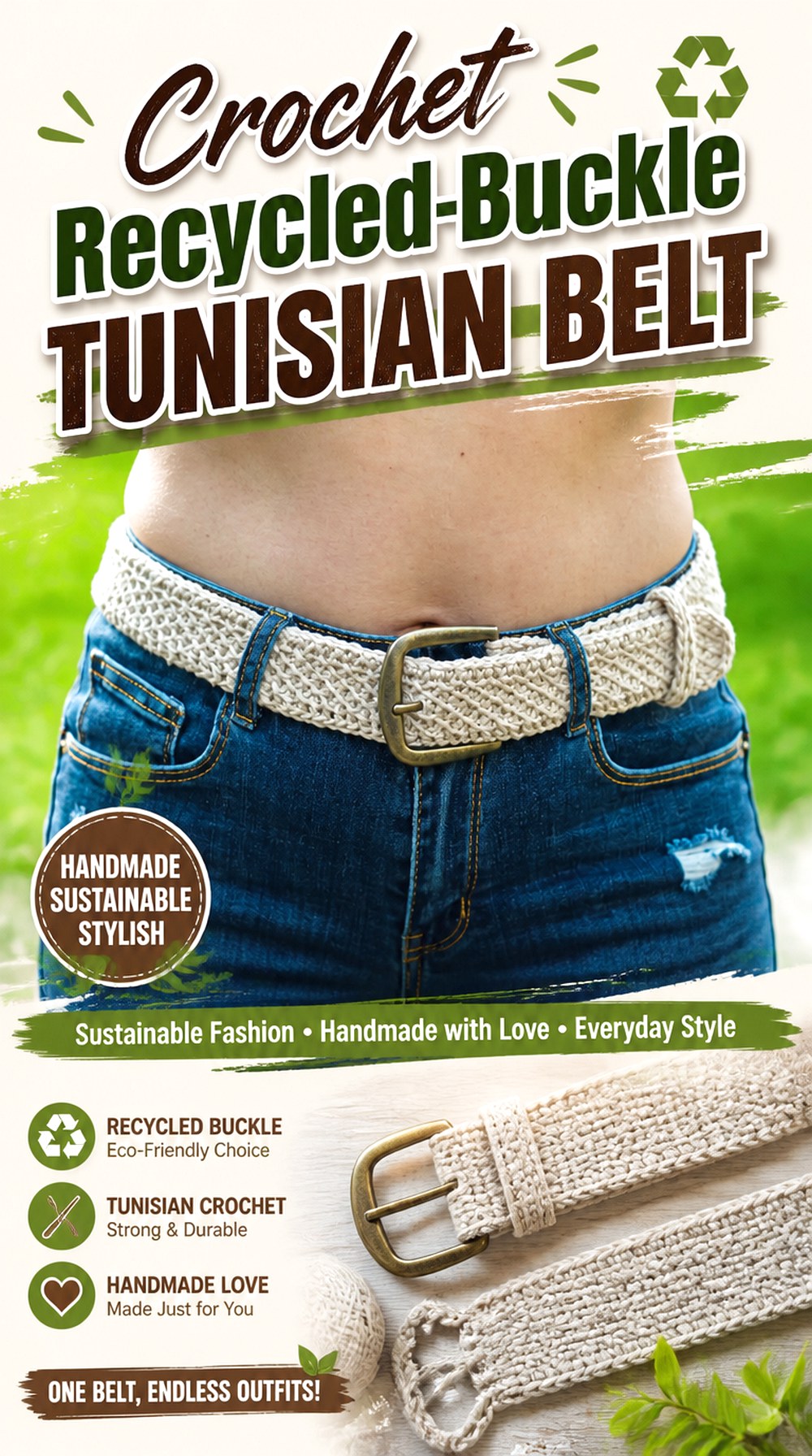
Francesca Uncinettando Crochet&Love offers a useful contrast to the more openly lacy designs: a belt worked with Tunisian crochet and attached to a reused buckle. The source specifically presents the project as a complete belt rather than a lace strip.
Why include it in a lace-belt roundup? Because a decorative openwork belt still needs a closure strategy. This tutorial provides a strong reference if you want a firmer, hardware-led finish or if you plan to pair lace elsewhere in an outfit with a quieter crocheted waist band.
A Reused Buckle Sets the Belt Width Early
When hardware is the closure, the opening of that hardware influences the proportions of the crocheted band. Choose the buckle before making assumptions about width. A beautiful finished strip that does not sit naturally within the buckle creates an avoidable finishing problem.
Tunisian Fabric Offers a More Tailored Counterpoint
This construction appears visually denser than the true lace examples, so it suits a different job. Use it when shape retention and a traditional belt appearance matter more than transparency. It can also serve as a useful comparison sample before deciding whether your outfit needs delicate openwork or a quieter structured accent.
Original Tutorial and Creator Credit
Creator: Francesca Uncinettando Crochet&Love
Crochet Slim Buckle Belt with Cord Structure
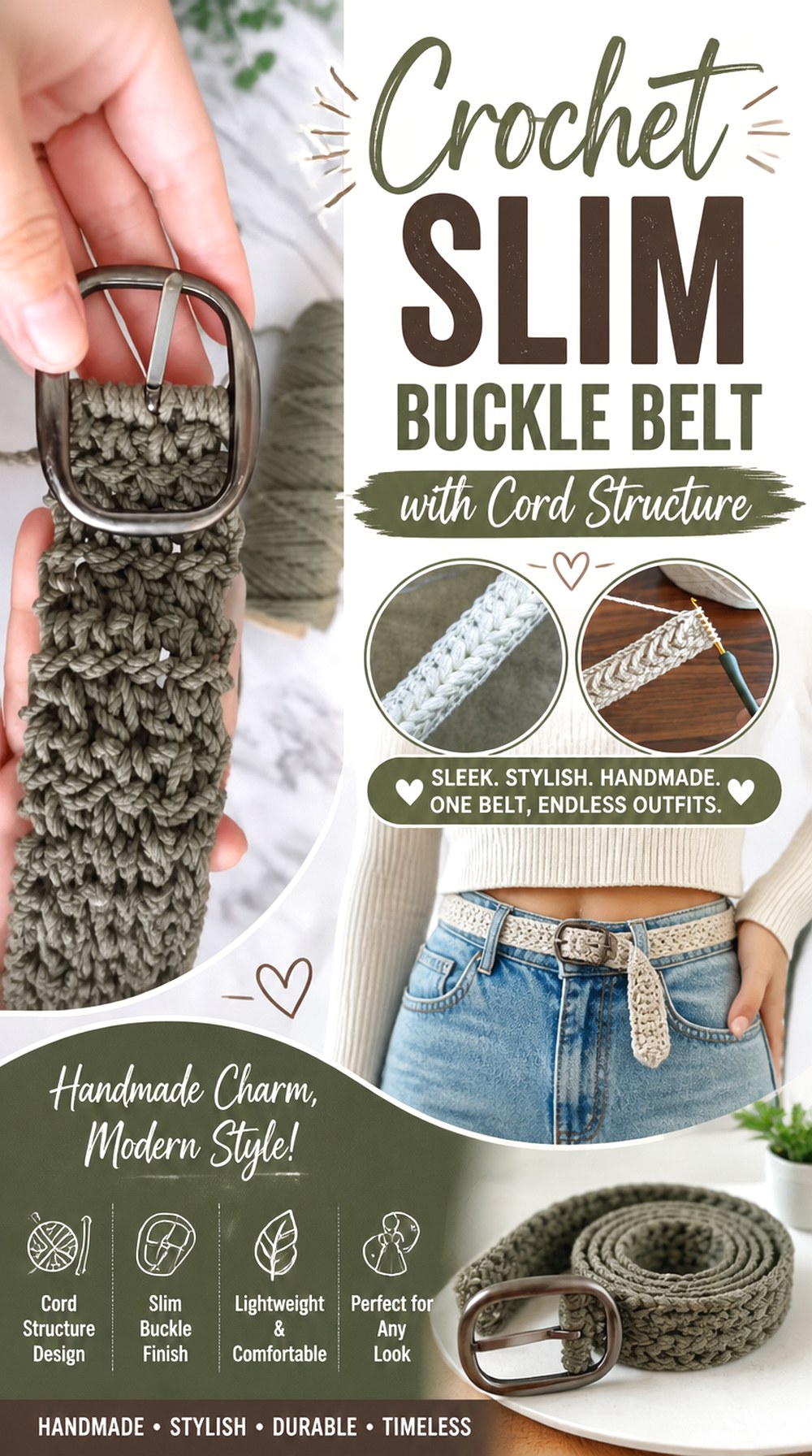
Bags by Bento | Taylor demonstrates another hardware-based belt, this time using cord and an existing buckle. The source notes that the demonstrated cord provides more body than conventional cotton yarn for this particular design. That makes the project a practical reference for anyone comparing soft lace ties with a more conventional belt that needs to hold its profile.
The finished format is slim enough not to dominate an outfit. It can therefore provide a structural alternative when a highly decorative lace belt would compete with an already textured garment.
Cord Produces a Different Result From Soft Garment Yarn
Changing fiber and construction material can alter more than stitch size. A firmer cord can make a skinny belt read as a defined band, whereas softer yarn may relax and fold. If you substitute materials, make a short sample and pull it gently lengthwise before deciding whether it has enough body for your preferred closure.
Buckle Attachment Deserves an Early Fit Check
Do not judge circumference before accounting for the hardware. Hold or temporarily position the belt with the buckle as soon as enough fabric exists to test the relationship. That allows you to catch unwanted stretch or proportion problems while there is still time to adjust the band.
Original Tutorial and Creator Credit
Creator: Bags by Bento | Taylor
Crochet Boho Tassel Tie Belt
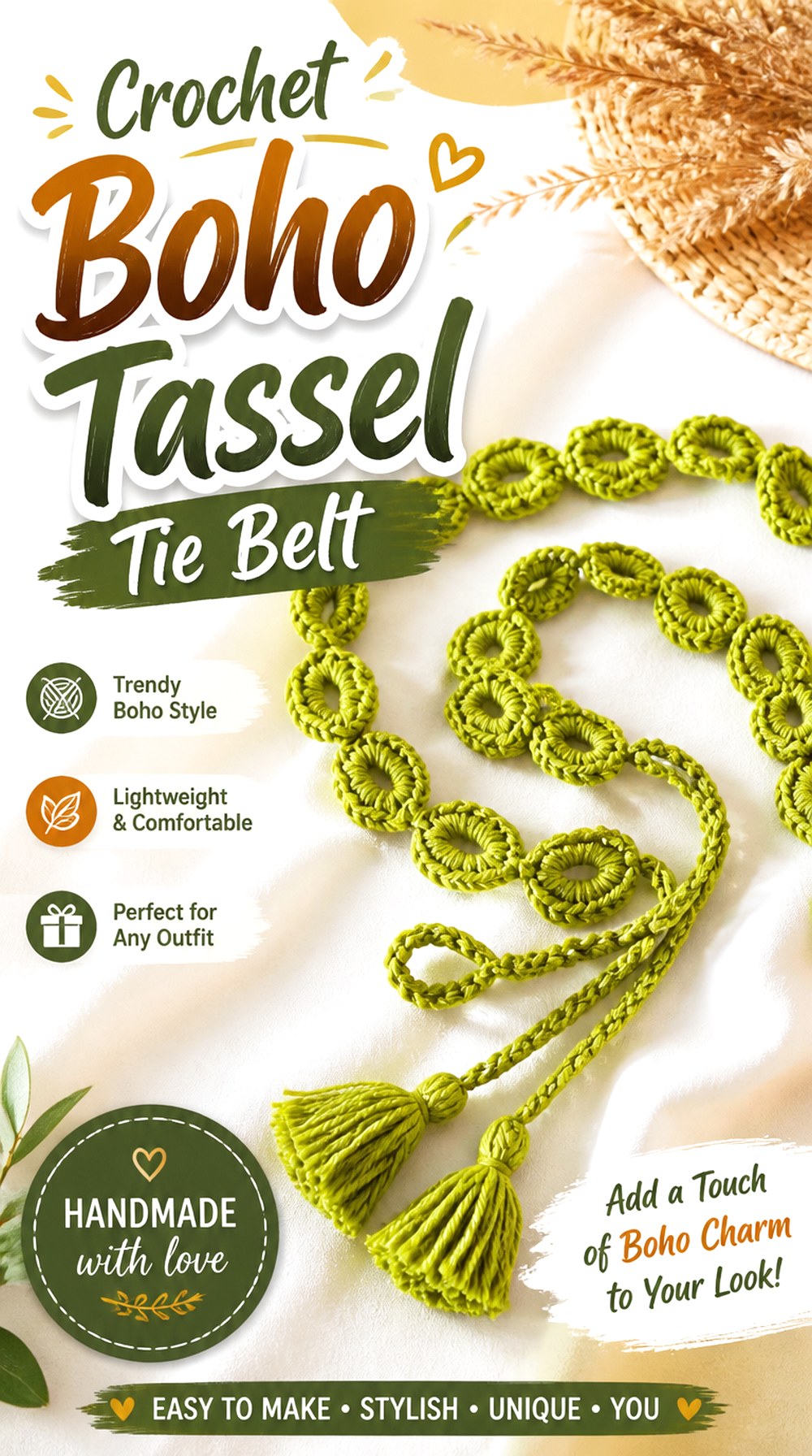
This boho belt from Hook & Loop Crochet Tutorials separates the project into the main belt, cord, and tassel components, producing a finished accessory with visibly decorative ends. Compared with a buckle belt, those hanging details become part of the outfit even after the waist section has been tied.
It is a useful choice for loose dresses, tunics, or festival-inspired layers where the belt is meant to add movement as well as waist definition. The format also offers more room for contrasting texture between the main section and the finishing details.
Tassel Length Changes Where the Eye Lands
Long decorative ends draw attention below the waist, while shorter tassels keep the focus closer to the knot. Before finishing them permanently, hold the belt against your most likely outfit and check the visual balance. The right proportion depends on the garment length and where you intend the belt to sit.
The Cord Should Move Easily Without Looking Weak
A tie needs enough flexibility for a comfortable knot but should not become disproportionately thin beside the main belt. If you change yarn, compare the finished cord and belt section together rather than evaluating them independently. A heavy main band paired with an extremely delicate tie can look visually disconnected.
Fringe Needs More Maintenance Than a Plain End
Tassels can become rumpled during storage, washing, or repeated wear. Consider that extra finishing detail when choosing between this design and a plain lace tie. If easy storage is the priority, a simple knotted end may suit you better; if movement is part of the appeal, the tassels earn their place.
Original Tutorial and Creator Credit
Creator: Hook & Loop Crochet Tutorials
Crochet Leaf Motif Wrap Belt
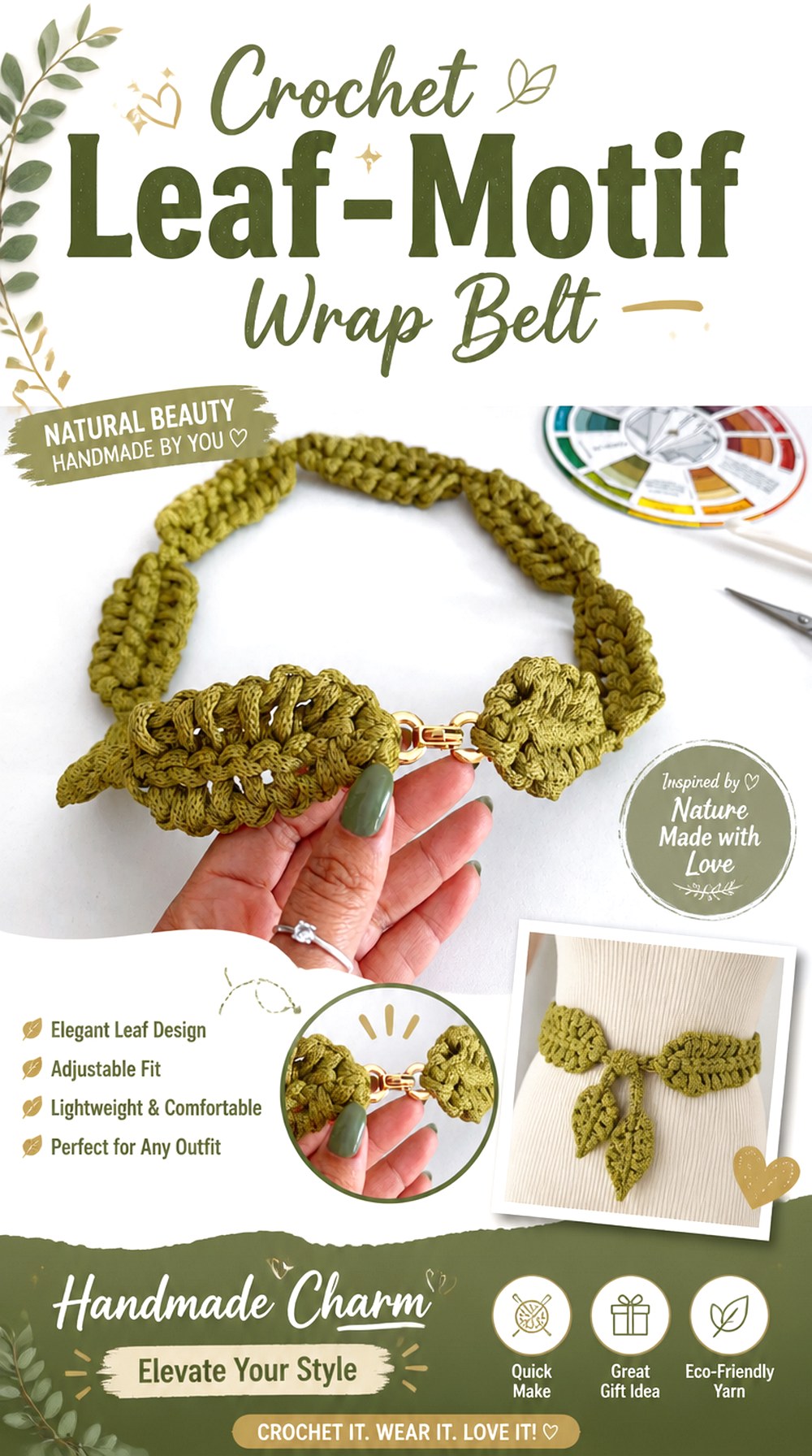
Michelle Duarte Crochê’s leaf belt turns the botanical element into the defining silhouette. Rather than enclosing a flower inside a square or repeating geometric openings, this design lets recognizable foliage create the decorative identity of the belt. The tutorial is presented specifically as a crochet leaf belt with its fastening incorporated into the finished accessory.
This approach suits readers who want lace to feel organic rather than formal. Leaf motifs also work especially well when the belt is worn where the individual shapes remain visible instead of being compressed beneath another layer.
Leaf Direction Can Create a Strong Visual Flow
Before committing to multiple motifs, decide whether the foliage should appear to travel consistently around the waist or form a mirrored arrangement around the front. Orientation matters more in a recognizable botanical motif than it does in an abstract stitch repeat because the eye naturally follows the direction of each leaf.
Keep the Botanical Edges From Becoming Lost
Highly textured or multicolored clothing can obscure the outline of the leaves. Test the finished section against a plain garment and a patterned one before choosing its primary use. If the motif itself is the reason you chose this belt, enough contrast around its outer edge will help that shape remain readable.
Original Tutorial and Creator Credit
Creator: Michelle Duarte Crochê
Crochet Chain and Charm Belt
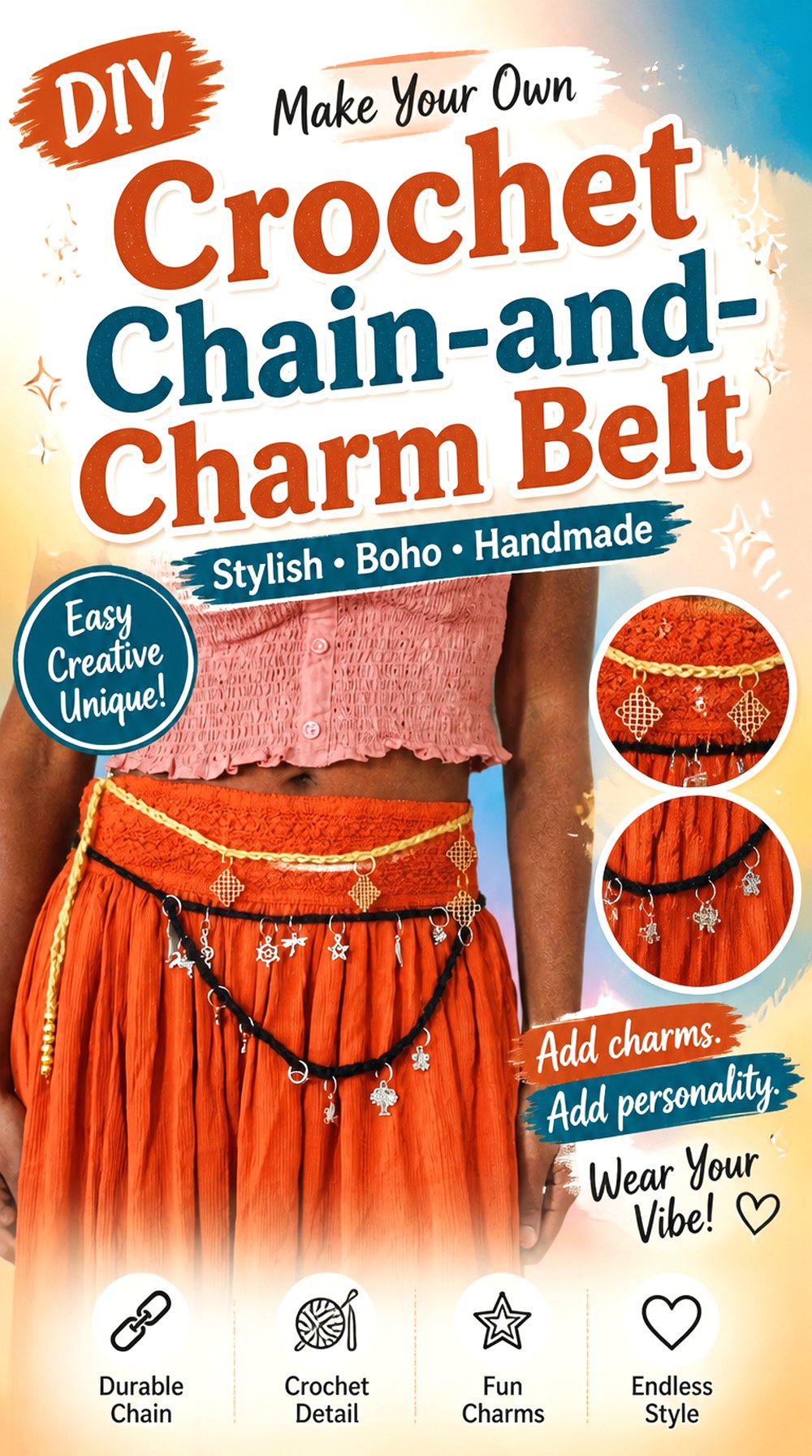
The Dream Crochet Channel treats the belt almost like oversized crochet jewelry. The tutorial combines a crocheted chain format with beads, charms or pendants, jump rings, and a lobster clasp. The result has substantially more open space than a fabric belt and is best considered a decorative waist accessory rather than a band intended to provide firm support.
This is the strongest option in the collection for readers who like the visual language of body chains but want yarn to remain part of the design.
Hardware Weight Can Change How the Chain Hangs
Charms and beads add localized weight. Before distributing embellishments across the entire belt, attach or temporarily position a few and observe how the crocheted chain responds. A very soft chain may sag more around heavily decorated points, so balance matters as much as the appearance of individual charms.
Secure Decorative Parts for the Intended Use
Small beads, charms, jump rings, and clasps can loosen or snag. Inspect connection points regularly and consider where the belt will be worn. This kind of embellishment is better treated as adult fashion jewelry than as an accessory for situations where small detachable parts could create a safety concern.
Original Tutorial and Creator Credit
Creator: The Dream Crochet Channel
Crochet Beaded Summer Belt

Sarah’s beaded crochet belt adds sparkle and weight without turning the whole accessory into a metal chain. The tutorial centers on a crocheted belt embellished with beads, giving it a useful middle ground between plain fiber lace and jewelry-style construction.
This idea works particularly well when you want the belt itself to stay lightweight-looking but still need small focal points to catch the eye. Bead color can be subtle and tonal or deliberately contrasting, although placement matters more than simply adding more decoration.
Beads Should Enhance Rather Than Collapse the Crochet
A lightweight lace section can behave differently once beads are introduced. Before adding many, test a small decorated section while it hangs vertically and while it curves around the body. That reveals whether the added weight improves the drape or causes individual areas to pull downward.
Think About Contact With the Garment Underneath
Hard-edged or textured beads can rub against delicate fabrics. Check the reverse side of the belt and how the embellishments sit when tightened. If you plan to wear it over fine knits, lace dresses, or easily snagged fabric, smooth bead surfaces and tidy attachment points become especially important.
Original Tutorial and Creator Credit
Creator: Sarah
Crochet Heart Chain Belt
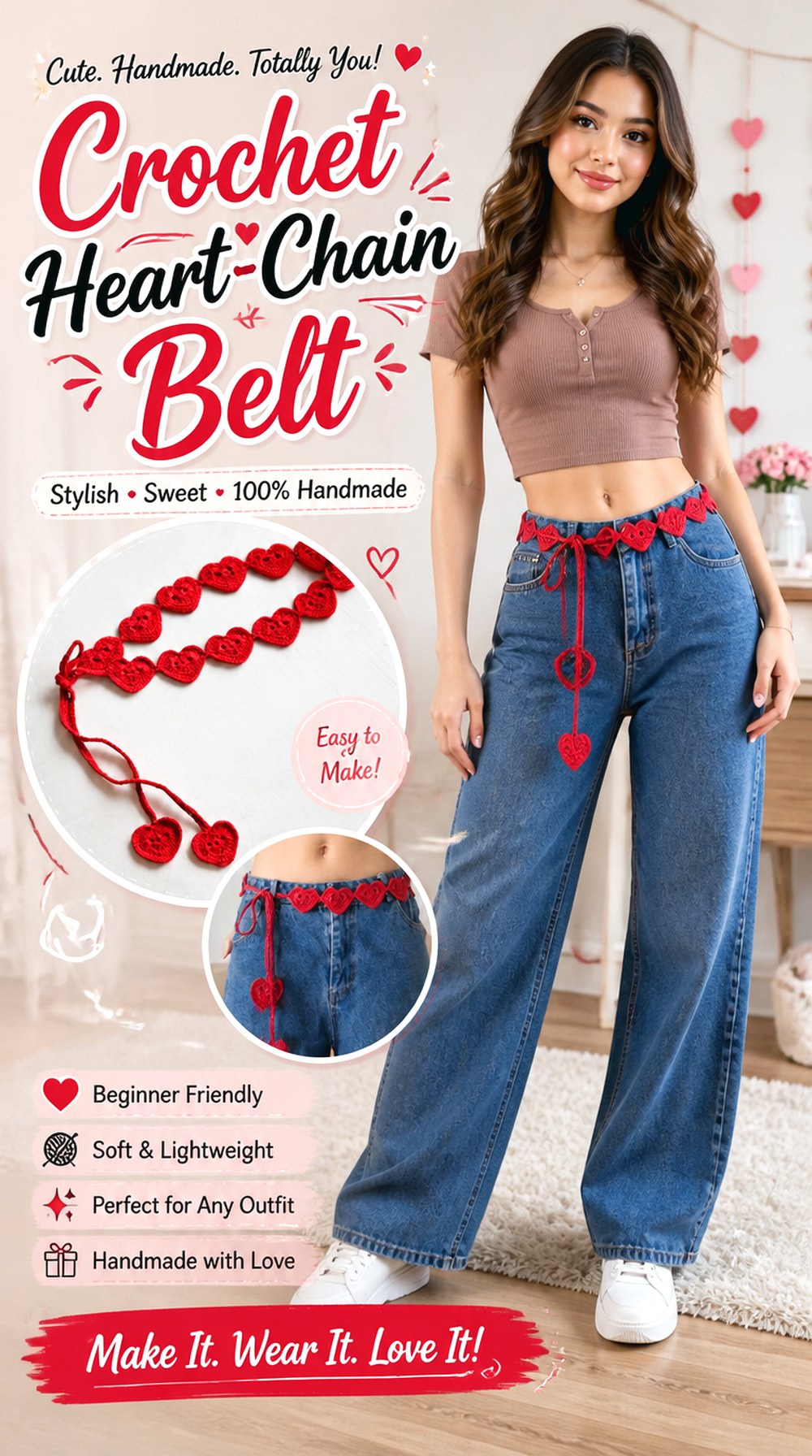
ABoC Studio’s heart chain turns a recognizable motif into the links of the belt itself. Instead of placing hearts on top of a solid strap, the repeated shapes create the continuous decorative line. The tutorial is specifically presented as a heart-chain belt, making it a strong match for readers who want obvious open space between motifs.
The finished style is playful and highly visible, but visually lighter than joined granny squares. It is also a useful option when the motif repeat matters more than creating a broad waist band.
Heart Consistency Matters More Than Perfect Rigidity
When every link has a recognizable outline, changes in tension can make one heart look noticeably larger or narrower than its neighbors. Compare each new section with the previous motifs as you work. The chain can remain flexible, but the repeated shapes should still look intentionally related.
Negative Space Is Part of the Finished Pattern
Do not evaluate this belt only by the crocheted yarn. The empty spaces between and inside the hearts create much of its visual rhythm. Try the belt over different garment colors before deciding whether the motif reads clearly enough for the effect you want.
Original Tutorial and Creator Credit
Creator: ABoC Studio
Crochet Wide Clasp Waist Belt
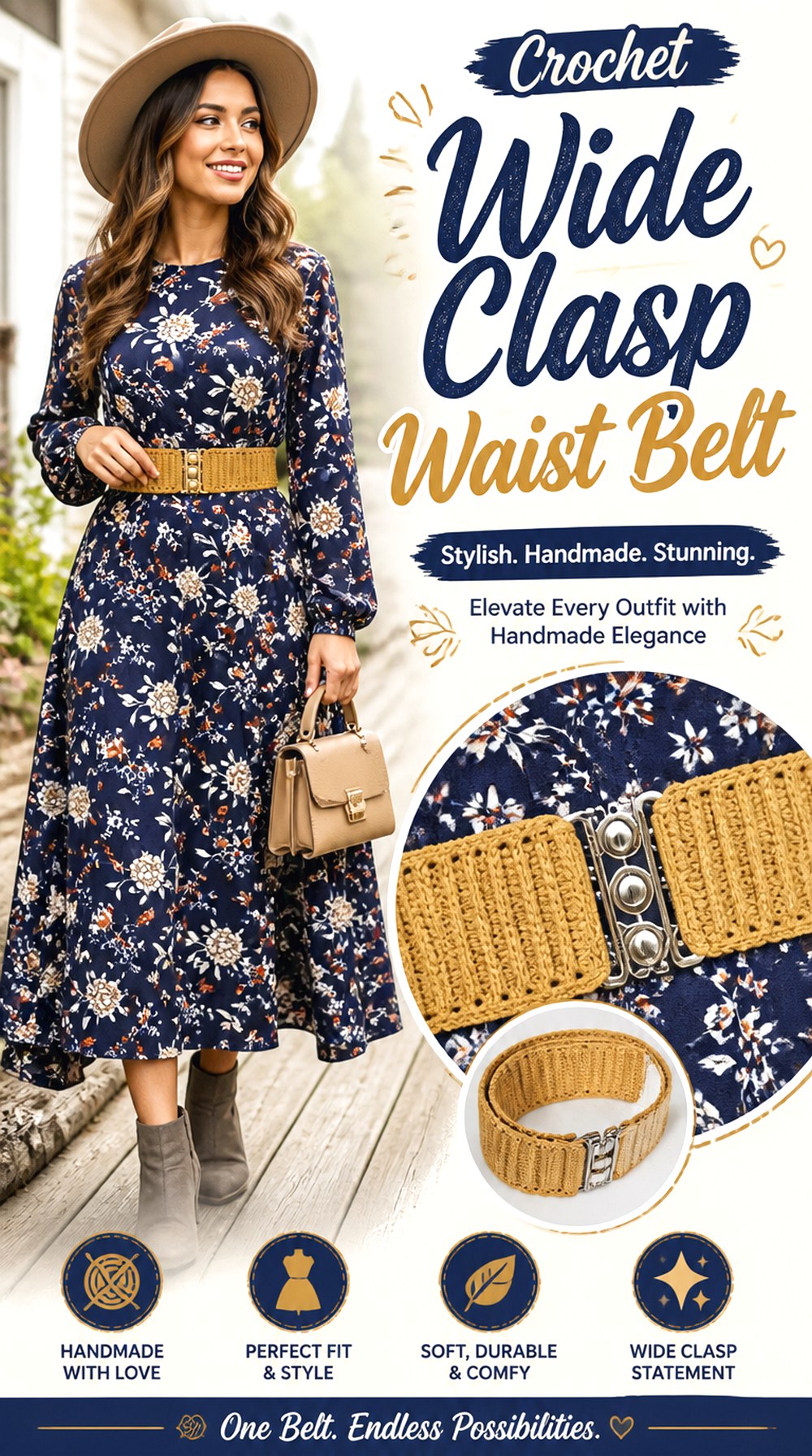
Yarn + Chai’s waist belt is another intentionally structured option. The design uses a broad crocheted band and a two-part clasp, with a braided-looking surface detail created by the chosen stitch placement. The creator’s written companion notes that the belt is meant to be measured against both the body and the closure as it develops.
It is not traditional open lace, but it fills an important gap in this collection: what to choose when delicate motifs look right aesthetically but the outfit needs a cleaner, wider line around the waist.
A Fixed Clasp Leaves Less Room for Guesswork
Unlike long ties, a clasp closes at one specific relationship between the two ends. Test circumference while the project is still underway, including the space occupied by the hardware. That is especially important if your yarn relaxes after handling or when wrapped around the body.
Wider Crochet Can Visually Break Up a Busy Dress
A continuous band creates a stronger horizontal division than a heart chain or skinny cord. This is useful when the garment underneath has a dense print and fine lace would disappear. Conversely, if you want the belt to blend softly into the outfit, one of the narrower openwork options may be a better choice.
Stretch Can Shift the Position of the Closure
A belt may look correctly sized on a table and then lengthen once worn. The source itself advises measuring against the body as you go. If substituting yarn, make that fit check even more important rather than assuming a visually similar fiber will stretch the same way.
Original Tutorial and Creator Credit
Creator: Yarn + Chai
Crochet Romanian Cord Skinny Belt

Romanian cord offers the most minimal silhouette in this roundup. Tutorial Rajut describes the finished cord as flat, textured on both sides, and suitable for uses that include drawstrings, straps, and belts. It is therefore a useful route when a full lace band feels too decorative but a handmade tie still suits the outfit.
The narrow scale makes this idea especially adaptable for wrapping, layering, or pairing with a separate motif. It also works as a planning reference for tie components on more elaborate lace belts.
A Skinny Cord Puts the Knot in Focus
With little surface area across the waist, the way the belt closes becomes visually important. Experiment with a simple knot, bow, or wrap arrangement before deciding how much extra length you need. The same cord can look restrained with short ends or distinctly bohemian when the tails hang lower.
Flat Cord Behaves Differently From an Ordinary Chain
A basic chain may twist and present different sides as it moves. Romanian cord is designed as a more substantial narrow structure. If you are considering it as the tie for a larger lace motif belt, compare its thickness with the motifs so the connection does not look disproportionately heavy.
Original Tutorial and Creator Credit
Creator: Tutorial Rajut
Crochet Flower Chain Belt
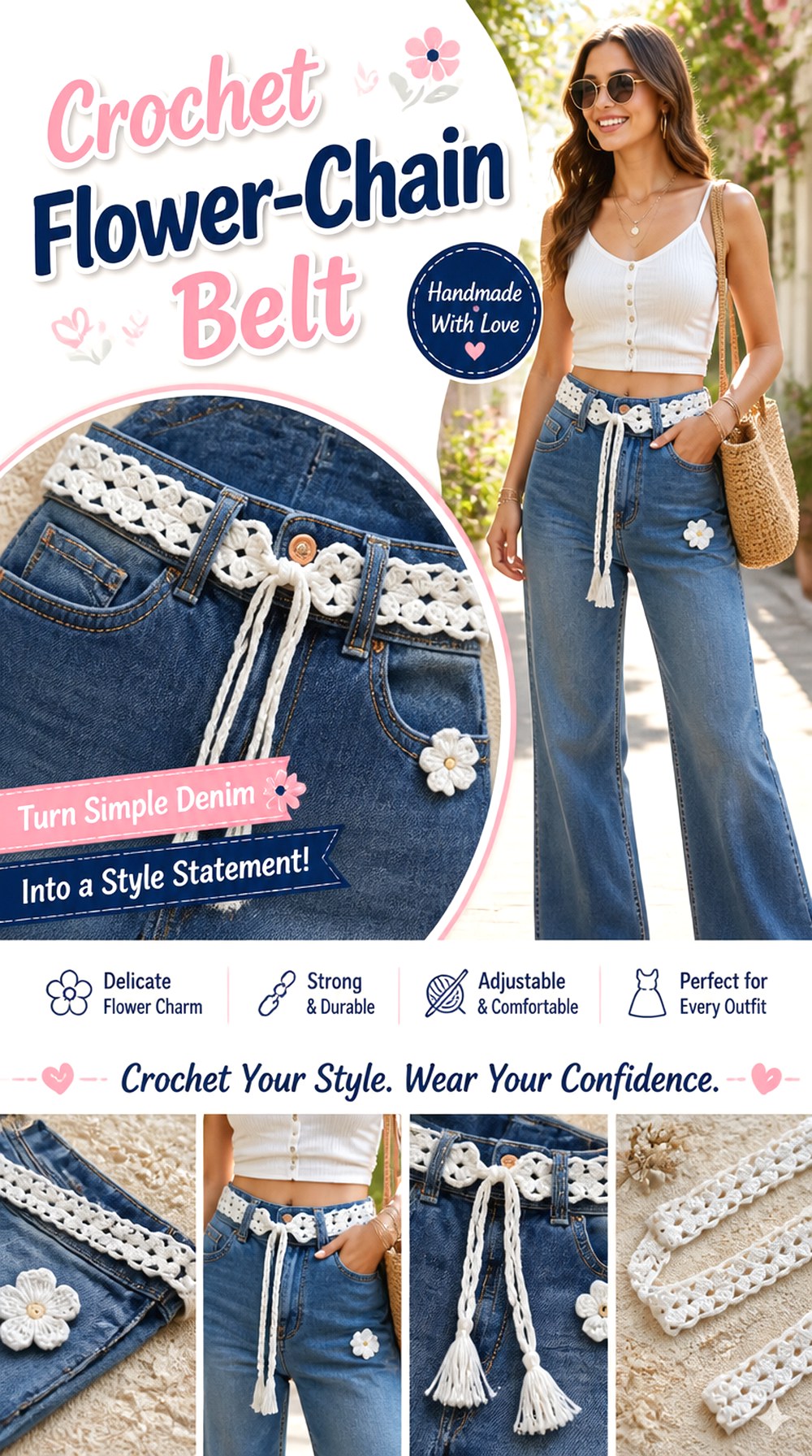
CrochetbyJen’s flower-belt tutorial shifts floral design away from square frames and toward a lighter flower-led strip. That makes it visually different from the earlier granny-square belt: the blossoms themselves dominate rather than sitting inside obvious geometric blocks.
Choose this style if you want a romantic or playful belt that remains visually open. A flower chain can also sit more softly over lightweight clothing because there is less continuous fabric across the waist than in a wide motif band.
Flower Spacing Controls How Airy the Belt Looks
Closely grouped blossoms can begin to read as a continuous floral trim, while more visible space emphasizes each individual flower. Before extending the whole piece, hold a short section against your outfit and decide which effect better matches the scale of the garment underneath.
Keep Dimensional Petals Clear of Snag-Prone Layers
Any petal or loop that projects from the surface can catch more readily than flat crochet. Check the back and edges for loose points before pairing the belt with delicate knitted or lace fabric. A smooth woven dress will generally be less demanding than a garment that already contains loops or open texture.
Original Tutorial and Creator Credit
Creator: CrochetbyJen
Crochet O Ring Lace Belt
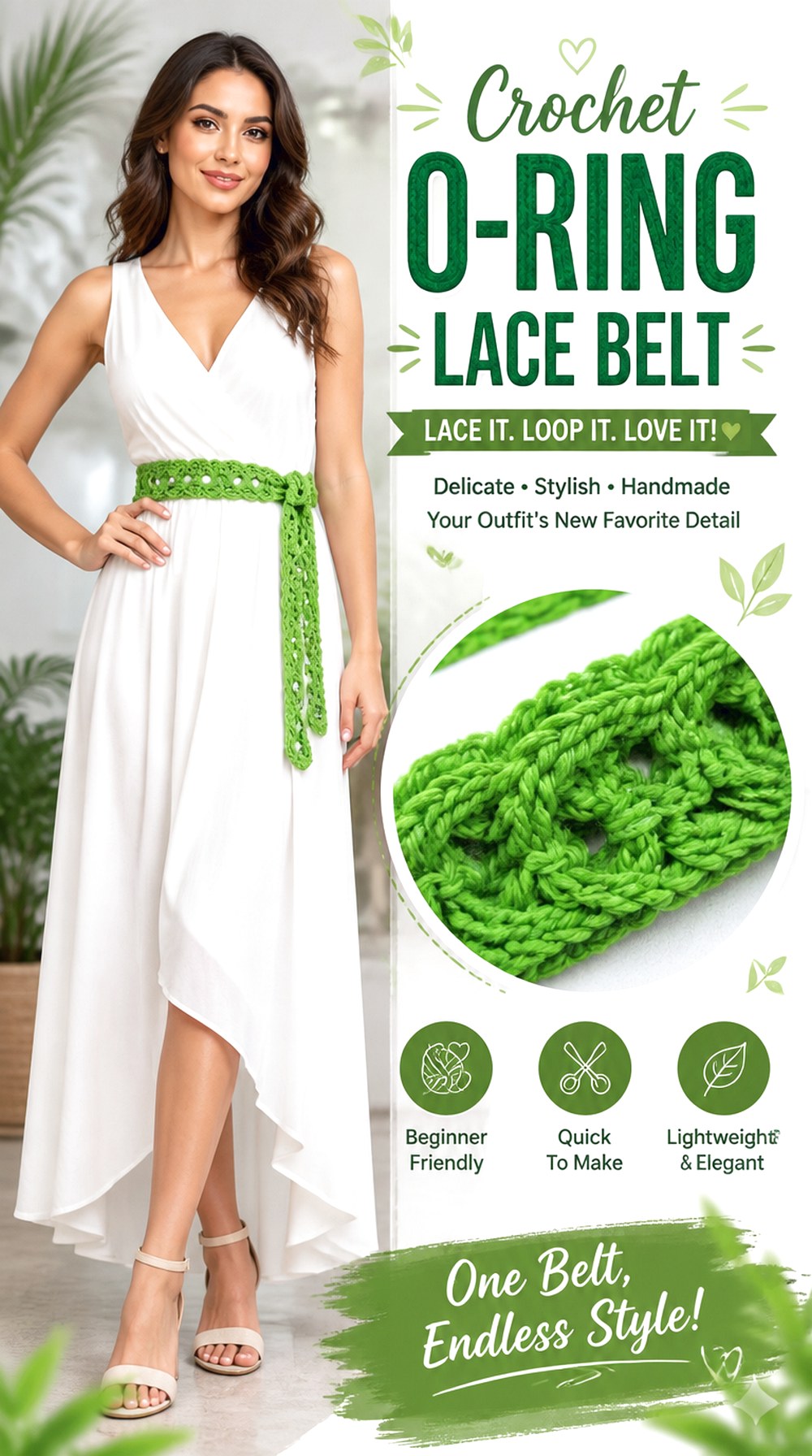
Crochet Bits uses repeated O-ring shapes to create one of the most graphic lace effects in the collection. The design is explicitly presented as a crochet O-rings belt, so the circular openings are structural rather than merely surface decoration.
This is a strong choice when you like geometric openwork but do not want traditional floral lace. The repeating circles create large, deliberate negative spaces, giving the belt a distinctly modern rhythm that can stand out against a plain dress, skirt, or long top.
Circle Size Sets the Scale of the Whole Accessory
Large open rings create more dramatic negative space and make each repeat easy to identify. Because the motifs are so obvious, irregular size is also noticeable. Compare completed rings as you progress instead of waiting until the entire belt is finished to check consistency.
Overlapping Rings Create More Visual Depth
The source’s companion information describes an overlapping ring arrangement with lace joining through the center. That layered construction is part of what distinguishes it from a flat chain of motifs. Keep an eye on whether the overlaps settle in the same direction so the final band reads intentionally rather than appearing twisted.
A Plain Background Shows the Geometry Best
The circular gaps rely on contrast with whatever sits behind them. Highly detailed prints can make the ring pattern difficult to read from a distance. If the geometry is your favorite feature, test the belt over solid or low-contrast garments before choosing its final color.
Original Tutorial and Creator Credit
Creator: Crochet Bits
Crochet Lacy Pointed End Sash Belt
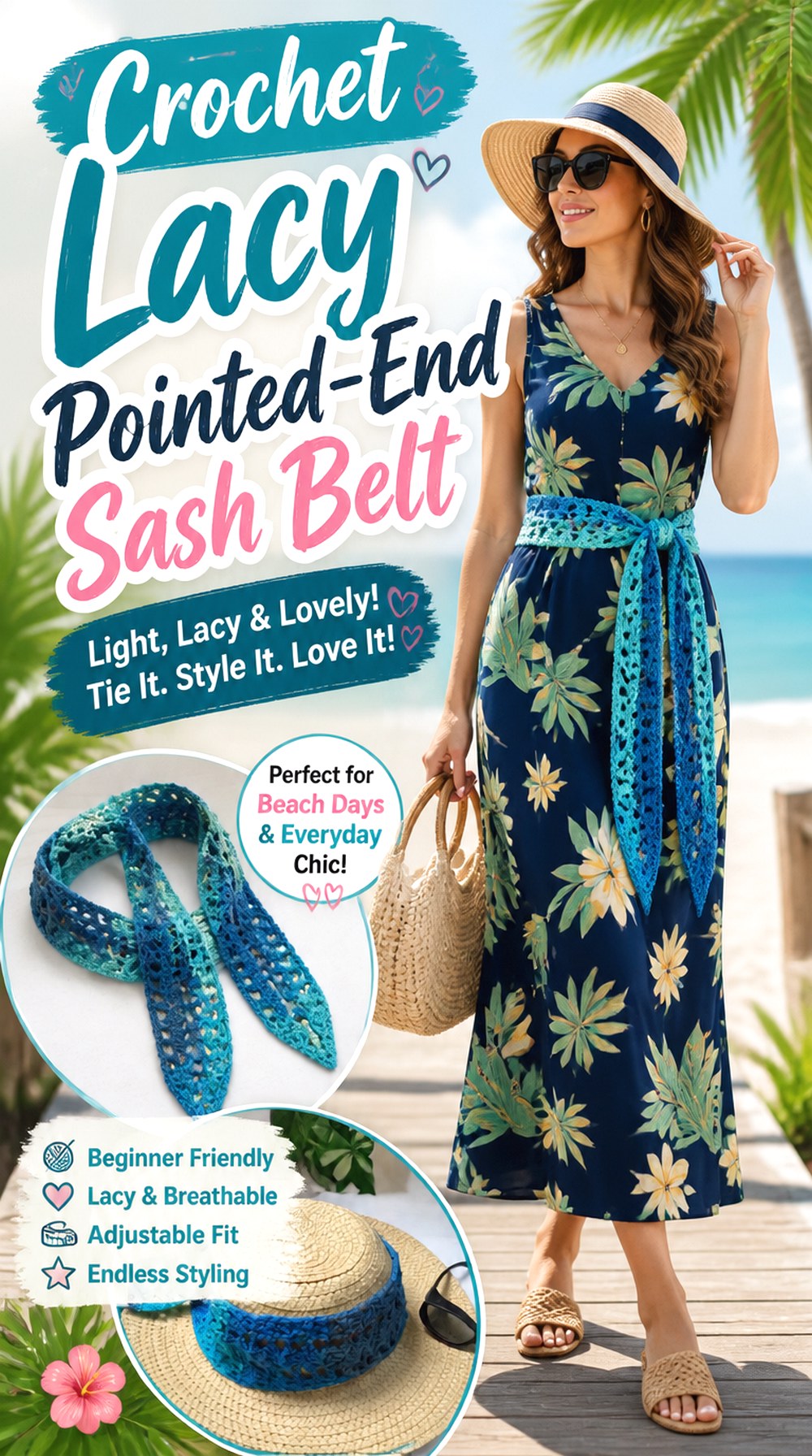
Posh Pooch Designs’ Beach Time Scarf is intentionally multi-use: the creator describes it as an open, lacy accessory that can be worn as a scarf, headscarf, hatband, or belt. It also has pointed ends and optional fringe. That makes it a particularly useful final idea because it approaches the lace belt as a soft sash rather than as specialized waist hardware.
This style suits someone who values versatility and wants one narrow crochet piece that can move between several styling roles. Its pointed ends also create a more finished visual termination than a plain rectangular strip.
Pointed Ends Give a Sash a Deliberate Finish
When a belt hangs visibly after tying, the final shape of each end matters. A taper or point makes the tails look designed rather than simply cut off at a rectangular edge. Check that both ends settle similarly once the sash is tied; twisting can make one point face forward and the other disappear.
Fringe Is Optional, So Decide by Use
Fringe adds movement when the sash is worn around the waist, but it also changes how the same piece works as a scarf or head accessory. The creator presents the fringe as optional. If maximum versatility or simpler storage matters, leaving the ends clean may be the more practical choice.
Which Crochet Lace Belt Style Should You Choose?
| If you want… | Look first at… | Main point to check |
|---|---|---|
| Soft, classic lace | Fan-Lace or Shell Belt | Drape and edge consistency |
| Floral statement | Flower-Square or Flower-Chain Belt | Motif size and spacing |
| Botanical detail | Leaf-Motif Belt | Direction and visibility of leaves |
| Adjustable waist shaping | Corset-Laced Belt | Panel fit and lacing tension |
| Jewelry-like styling | Chain-and-Charm or Beaded Belt | Weight and secure findings |
| Graphic openwork | Heart-Chain or O-Ring Belt | Repeat consistency |
| Traditional hardware | Tunisian, Slim Buckle, or Wide Clasp Belt | Stretch plus closure dimensions |
| Minimal tie | Romanian-Cord Belt | Cord thickness and final knot |
| Multi-use accessory | Pointed-End Sash | Tail length and optional fringe |
Conclusion
For the lightest lace effect, the fan, shell, heart-chain, flower-chain, and O-ring designs keep plenty of visible space around the yarn. Flower squares and leaves make stronger motifs, while the corset belt creates the most obvious waist-focused statement. If function and hardware matter more than transparency, the Tunisian, cord, and clasped belts offer useful structural alternatives.
Before choosing, decide where the belt will sit, whether it needs to tie or fasten at a fixed point, and how much stretch you can tolerate. Then test the crochet against the garment you plan to wear beneath it. Use the original tutorials near each idea for the creators’ exact construction details.
Frequently Asked Questions
What type of yarn works well when I want the lace pattern to stay crisp?
A smooth yarn generally makes open spaces, shells, leaves, hearts, and other motifs easier to see than a yarn with a strong fuzzy halo. Fiber behavior matters too: a belt that stretches substantially may lose some definition when worn. Instead of choosing by fiber name alone, make a small sample, finish it as you plan to finish the belt, and test it under light tension.
How do I decide the right length for a crochet lace belt?
Measure at the exact place and over the type of clothing where you plan to wear it. Then consider the closure separately. A tie belt needs enough additional length for the preferred knot and hanging tails, while a fixed clasp or buckle contributes to the finished circumference. If the design uses repeated motifs, remember that adding one complete motif can change length in a larger increment than extending continuous lace.
Should I block lace motifs before joining them into a belt?
Blocking or otherwise finishing the motifs consistently can make comparison easier before permanent joining. This is especially useful for granny squares, flowers, leaves, hearts, and large rings because small differences can accumulate along a long strip. Use a finishing method appropriate for your yarn and care instructions rather than assuming every fiber should be treated in the same way.
How can I keep an open crochet belt from stretching too much?
Start with material and construction choices that suit the amount of structure you need, then test a sample lengthwise. Very narrow chains and open lace can respond differently from dense bands. If you need substantial support rather than decoration, a structured belt tutorial, firm cord, or suitable closure may make more sense than forcing a delicate lace design to perform like a conventional belt.
Is a buckle better than crochet ties for a lace belt?
Neither is universally better. Ties offer flexible adjustment and preserve a soft handmade look, which suits many openwork designs. Buckles and clasps create a neater fixed closure and can make the accessory appear more tailored. They also require more precise planning because the hardware width and length become part of the belt’s finished dimensions.
Can I combine lace from one design with the closure from another belt?
Potentially, but first compare width, stretch, thickness, and the amount of tension the closure will place on the lace. A buckle designed for firm cord may distort an extremely open strip, while a delicate tie might look undersized beside a broad motif band. Treat any combination as a new adaptation and make a small compatibility sample rather than assuming two attractive elements will automatically work together.