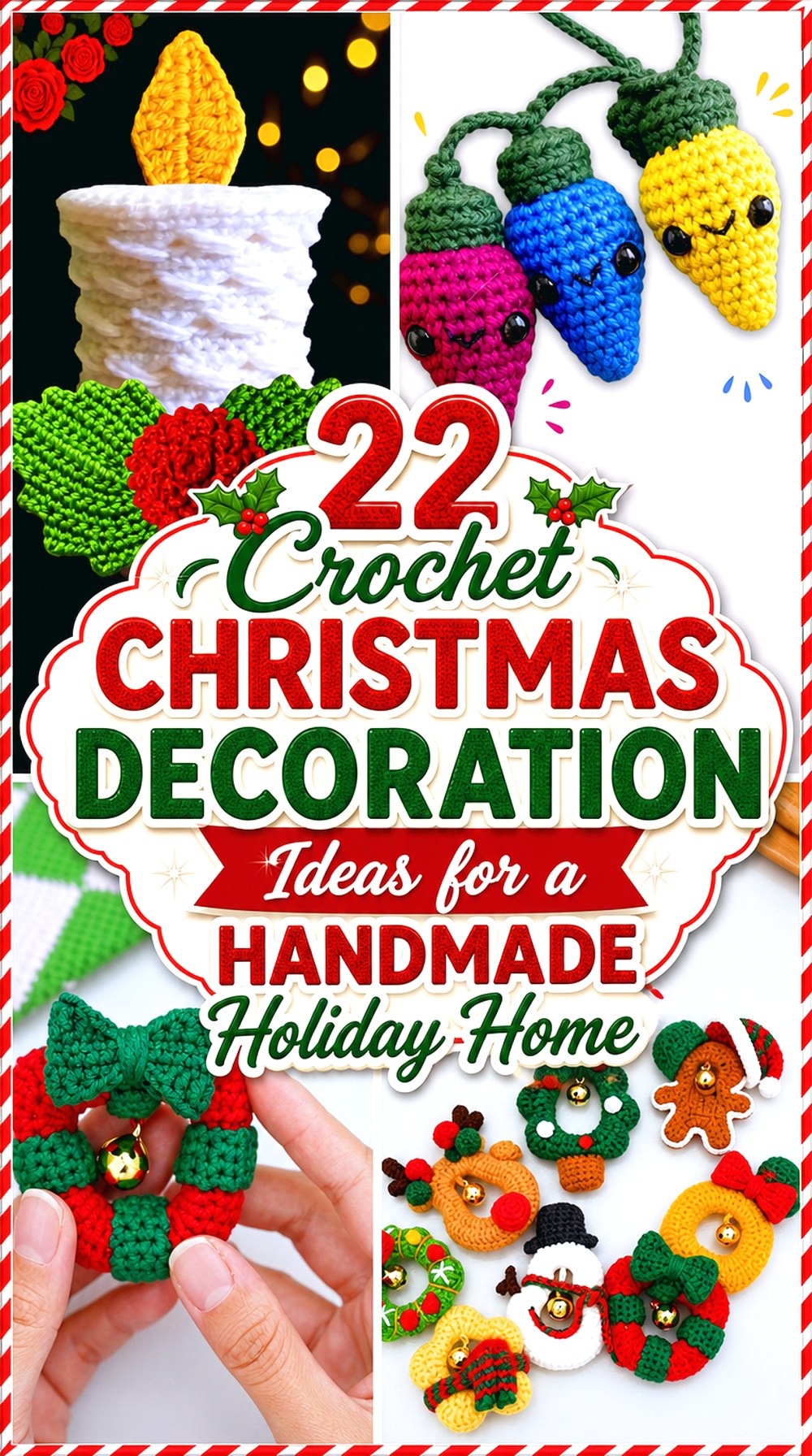

Crochet Christmas decorations can do much more than fill a tree with small ornaments. Flat snowflakes and holly leaves can disappear neatly into storage, stuffed characters create stronger focal points, covered baubles add rounded structure, and garlands or tabletop pieces can carry handmade crochet beyond the tree.
These 22 ideas are deliberately varied so you can compare the finished shape, hanging style, amount of structure, embellishment, storage needs, and best display location before choosing a project. Some work naturally as repeated sets, while others make more sense as a single statement decoration. Each idea also includes an original YouTube tutorial so you can go directly to the creator when you are ready for exact construction details.
Quick List
- Crochet Lacy Snowflake Hanging Decoration
- Crochet Mini Stocking Tree Decoration
- Crochet Shaped Candy Cane Ornament
- Crochet Christmas Bell Decoration
- Crochet Stuffed Snowman Tree Ornament
- Crochet Nordic Christmas Gnome Decoration
- Crochet Ring Wreath Tree Ornament
- Crochet Keepsake Angel Ornament
- Crochet Gingerbread Man Tree Ornament
- Crochet Five-Point Star Decoration
- Crochet Poinsettia Holiday Accent
- Crochet Reindeer Head Ornament
- Crochet Christmas Pudding Ornament
- Crochet Covered Bauble Decoration
- Crochet Snow-Tipped Christmas Tree Ornament
- Crochet Spiral Icicle Ornament
- Crochet Stuffed Gift Box Ornament
- Crochet Mini Mitten Decoration
- Crochet Holly Leaf Cluster Accent
- Crochet Santa Head Ornament
- Crochet Christmas Light Garland
- Crochet Christmas Candle Table Decoration
Choose Christmas Crochet by Display Style
Start with where the finished piece will actually go. Thin snowflakes, stars, holly leaves, and icicles make sense when branch space is limited because their visual impact comes from outline rather than bulk. Stuffed snowmen, gingerbread figures, presents, puddings, and Santa ornaments create more depth, so they are useful when a tree needs a few larger-looking focal points among flatter ornaments.
Garlands solve a different decorating problem. They can stretch across a mantel, shelf, doorway, staircase, or tree instead of competing for individual branches. Tabletop gnomes and candle-shaped decorations are better choices when you want crochet away from the tree. Before starting, also check the planned hanging point: a beautiful ornament can still sit awkwardly if the loop placement makes a dimensional piece tilt forward.
Think About Shape Retention, Weight, and Storage
Christmas decorations are usually stored much longer than they are displayed, so construction matters. Flat motifs are easy to layer between sheets of tissue or place in a shallow box, although openwork designs may need reshaping after storage. Stuffed pieces resist creasing but occupy more room. Designs fitted over an insert, such as covered baubles, need protection from crushing.
Fiber choice changes the result as well. A firmer yarn can help small sculptural details stay visible, while a softer yarn may create a gentler stuffed shape. For repeated garland motifs, consistency matters more than any single measurement: compare finished pieces before joining them so uneven tension does not create an obviously irregular strand. When a decoration includes beads, bells, wire, safety eyes, or other small components, consider who can reach the finished display and secure or omit those parts as appropriate.
Crochet Lacy Snowflake Hanging Decoration
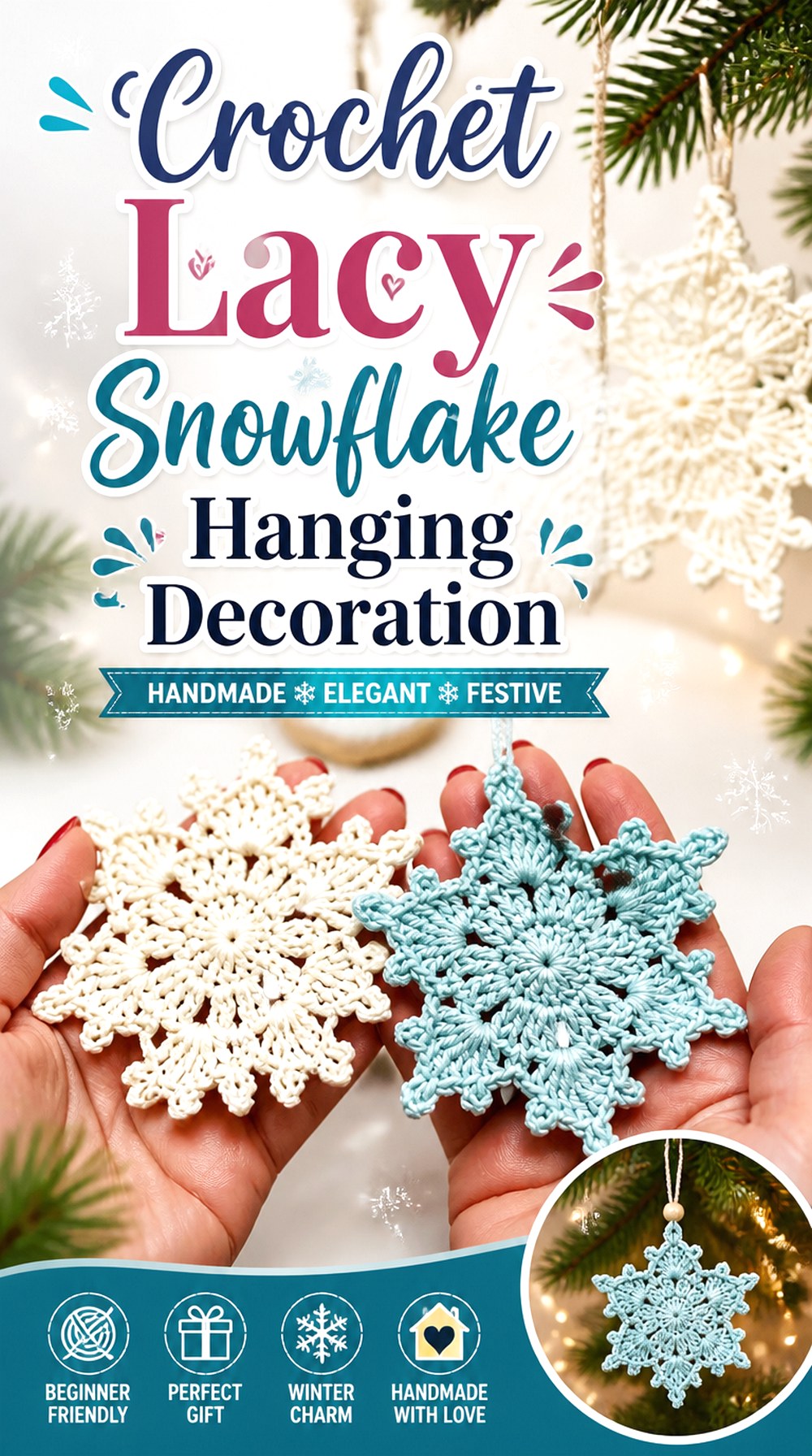
A crochet snowflake is one of the lightest ways to introduce handmade texture to Christmas decorating. Its open shape lets the tree remain visible behind it, so several snowflakes can be repeated without making the branches look crowded. This option also works on windows, narrow garlands, wrapped gifts, or small wall displays where a stuffed ornament would project too far.
The appeal is in the outline rather than volume. That means symmetry, point definition, and final shaping matter more than stuffing or assembly. It is especially useful when you want a collection that can be packed relatively flat after Christmas.
Open Spaces Need an Even Finished Outline
Lacy motifs make tension differences easy to see because every arm is exposed. Before treating a snowflake as finished, place it on a flat surface and compare the points. If one section pulls inward, reshaping or appropriate blocking may improve the outline. For a repeated set, finish one first and use its overall proportions as a visual reference rather than assuming every motif will automatically match.
Decide Whether You Want Soft or Crisp Snowflakes
A soft snowflake can look relaxed on a rustic tree, while a more defined outline emphasizes the geometric pattern. The right finishing approach depends on the yarn and the way you intend to display and store it. If you plan to stiffen a snowflake, test the method on a spare swatch or first motif and follow the relevant product directions rather than assuming every fiber will respond identically.
Crochet Mini Stocking Tree Decoration
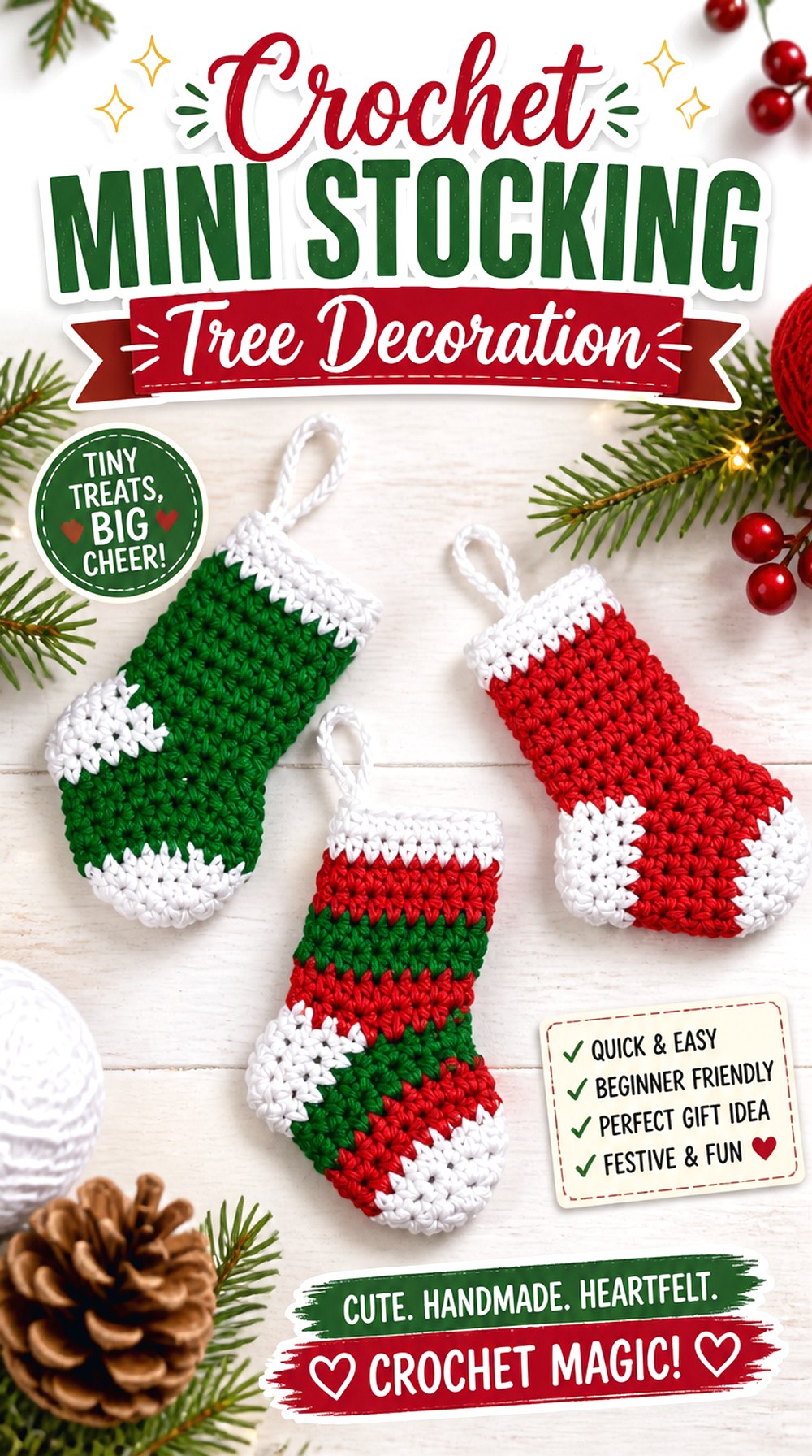
A miniature stocking brings a recognizable Christmas shape to the tree without the space demands of a full-size mantel stocking. The heel and toe give it a directional silhouette, so it reads clearly even when made in a simple color scheme. Several can also be connected into a stocking garland or mixed with flatter motifs for more variety.
This is a useful choice when you want an ornament with a little dimension but do not want a heavily stuffed figure. It can also introduce stripes or contrasting cuffs without relying on beads or other hard embellishments.
The Heel Determines How Clearly the Stocking Reads
When comparing stocking tutorials, look beyond the cuff color. The turn between leg, heel, and foot is what separates a convincing stocking from a vaguely boot-shaped piece. Check that your fabric is not being pulled so tightly around that transition that the foot twists. Before adding the hanger, flatten the stocking gently and confirm that the toe points in the direction you want.
Keep the Hanging Loop in Balance With the Foot
A stocking is asymmetrical, so loop placement affects how it sits on a branch. Attach or position the hanger where the weight of the foot does not make the ornament rotate awkwardly. If you are making a set, hang the first finished stocking temporarily before committing to the same loop placement on all the others.
Original Tutorial and Creator Credit
Creator: Hopeful Turns
Crochet Shaped Candy Cane Ornament
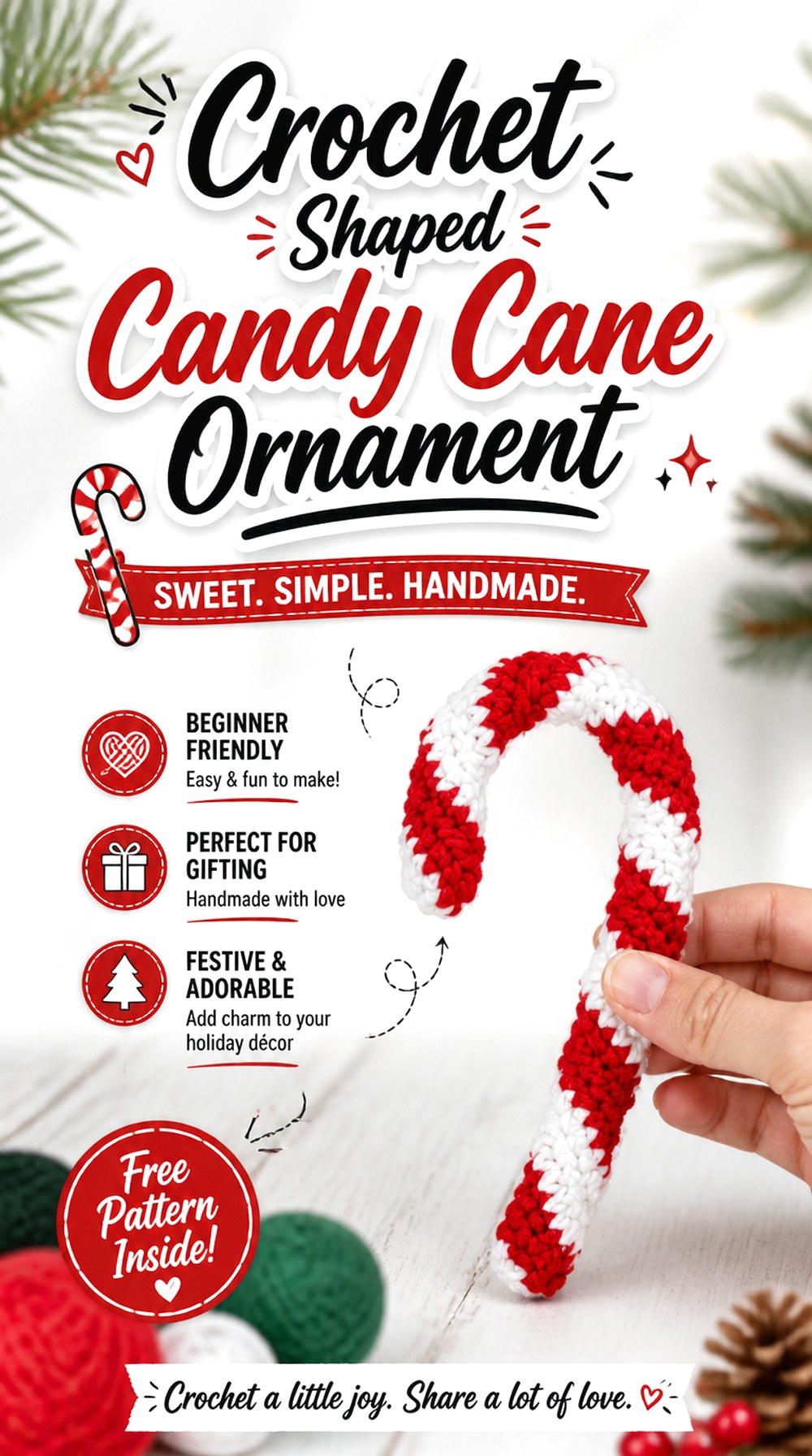
The curved candy cane adds something many Christmas ornaments lack: a long, narrow outline. It can fill gaps between round baubles and compact character ornaments without adding another large block of color. Traditional red and white make the shape immediately recognizable, but the more important design feature is the controlled hook at the top.
This style also gives you options beyond the tree. A candy cane shape can sit along a garland, accent a wreath, or become a package decoration when its scale suits the gift. Because the piece is elongated, keeping the body evenly shaped matters more than adding numerous embellishments.
Internal Support Changes How the Cane Behaves
A shaped candy cane may use reinforcement to maintain its curve rather than relying on crochet fabric alone. Theresa’s Crochet Shop’s tutorial uses pipe cleaners inside the piece, so this is a project where you should account for the non-yarn component before starting. If you adapt the idea, make sure any internal support is fully enclosed and appropriate for your intended display.
Check the Curve Before Finishing the Ends
A smooth hook gives the candy cane its character. Before final finishing, look at the decoration from a distance rather than only while holding it. A curve that appears fine close up can look uneven once hanging vertically. If you are making several, use the first finished cane as a visual guide so the group feels related without requiring mathematically identical pieces.
Original Tutorial and Creator Credit
Creator: Theresa’s Crochet Shop
Crochet Christmas Bell Decoration
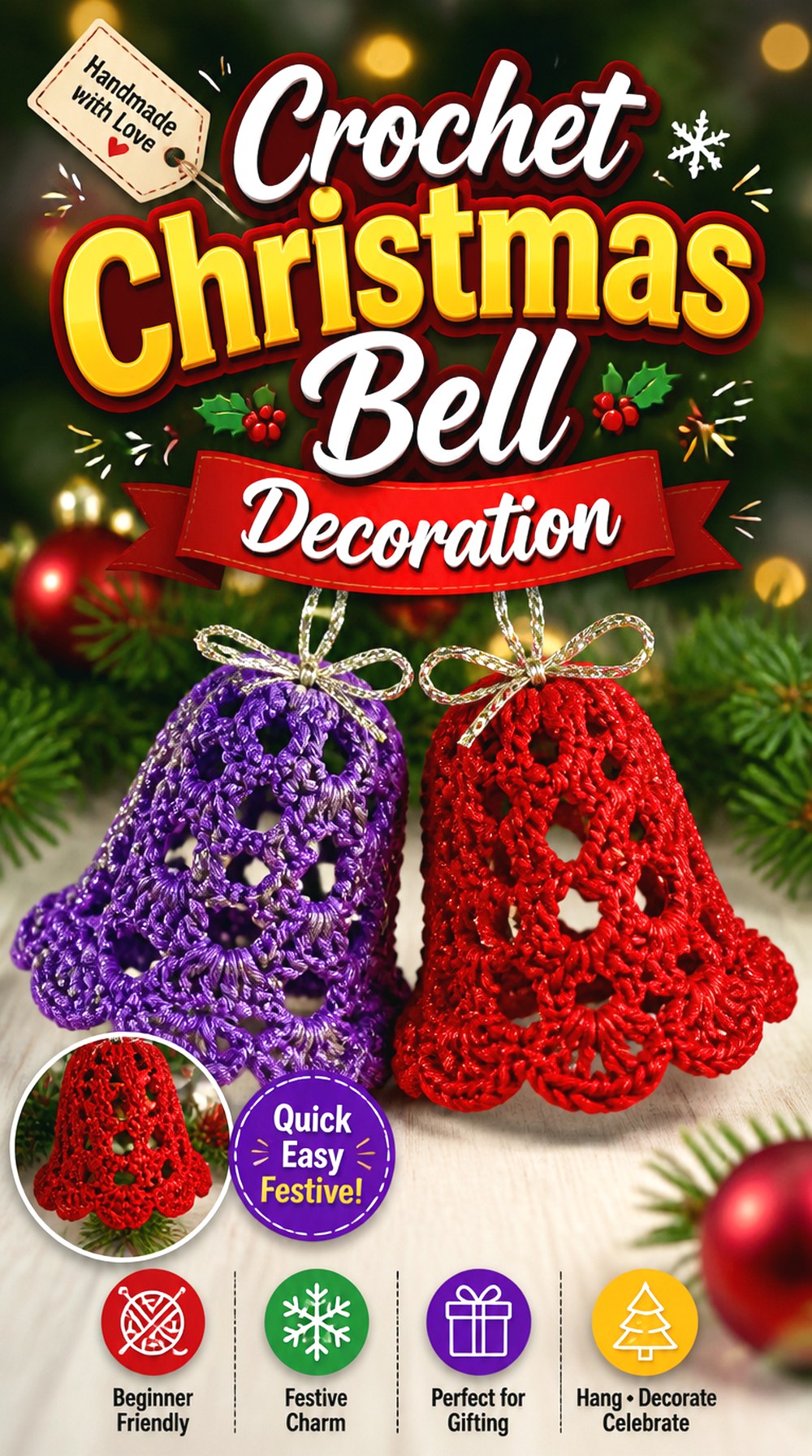
A bell introduces a flared shape that looks noticeably different from circles, stars, and stuffed figures. It works well near branch tips because the wider lower edge can remain visible while the narrower top tucks into the greenery. Bells can also be repeated along a garland or used as small hanging accents under a shelf.
The silhouette is the main feature, so this is a good project for crocheters who want decorative shaping without constructing a face or multiple limbs. A crisp lower edge makes the bell read clearly, while softer yarn can produce a more relaxed ornament.
The Flare Should Stay Visible When Hanging
Before choosing the hanger length, hold the completed bell against a branch or hook and check whether the bottom edge can hang freely. If it disappears into dense greenery, slightly different placement may do more for the decoration than changing yarn color. For several bells, mixing heights along a garland can keep the repeated shape from appearing like one straight horizontal line.
Finishing Can Change the Bell’s Character
Tuula Maaria’s tutorial includes hardening the finished bell, which shows how finishing can affect a crochet decoration that depends on its silhouette. You do not have to treat every bell identically, but decide in advance whether you prefer flexible fabric or a more defined decorative form and store it accordingly.
Original Tutorial and Creator Credit
Creator: Crochet with Tuula Maaria
Crochet Stuffed Snowman Tree Ornament
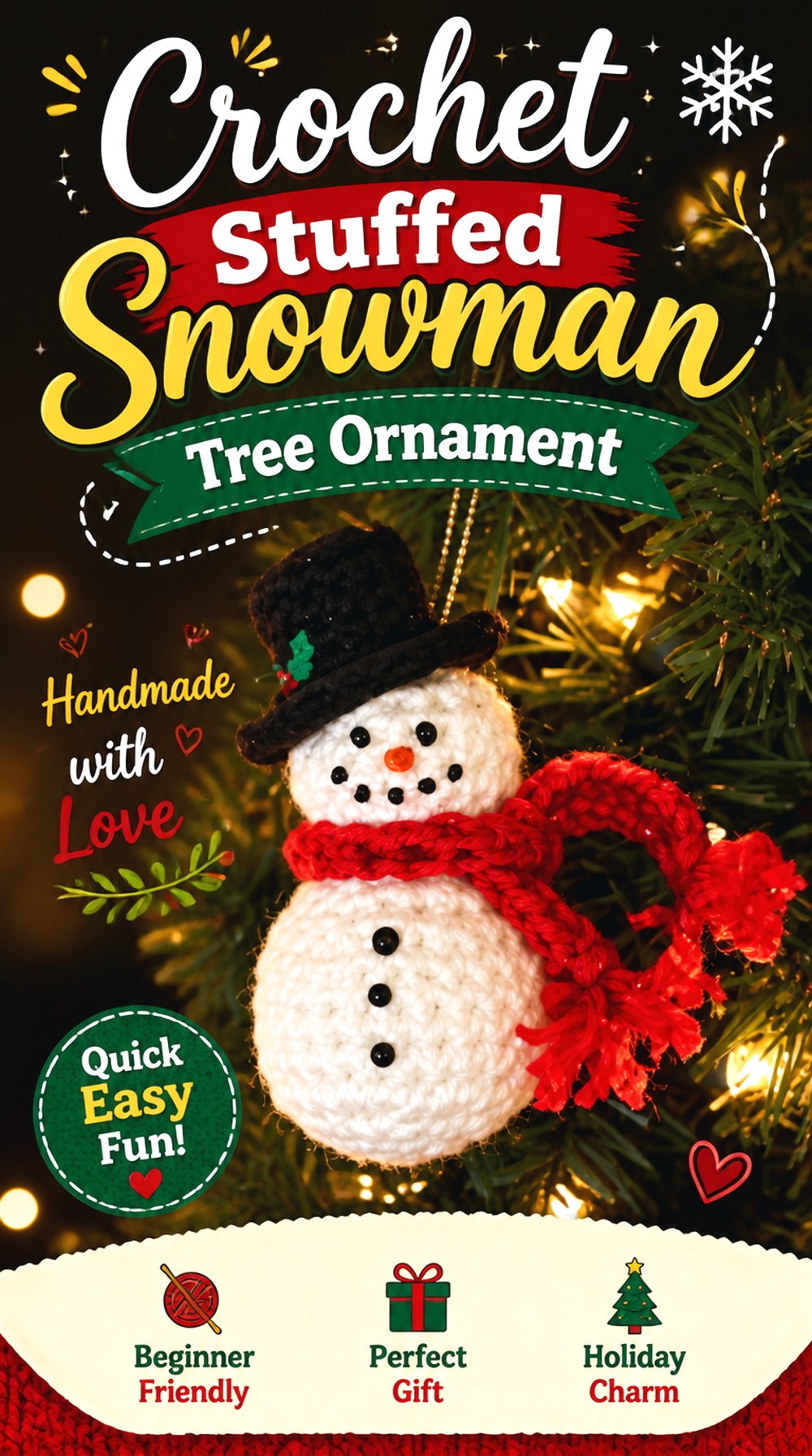
A stuffed snowman provides rounded volume and a friendly character shape without requiring the longer limbs of many amigurumi projects. Its stacked body naturally creates a vertical ornament, making it useful for filling deeper spaces in a Christmas tree where very flat motifs can disappear.
Accessories such as a hat or scarf also let you change the visual emphasis without changing the basic white snowman body. That makes this a practical choice for a coordinated set: keep the snowmen related while varying small details rather than rebuilding the entire decorating palette around each one.
Stuffing Distribution Controls the Stacked Shape
A snowman depends on distinct rounded sections. Uneven filling can make one part look lopsided or obscure the narrowing between the head and body. Add and distribute stuffing gradually rather than pushing a large amount into one area. Check the profile from the side as well as the front before closing, because a snowman that looks centered on a table may lean once suspended.
Small Facial Details Need Restraint
The face occupies very little area, so oversized eyes, a heavy mouth, or a large nose can change the expression dramatically. Position temporary markers before permanently securing details when possible. If the ornament will be accessible to small children or pets, reconsider detachable or hard components and use an appropriately secure alternative for the intended setting.
Original Tutorial and Creator Credit
Creator: Crouton Crafts
Crochet Nordic Christmas Gnome Decoration
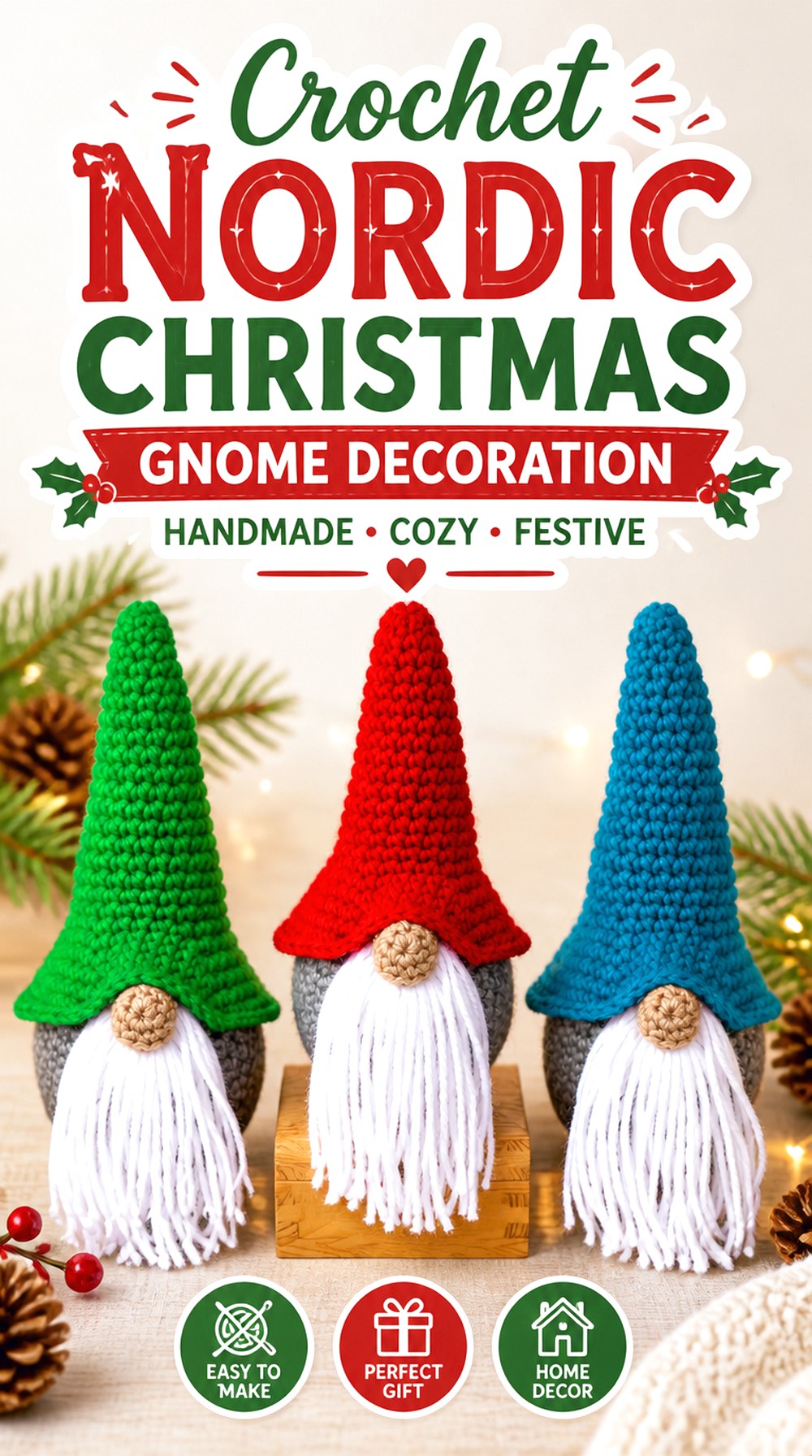
A crochet Christmas gnome is better suited to a shelf, mantel, tiered tray, or substantial tree branch than a delicate flat ornament. Its tall hat, beard, and hidden-face style create a strong vertical profile, making one gnome capable of acting as a focal point among much smaller decorations.
It also offers a different type of customization. Instead of changing a motif border, you can alter the relationship between hat, beard, body, and nose colors. The finished piece benefits from a stable base, particularly if it is intended to stand rather than hang.
Base Stability Matters for Tabletop Display
A gnome that looks balanced in your hand may lean once placed on a shelf. Naztazia specifically discusses weighting the bottom of the decoration, so pay attention to the tutorial’s approach if you want a freestanding result rather than a hanging ornament. Keep any weighting material securely contained inside the finished piece.
Let the Hat and Beard Share the Visual Weight
An extremely full beard paired with a small hat can make the lower half look heavy, while an oversized hat can hide the rest of the figure. Before final attachment, arrange the separate features temporarily and look at the gnome at display distance. This simple check is particularly useful when substituting yarns with noticeably different thickness or texture.
Original Tutorial and Creator Credit
Creator: naztazia
Crochet Ring Wreath Tree Ornament
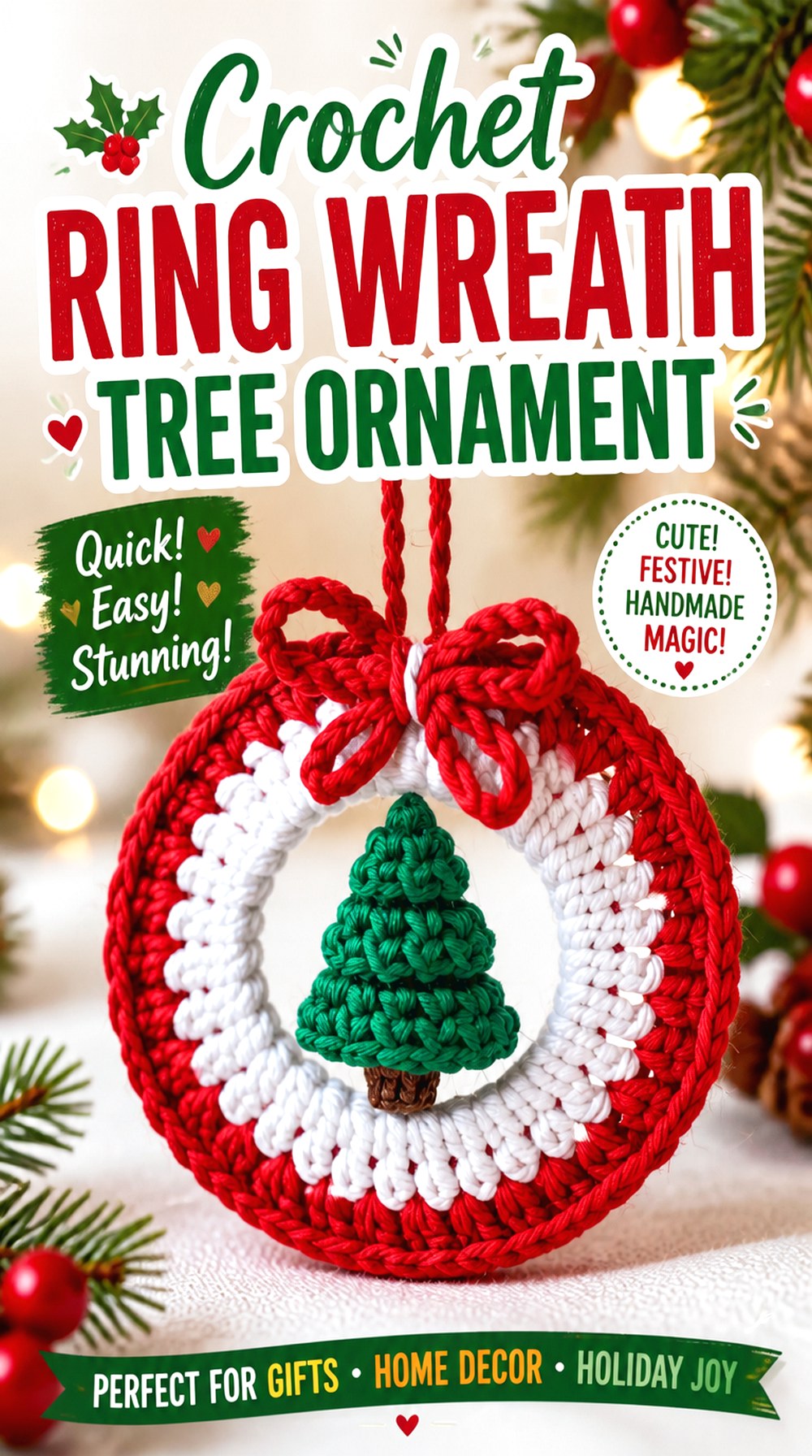
A miniature wreath creates an open center that keeps the ornament visually lighter than a solid round motif. The circular frame still gives it enough presence to stand out among branches, while the opening lets lights and greenery remain visible behind the crochet.
This is a strong choice when you want repetition. Multiple small wreaths can be spread across a tree without looking like identical solid disks, or one can be used as a small accent on a wrapped gift. Decorative bows, berries, or contrasting sections can change the emphasis, but the round outline should remain the dominant feature.
Protect the Circle From Becoming an Oval
A wreath needs enough structural consistency to maintain an obvious ring. Uneven crochet tension or a distorted underlying form can pull it into an oval. After finishing, place the wreath flat and compare the width in several directions. If you are producing a set, check each one before adding embellishments so the decoration does not hide a shape problem.
Keep Embellishments Proportional to the Opening
The open center is part of what makes a miniature wreath appealing. A very large bow or cluster can close that space and turn the design into a heavier circular ornament. Pin or lay embellishments in position first, then step back and make sure you can still read the wreath shape immediately.
Original Tutorial and Creator Credit
Creator: Tuba Crochet
Crochet Keepsake Angel Ornament
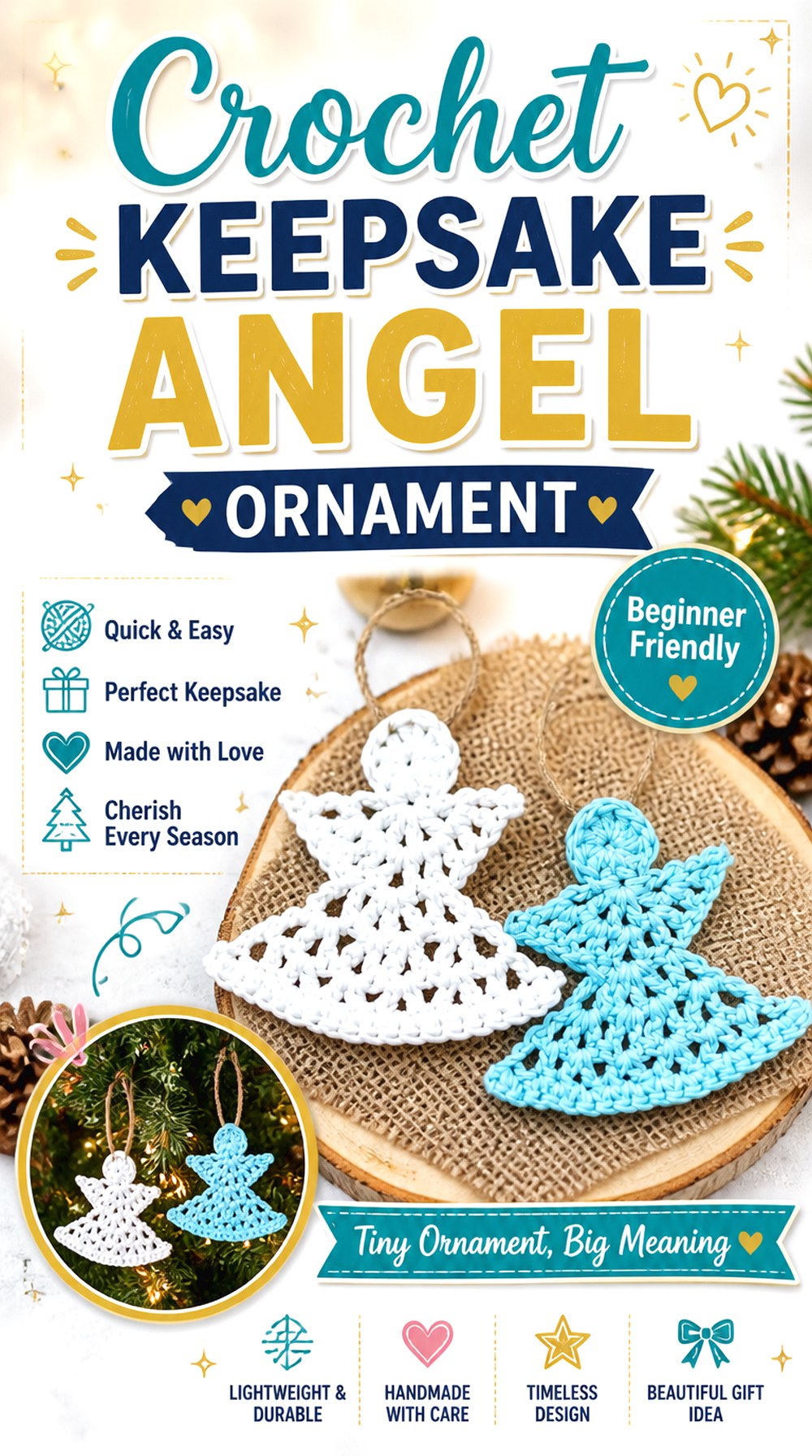
An angel introduces a wider silhouette through the wings while keeping a narrow central body. That makes it useful near open areas of a tree where a slim ornament would feel lost. The traditional shape can also work on memorial displays, gift packages, or a small seasonal wall arrangement.
Compared with a stuffed character, an angel can achieve much of its impact through shaping rather than bulk. The wings deserve particular attention because they determine the width and balance of the finished piece. A clean hanging point above the head allows the figure to remain upright instead of rotating sideways.
Wing Symmetry Has More Impact Than Tiny Stitch Differences
View the completed wings together before permanently finishing the ornament. One wing sitting higher than the other is more noticeable than a minor variation in individual stitches. If the construction allows repositioning, pin or hold both sides in place first and look at the angel vertically, since gravity can change how the wings sit compared with a flat work surface.
Choose a Hanger That Does Not Compete With the Halo Area
The top of an angel is already visually busy because the head, possible halo detail, and wings meet nearby. A thick hanging cord can overwhelm that area. Match the hanger to the scale and weight of the finished angel, and position it so the figure hangs face-forward rather than tipping back.
Original Tutorial and Creator Credit
Creator: Crochet with Simply Hooked by Janet
Crochet Gingerbread Man Tree Ornament
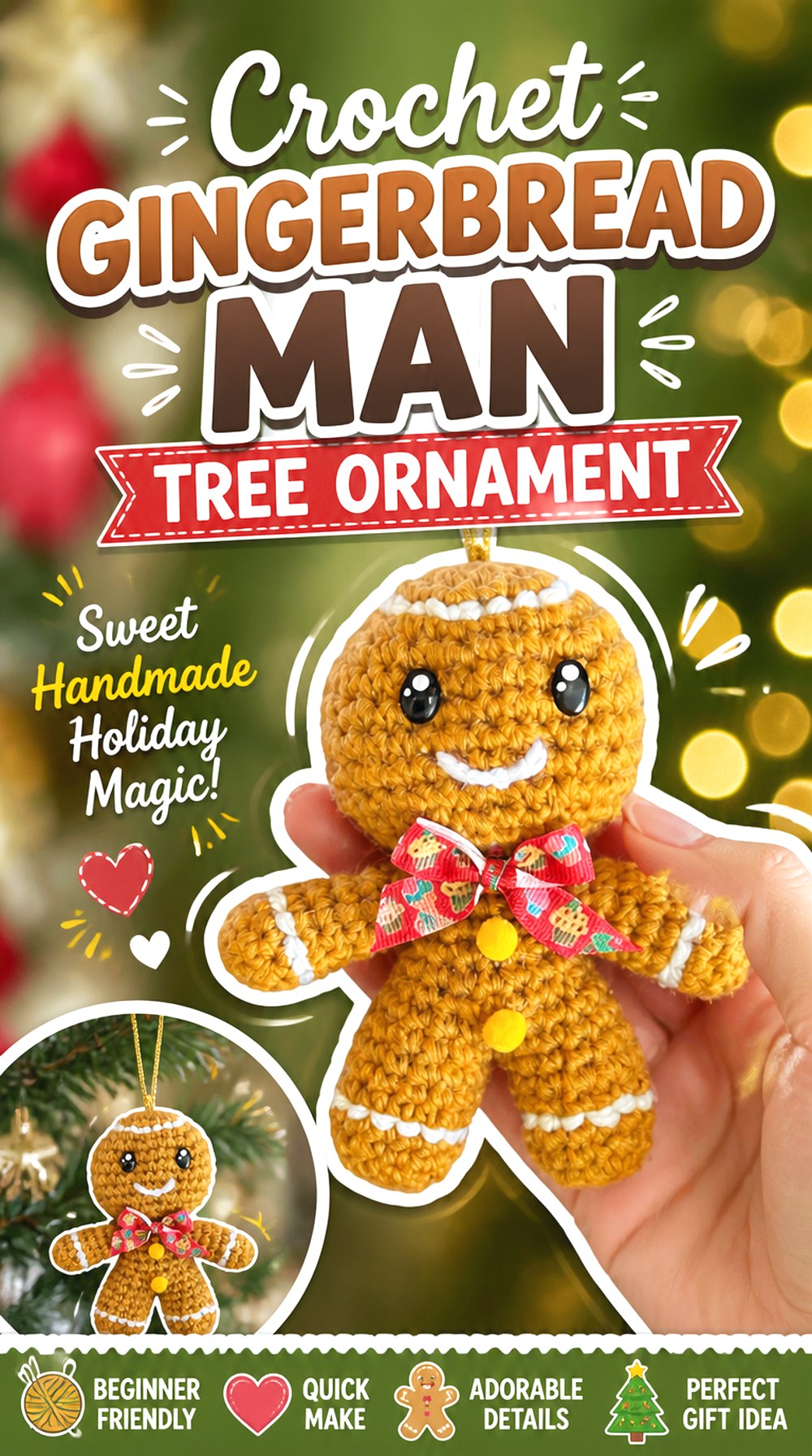
A gingerbread man brings a broad, playful silhouette to the tree. Arms and legs break up the outline, so the ornament remains recognizable even when surrounded by round baubles. It is also a useful choice for kitchen-themed Christmas displays, gingerbread collections, or a coordinated group of food-inspired decorations.
Because the outline carries so much character, finishing around the limbs matters. A twisted arm or uneven leg can make the figure hang off-center. Facial and icing-style details can be customized, but the best starting point is a balanced body that hangs well before extra decoration is added.
Check Limb Position Before Adding the Hanger
Lay the gingerbread figure flat and compare the angles of both arms and both legs. Then lift it from the intended hanging point. Crochet fabric can shift under gravity, so the final suspended pose may differ from the flat one. Correcting the balance before adding detailed decoration is easier than trying to disguise a tilted body later.
Decorative Details Should Follow the Scale of the Figure
Buttons, bows, icing lines, and facial features can quickly crowd a small ornament. Select a few details that remain visible at normal tree-viewing distance rather than trying to reproduce every element found on a decorated cookie. If hard or detachable embellishments are used, secure them appropriately and consider whether a stitched alternative is more suitable for your household.
Original Tutorial and Creator Credit
Creator: La casita de puchis
Crochet Five Point Star Decoration
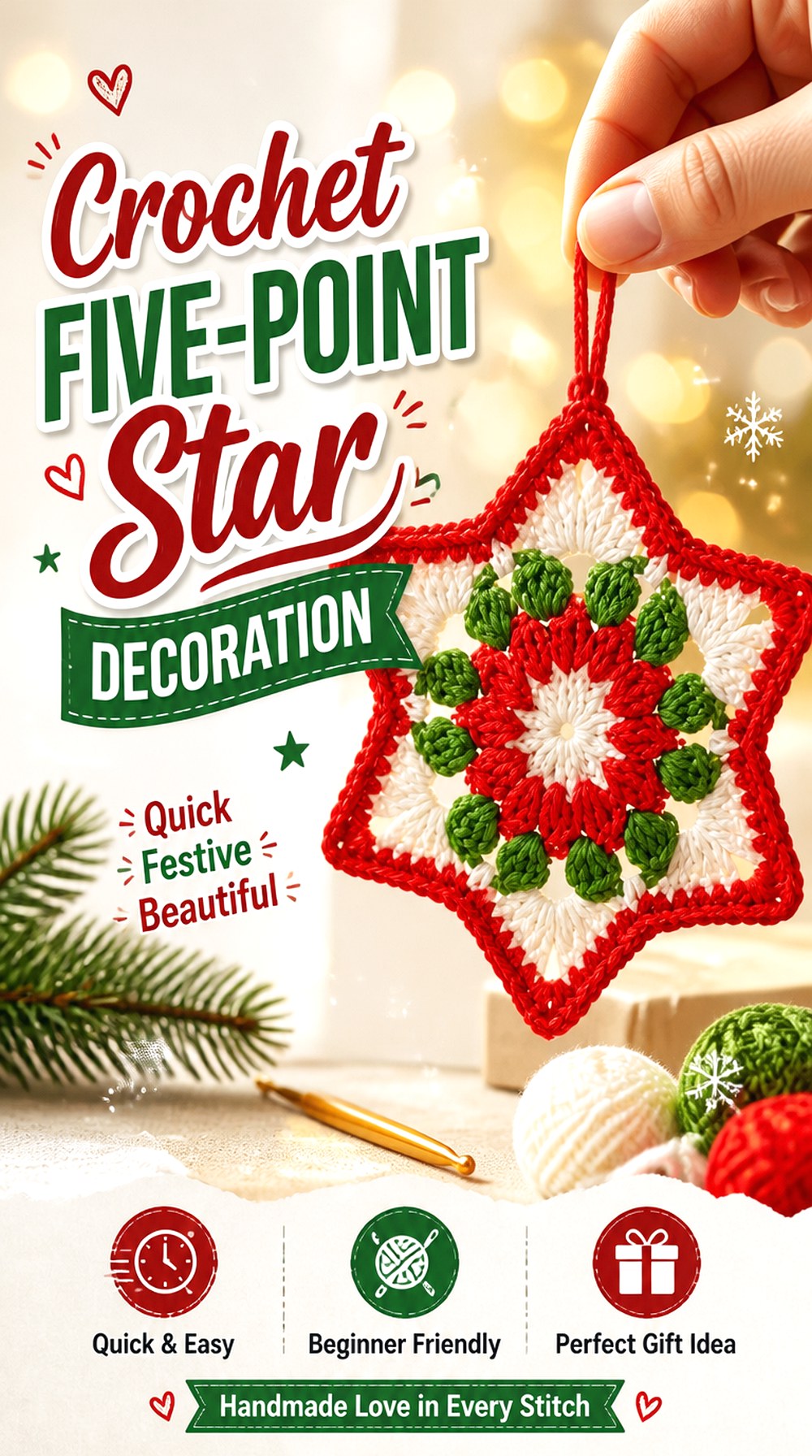
A crochet star supplies strong geometry without the delicacy of a snowflake. Its solid points make it easy to see against deep green branches, while the flat shape keeps storage simple. Stars can also be tied to gifts, connected into a garland, or layered over a contrasting background for wall decor.
This project works particularly well when you want a repeated motif that does not require stuffing or extensive assembly. The main challenge is consistency at the points. Even small variations become visible because the eye expects a star to look balanced.
Sharp Points Depend on Consistent Tension
After completing the star, place it flat and compare the distance between neighboring points. If one section bunches, resist the temptation to hide it beneath an embellishment. First determine whether gentle shaping or appropriate blocking can improve the outline. For a garland, check all stars before joining them so one noticeably distorted motif does not interrupt the rhythm.
Scale the Hanger to the Star’s Visual Weight
A thick loop on a small flat star can become almost as prominent as the ornament itself. A very fine hanger on a larger star may have the opposite problem and look visually disconnected. Choose the loop only after you see the finished size and test it against an actual branch or display hook.
Original Tutorial and Creator Credit
Creator: Crochet Craftsman
Crochet Poinsettia Holiday Accent
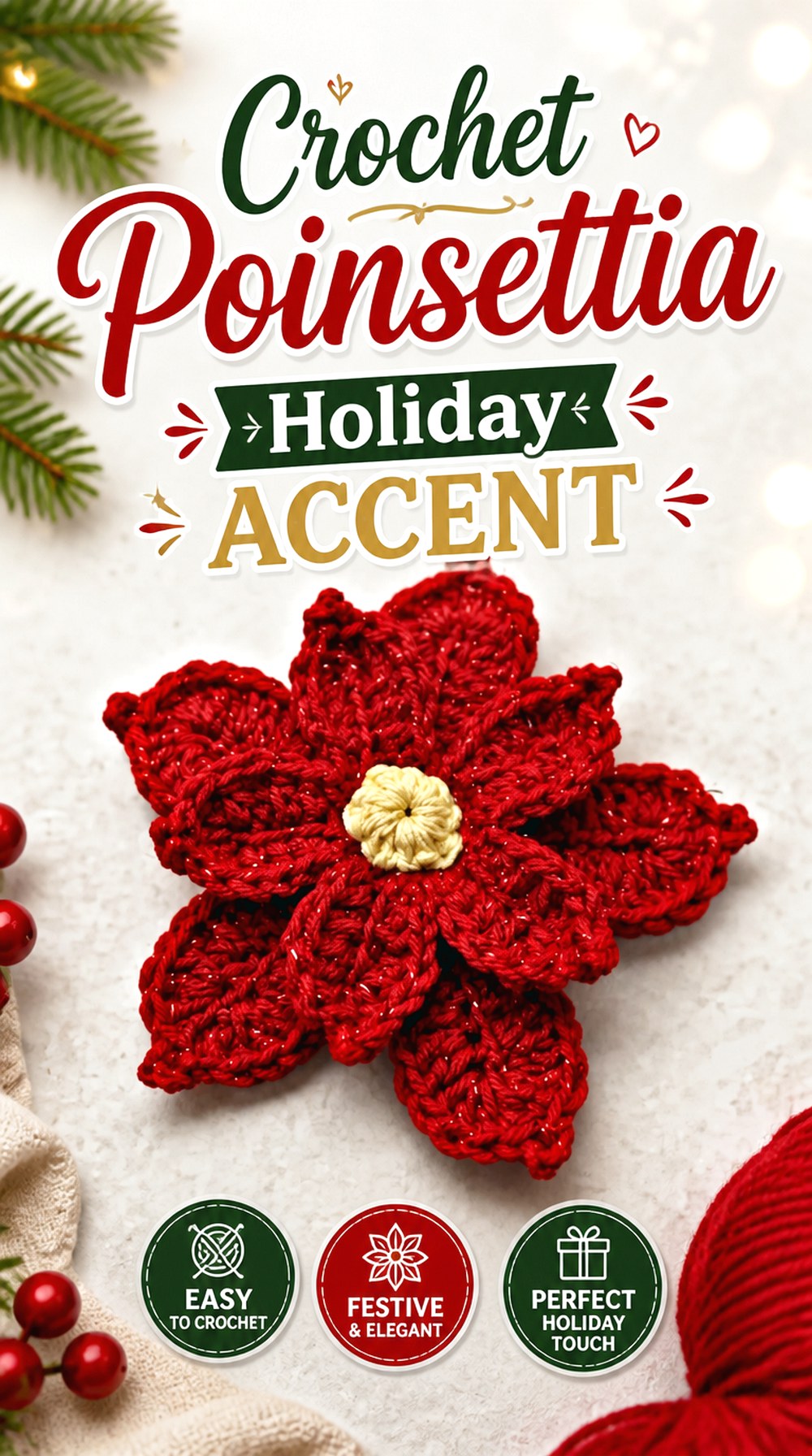
A poinsettia gives Christmas crochet a floral option instead of another character or geometric ornament. Its layered petals can add depth to wreaths, garlands, gift wrapping, table settings, or tree branches. One flower can function as a focal accent, while smaller repeated flowers can connect different areas of a room through the same motif.
Petal definition is more important than making the flower perfectly flat. A little dimension helps the layers remain visible. Before attaching a poinsettia permanently, decide whether you want to see it straight on, from above, or at an angle because the mounting position changes how much of the center and lower petals remain visible.
Layering Creates the Flower’s Depth
If every petal is pressed into the same plane, the poinsettia can lose much of its dimensional character. Arrange the layers before securing any optional center detail and make sure lower petals remain visible between the upper ones. This is especially helpful when using a fuzzy yarn that may obscure smaller spaces.
Match the Backing to the Final Use
A flower destined for a wreath needs a different attachment strategy from one used as a removable gift topper. Decide on the display first rather than adding a generic hanging loop automatically. If the poinsettia may be reused, a removable attachment can also make storage and repositioning easier.
Original Tutorial and Creator Credit
Creator: Bag-O-Day Crochet
Crochet Reindeer Head Ornament
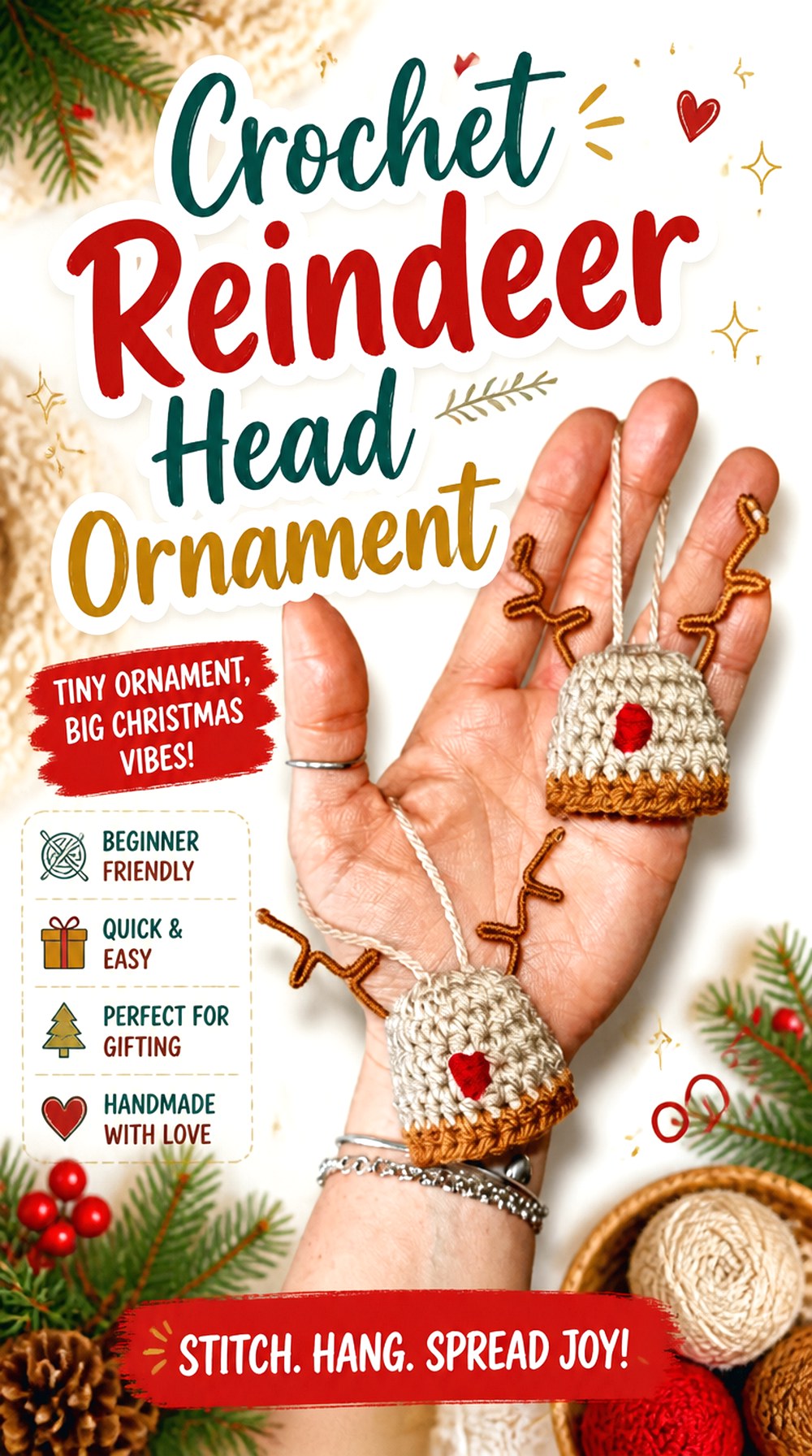
A reindeer head ornament creates character with a relatively compact central shape and a much wider upper outline created by the antlers. That profile separates it from the snowman, Santa, and gingerbread projects in this collection. It suits woodland-themed trees especially well and can also work as a playful bottle topper or small holiday accent.
The antlers are the detail most likely to influence storage and durability. They extend beyond the main body and can catch on nearby decorations, so this ornament benefits from a little extra breathing room on the branch.
Treat the Antlers as Structural Details
The featured tutorial uses wire or a pipe-cleaner-style option for the antlers, so they are not simply decorative stitches. Make sure any reinforcing material is safely covered and that exposed ends cannot poke through. If your display is within reach of children or pets, consider whether a softer antler treatment would be more appropriate.
Give the Face Enough Space Between Other Ornaments
A reindeer loses much of its personality when only the antlers are visible. Hang it where the face can be viewed from the front rather than squeezing it behind deeper baubles. On a garland or wreath, rotate the ornament before securing it and make sure the antlers do not repeatedly snag neighboring yarn pieces.
Original Tutorial and Creator Credit
Creator: mum2makes
Crochet Christmas Pudding Ornament
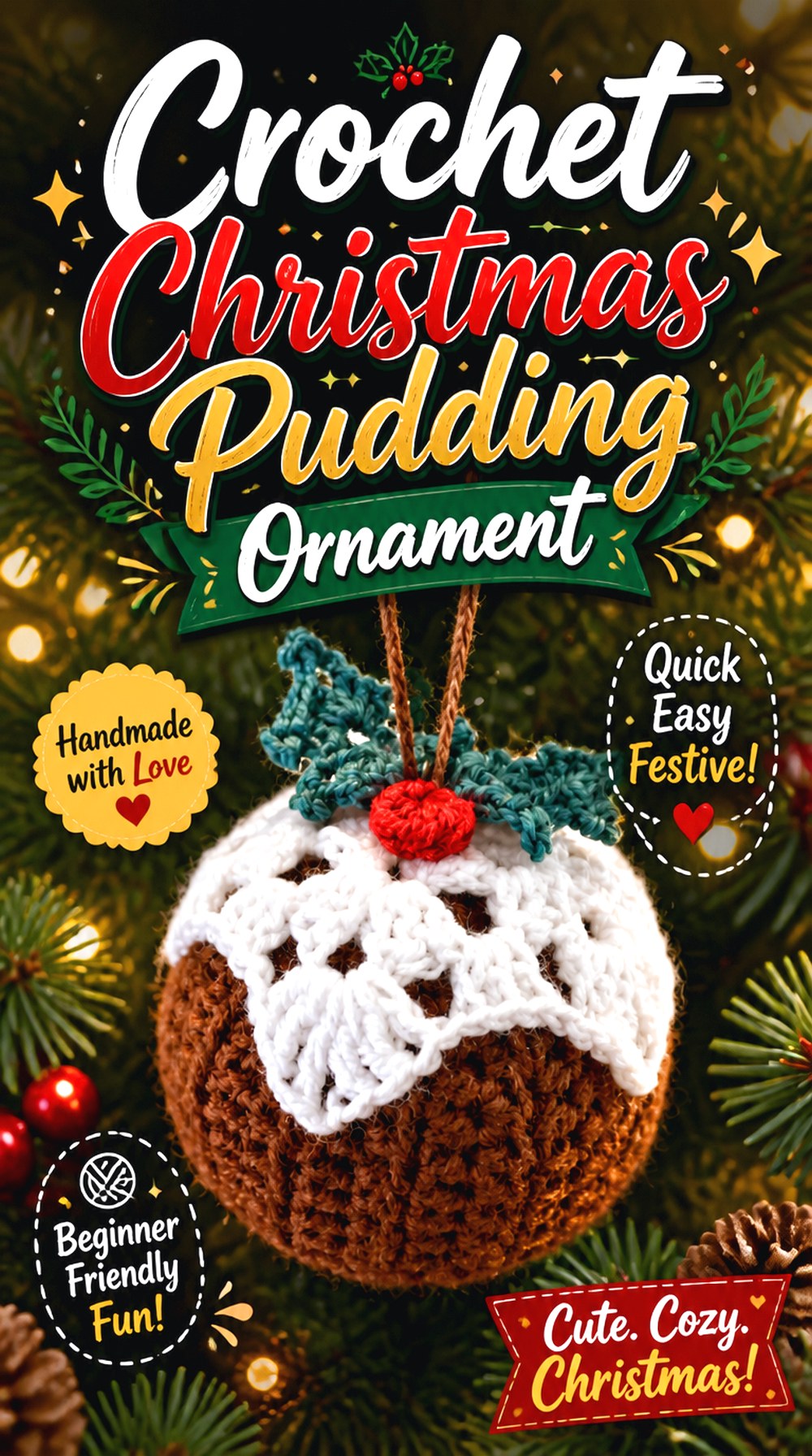
A crochet Christmas pudding offers a rounded food-themed decoration without looking like a standard bauble. The dark pudding body, light icing area, and holly-style top create strong visual layers, making the ornament readable even from a little distance. It works well on kitchen trees, dessert-themed garlands, or traditional red-and-green displays.
Unlike a flat cookie motif, the pudding benefits from volume. Its curved shape should remain smooth enough that the icing sits naturally over the top instead of appearing pasted onto an uneven form.
Shape the Body Before Attaching the Icing
Treat the pudding and topping as two visual layers. If the stuffed base has obvious lumps, adding the icing will not correct the underlying shape. Rotate the body in your hands and redistribute filling before final closure. Then position the icing so the draped edge looks intentional from the front rather than allowing the most interesting section to disappear at the back.
Top Decorations Need a Clear Center
Holly leaves and berries give the pudding its Christmas identity, but a large cluster can make the small ornament top-heavy. Arrange the pieces before sewing them down and lift the pudding by its hanger to check balance. If beads or other small detachable decorations are substituted, consider the security and intended audience of the display.
Original Tutorial and Creator Credit
Creator: Kara Ella Uy
Crochet Covered Bauble Decoration
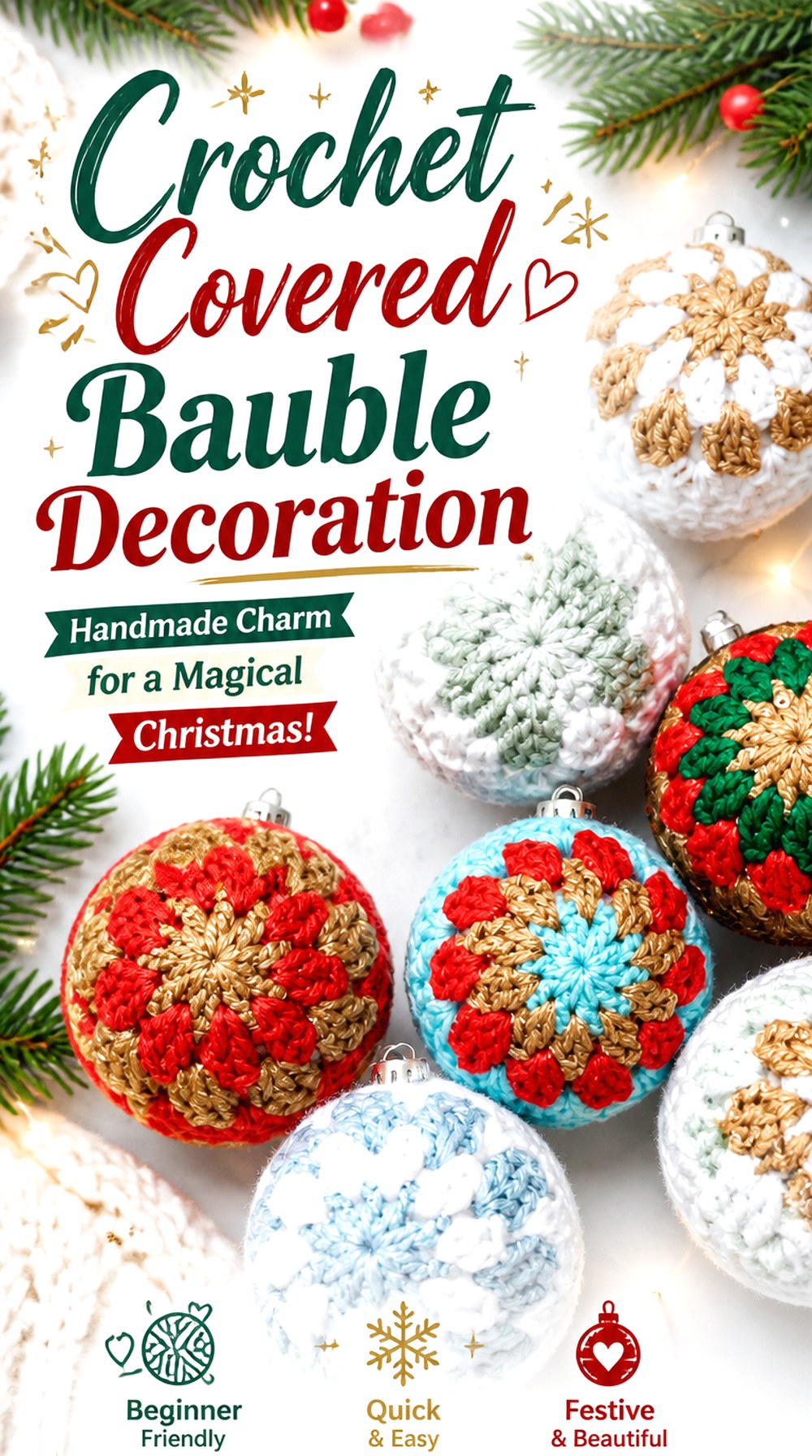
A covered bauble combines a traditional round Christmas ornament with visible crochet texture. Instead of creating the entire shape from stuffing, the crochet fabric fits around an existing ball. That gives the finished piece a regular sphere and makes it a good option when you want a polished group of matching round ornaments.
Fit becomes the central decision. A cover that is too loose can sag away from the insert, while one that is too small can distort the crochet pattern. Check the actual insert rather than relying on a generic assumption that all baubles labeled similarly have identical proportions.
Fit the Crochet to the Real Bauble
Freddie Loves Crochet demonstrates the project around a bauble and discusses adjusting the crochet for different sizes. Use that fitting mindset whenever you substitute an ornament. Test the developing cover against your insert before final joining so you still have an opportunity to correct the fit.
Think About Long-Term Storage of the Insert
A covered ball cannot be pressed flat like a snowflake. Store it where the insert will not be crushed and where hooks or caps from neighboring ornaments cannot snag the crochet. If you are making several, a divided ornament box can protect both the rounded shape and the yarn surface better than dropping them loosely into one container.
Original Tutorial and Creator Credit
Creator: Freddie Loves Crochet
Crochet Snow Tipped Christmas Tree Ornament
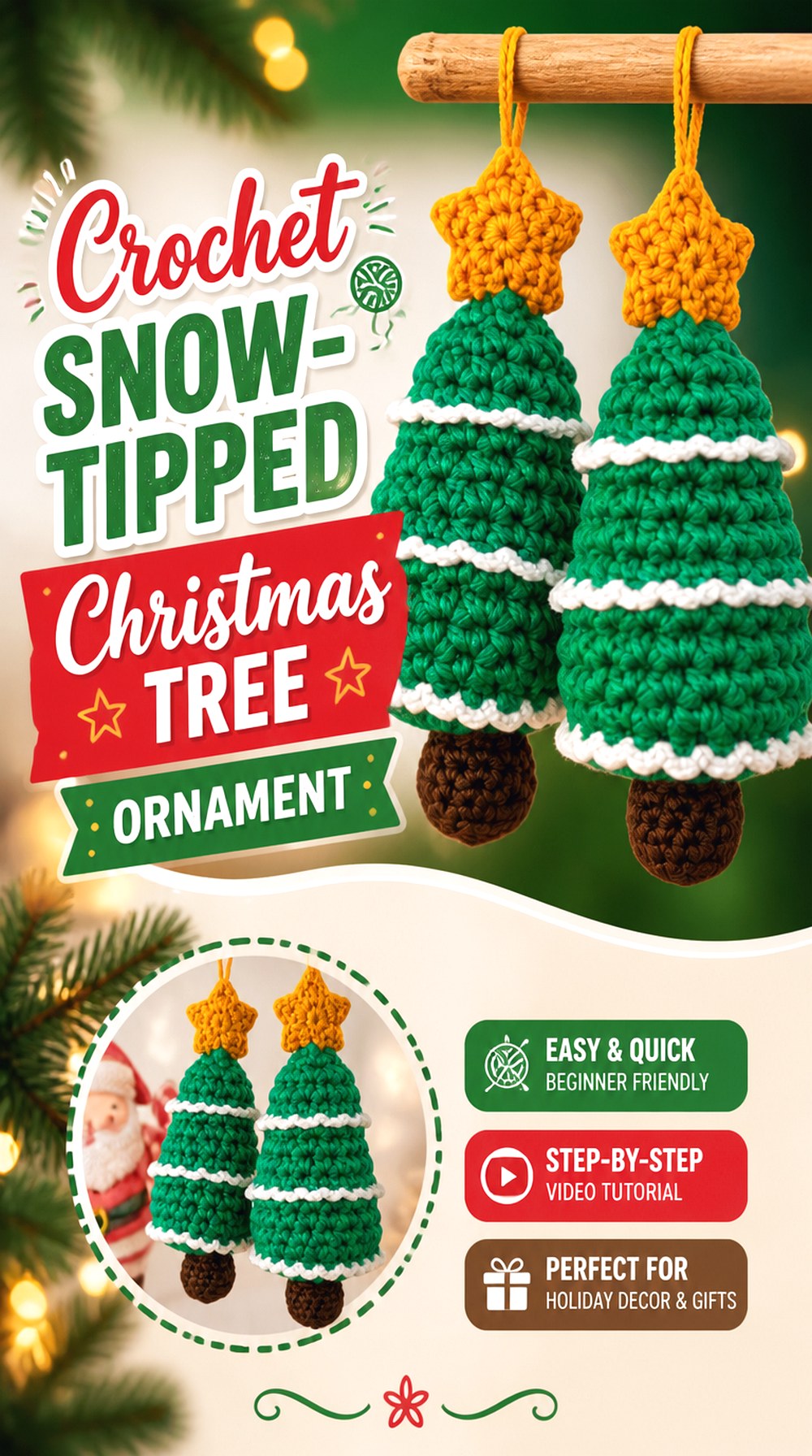
A miniature Christmas tree inside the larger Christmas tree creates a playful repetition of shape. This version is dimensional rather than a simple flat triangle, with tiered visual sections and contrasting snowy details. It therefore works as a stronger focal ornament than many lightweight tree motifs.
The conical form also suits small tabletop or shelf displays if you omit or adapt the hanger. Because the shape narrows toward the top, even small distortions can become obvious, so stuffing and finishing should support a centered vertical profile.
Keep the Tree Centered From Trunk to Top
Before adding final surface decoration, stand or hold the tree upright and inspect the line from trunk through the center of the body to the topper. If the trunk sits noticeably off-center, the whole ornament can appear tilted even when the hanger is correct. Adjust positioning before permanent attachment rather than using extra embellishments to distract from the problem.
Contrasting Snow Details Need Clear Stitch Definition
Jess Crafting’s finished design combines a green tree with lighter snow-tip details and a separate topper, giving the ornament multiple surface layers. If you substitute very fuzzy yarn, make sure those smaller details will still be visible; otherwise a smoother yarn may better preserve the tiered look.
Original Tutorial and Creator Credit
Creator: Jess Crafting
Crochet Spiral Icicle Ornament
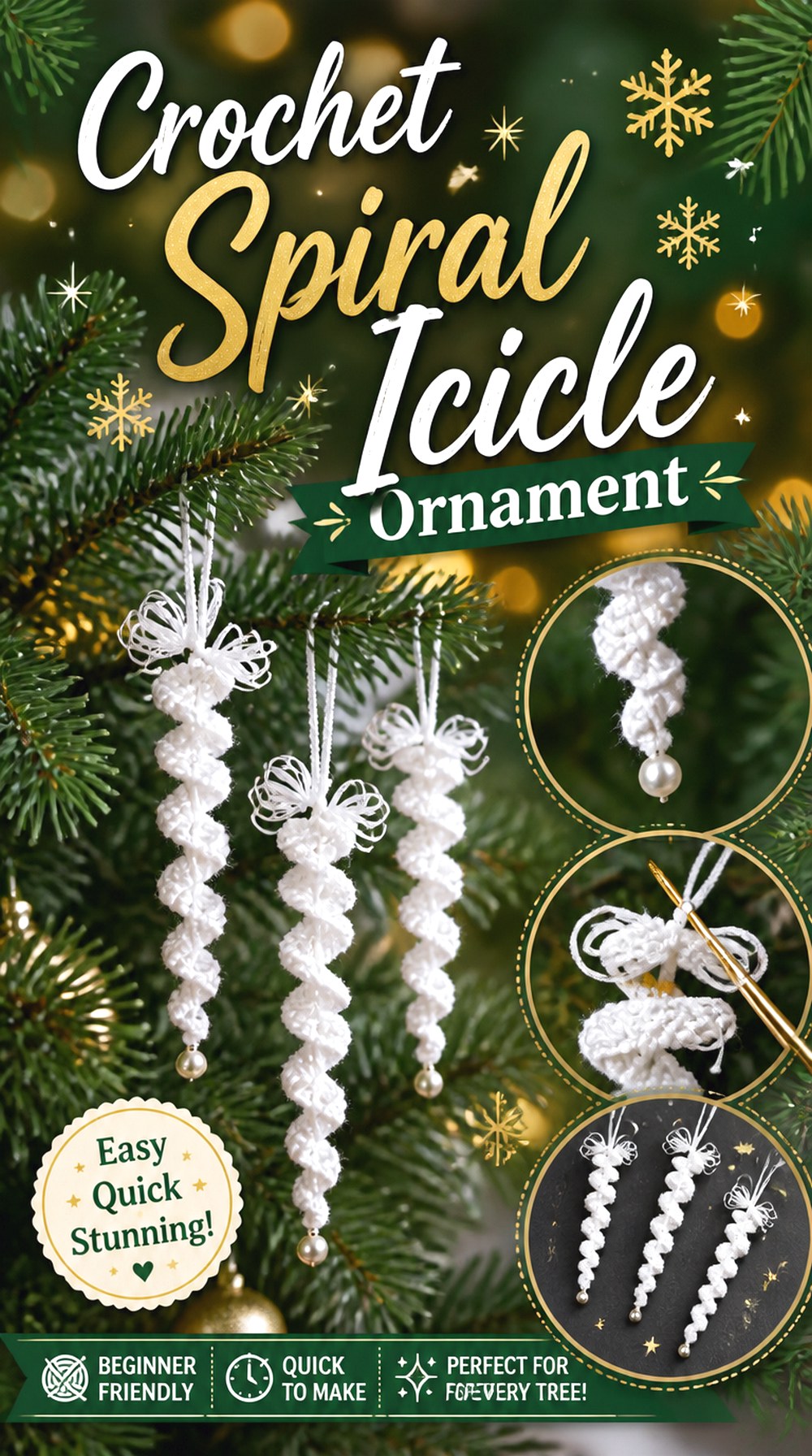
An icicle is an unusually narrow Christmas decoration, which makes it valuable when the tree already contains plenty of round and blocky shapes. The spiral creates movement without requiring a large surface area, and the vertical line can visually fill empty space between branches.
It is also one of the easiest shapes in this collection to repeat in quantity without making the display feel heavy. Try using the same yarn across several icicles for continuity, then vary their placement rather than treating each one as a separate statement ornament.
Let the Spiral Hang Before Judging It
A crochet spiral often looks compressed while being handled. Suspend the finished icicle and allow the shape to hang naturally before deciding whether it needs adjustment. The vertical display position is the one that matters. If making several, compare them while hanging rather than laying them side by side on a table.
Bottom Embellishments Can Change the Balance
A bell, bead, or other finishing detail at the lower end adds weight and movement, but it can also pull attention away from the spiral itself. Hectanooga1 presents a jingle bell as an optional addition. If you add one, confirm that the attachment is secure and that the extra weight does not stretch the crochet more than you want.
Original Tutorial and Creator Credit
Creator: Hectanooga1
Crochet Stuffed Gift Box Ornament
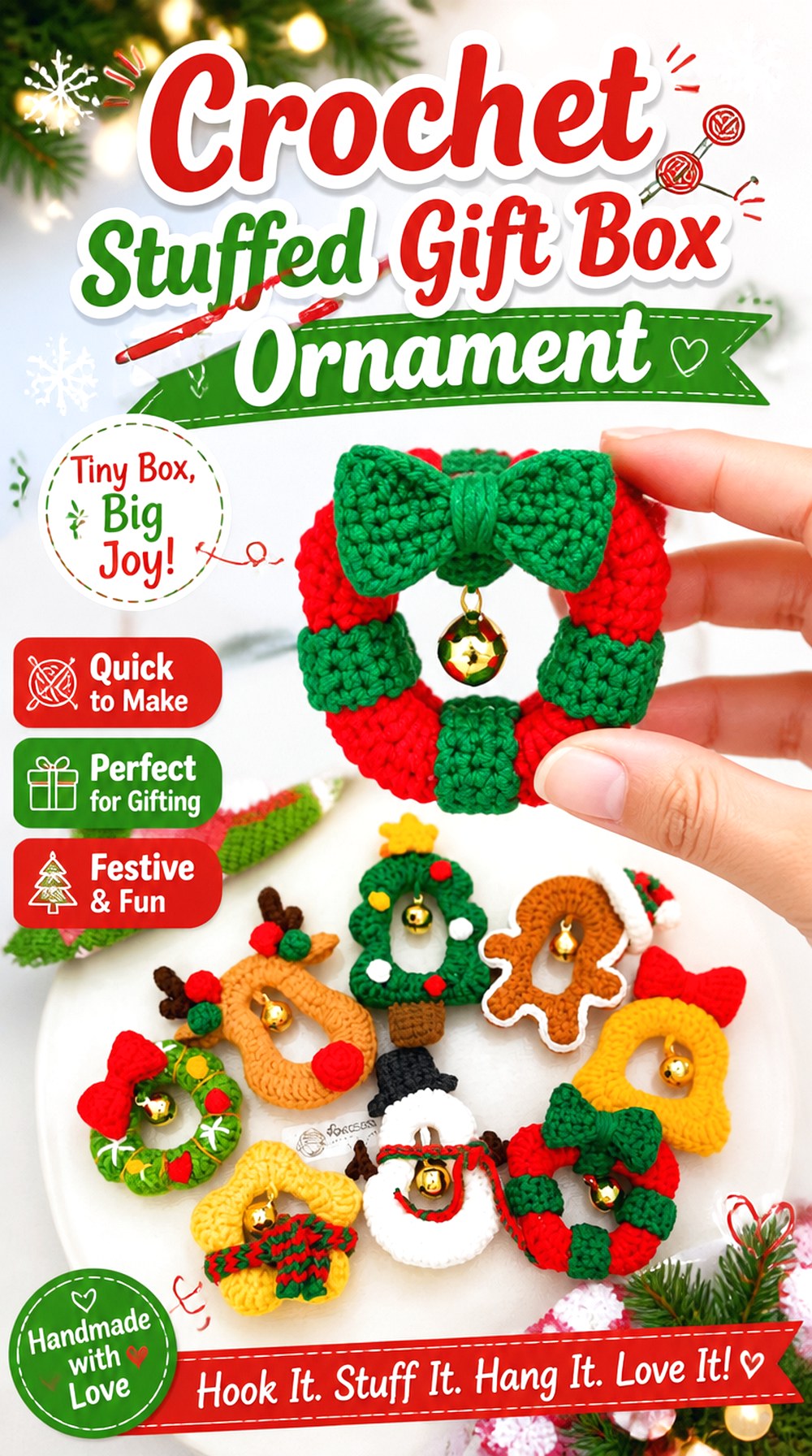
A miniature present introduces straight edges and a boxier silhouette to a collection dominated by circles and organic shapes. The ribbon and bow make it unmistakably festive, while the stuffed form creates enough depth to stand out against greenery. It works particularly well near round baubles because the contrasting geometry makes both shapes more noticeable.
This project involves more finishing decisions than a flat motif. The box needs to remain reasonably even, and the decorative straps or ribbon should look centered before the bow is permanently attached.
Preserve the Box Shape While Stuffing
Stuffing can easily turn a small gift box into a round cushion. Add enough filling to support the form without forcing the sides outward excessively. Check all faces as you work rather than judging only the front. If the finished box will hang diagonally, decide whether that is intentional before positioning the ribbon and loop.
Center the Ribbon Before Securing the Bow
An off-center strap is more obvious on a geometric object than on a soft character. Position the decorative bands first, compare their spacing from the corners, and only then add the bow. The featured tutorial includes separate base, strap, ribbon, and assembly stages, which makes the finishing sequence particularly useful to observe.
Original Tutorial and Creator Credit
Creator: AnDesign_Craft
Crochet Mini Mitten Decoration
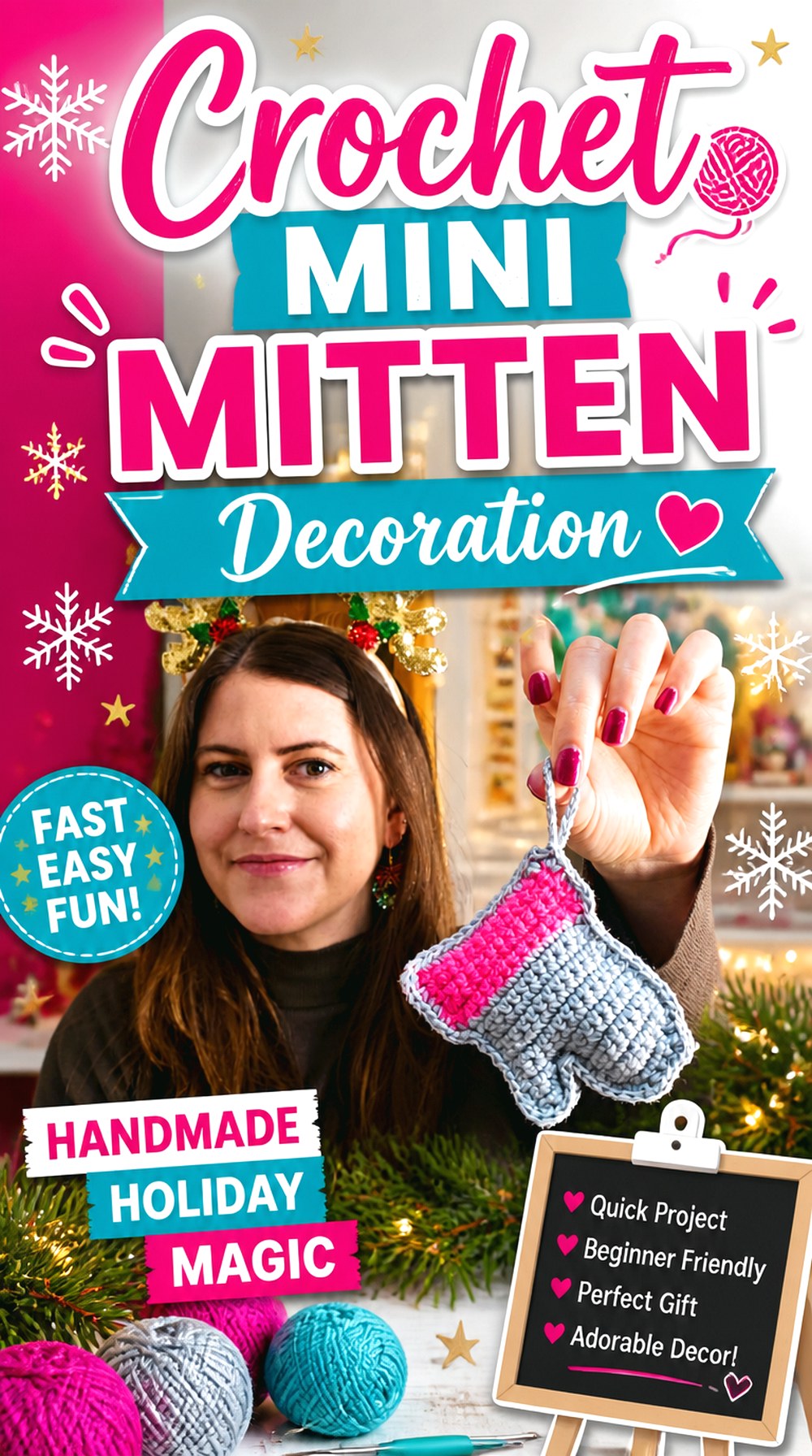
A miniature mitten adds a cozy winter symbol without repeating the shape of the stocking. Its thumb creates a small side projection, and the cuff gives you a natural place to introduce contrast or texture. It works as a single tree ornament, part of a winter-clothing garland, or an accent attached to a wrapped present.
One useful feature of Cilla Crochets’ tutorial is the option to think about the decoration as either flatter or more dimensional. That gives you flexibility when storage depth or tree-branch space is limited.
Decide on Flat or Dimensional Before Finishing
A flat mitten is easier to store and works well against a package or garland. A lightly stuffed version has more presence on a tree. Make that choice before closing the edges because it changes how you evaluate the outline. If stuffing, keep the thumb recognizable rather than filling so firmly that the smaller shaping disappears.
Cuff Texture Can Become the Main Detail
The cuff naturally frames the top of the mitten and can carry a contrast color or different visual texture without crowding the small body. If you make several mittens, repeating one cuff treatment while varying the main color can create a coordinated collection. Check the cuff width against the hand portion so it does not visually overwhelm the ornament.
Original Tutorial and Creator Credit
Creator: Cilla Crochets
Crochet Holly Leaf Cluster Accent
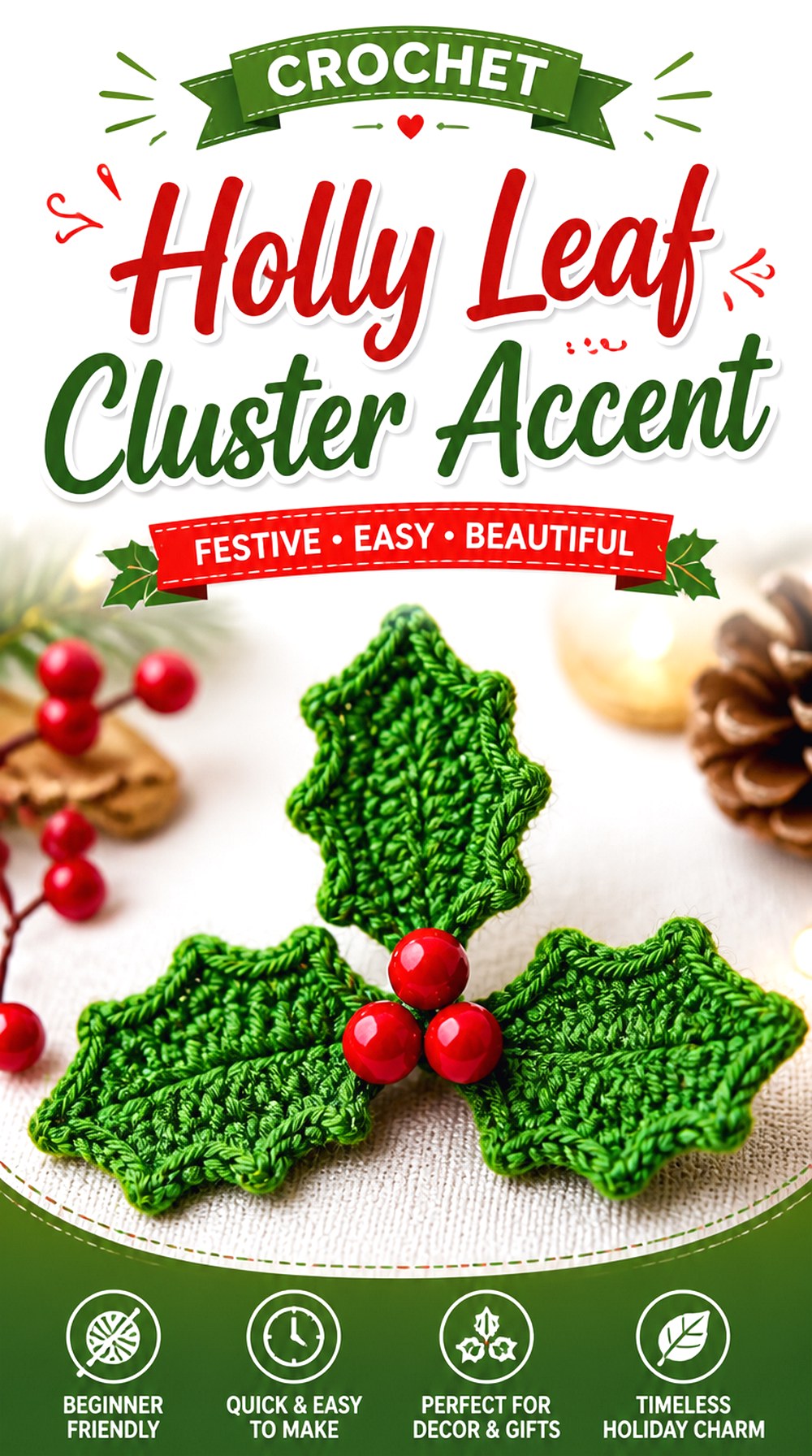
Holly is a flexible decoration because it does not have to function as a conventional hanging ornament. A small cluster can decorate a wreath, Christmas card, gift, mini pillow, garland, or tree. The pointed leaves and red berry accents create a strong seasonal signal with very little bulk.
This makes holly useful for connecting separate projects. For example, the same small motif can appear on a stocking, wreath, and table decoration, helping a mixed handmade collection look more coordinated without forcing every item to use the same construction.
Match the Motif Scale to the Surface
A holly cluster that looks delicate on a card may almost disappear on a large wreath. Conversely, a thick-yarn version can overwhelm a small ornament. Make one sample and physically place it on the intended surface before repeating it. Changing yarn weight changes more than size; it also changes how sharply the pointed leaf outline reads.
Beads and Crocheted Berries Create Different Results
GoldenLucyCrafts uses red beads with the thread-crocheted leaves, giving the small motif a distinct shiny center. If you prefer an all-yarn decoration, a crocheted or embroidered alternative will create a softer look. For displays reachable by young children or pets, avoid loosely attached small components.
Original Tutorial and Creator Credit
Creator: GoldenLucyCrafts
Crochet Santa Head Ornament
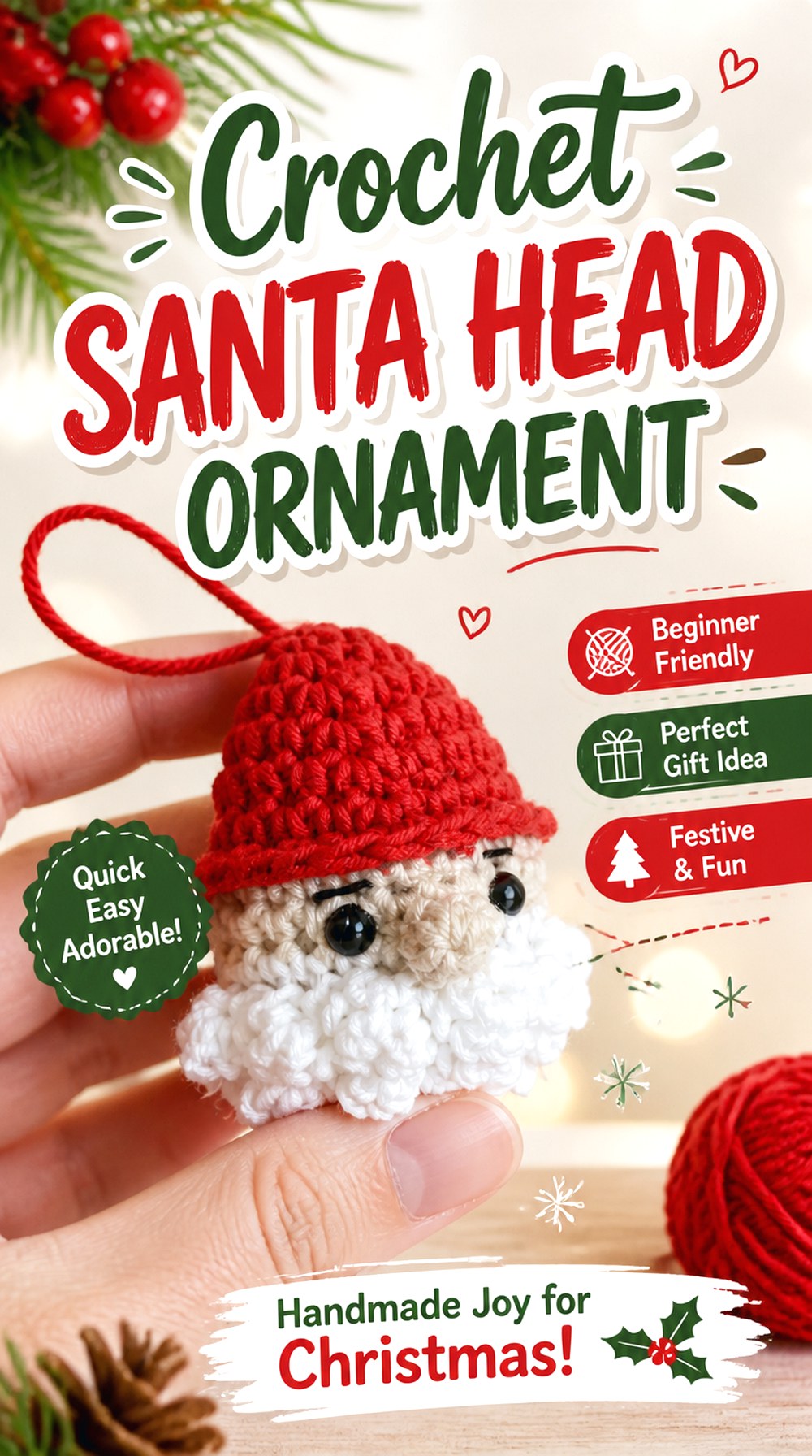
A Santa head ornament concentrates the recognizable hat, face, and beard into a compact shape rather than building a full figure. That gives it more facial detail than many flat ornaments while keeping the body of the decoration small. It is a good choice for a character-focused tree where you want several figures but limited branch weight.
The face and beard occupy most of the visible area, so placement matters more than complicated body shaping. Hang it where it can face outward instead of disappearing sideways between branches.
Balance the Hat Against the Beard
Santa ornaments often contain strong blocks of red and white. If the hat becomes too dominant, the face can appear squeezed between the two. If the beard is excessively full, the ornament may read as a white circle from a distance. Before completing permanent facial details, look at the entire silhouette rather than focusing only on individual features.
Check the Face Before Final Assembly
Small shifts in eye or nose placement can change the expression. Position the face with temporary markers where practical, then view it upright. The Amigurumi_Joys design is a small stuffed Santa ornament, so maintaining a dense enough crochet fabric to contain filling is also an important consideration when substituting yarn or hook size.
Original Tutorial and Creator Credit
Creator: Amigurumi_Joys
Crochet Christmas Light Garland
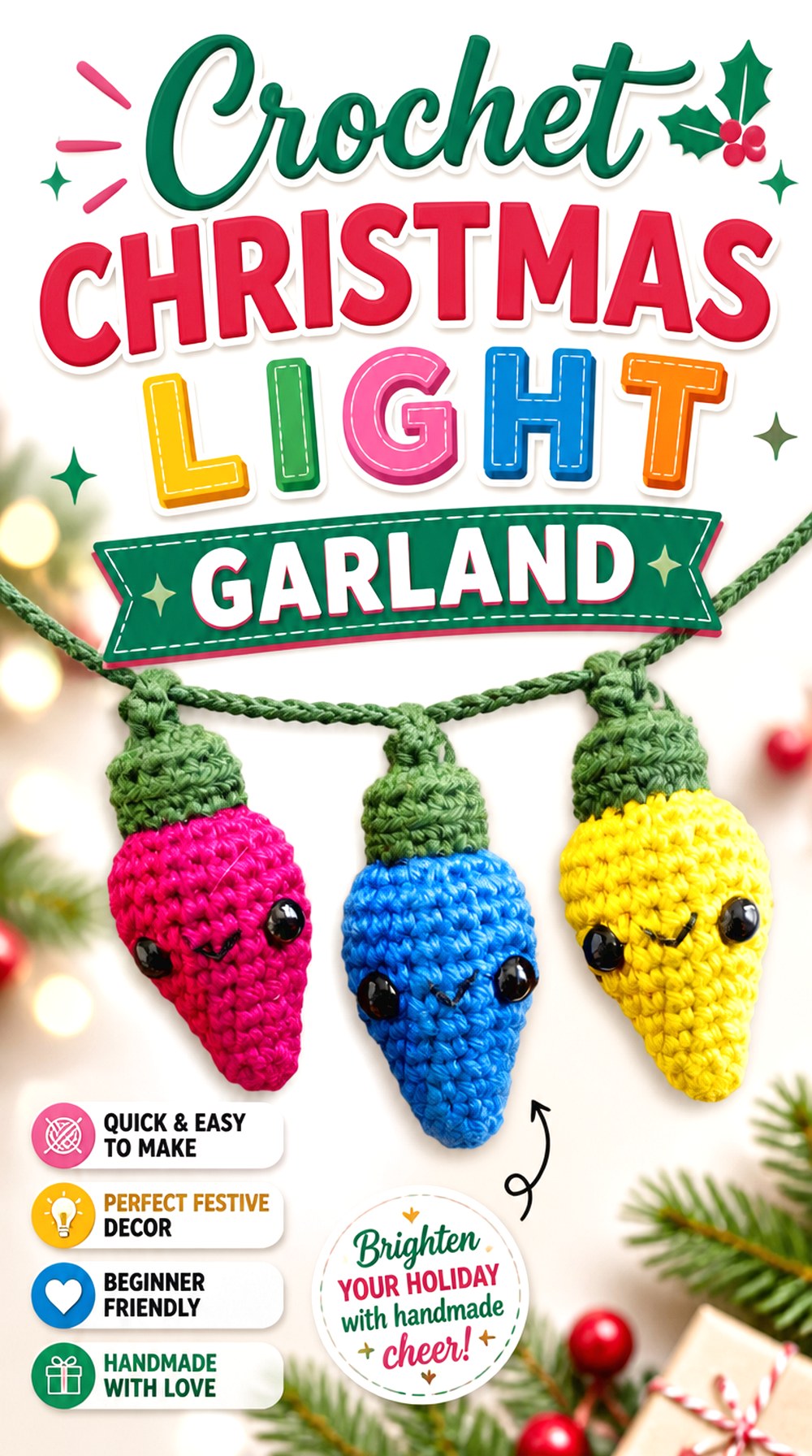
A strand of crochet Christmas lights shifts the focus from individual ornaments to a continuous decoration. Colorful bulb shapes can run across a mantel, shelf, doorway, or tree and create a repeating rhythm that is difficult to achieve with isolated motifs. Because each bulb is dimensional, the strand also brings more texture than a simple chain garland.
The main planning question is not just how each bulb looks, but how the entire sequence behaves when suspended. Spacing, color order, orientation, and total display length need to be considered together before the pieces are permanently connected.
Test Spacing on the Actual Display Area
Make a few bulbs first and temporarily position them along the planned mantel, branch, or shelf. This reveals whether the motifs need more breathing room or whether large gaps make the garland feel unfinished. A spacing decision that looks right on a table may feel very different when the strand is hanging in a long horizontal line.
Repeat Color With a Plan
Random color can be playful, but accidental clustering may leave one end of a garland visually heavier than the other. Lay the finished bulbs out before joining them and adjust the sequence while it is still easy. For a longer strand, repeating a short color rhythm can give variety without requiring every bulb to be unique.
Keep Small Parts Appropriate for the Setting
A Menagerie of Stitches’ tutorial uses safety eyes and additional facial details on the mini bulbs. If the garland will be accessible to babies, small children, or pets, reconsider hard or detachable pieces and choose finishing details appropriate for that environment.
Original Tutorial and Creator Credit
Creator: A Menagerie of Stitches
Crochet Christmas Candle Table Decoration
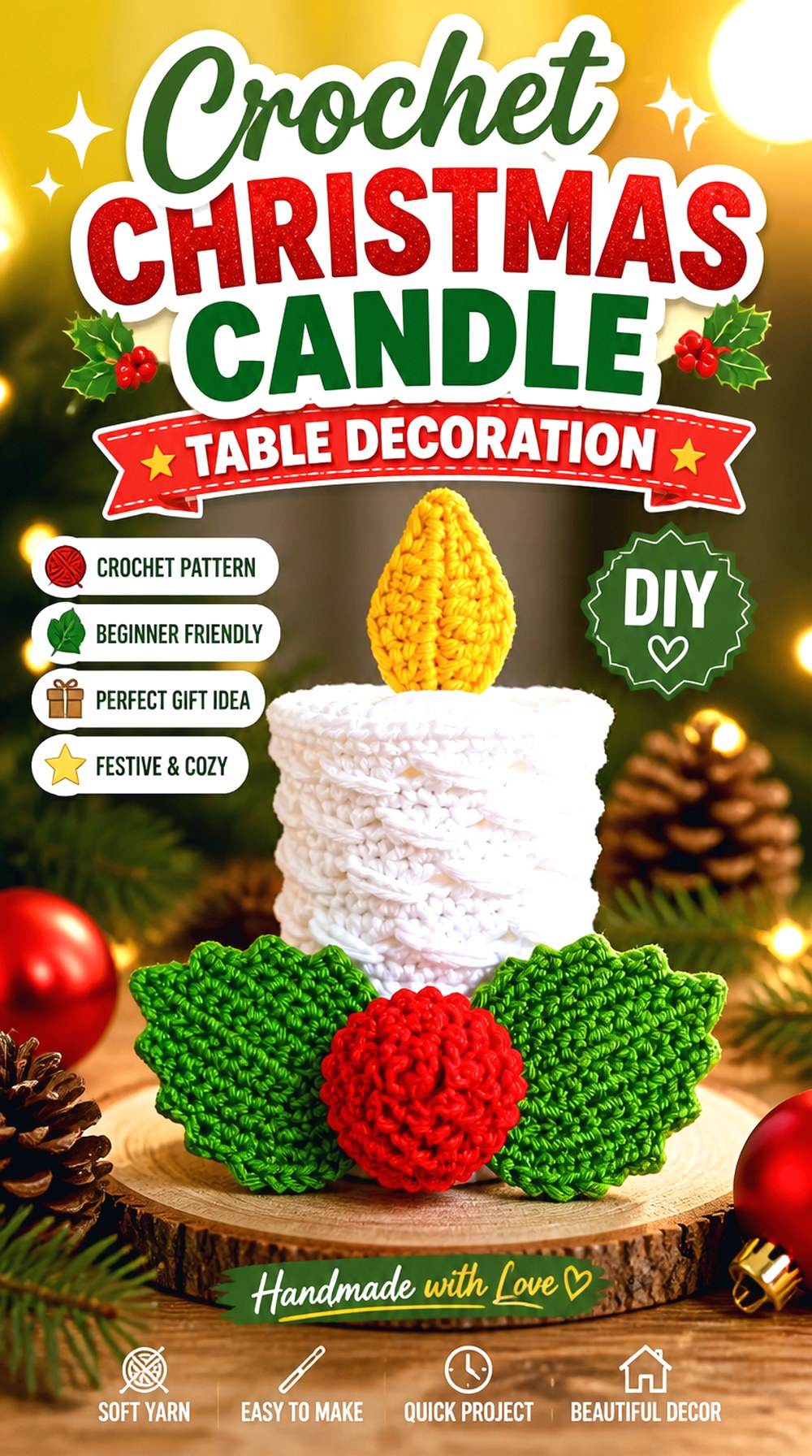
A crochet candle brings the collection off the tree and onto a table, shelf, mantel, or centerpiece. Its tall cylindrical profile creates vertical interest beside lower decorations such as baubles and wreaths. It can also provide a softer textile interpretation of a familiar Christmas centerpiece without needing to make another stuffed character.
The strongest visual feature is the relationship between the candle body, top, and floral decoration. Because the form is tall and relatively simple, crooked sides or an off-center top will be more noticeable than they might be on an irregular amigurumi shape.
Keep the Candle Decorative Around Heat Sources
Yarn should not be treated as heatproof simply because the finished piece resembles a candle. Keep crochet away from open flames and hot components. If you want a lighted effect nearby, use an appropriate flameless lighting solution according to its manufacturer’s instructions and maintain sensible separation from the yarn decoration.
Build the Centerpiece From the Silhouette Outward
First make sure the candle shape stands the way you want. Then evaluate flowers, leaves, or other surface details. Large decorations placed too high can obscure the candle profile, while everything clustered at the bottom may make the piece appear visually heavy. Temporarily arrange embellishments and view the decoration from the position where it will actually be displayed.
Original Tutorial and Creator Credit
Creator: Manualidades La Manita Felíz
Which Crochet Christmas Decorations Work Best Together?
For a lighter tree, combine the snowflake, star, holly, icicle, wreath, and mini stocking. Their outlines are distinct, but they do not all compete with large amounts of stuffing.
For more dimensional decorating, mix the snowman, gingerbread man, pudding, gift box, reindeer, Santa, and covered bauble. Spread them between flatter motifs so the tree does not become visually dense in one area.
The gnome and crochet candle make more sense as separate tabletop accents, while the Christmas light garland can visually connect a mantel, doorway, or shelf. If you want a coordinated collection without making every object identical, repeat two or three colors across different shapes rather than choosing 22 versions of the same ornament.
Conclusion
The most useful Christmas crochet collection mixes shapes as well as colors. Choose snowflakes, stars, holly, or icicles when you need flatter pieces; use snowmen, gingerbread figures, puddings, presents, and Santa ornaments where extra depth will improve the display. Covered baubles add regular round structure, while a gnome, candle, or Christmas-light garland can extend the handmade theme beyond the tree.
Before making multiples, finish one sample and check its hanging balance, final scale, storage needs, and compatibility with the rest of your decor. Once you choose a direction, use the original tutorials credited with each idea for the creator’s exact construction details.
Frequently Asked Questions
What type of crochet Christmas decoration is easiest to store?
Flat motifs such as snowflakes, stars, holly leaves, and some wreath designs generally require less storage depth than stuffed ornaments. They can often be layered carefully in a box, although delicate points may need protection from bending. Dimensional pieces such as puddings, gift boxes, baubles, and amigurumi figures occupy more room but are less dependent on maintaining a perfectly flat surface.
Should I use cotton or acrylic yarn for crochet Christmas ornaments?
Both can work, but the choice changes the result. Cotton often gives small motifs clear stitch definition and can feel relatively structured, while acrylic offers a broad range of textures and can work well for stuffed decorations. Instead of choosing by fiber name alone, consider whether the specific project needs crisp points, soft volume, stretch around an insert, or easy shaping. Always check the care information for the actual yarn you use.
How can I make a set of crochet Christmas decorations look coordinated without making them identical?
Repeat a limited color palette across several different shapes. For example, the stocking, star, wreath, pudding, and gift box can share the same reds, greens, creams, or metallic accents while remaining completely different projects. You can also repeat one finishing element, such as the same hanging cord. This gives the tree visual continuity without turning the collection into 22 versions of one motif.
How do I keep crochet ornaments from hanging sideways?
Hanging balance depends on both loop position and weight distribution. Before permanently securing a loop, hold the decoration at the proposed attachment point and see how gravity rotates it. Dimensional or asymmetrical items such as stockings, reindeer, gingerbread figures, and gift boxes may need more testing than flat stars. Adjust the hanger position before final finishing instead of trying to twist the branch around a poorly balanced ornament.
Can I change the yarn weight to make a Christmas decoration larger or smaller?
Often the overall scale changes when yarn and hook size change, but that does not guarantee every construction will adapt cleanly. A thicker yarn can obscure small decorative details, change stiffness, affect a fitted bauble cover, or make an amigurumi piece much heavier. For projects involving inserts, beads, wire, or other sized components, confirm compatibility before committing to the substitution.
Should I block crochet Christmas decorations before hanging them?
Blocking can be particularly useful for flat geometric pieces such as snowflakes, stars, and leaf motifs when you want a more even outline. It is not automatically necessary for every decoration, especially stuffed projects or pieces built around rigid forms. Use a method appropriate for the fiber and construction, and test cautiously when you are unsure how a yarn or decorative component will react.
What should I consider when crochet Christmas decorations will be around children or pets?
Pay attention to detachable embellishments, bells, beads, safety eyes, wire, long hanging cords, and accessible stuffing. A decoration suitable for an adult-only mantel may not be suitable within reach of a baby or pet. Secure components appropriately, substitute embroidered or crocheted details when useful, and place delicate or potentially hazardous decorations where they cannot be pulled down or chewed.