Patchwork can change a crochet hoodie in several ways. Some designs are genuinely assembled from separate squares, while others create the look through granny clusters, contrasting sleeves, broad color panels, textured sections, or strategically placed scraps. The construction choice matters because a joined-square cardigan behaves differently from a seamless-looking pullover or a long hooded coat.
These 18 ideas cover open-front cardigans, closed pullovers, oversized layers, children’s hoodies, textured jackets, pocketed versions, and longer silhouettes. Several tutorials demonstrate true patchwork or granny construction; others provide complete hooded-garment foundations that can be adapted with compatible color blocking rather than copied as a different pattern. The most useful plan is one that considers fit, fabric weight, patch dimensions, seams, and hood structure together.
Quick List
- Crochet Joined-Square Stash Patchwork Hoodie
- Crochet Granny-Square Mosaic Hooded Cardigan
- Crochet Top-Down Granny-Block Hoodie Cardigan
- Crochet Oversized Wide-Block Patchwork Cardigan Hoodie
- Crochet Chunky Scrap-Panel Oversized Hoodie
- Crochet Jacket-Style Patchwork Hooded Cardigan
- Crochet Kids Color-Block Patchwork Hoodie
- Crochet Long-Line Patchwork Hooded Coat
- Crochet Cable-and-Solid Patchwork Hooded Cardigan
- Crochet Chunky Two-Tone Patchwork Hoodie Cardigan
- Crochet Oversized Closed-Front Patchwork Hoodie
- Crochet Geometric Panel Patchwork Pullover Hoodie
- Crochet Narrow-Panel Chunky Patchwork Hooded Cardigan
- Crochet Bear-Ear Patchwork Baby Hoodie
- Crochet Two-Color Pieced Patchwork Pullover Hoodie
- Crochet Pocketed Made-to-Measure Patchwork Hoodie Cardigan
- Crochet Mini-Bean Color-Patch Baby Hoodie Cardigan
- Crochet Pocket-Accent Patchwork Hooded Cardigan
Decide What Kind of Patchwork You Actually Want
A patchwork hoodie does not have to be built from dozens of separate squares. Joined motifs create the clearest traditional patchwork appearance, but they also introduce more seams and make blocked motif dimensions important. Large color panels offer a cleaner, more modern look and can be easier to coordinate with an existing hoodie construction. Granny-cluster color changes sit somewhere between those approaches because the fabric can remain continuous while still looking segmented.
Texture can become another type of patch. A cable panel beside plain fabric, for example, creates separation without changing color. Before committing to a tutorial, decide whether your priority is visible seams, a scrap-yarn look, geometric color placement, granny motifs, or mixed texture. That choice will determine how much planning is needed before the hood and sleeves are attached.
Plan the Hood, Fit, and Patch Layout as One Garment
The hood is not an isolated accessory. It adds fabric around the neckline, while patch seams and heavier motifs can change how the shoulders hang. For a wearable assembled from squares, block the motifs first and compare their finished dimensions before deciding how many belong across a panel. A small difference repeated across several motifs can become a noticeable width mismatch.
Also distinguish between garment ease and simply making more patches. An oversized cardigan needs intentional room through the body and sleeves, while a closed pullover still has to pass comfortably over the head and shoulders. Check the tutorial’s intended sizing method before translating its body into patchwork. Around armholes, shoulders, cuffs, and the neckline, keeping the patch arrangement symmetrical can make later assembly easier to evaluate.
Keep Scrap Yarn Compatible With the Finished Fabric
A colorful stash does not automatically make a good wearable stash. Two yarns that look similar in the ball can produce noticeably different thickness, stretch, drape, or washing behavior. That becomes more obvious when they meet along a patch seam.
For joined motifs, compare blocked size and fabric feel rather than relying only on the yarn-label category. With larger color blocks, swatching can show whether one section becomes much stiffer or looser than another. Very dense textures are useful as deliberate accents but may feel heavy if repeated across the hood, sleeves, and body at once. If laundering matters, check the care instructions for every yarn that will share the garment. A patchwork hoodie is easiest to maintain when its fibers have reasonably compatible care requirements.
Crochet Joined Square Stash Patchwork Hoodie
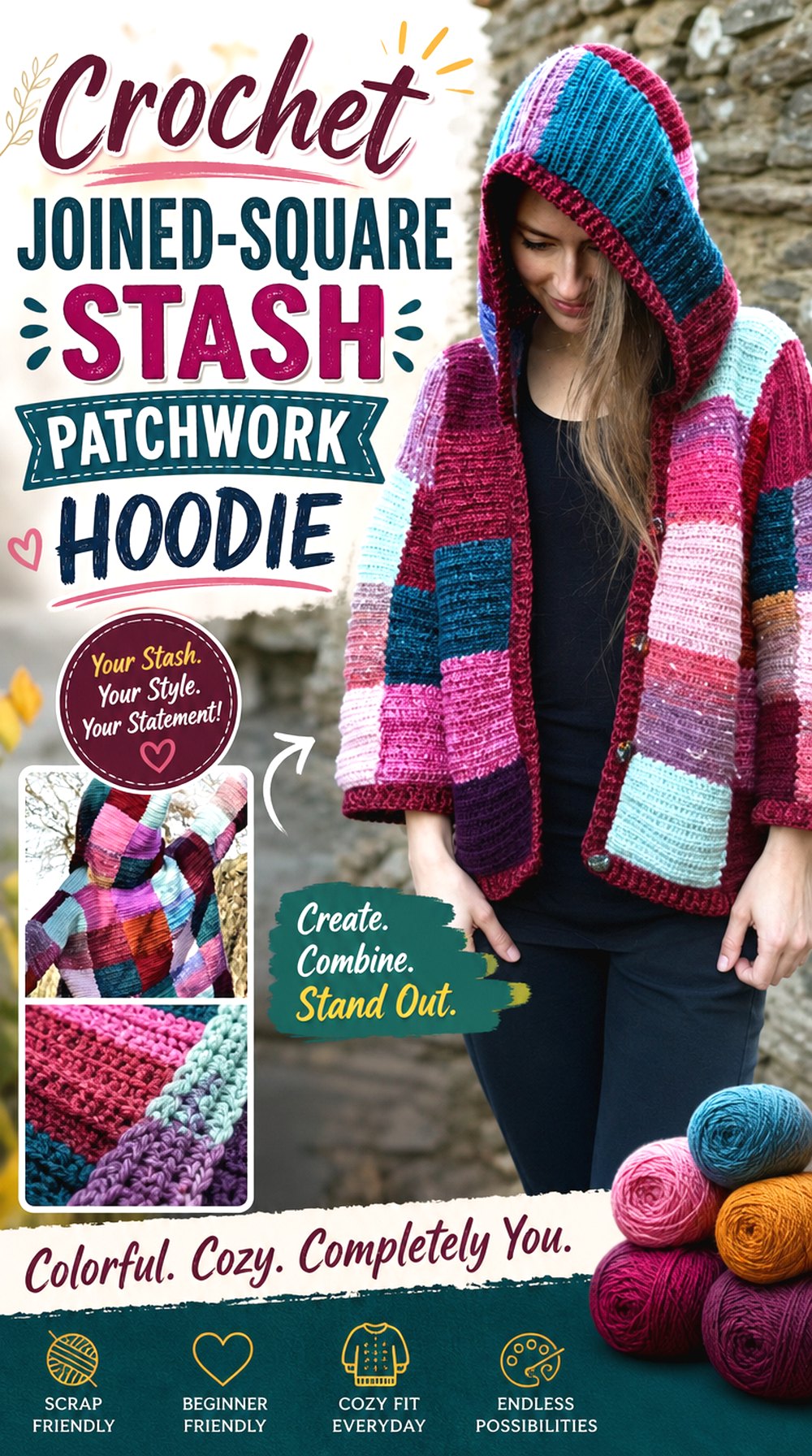
This is the most literal patchwork direction in the collection: a hooded cardigan formed from individual crochet squares arranged into a colorful garment. It is a strong choice when the appeal of the project is seeing separate scraps become one coordinated layer rather than simply switching colors across rows.
Because the squares remain visually obvious after assembly, placement becomes part of the design. You can distribute stronger colors across the body or reserve calmer combinations around the face and hood. Colour Ceilidh Crochet’s tutorial is a direct project match, so it is especially useful if your priority is learning from a hoodie already designed around separate patches rather than adapting a conventional sweater.
Block Every Square Before Finalizing the Grid
Small differences in motif dimensions are easier to correct before joining than after a whole panel has been assembled. Lay the blocked pieces side by side and compare both width and edge behavior. If one yarn or tension consistently produces smaller patches, address that mismatch before placing those motifs in a major seam line.
Let Color Placement Balance the Front and Back
Random-looking patchwork can still benefit from planning. Spread repeated or especially bright colors around the garment instead of accidentally clustering them in one corner. Photographing a temporary floor layout is useful because it lets you compare arrangements before committing to seams, particularly around the two front panels.
Watch the Shoulder Seams as the Hoodie Gains Weight
A hood plus joined squares can concentrate weight near the upper body. Before completing every finish, check how the shoulder area behaves when the cardigan is hanging rather than lying flat. If the fabric stretches noticeably, that information may influence edging choices or where you place heavier yarns in a future version.
Crochet Granny Square Mosaic Hooded Cardigan
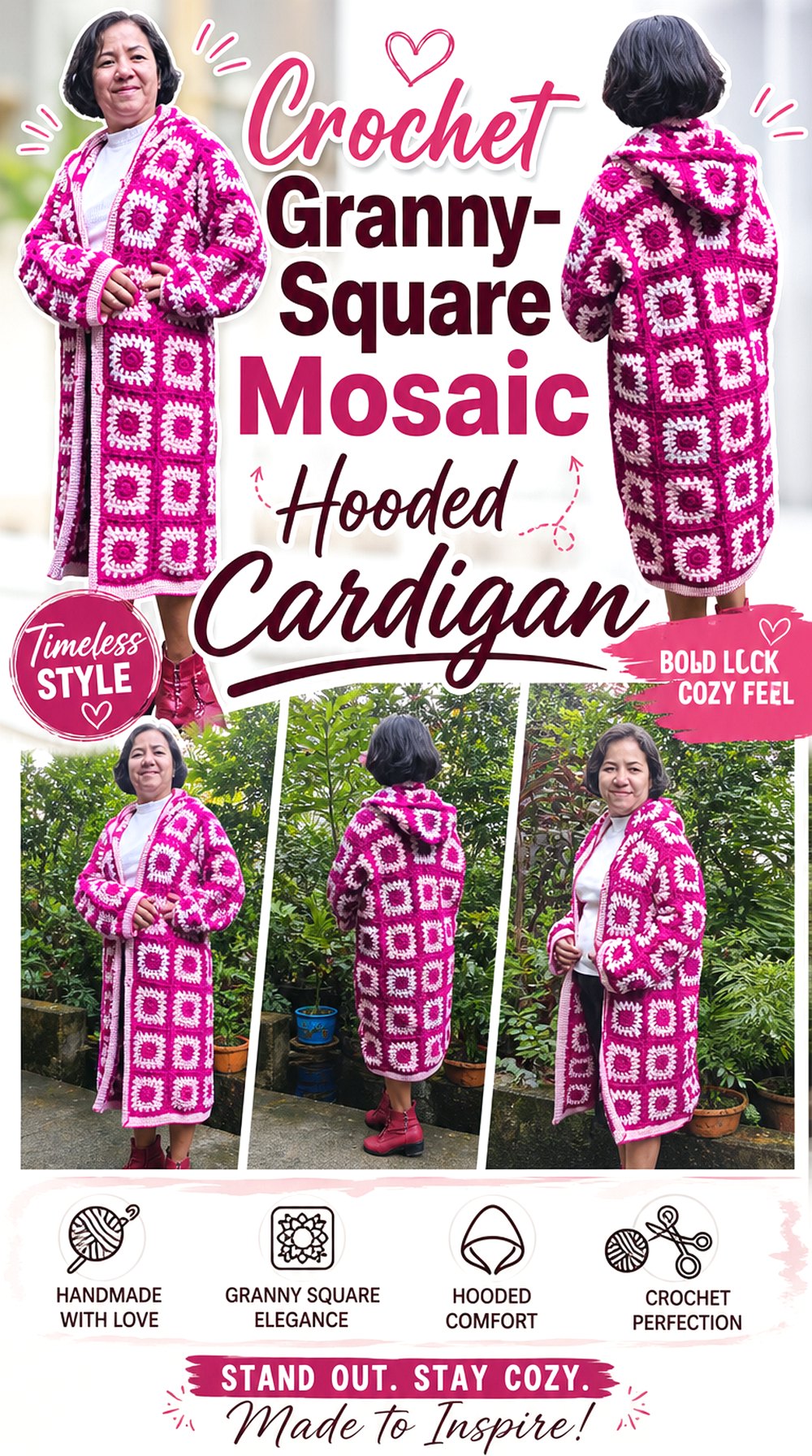
For a more traditional motif look, use classic granny squares as the visual language of the entire hooded cardigan. Compared with the flatter block style above, granny motifs can create more internal color detail inside every patch, so even a limited palette can produce a busy mosaic effect.
This direction works well when the squares themselves are meant to remain the main attraction. Team Alcaval demonstrates a hooded granny-square cardigan, giving the idea a close tutorial match. When choosing your own arrangement, decide whether the hood should repeat the body’s full color mix or use a quieter sequence that frames the face without competing with the front panels.
Motif Borders Need to Agree Before Joining
Two granny squares can contain very different centers yet still join cleanly when their outer dimensions and borders are compatible. Compare the finished edges after blocking rather than judging only the center pattern. Unequal borders are one common reason neighboring motifs appear to pull against each other.
Use the Hood as Part of the Mosaic
The hood is large enough to affect the whole color composition. Continuing every accent color into it gives the cardigan an all-over patchwork effect, while concentrating calmer squares there shifts attention toward the body. Choose deliberately rather than using whatever motifs happen to remain at the end.
Check Motif Direction Around the Front Opening
If your granny squares contain directional flowers, stripes, or asymmetric color arrangements, rotate them on the floor before joining. A direction that looks harmless on a single square can become obvious when several motifs sit beside the front opening. Consistent orientation often gives highly varied colors a more controlled appearance.
Original Tutorial and Creator Credit
Creator: Team Alcaval
Crochet Top Down Granny Block Hoodie Cardigan

Instead of sewing independent squares, this idea uses granny-style fabric and planned color zones to suggest patchwork within a more continuous cardigan. The result can look softer and less segmented because there is no seam around every visual block.
MJ’s Off The Hook Designs demonstrates a top-down granny-stitch hooded cardigan with buttons and pockets. For a patchwork interpretation, treat color changes as broad blocks rather than narrow repetitive stripes. This option suits readers who like the colorful rhythm of granny crochet but do not specifically want an entire garment built from dozens of separate motifs.
Top-Down Construction Changes When You Judge Fit
A garment growing from the neckline lets you evaluate the upper body before the lower length is finalized. For patchwork planning, that means the earliest color sections will sit close to the face and shoulders. Pick those colors with the finished neckline in mind instead of treating every block as interchangeable.
Buttons Give the Color Layout a Center Line
A buttoned opening creates a strong visual division. You can mirror major color areas across the opening for a calmer result or deliberately offset them for a collage effect. Either way, check how the two fronts look together while the cardigan is closed as well as open.
Pockets Can Become Intentional Color Patches
Rather than hiding pockets in matching yarn, use them to repeat a color from the hood or upper body. That makes the functional detail part of the patchwork plan. Keep the fabric behavior compatible, though; a pocket made from a substantially heavier or stretchier yarn may sit differently from the surrounding cardigan.
Original Tutorial and Creator Credit
Creator: MJ’s Off The Hook Designs
Crochet Oversized Wide Block Patchwork Cardigan Hoodie
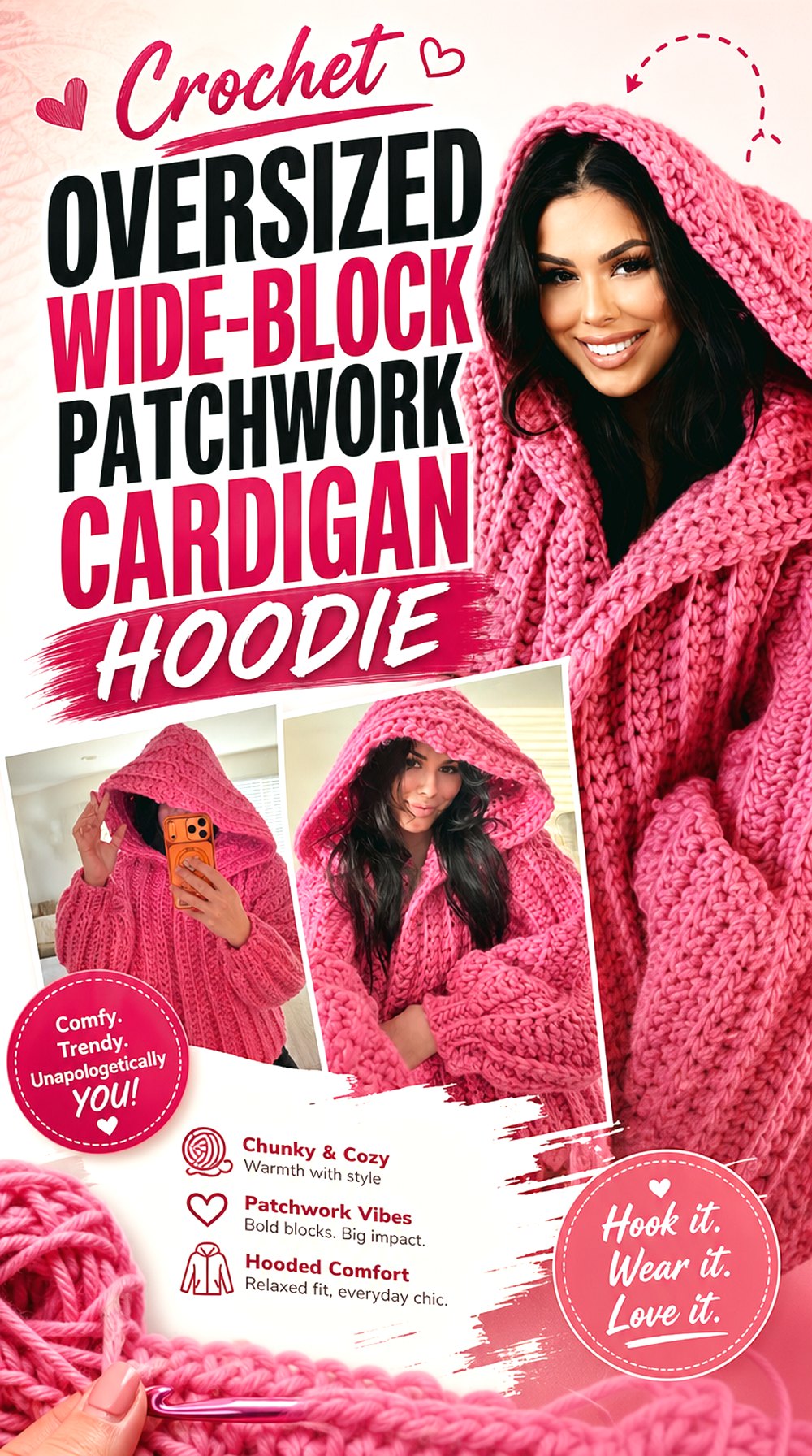
Large rectangular color fields can deliver a patchwork look without requiring a motif at every seam. Start with the oversized hooded-cardigan silhouette demonstrated by Crafty with Jackie, then plan broad blocks across compatible sections of the fabric rather than trying to convert the project into a square-by-square garment.
This is a useful direction if you prefer fewer yarn changes and a calmer graphic result. One sleeve could carry a different large color zone from the other, or the lower body could contrast with the shoulders and hood. The tutorial itself is an oversized hooded cardigan rather than a patchwork-specific design, so keep its construction intact while treating the color layout as your separate adaptation.
Oversized Does Not Mean Every Panel Can Grow Randomly
Extra room works best when the proportions still relate to each other. If you modify panel dimensions, keep checking sleeve placement, body width, and shoulder position against the sizing approach shown by the source rather than adding width solely to accommodate another color block.
Bigger Patches Make Yarn Differences More Visible
A tiny scrap can hide a slight difference in texture; a large rectangular section cannot. Compare drape before committing half a front or sleeve to an unfamiliar yarn. A noticeably stiffer block can pull the oversized silhouette away from the relaxed shape you intended.
Keep the Hood Visually Connected
When the body uses only a few large color regions, a completely unrelated hood may look added on. Repeating one body color in part or all of the hood ties the upper section back to the cardigan while still leaving room for contrast.
Original Tutorial and Creator Credit
Creator: Crafty with Jackie
Crochet Chunky Scrap Panel Oversized Hoodie
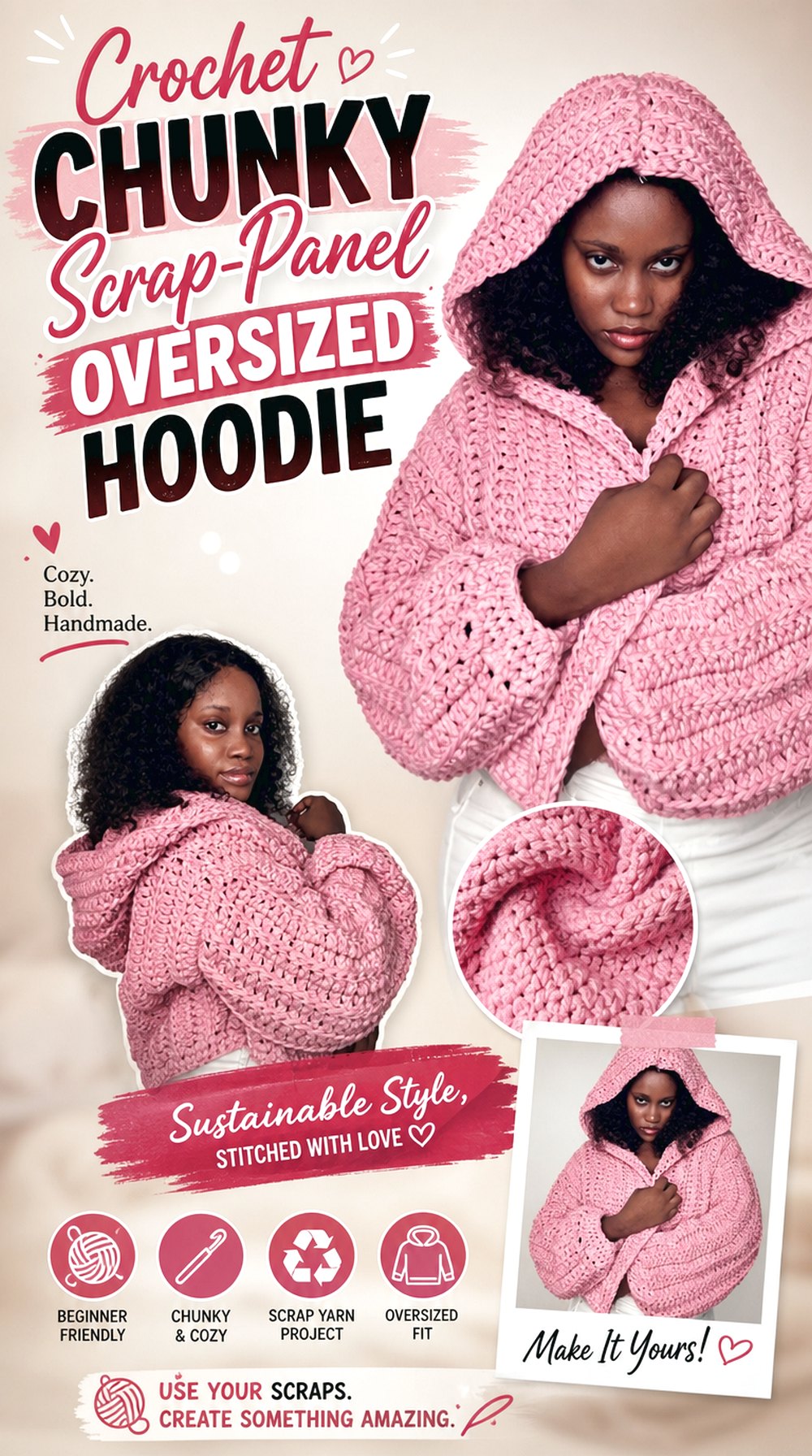
Chunkier fabric changes the scale of patchwork. Instead of many tiny motifs, consider fewer broad sections so the garment does not become overwhelmed by seams, yarn ends, and competing texture. Priya Crochets demonstrates a chunky oversized hooded cardigan and explicitly discusses customizing the garment through measurements.
That makes this a practical foundation for a scrap-panel interpretation using yarns with genuinely compatible thickness and behavior. The visual interest can come from a contrasting back panel, split-color fronts, or different sleeves. Compared with a classic granny-square hoodie, this idea reads more like modern color blocking while still making use of multiple yarn colors.
Chunky Yarn Magnifies Changes in Fabric Density
If one scrap yarn produces a tighter or more rigid fabric than another, the difference may be obvious across a large chunky panel. Make small comparison swatches and handle them together. Similar thickness on a label does not guarantee that the fabrics will hang the same way.
Place the Heaviest Color Zones Low When Possible
If a particular yarn makes a noticeably dense fabric, think carefully before putting large amounts of it into the hood or upper shoulders. A heavier lower-body panel may be easier to accommodate visually and physically than concentrating all the extra weight at the neckline.
Measure the Garment, Not the Number of Color Blocks
A four-block front is not automatically wider than a three-block front. Keep overall measurements tied to the intended fit, then divide that available area into colors. Patchwork should fit inside the garment plan rather than determine the garment size by accident.
Original Tutorial and Creator Credit
Creator: Priya Crochets
Crochet Jacket Style Patchwork Hooded Cardigan
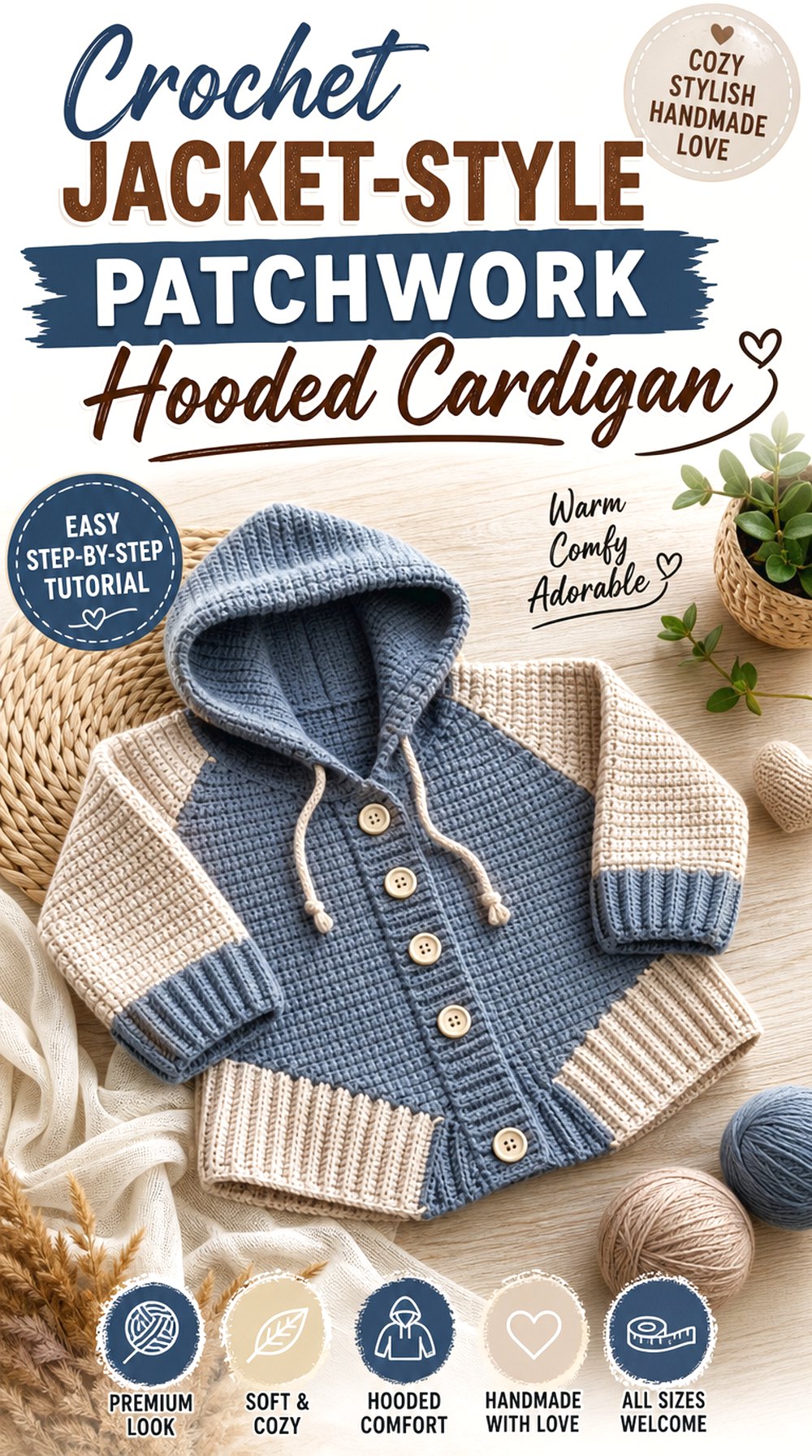
A jacket-style hoodie is a good candidate for more restrained patchwork. Instead of filling every surface with small motifs, divide the garment into stronger structural zones: body, sleeves, hood, edging, and perhaps lower sections. This gives the finished layer a clearer outerwear feel.
Chacha crochet tuto provides a full-size-range hooded-jacket tutorial that can serve as the construction foundation. The source is not presented as a patchwork pattern, so the patch effect here comes from planned color division rather than changing the underlying assembly. This approach works particularly well when you want a wearable that feels more organized than a deliberately random scrap cardigan.
Let the Jacket Shape Set Patch Boundaries
Natural construction lines are useful places for color changes because they make the segmentation look intentional. Before adding extra patch seams, see whether sleeves, body sections, and hood already provide enough visual boundaries to create the effect you want.
Keep the Front Edges Consistent
The opening frames the entire jacket. Even with asymmetric patchwork elsewhere, using one consistent edging color can visually contain a busy layout. It can also make differently colored front sections feel related without requiring them to mirror one another.
Evaluate the Hoodie While It Is Hanging
A jacket may look balanced when laid flat yet shift once gravity acts on the hood and sleeves. Hang the assembled garment before considering the color layout finished. This is especially important if some sections are made from denser or more absorbent fibers than others.
Original Tutorial and Creator Credit
Creator: chacha crochet tuto
Crochet Kids Color Block Patchwork Hoodie

A children’s hoodie gives patchwork a smaller canvas, so large blocks may be more practical than reducing an adult motif grid until every square becomes tiny. The Crochet Creators tutorial is specifically presented as a baby/kids color-block hoodie, making it a useful direct reference for this direction.
Try separating the body, sleeves, hood, and trims into a limited set of contrasting areas rather than adding many small decorative pieces. Fewer divisions also mean fewer bulky joins against a small garment. When selecting a size, rely on the tutorial’s own instructions and actual body measurements rather than assuming that a child’s age automatically corresponds to a universal crochet size.
Keep Small Garments Comfortable at the Seams
A seam that feels minor on an adult cardigan can become proportionally bulky on a child-sized garment. If you add genuine patch joins, feel the inside of the hoodie and consider whether the placement creates unnecessary ridges around the underarm, shoulder, or neckline.
Treat Drawstrings and Loose Details Carefully
For garments intended for young children, decorative cords and small detachable embellishments deserve extra consideration. Follow applicable clothing-safety guidance for the intended wearer rather than adding a drawstring simply because an adult hoodie uses one.
Original Tutorial and Creator Credit
Creator: Crochet Creators | Easy Crochet for Beginners
Crochet Long Line Patchwork Hooded Coat
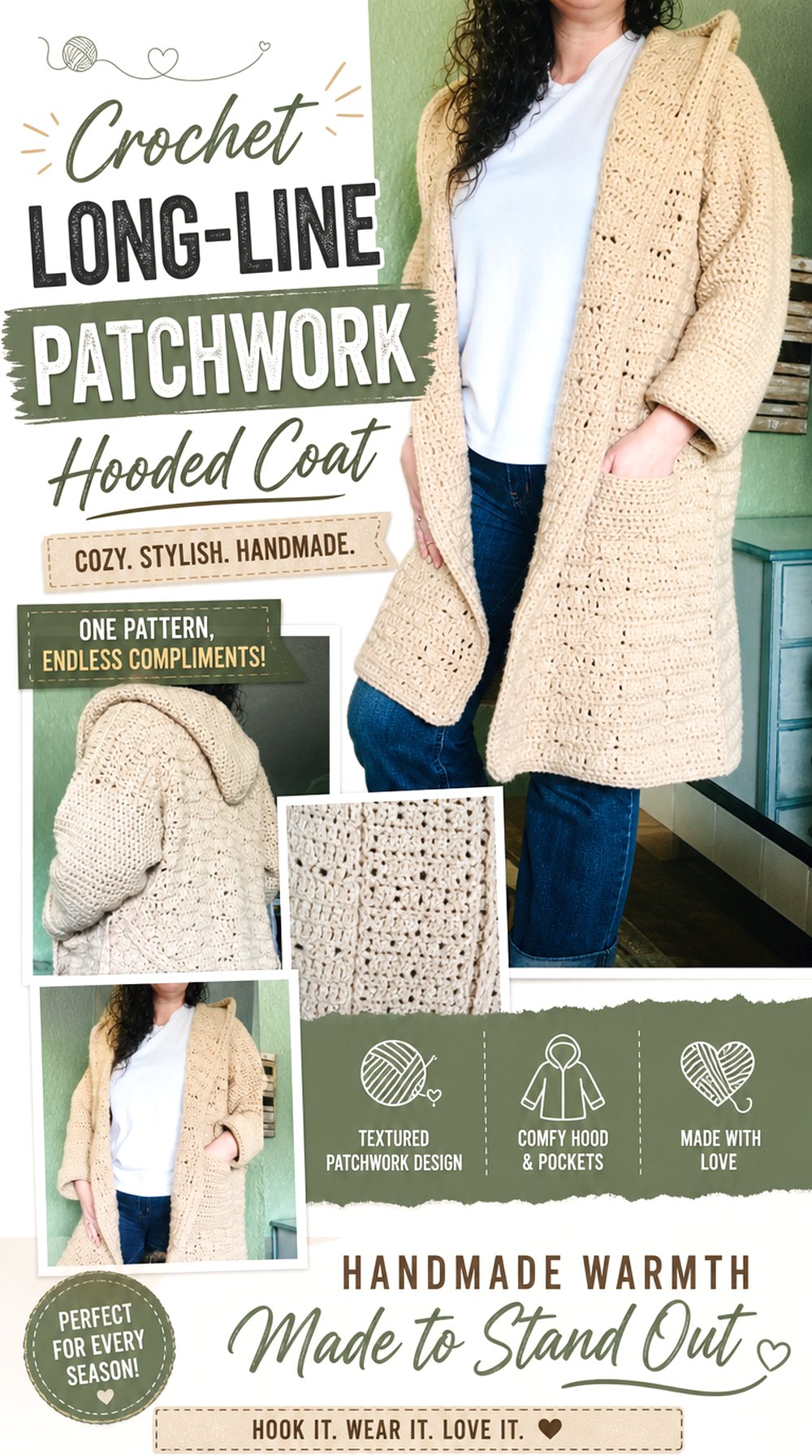
Length gives patchwork more space to develop vertically. A long hooded cardigan or coat can carry larger repeated sections without making the upper body feel crowded, and the lower panels provide room for gradual color changes or elongated blocks.
JolieKnots Handmade’s Crystal Coat tutorial supplies the long hooded silhouette for this idea. The source itself is not a patchwork coat, so keep the coat’s construction as the tutorial teaches it and plan color placement independently. Compared with a waist- or hip-length patchwork hoodie, this version can use repetition down the body to create a deliberate column effect rather than a compact checkerboard.
Vertical Blocks Can Change the Perceived Proportions
Long uninterrupted color zones emphasize length, while repeated horizontal divisions break it up. Decide whether you want the coat to read as tall vertical panels or as stacked patches before buying or assigning yarn. Both can be patchwork, but they create very different visual weight.
Check How Much Fabric the Hood Adds to a Long Garment
A long body already carries more crochet fabric than a cropped cardigan. If you are mixing yarns, avoid assuming every dense scrap belongs in the hood simply because it is available. Compare the weight and flexibility of the proposed hood fabric with the coat body first.
Plan Lower Patches for Real Wear
The lower section of a coat is more likely to brush against seats, bags, and other surfaces than an upper chest panel. If some stash yarns are especially fuzzy, delicate, or difficult to clean, consider whether they belong in high-contact areas before making them central to the layout.
Original Tutorial and Creator Credit
Creator: JolieKnots Handmade
Crochet Cable and Solid Patchwork Hooded Cardigan
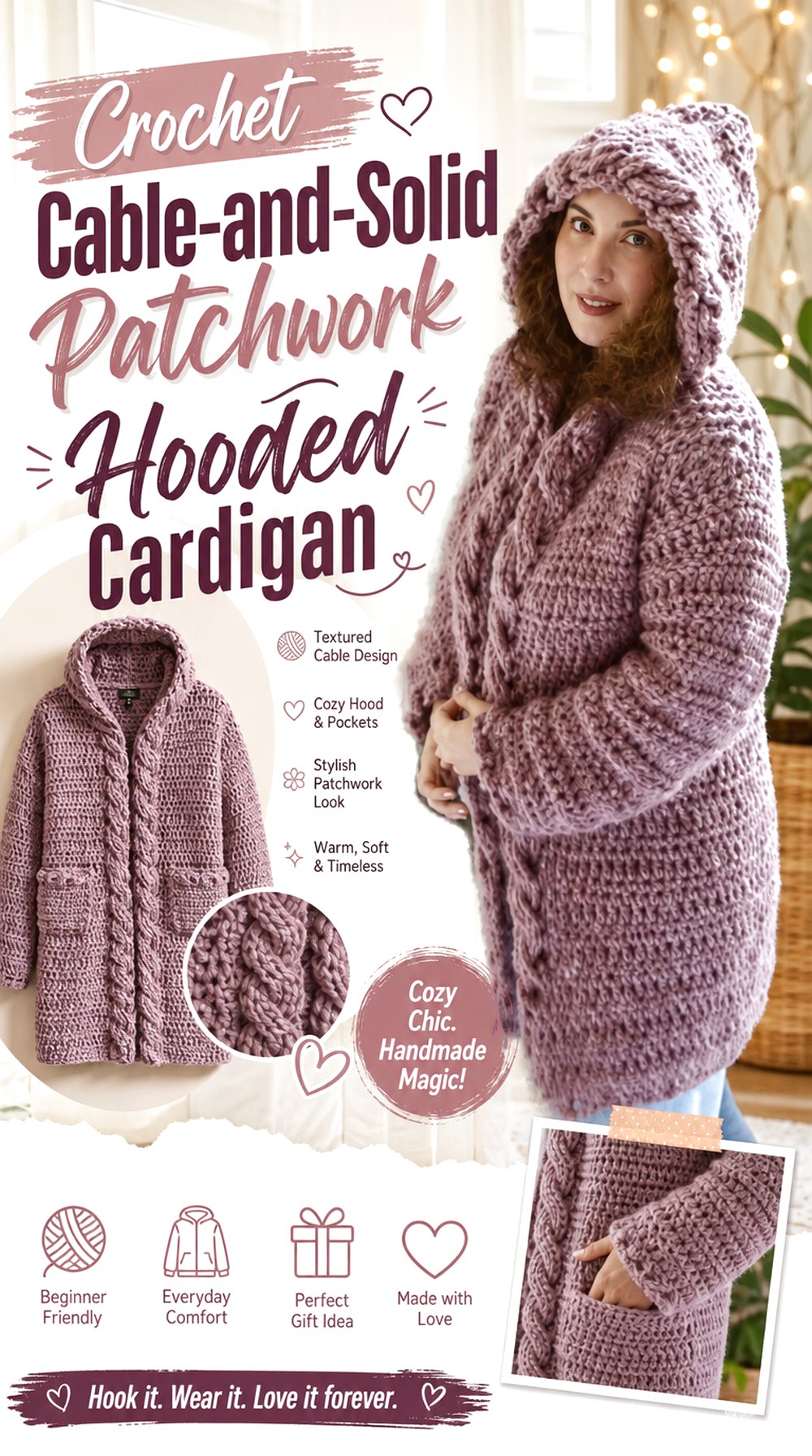
Patchwork does not have to depend on color. A raised cable section beside flatter crochet fabric can create a visible “patch” through texture alone. Annoo and The Unruly Stitch demonstrates a hooded cardigan with cable detailing and a pocket, giving this idea a strong textured foundation.
For an adaptation, keep the source construction intact and use the cable texture selectively. You might repeat it only on pockets and a center back zone while allowing larger solid areas to rest visually. This produces a quieter patchwork garment that can work in one color, two close shades, or a restrained palette instead of requiring a rainbow of scraps.
Raised Texture Deserves Breathing Room
Cable texture loses impact when every neighboring area is equally busy. Leave some flatter fabric around the textured zones so the difference remains readable. This also gives you a clearer way to compare whether the cable sections are drawing in or changing the local fabric width.
Make the Pocket Part of the Texture Map
Because the source design includes a pocket, that feature can become an intentional patch rather than an afterthought. Repeating a cable or contrasting texture there links function with the overall layout. Before attaching it, check that the pocket fabric does not distort the front panel.
Watch for Unequal Stretch Between Textures
Different crochet textures can respond differently even when made from the same yarn. Compare swatches before placing one texture across an entire shoulder and another down the body. A dramatic stretch difference is harder to hide when two fabric types meet along a visible line.
Original Tutorial and Creator Credit
Creator: Annoo and The Unruly Stitch
Crochet Chunky Two Tone Patchwork Hoodie Cardigan
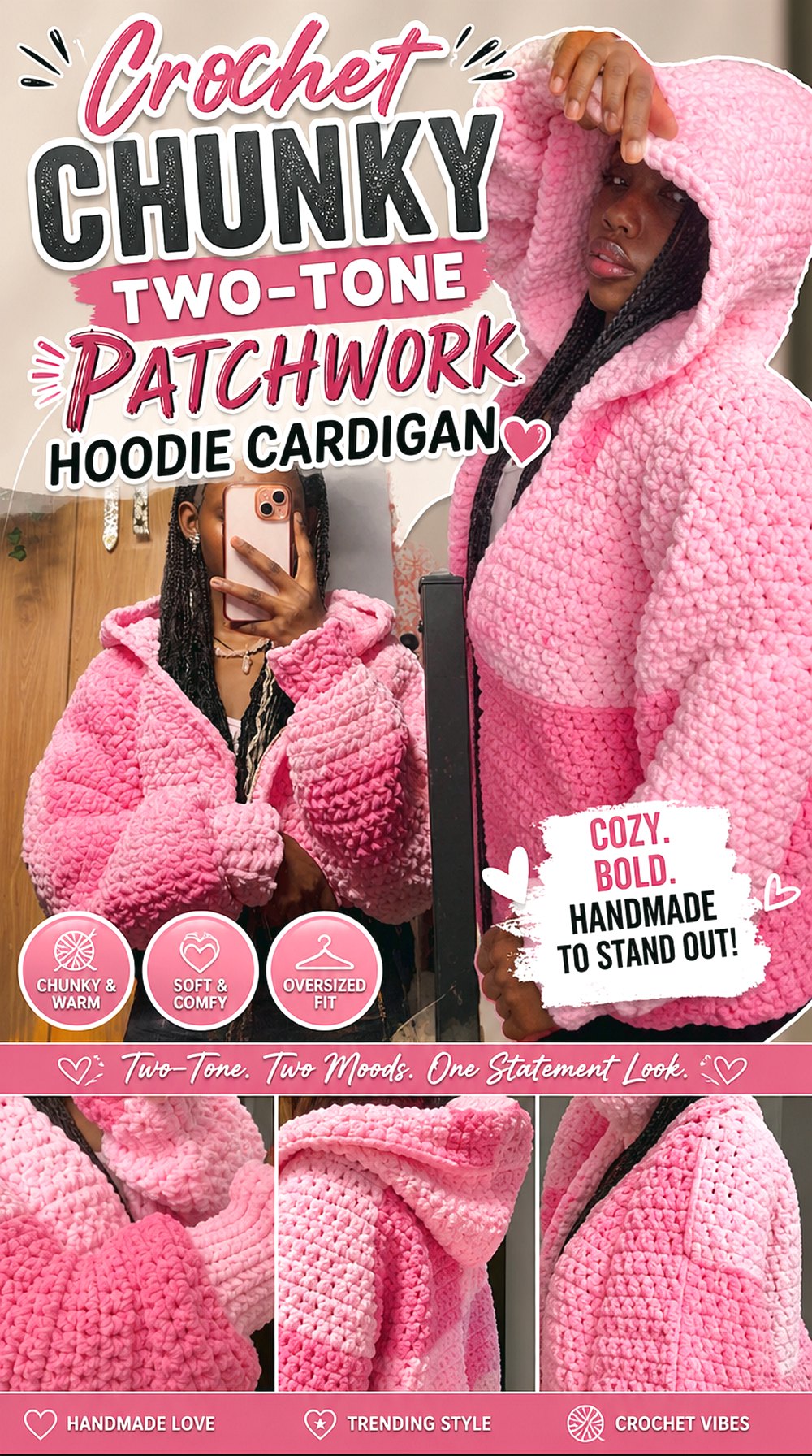
A two-color patchwork hoodie can look just as deliberate as a multicolor one. Instead of distributing many scraps, use strong zones: one shade for a sleeve and part of the body, another for the opposite areas, then repeat each color somewhere small enough to make the asymmetry look intentional.
Fisayo & Crochet demonstrates a chunky hooded cardigan that works as the silhouette foundation for this idea. The tutorial itself does not need to be reconstructed into a square garment. The patchwork value comes from how you divide compatible yarn across the existing pieces. This is a useful direction for crocheters who want graphic contrast without managing a large palette.
Two Colors Make Proportion More Important
With only two shades, the eye notices how much space each one occupies. A nearly even split feels different from one dominant color with a smaller accent. Sketch the front, back, sleeves, and hood as simple shapes and shade them before committing yarn.
Repeat the Minority Color at Least Once Visually
If a secondary color appears on only one isolated sleeve, it may look accidental. Repeating it at the hood edge, pocket, cuff area, or another logical section can connect the layout without turning the garment into regular stripes.
Avoid Solving a Yarn Shortage With Random Fit Changes
Running low on one color may tempt you to shorten a sleeve or body panel solely to preserve the palette. Protect the intended fit first. Switching the color plan is usually less disruptive than changing the garment proportions simply because one yarn supply ended.
Original Tutorial and Creator Credit
Creator: Fisayo & Crochet
Crochet Oversized Closed Front Patchwork Hoodie
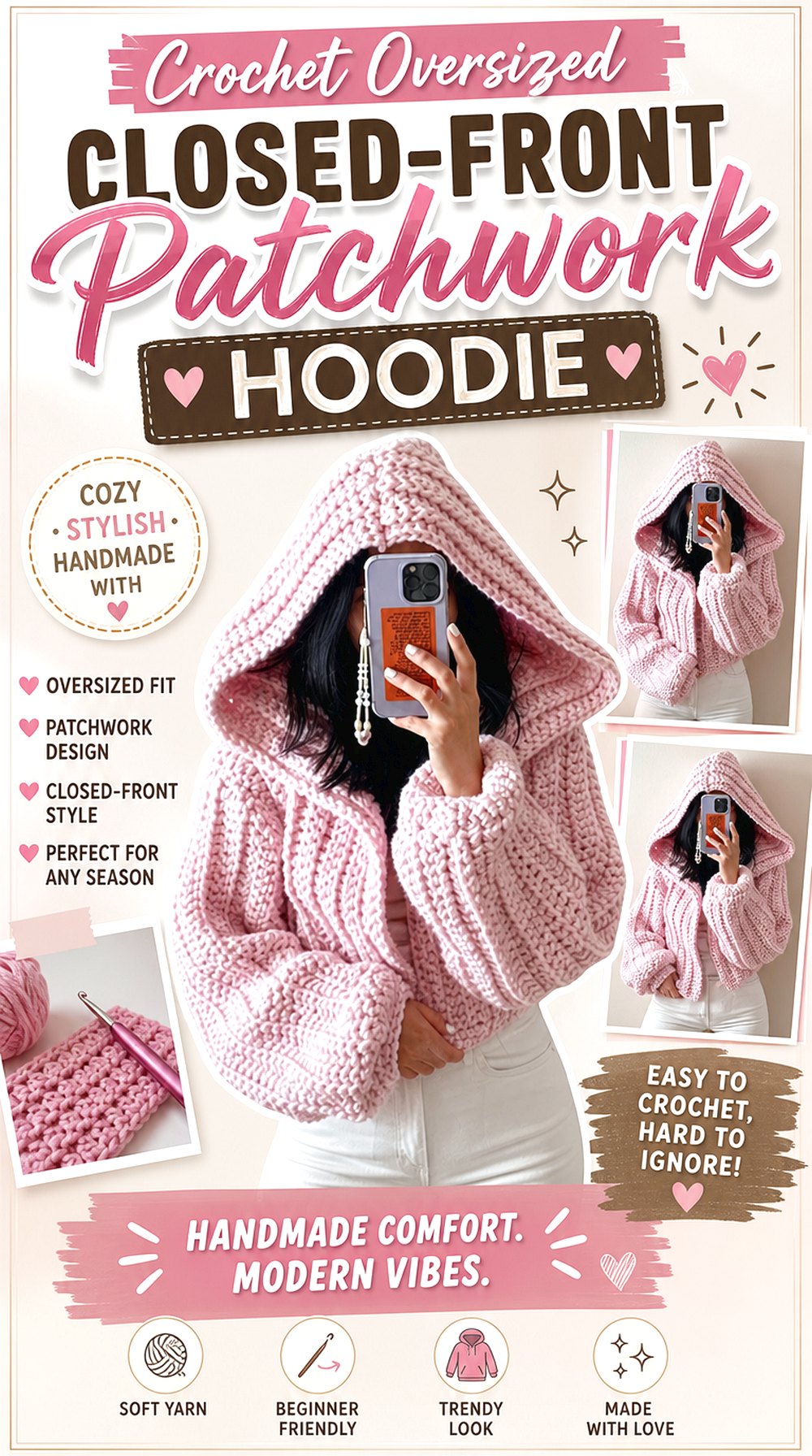
Most granny patchwork garments are open cardigans, so a closed-front pullover creates an immediate change in function and appearance. Dana B’s oversized crochet hoodie sweater provides a full pullover silhouette rather than an open-front cardigan.
For the patchwork version, think in broad body and sleeve panels rather than assuming you need individual granny squares. A large rectangular chest block, contrasting lower body, and asymmetric sleeves can create a collage effect while preserving the closed front. This option is particularly useful if you want the relaxed visual language of a handmade hoodie without buttons or a cardigan opening dividing the patch arrangement down the middle.
Check Head and Shoulder Access Before Finishing
A pullover has fewer escape routes than a cardigan. Any adaptation near the neckline needs to preserve the opening and upper-body fit intended by the tutorial. Do not tighten an edge merely to make two color blocks line up more neatly.
Use the Unbroken Front as a Statement Area
Without buttons or an opening, the front becomes one large visual canvas. A centered block creates a more graphic sweatshirt feel, while asymmetrical sections produce a stronger patchwork effect. Decide this before splitting yarn because the front will dominate most straight-on views.
Oversized Sleeves Can Carry Their Own Patch Story
Wide sleeves have enough surface area for color changes that would feel cramped on a fitted garment. They are also a good place to use smaller remaining quantities after the body palette is established, provided all yarns still produce compatible fabric.
Original Tutorial and Creator Credit
Creator: Dana B
Crochet Geometric Panel Patchwork Pullover Hoodie
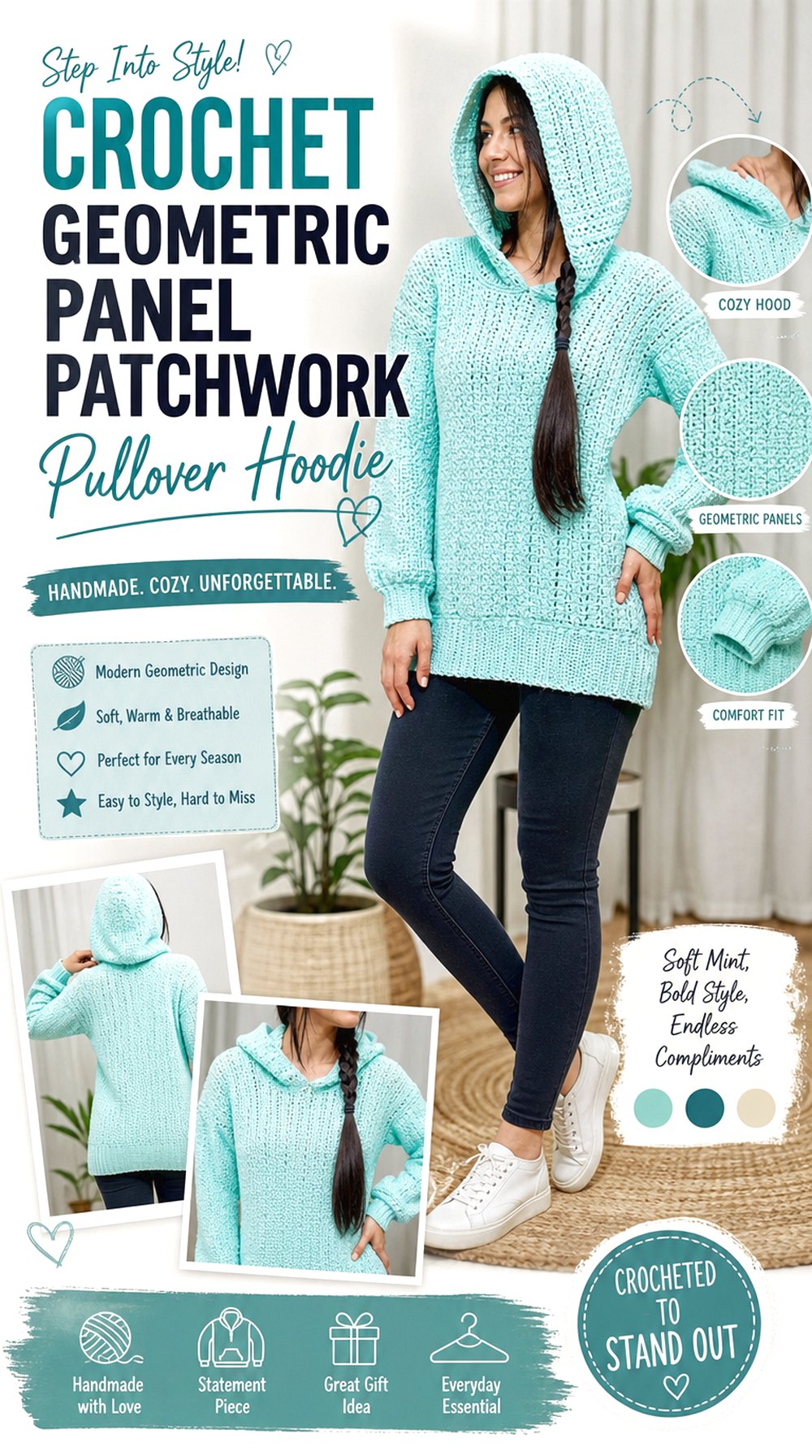
TCDDIY’s hoodie tutorial breaks the garment into identifiable body, sleeve, hood, cuff, and band components, which makes it a useful base for a geometric panel interpretation. The source uses a full hoodie construction rather than a patchwork design, so the adaptation comes from assigning color to existing garment zones instead of altering the creator’s assembly sequence.
This can produce a cleaner result than traditional scrap patchwork. Imagine a contrasting shoulder area, different front and back colors, or sleeves divided into a few broad sections. Because the shapes remain relatively large, the design reads more like architectural color blocking than a granny-square collage.
Treat Bands and Cuffs as Visual Outlines
A consistent cuff and lower-band color can frame several unrelated body colors. This is particularly helpful when the palette contains more than two shades because it gives the eye a repeated reference point around the edges of the garment.
Keep Geometry Clear Around the Neckline
The hood opening and neckline already create angular changes in the fabric. Too many tiny color switches there can compete with that shape. Consider allowing one main color to carry through the neckline before introducing the next block farther down.
Check Seams Before Choosing Exact Color Boundaries
A design sketch may place a color line at a visually appealing height, but the actual construction may put a seam or shaping area nearby. Compare your proposed boundary with the tutorial’s component layout so the change does not create unnecessary finishing complications.
Original Tutorial and Creator Credit
Creator: TCDDIY
Crochet Narrow Panel Chunky Patchwork Hooded Cardigan
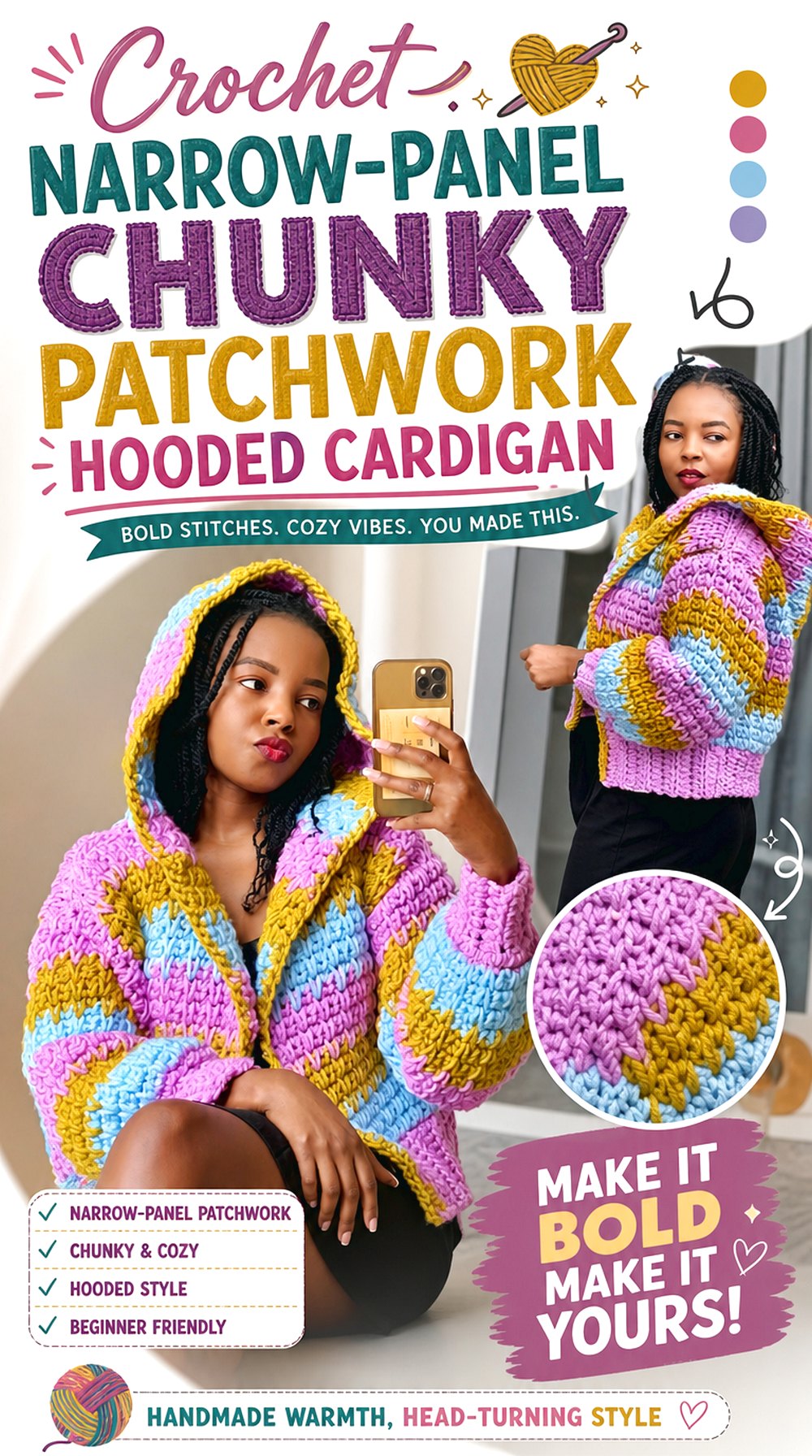
Instead of broad blocks or small squares, use several narrower vertical color sections to create a striped-patchwork hybrid. AC Crochets demonstrates a chunky hooded cardigan, giving this idea a complete wearable base. The video description identifies chunky yarn for the demonstrated project, so any stash adaptation should respect the substantial fabric character rather than mixing in noticeably thinner yarn simply to gain another color.
Vertical panels can make a multicolor garment appear more organized than random squares. They also give you a natural way to use medium-size yarn quantities: larger than a motif requires, but not enough to complete an entire cardigan.
Vary Panel Widths to Avoid Ordinary Striping
Equal narrow stripes will read as stripes rather than patchwork. Mix broader and narrower zones, or allow some colors to stop at a construction boundary. The goal is controlled irregularity without adding seams that the underlying hoodie does not need.
Save a Stable Color for Structural Edges
If one yarn produces especially neat, resilient edging, consider reserving it for the front opening or other high-visibility borders. That can unify several vertical colors and reduce the sense that the cardigan is assembled from unrelated leftovers.
Compare Chunky Fabrics Side by Side
Hand feel matters more than label terminology. Crochet a small sample from each candidate yarn using the intended hook range, then compare thickness, recovery, and drape. Rejecting one poorly matched scrap early may prevent an entire panel from behaving differently later.
Original Tutorial and Creator Credit
Creator: AC Crochets
Crochet Bear Ear Patchwork Baby Hoodie

A bear-ear hood gives a small patchwork garment a clear focal point without requiring extra motifs all over the body. Maisie and Ruth’s Snuggle Bear Kids Hoodie tutorial demonstrates the baby hoodie and the recognizable ear detail; the patchwork interpretation can come from using compatible color sections across the yoke, body, sleeves, or edging rather than changing the garment into a heavily seamed miniature cardigan.
Because the scale is small, keep the palette readable. Two or three larger areas can communicate patchwork more cleanly than many tiny blocks. Also treat every fastening or decorative addition as a functional child-garment decision, not merely a styling choice.
Keep the Ears as the Main Hood Detail
Once the hood already has dimensional ears, adding many appliqués or raised patches can make the upper garment unnecessarily busy. A quieter hood color allows the silhouette to remain recognizable while the body carries most of the patchwork.
Review Small Parts for the Intended Wearer
The source design includes a baby garment with finishing details, but suitability depends on the wearer and how the finished item will be used. Secure components carefully and review current child-clothing guidance before adding buttons, cords, beads, or other detachable decoration.
Original Tutorial and Creator Credit
Creator: Maisie and Ruth
Crochet Two Color Pieced Patchwork Pullover Hoodie
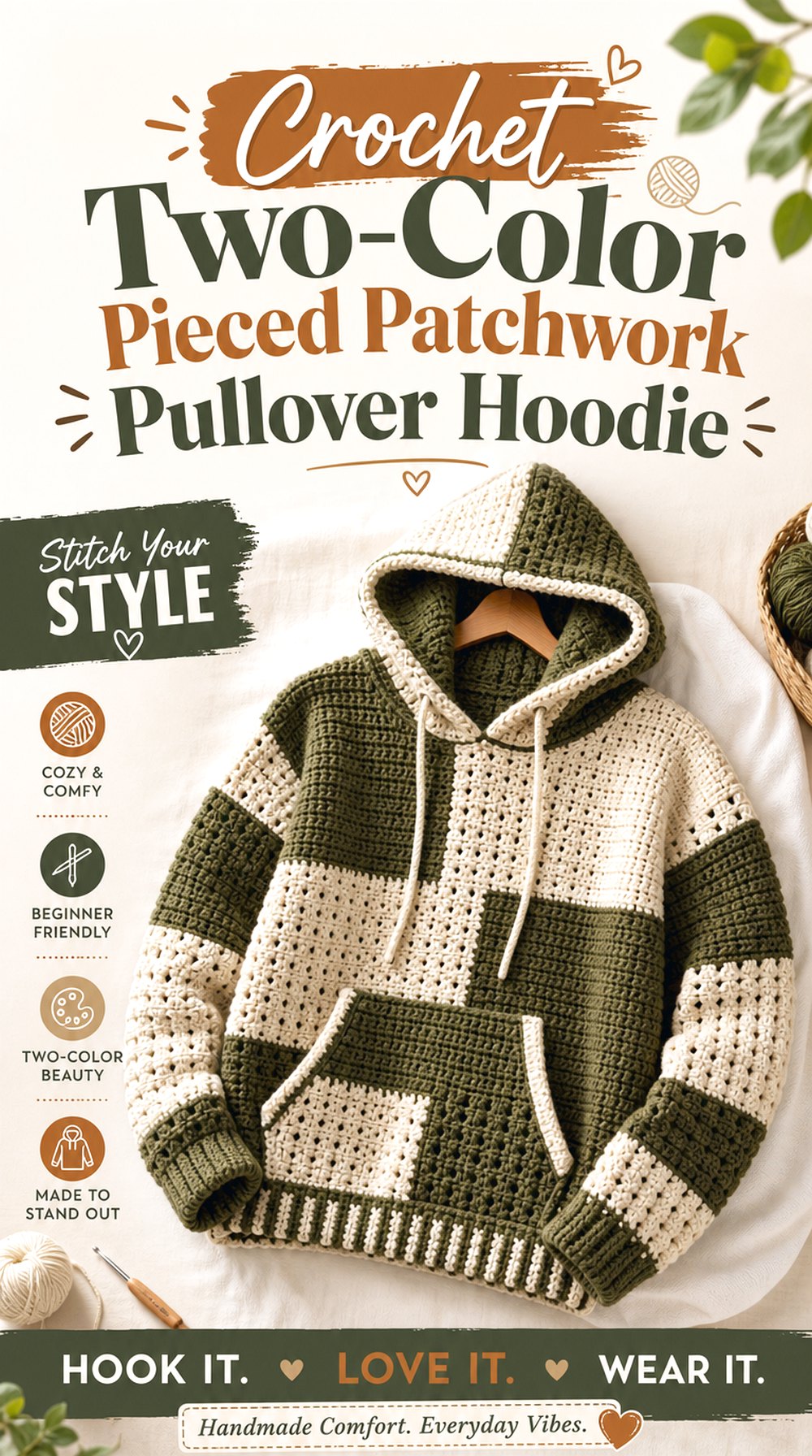
KnitcroAddict’s hoodie provides an unusually clear starting point for a pieced color-block adaptation because the creator describes the garment as being made in separate pieces and demonstrates it with two colors. That makes it well suited to a patchwork look created by changing color across selected components instead of sewing many small motifs.
A two-color pullover can feel more intentional and less visually crowded than a multicolor scrap garment. You could keep the main body dominant and concentrate the contrast on sleeves and hood, or divide the body into larger irregular areas while maintaining the tutorial’s actual garment construction and sizing instructions.
Pieced Construction Rewards Early Color Planning
When major sections are created separately, decide which color belongs to each area before crocheting too far. Lay yarn balls or paper color swatches in a rough front-and-back garment diagram. This helps prevent ending with two visually heavy sections on one side.
Use the Hood to Repeat the Less Dominant Shade
A smaller amount of a second color can still feel integrated when it reappears near the face. If your yarn supply permits, repeating an accent from the sleeves or another major component in the hood can make the palette feel connected rather than leftover-driven.
Preserve the Tutorial’s Fit Relationships
Color changes are much safer than casual dimensional changes. If you want a block to end at a particular point, adjust where the color switches rather than changing a panel’s required width or length without understanding how that affects assembly.
Original Tutorial and Creator Credit
Creator: KnitcroAddict
Crochet Pocketed Made to Measure Patchwork Hoodie Cardigan
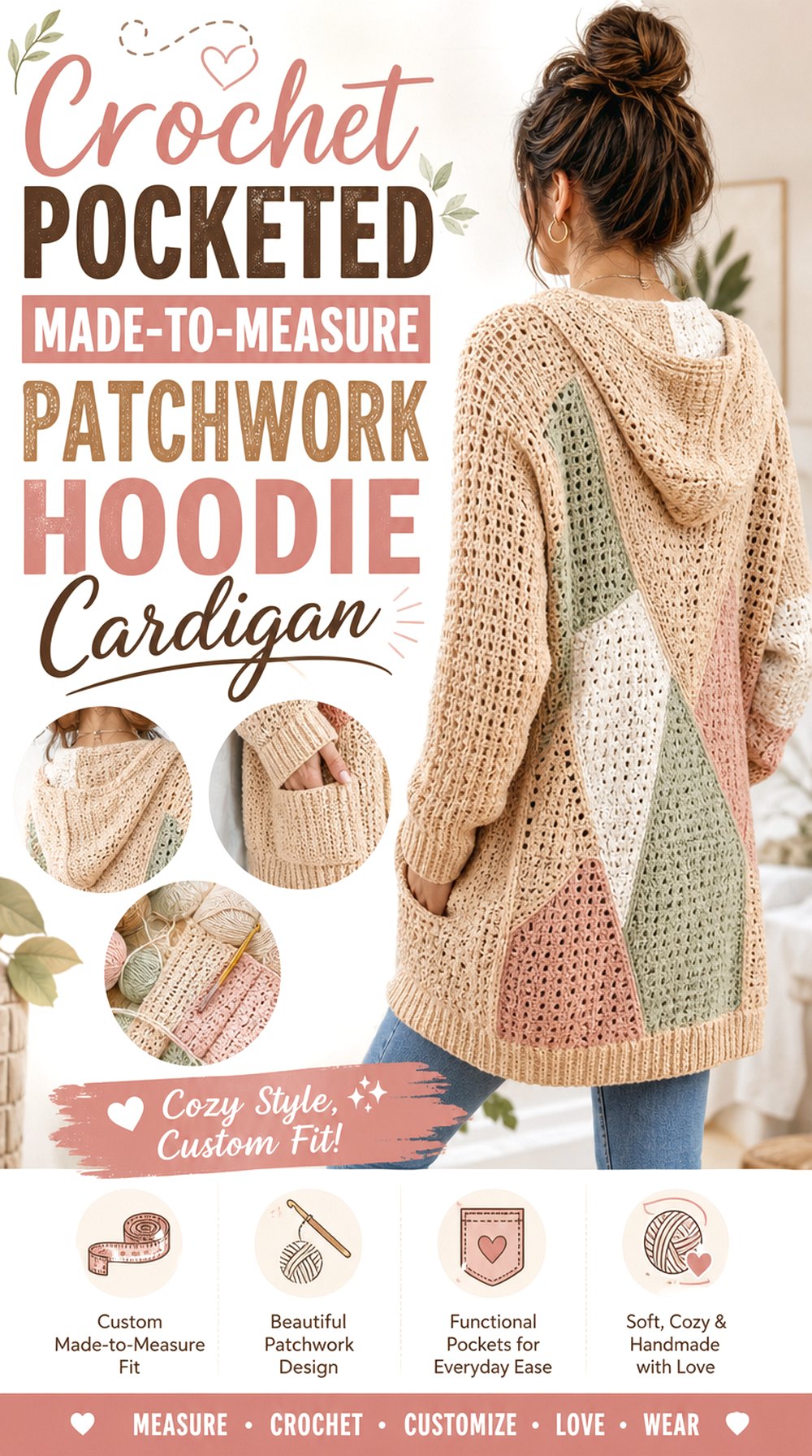
A measurement-led cardigan is useful when a fixed motif grid is not the main goal. JKD Handmade’s hooded-cardigan tutorial is presented across a wide range of sizes and includes pockets, giving this project a practical foundation for patchwork based on body sections rather than a predetermined number of squares.
Use that flexibility to plan patches only after the intended dimensions are understood. A contrasting lower section, pocket pair, hood, or sleeve arrangement can create a scrap-built appearance without forcing the body measurement to match arbitrary motif multiples. This is especially helpful when your stash contains medium quantities that are too large for single squares but too small for an entire cardigan.
Fit Comes Before the Patch Count
Do not add another block simply because you have yarn for it. Establish the garment width and length using the tutorial’s measurement framework, then divide those areas visually. If a planned color zone does not fit, shorten the zone rather than expanding the body accidentally.
Pockets Give Small Yarn Quantities a Purpose
Pockets can repeat a shade that appears only briefly elsewhere, helping a limited scrap feel intentional. Compare the pocket fabric with the cardigan front before attachment, especially if you are using a different fiber or texture for the accent.
Mark Major Body Lines on a Layout Sketch
Shoulders, armholes, opening edges, pocket positions, and hood attachment all affect where a patch boundary will be noticeable. A simple sketch with those landmarks is more useful than planning color rectangles in isolation from the actual garment.
Original Tutorial and Creator Credit
Creator: JKD Handmade
Crochet Mini Bean Color Patch Baby Hoodie Cardigan
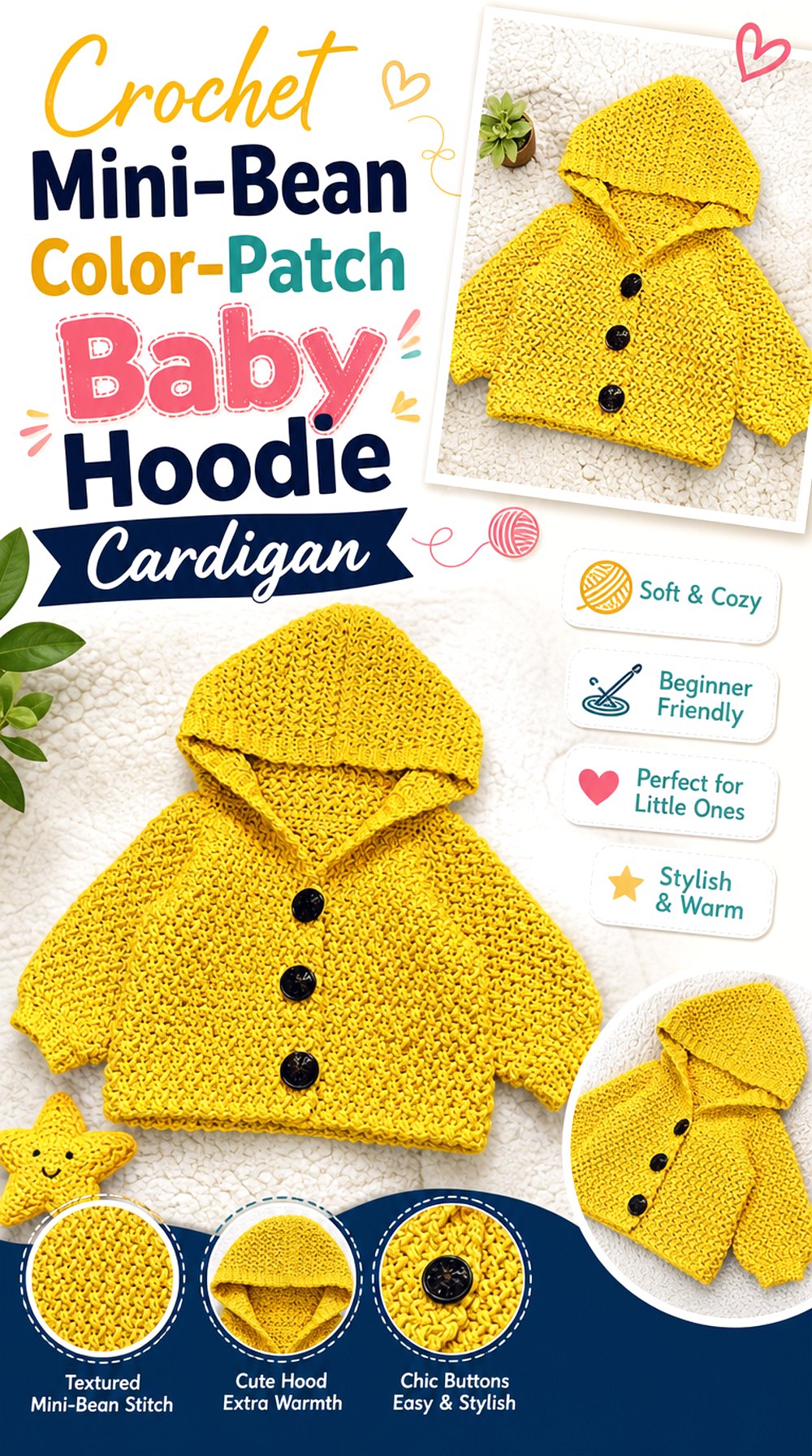
Dense texture can make even simple color blocks look substantial. Shyler crochets demonstrates a hooded baby cardigan using mini-bean texture, with the video showing the garment’s yoke, sleeves, hood, and buttoned finish.
For a patchwork interpretation, keep the stitch texture consistent and change color in larger sections. That avoids introducing several competing textures into an already small garment. A contrasting yoke, lower body, sleeves, or hood can create the patched appearance while maintaining a coherent surface. This differs from the bear-ear idea because texture—not an animal-shaped hood—is the central feature, and the color layout can remain comparatively architectural.
Dense Texture Can Make Color Changes Look Stronger
Raised stitches create shadow, so adjacent colors may appear more separated than they would in flat fabric. Start with fewer color zones and evaluate the effect before adding more. A small textured garment can become visually crowded surprisingly quickly.
Keep Button Areas Easy to Inspect
When texture and color meet near a front fastening, make sure the edge remains tidy and functional rather than allowing a decorative patch boundary to interfere with it. The fastening should remain easy to see and use.
Confirm Baby Sizing From the Source
The demonstrated tutorial has a specific baby size, while additional sizing information is handled separately by the creator. Do not enlarge it by assuming that simply adding rows creates a correctly proportioned older-child garment; consult the creator’s relevant sizing information instead.
Original Tutorial and Creator Credit
Creator: Shyler crochets
Crochet Pocket Accent Patchwork Hooded Cardigan
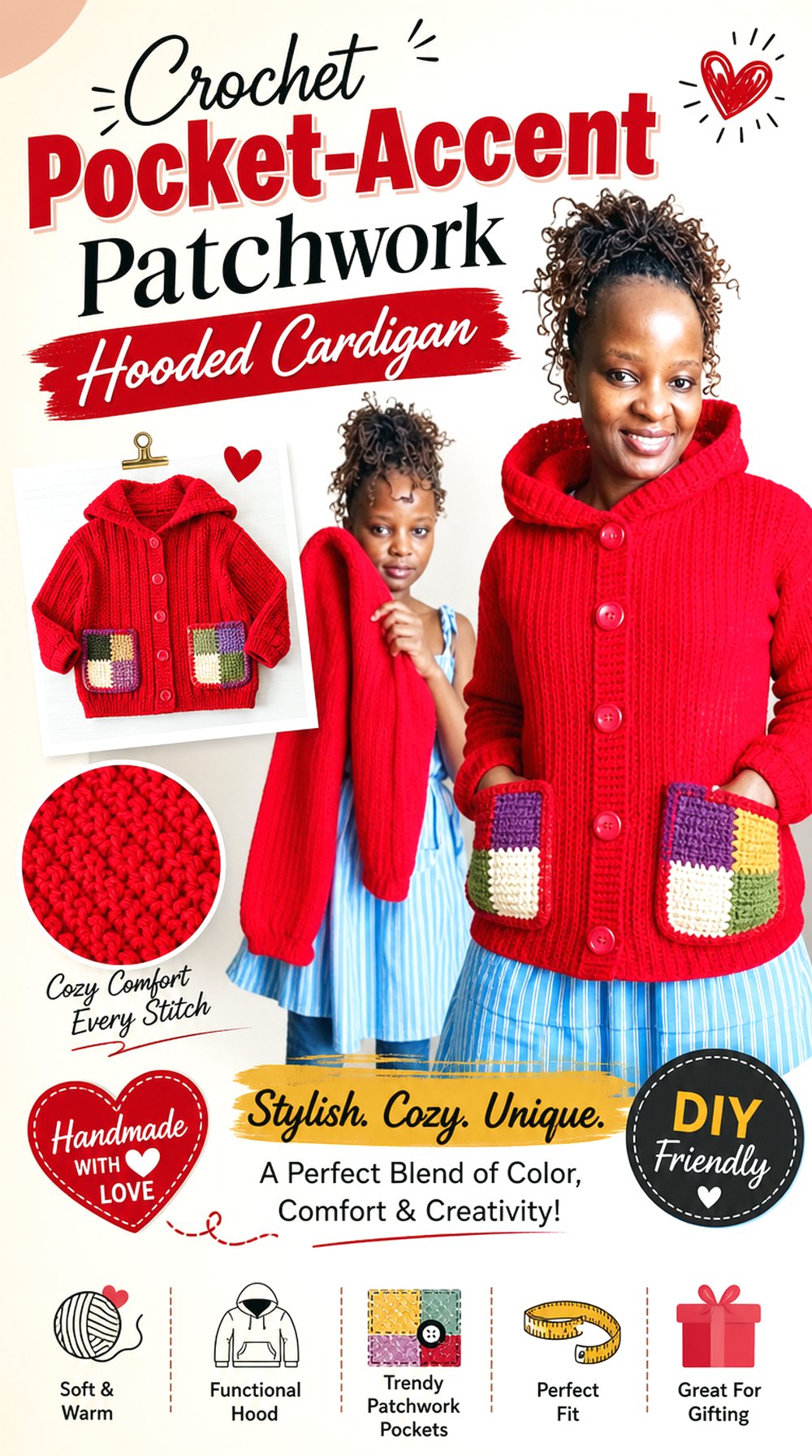
The final direction uses pockets as deliberate pieces of the patchwork composition. LaDenser Crochets’ tutorial is specifically a hooded cardigan with pockets, providing a complete functional silhouette to adapt. Instead of covering the entire garment in squares, use contrasting pockets as the starting point and repeat their color elsewhere—perhaps in the hood, sleeve ends, or a broad body panel.
This creates a restrained patchwork hoodie that can be easier to style than a fully multicolor motif garment. It also gives small amounts of accent yarn a clear purpose. The tutorial itself supplies the cardigan construction; the patch placement should remain your independent color decision.
Contrast Pockets Need Visual Support Elsewhere
Two bright pockets on an otherwise quiet cardigan can look disconnected. Repeat at least one related color area higher on the garment or in another structural zone so the pockets participate in a larger composition rather than appearing added at the end.
Pocket Fabric Should Not Pull the Front Down
A dense pocket made from a much heavier yarn may drag on a softer cardigan panel. Before attaching a contrasting version, hold or pin the finished pocket in place and check how the front behaves while hanging vertically.
Stop Before Every Detail Becomes a Patch
This version works because the contrast is selective. If the pockets, hood, cuffs, edging, sleeves, and every body section all change independently, the original focal point disappears. Decide which two or three garment features deserve attention and let the remaining fabric provide visual rest.
Which Patchwork Hoodie Direction Should You Choose?
Choose a joined-square hoodie if the individual patches are the main reason you want to make the garment. Ideas 1 and 2 put motifs at the center of the construction and therefore make blocking, joining, and grid planning especially important.
Choose a color-block or panel hoodie if you want fewer joins. Ideas 4, 5, 10, 12, 13, and 15 preserve larger garment sections while creating patchwork through color placement. They are particularly useful for medium-size yarn leftovers rather than tiny scraps.
For a more understated result, Ideas 9 and 18 rely on texture or functional pockets as patches. If silhouette matters most, compare the closed pullover in Idea 11 with the long coat in Idea 8 and the oversized open cardigan in Idea 4 before deciding on the color scheme.
Conclusion
The most convincing crochet patchwork hoodie is not necessarily the one with the most colors. Joined granny squares give you an unmistakable handmade mosaic, large panels create a cleaner graphic garment, and texture or pocket accents can deliver patchwork character with much less visual activity. Closed pullovers suit broad uninterrupted blocks, while open cardigans give you two front panels that can be balanced or deliberately mismatched.
Whichever direction you choose, establish the intended fit first and make color, motif, and yarn decisions inside that framework. Check the original tutorials near each idea for the creators’ exact construction details rather than treating these adaptation notes as replacement patterns. That leaves room to personalize the patchwork while preserving a reliable hoodie structure.
Frequently Asked Questions
Can I turn any crochet hoodie tutorial into a patchwork hoodie?
Not automatically. Large color blocking is usually a smaller structural change because the original garment pieces can remain intact, but true joined-square patchwork requires compatible motif dimensions and a construction that can accommodate those seams. If the tutorial was not designed for motifs, use it as a silhouette reference rather than assuming its measurements convert directly into a square grid.
Should I block crochet patches before assembling a hoodie?
Blocking first is especially useful when separate motifs must join into wearable panels. It lets you compare their finished dimensions, identify squares that are pulling smaller or larger, and evaluate the combined fabric before committing to long seams. Use an appropriate blocking method for the fiber involved, and remember that incompatible yarns may respond differently even when their unblocked squares initially look similar.
Can I mix different yarn brands in one patchwork hoodie?
Yes, but the brand name matters less than how the resulting fabrics behave together. Compare thickness, drape, stretch, texture, and care requirements. Two yarns sold in the same broad weight category can still crochet into noticeably different fabric. Swatching and blocking them side by side gives you more useful information than relying only on the labels.
How do I keep a crochet patchwork hoodie from becoming too heavy?
Be selective about dense yarns, raised textures, and the number of seams, especially around the shoulders and hood. Larger patches can reduce joining bulk compared with many small motifs. If one yarn creates substantially heavier fabric, use it cautiously rather than automatically distributing it across the hood, sleeves, and upper body. Check how the garment hangs during assembly instead of waiting until every finish is complete.
Is random patch placement better than planning the colors?
Random placement can work, but a temporary layout usually prevents accidental color clusters. Arrange motifs or sketch large blocks before joining, then check the front, back, sleeves, and hood as one composition. You can still keep the finished garment irregular while spreading repeated colors more intentionally. A photo of the proposed arrangement also makes it easier to compare alternatives without moving every patch repeatedly.
What is the easiest way to adapt a normal crochet hoodie to look patchwork?
Large color blocks are generally the least disruptive approach because they can follow the existing garment construction rather than replacing it. Keep the tutorial’s sizing and assembly method, then assign compatible yarn colors to selected body, sleeve, hood, or pocket sections. Creating a true square-by-square hoodie is a different construction problem and should not be treated as a simple color substitution.