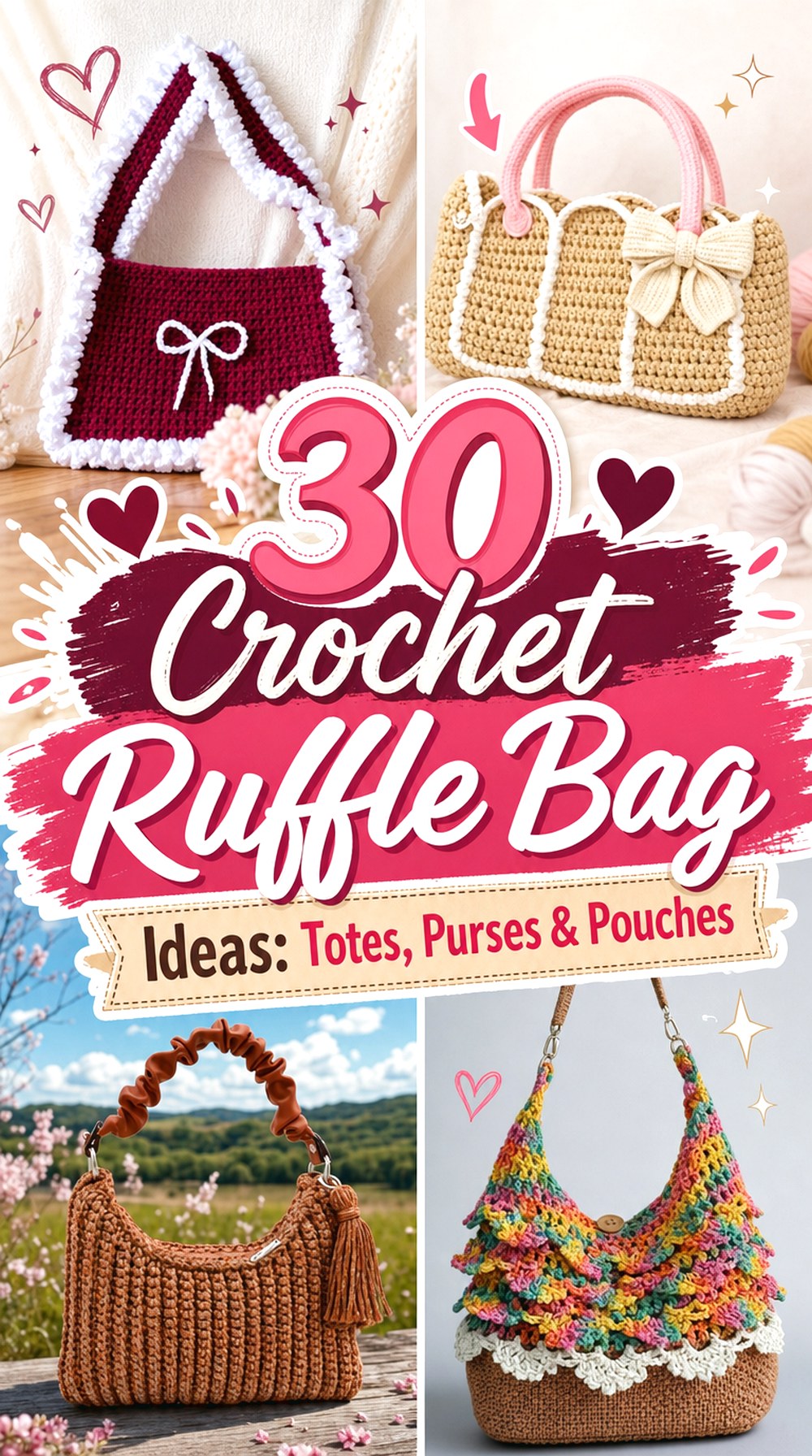

Ruffles can change a crochet bag in several ways. They can create full, skirt-like tiers around a shoulder bag, soften the edge of a flap, frame a drawstring opening, or add just enough movement to an otherwise simple tote. This collection covers those different approaches rather than repeating the same handbag in different colors.
You’ll find roomy totes, compact purses, phone carriers, bucket bags, pouches, and clutch-style designs. A few use scallops or shell-like frills instead of deeply gathered ruffles, which is useful when you want decorative movement without as much bulk. Along with the inspiration, each idea points out practical differences in structure, openings, straps, material behavior, and finishing so you can choose a tutorial that fits how you actually plan to use the bag.
Quick List
- Crochet Rounded Frill Flap Bag
- Crochet Pocketed Ruffle Tote Bag
- Crochet Button-Flap Double-Ruffle Pouch
- Crochet Drawstring Ruffle Bucket Bag
- Crochet Sheer Frill Party Handbag
- Crochet Frilly Phone Carrier Bag
- Crochet Scallop-Hem Summer Bucket Bag
- Crochet Coquette Mini Ruffle Shoulder Bag
- Crochet Raffia Ruffle Bucket Bag
- Crochet Compact Ruffle Mini Handbag
- Crochet Sweetheart Scallop-Edge Tote Bag
- Crochet Frilled Drawstring Gift Pouch
- Crochet Boho Ruffle-Flap Sling Bag
- Crochet Mesh Ruffle Market Tote
- Crochet Simple Ruffle Carry Bag
- Crochet Oval-Base Tiered Ruffle Shoulder Bag
- Crochet Ruffle-Yarn Statement Purse
- Crochet Classic Ruffle Handbag
- Crochet Chunky Ruffle Shoulder Handbag
- Crochet Scallop-Stitch Small Pouch
- Crochet Round Layered-Ruffle Purse
- Crochet Chevron Ruffle Handbag
- Crochet Frou Frou Frill Bag
- Crochet Cancan Frill Everyday Bag
- Crochet Pineapple-Frill Round Handbag
- Crochet Refined Ruffle Tote Bag
- Crochet Adjustable-Strap Frill Bag
- Crochet Gathered Ruffle Handbag
- Crochet Ruffled Clutch Purse
- Crochet Ruffle-Trim Project Tote
Decide Where the Ruffle Should Work: Body, Edge, or Flap
A ruffle running around the entire bag body has a very different effect from one placed only along an opening. Multiple horizontal tiers create the most volume and make the texture the main design feature, but they can also add yarn, thickness, and visual weight. A flap-edge or top-edge frill keeps more of the underlying bag visible and may be easier to pair with everyday clothes.
For small pouches and phone bags, proportion matters even more. An oversized ruffle can cover the opening or make a narrow bag harder to access. Before choosing a design, look at where the trim ends in relation to the closure, handles, pockets, and widest part of the bag.
Yarn Choice Changes Shape, Stretch, and Ruffle Definition
Soft yarn can produce fluid, fluttering ruffles, while a firmer fiber tends to make each frill stand farther away from the bag. Raffia and other structured materials can turn a ruffle into a noticeably sculptural detail. Novelty ruffle yarn creates yet another effect because the yarn itself supplies much of the volume.
The bag body also needs consideration. Open mesh may feel visually light beneath a large frill but can let small objects show or slip through. Dense crochet generally offers more coverage but may make a heavily ruffled design feel substantial. When substituting yarn, compare the tutorial’s fabric behavior rather than choosing by color alone; drape and stretch can change the final silhouette.
Check the Opening, Strap, and Lining Before You Commit
Ruffles often sit close to the functional parts of a bag, so check those areas before choosing purely by appearance. An open tote, buttoned pouch, flap purse, and drawstring bucket all handle contents differently. If security matters, confirm that the tutorial’s closure suits what you intend to carry rather than assuming decorative trim will narrow the opening enough.
Straps deserve the same attention. Crochet can lengthen under load, particularly when the strap is long or the fabric is stretchy. A lining or reinforcement may be worth considering when stretch or small-item containment matters, but not every tutorial includes one. Verify the creator’s construction before buying materials if lining, hardware, adjustable straps, or a particular closure is important to you.
Crochet Rounded Frill Flap Bag
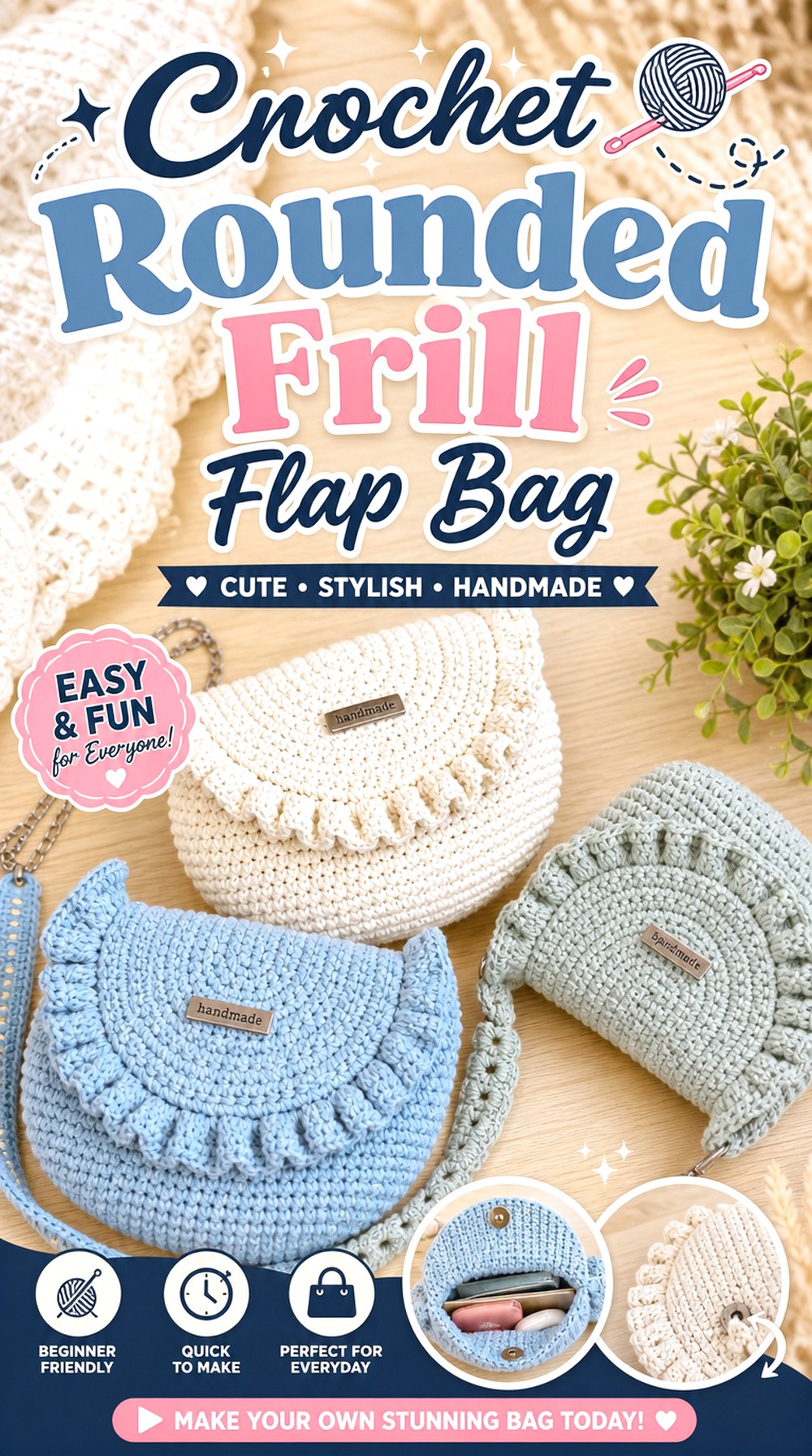
This rounded handbag uses its curved body as a backdrop for a prominent frilled edge, giving it a softer outline than a conventional rectangular purse. The flap makes the front feel finished rather than leaving the ruffle floating around an open top, while strap hardware gives the design the look of a small everyday handbag rather than a simple crochet pouch.
It is a useful choice if you like decorative bags but still want a clearly defined opening. Before adapting it, pay attention to how much room the rounded body needs to retain its shape and how the flap meets the fuller textured edge.
The Rounded Body Needs Room to Keep Its Shape
Curved bags show distortion more readily than straight-sided totes. If your substitute yarn is much softer or heavier than the fabric shown in the tutorial, the lower curve may flatten once the bag is filled. Check the shape before adding all finishing details. If the empty body already collapses more than you want, address structure before relying on the ruffle to disguise it.
A Flap Turns the Frill Into a Focal Edge
Here, the decorative edge and closure area need to cooperate. A frill that is too bulky around the flap can make opening and closing awkward, while one that lies too flat loses the intended emphasis. When changing yarn, judge the ruffle with the flap actually folded into position instead of evaluating it only while the work is laid flat.
Hardware Opens Up More Strap Choices
The tutorial incorporates hardware around the carrying setup, which makes this concept useful if you want a removable or interchangeable strap rather than a permanently crocheted handle. Hardware size should look proportional to the finished bag and should attach to fabric that can support it without pulling out of shape.
Crochet Pocketed Ruffle Tote Bag
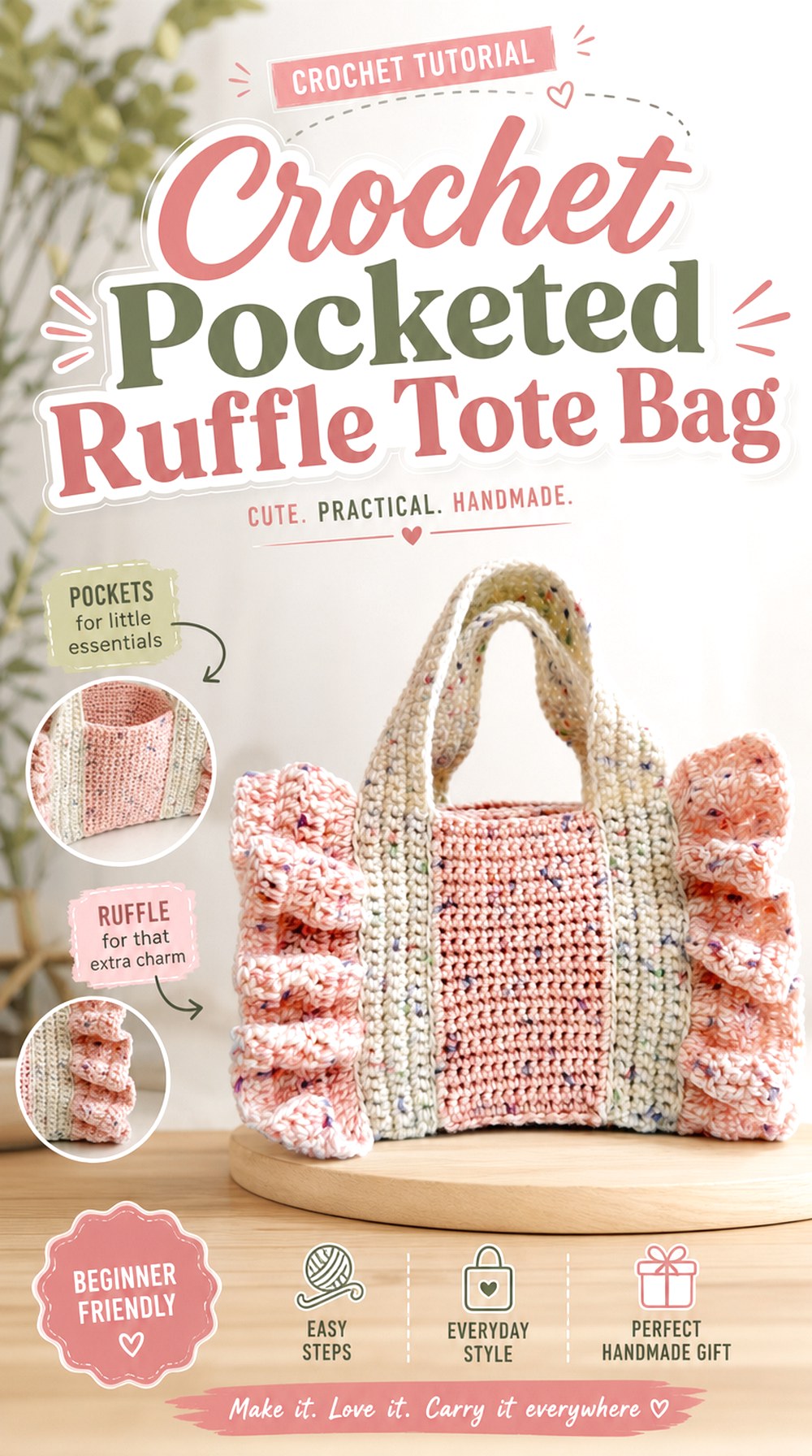
A pocketed tote gives the ruffle something practical to work around. Instead of treating the entire surface as decoration, this design combines a small tote body with accessible storage, handles, and a structured-looking base. That makes it noticeably different from the more ornamental mini purses in this collection.
This idea suits someone who wants the frill to add personality without giving up organization. Look closely at the relationship among the pockets, ruffle line, and handles. Those elements should remain visually separate enough that a pocket can still be reached and the handle attachment does not disappear inside bulky trim.
Pockets Should Stay Clear of the Ruffle Line
A decorative tier can become inconvenient if it droops directly over a pocket opening. When adapting the bag, decide which feature has priority. For a functional outer pocket, leave enough visual and physical clearance to reach inside easily. If the pocket is mainly decorative, you have more freedom to let the ruffle overlap its outline.
A Firm Base Changes How the Tote Sits
The tutorial uses a base component, giving this bag a different structural starting point from a fully soft crocheted tote. A firmer bottom can help the lower outline stay defined, but it also means the sides and base need to look proportionate. Check that any substitute base works with the scale of your intended finished bag.
Small Handles Need Clean Attachment Points
Short handles put their attachment areas in full view, especially on a compact tote. Before adding extra ruffle volume near the top, make sure those joins remain accessible and visually tidy. Decorative layers should frame the handle area rather than hiding attachment points that may need inspection or reinforcement later.
Original Tutorial and Creator Credit
Creator: Liko’s crochet
Crochet Button Flap Double Ruffle Pouch
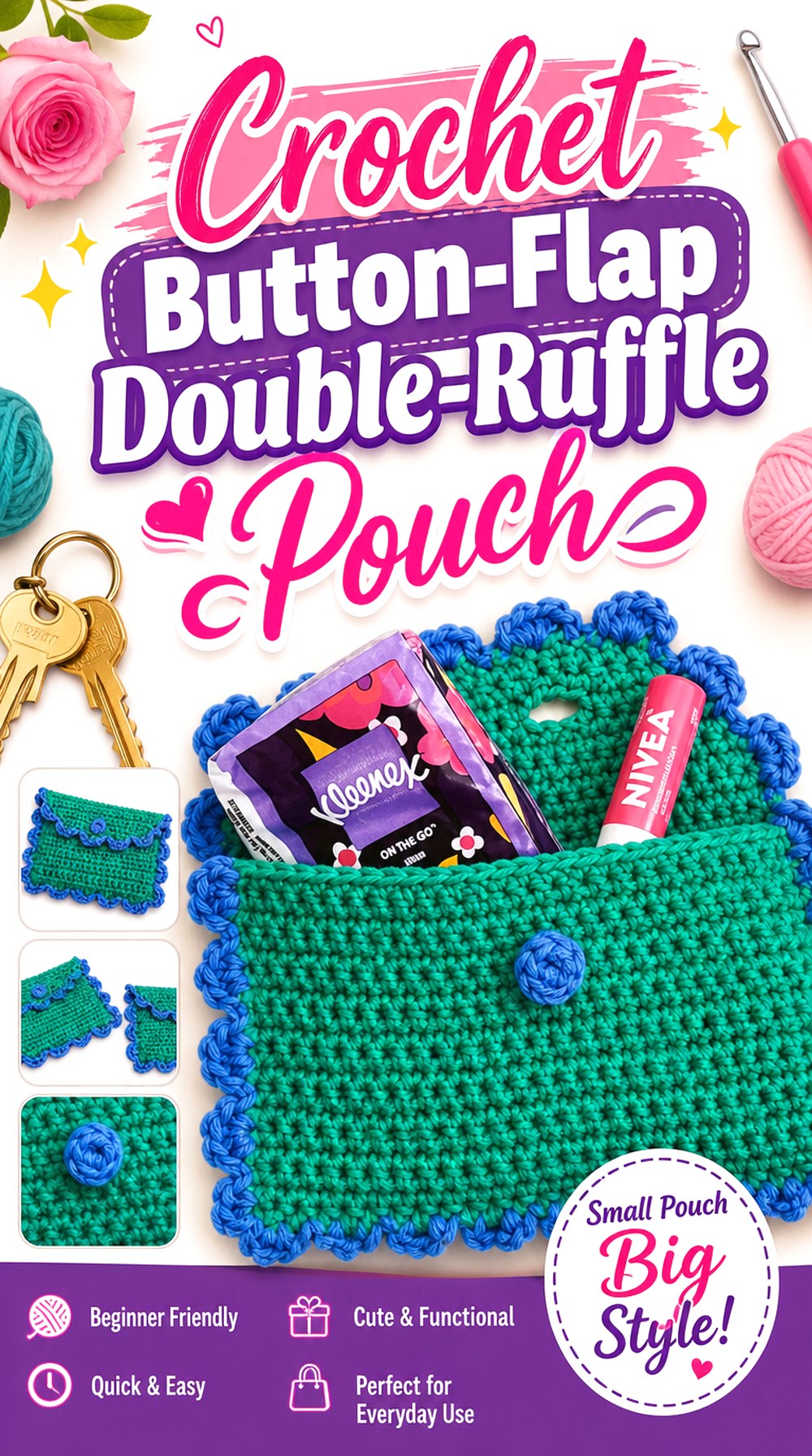
This compact pouch layers decoration in two places: around the body and along the flap. The result has more detail than a plain cosmetic pouch, yet its small format keeps the ruffles from turning into the long tiers seen on larger shoulder bags. A button closure gives the top a definite center point and makes the flap part of the visual design.
Because it is small, this project works well for organizing lightweight personal items inside a larger bag. It is also a good example of why ruffle placement matters: the two decorative zones need to feel connected without swallowing the opening or covering the button.
Two Ruffle Zones Create More Visual Detail
Repeating a frill on both the pouch and flap can make the piece feel coordinated, but it also increases texture quickly. If you change yarn or add stronger color contrast, evaluate both ruffles together. One can become the main feature while the other acts as a smaller echo rather than having both compete equally.
The Button Closure Sets the Useful Capacity
A buttoned flap is most effective when the contents do not push hard against it. Before deciding what this pouch will hold, test whether the flap can fall naturally into its closed position. If the pouch has to bulge substantially for your intended use, a roomier bag style elsewhere in this list may be the better choice.
Original Tutorial and Creator Credit
Creator: The Pudgy Rabbit
Crochet Drawstring Ruffle Bucket Bag
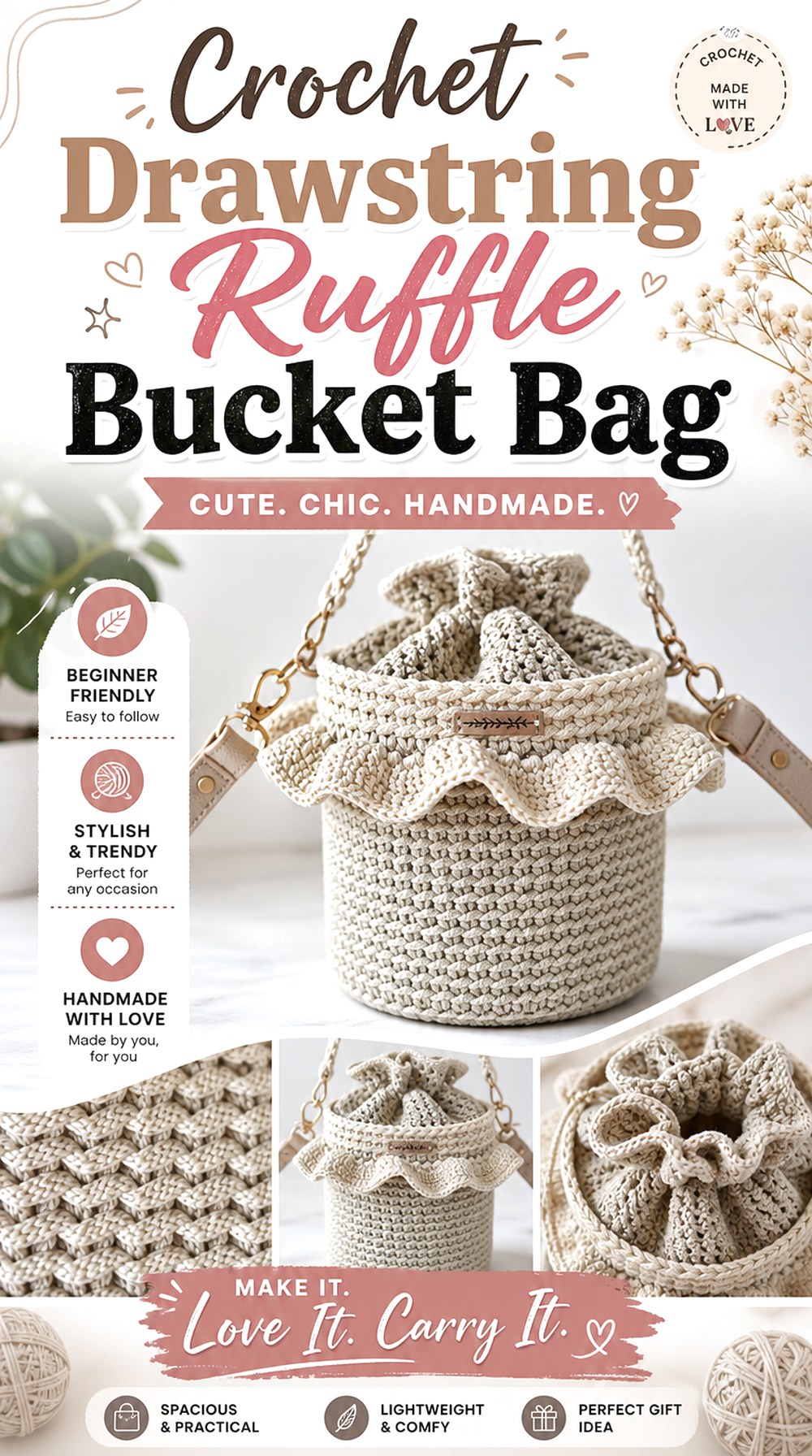
This bucket bag combines several distinct textures rather than relying on one ruffled surface. It has a rounded bottom, a pronounced ruffle, a mesh section near the opening, and a drawstring system, plus a decorative carrying treatment. That combination gives the bag a fuller lower half and a lighter-looking top.
Choose this direction if you like a bag with noticeable dimensional contrast and want more closure control than an open tote offers. The mesh and drawstring are functional parts of the silhouette, so changes to yarn stiffness or strap style can affect how well the upper portion gathers.
The Drawstring Controls a Wide Bucket Opening
A bucket bag naturally creates a fairly open top until the drawstring is tightened. The ruffle should not interfere with that movement. When substituting materials, test the cord path before final finishing and make sure the surrounding fabric can gather without becoming so stiff that the opening remains partly spread.
Mesh Near the Top Changes How the Bag Stretches
Open fabric can respond differently to weight than the denser lower section. That transition matters because the drawstring and carrying system are close to it. Avoid assuming the mesh will behave exactly like the body. Check its shape with the bag hanging naturally before making irreversible strap or hardware decisions.
Choose the Carry Strap Before Final Hardware
The tutorial discusses several carrying elements, so this design offers room for customization. Decide whether you want a short handheld option, a longer adjustable strap, or another compatible setup before buying hardware. The attachment points should match the actual carrying method instead of being added merely because they appeared in another version.
Original Tutorial and Creator Credit
Creator: PasteloveSploty
Crochet Sheer Frill Party Handbag
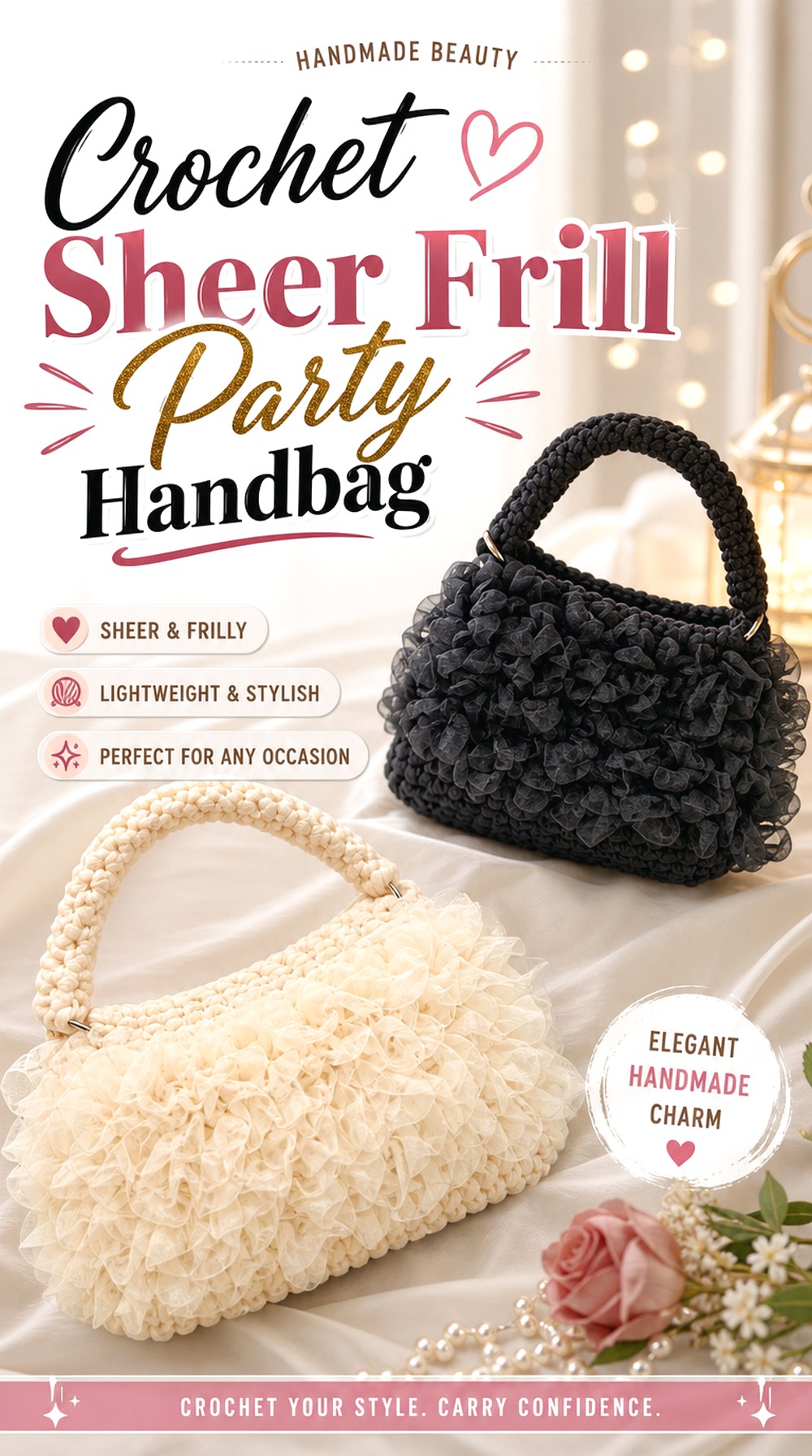
A sheer-looking frill bag takes the ruffle idea in a lighter, more fashion-focused direction. Rather than emphasizing dense everyday fabric, this style lets airy texture and volume carry the design. The translucent or tulle-like yarn appearance makes the frills look softer and more cloudlike than the crisp tiers produced by raffia or tightly worked cotton.
It is an appealing option for an outfit-focused handbag where appearance matters more than rugged storage. Because unusual yarn can obscure individual stitches, this is also a project where you should assess whether you enjoy working by feel and by overall fabric shape rather than expecting every stitch to remain visually obvious.
Sheer Yarn Makes Texture More Important Than Stitch Detail
When fuzzy, translucent, or novelty-like fibers surround the stitch structure, small inconsistencies may be harder to see—but so can the stitches you need to work into. Before committing to the full bag, make a small sample and confirm that you can comfortably identify the working edge. Visibility matters more than how impressive the yarn looks in the skein.
Voluminous Frills Need a Simple Handle Area
A dramatic ruffled body already provides plenty of movement. Keeping the handle area comparatively uncluttered can make the finished bag easier to hold and gives the eye somewhere to rest. If you add bows, charms, or extra trim, check the bag from a distance first; additional decoration may obscure the distinctive sheer ruffle effect.
Original Tutorial and Creator Credit
Creator: mys楽しく編み物
Crochet Frilly Phone Carrier Bag
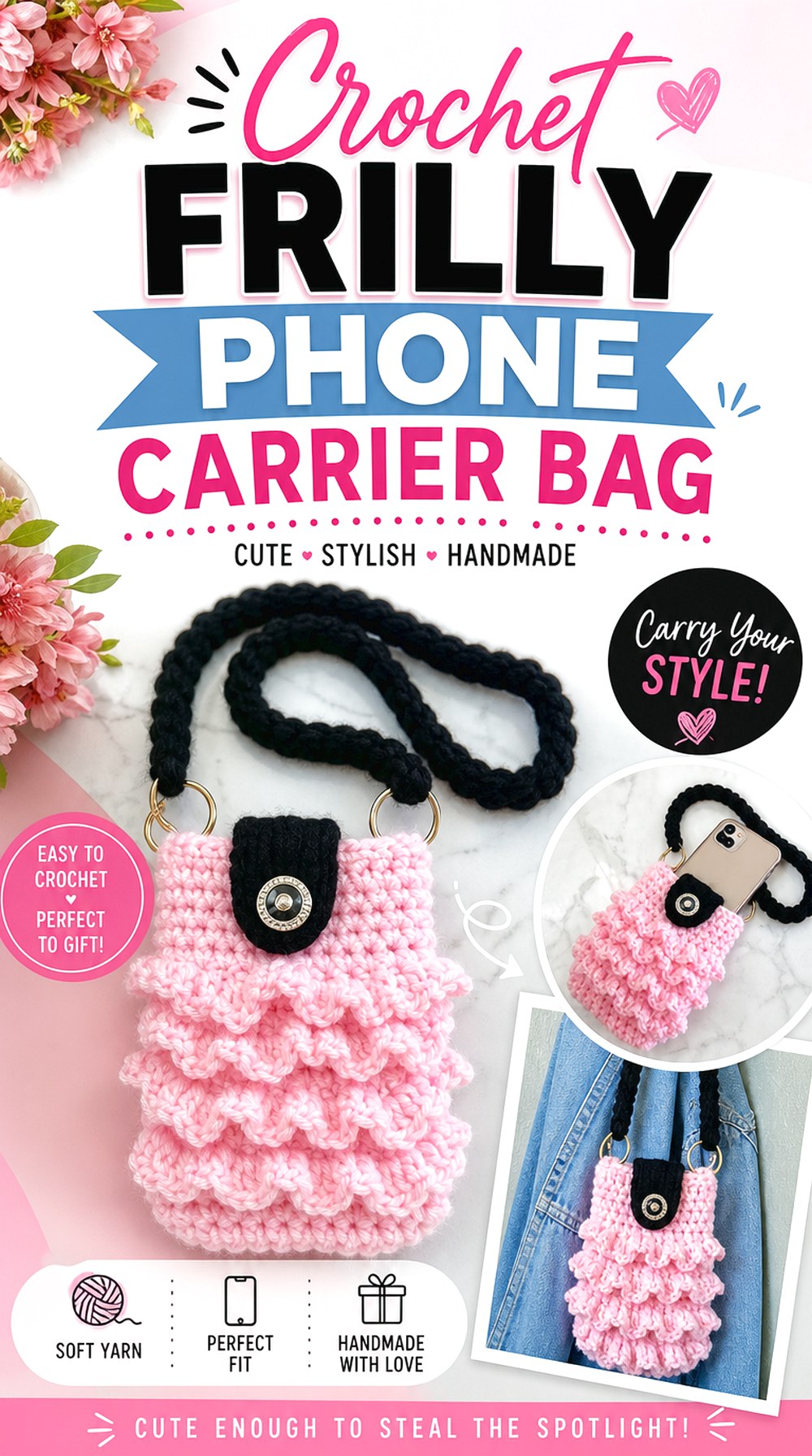
A phone carrier turns the ruffle concept into a long, narrow accessory. Its proportions are dictated by the object it carries, so the decorative edge has less room to spread than it would on a tote or bucket bag. That makes this a useful choice if you want a small wearable bag without carrying a full purse.
The tutorial also provides a useful reference for strap options. Before beginning, however, work from the dimensions of the device and case you actually use. Phone names and generations are not reliable sizing tools, and a heavily padded case can change the required internal space.
Measure the Device Instead of Trusting a Phone Label
Place the phone in its normal case and measure the actual width, height, and thickness. Then compare those needs with the tutorial’s construction and intended fit. A carrier that is merely wide enough while lying flat may become inconvenient once the device’s thickness is included, especially if the top ruffle narrows the usable opening.
Narrow Bags Put More Stress on Strap Attachments
A long strap concentrates carrying force at relatively small attachment areas on a phone pouch. Inspect those points after assembly and avoid placing a bulky frill where it prevents you from seeing the join. If you substitute a heavier strap or hardware, consider whether the small crocheted body is still an appropriate support.
Original Tutorial and Creator Credit
Creator: Hectanooga1
Crochet Scallop Hem Summer Bucket Bag
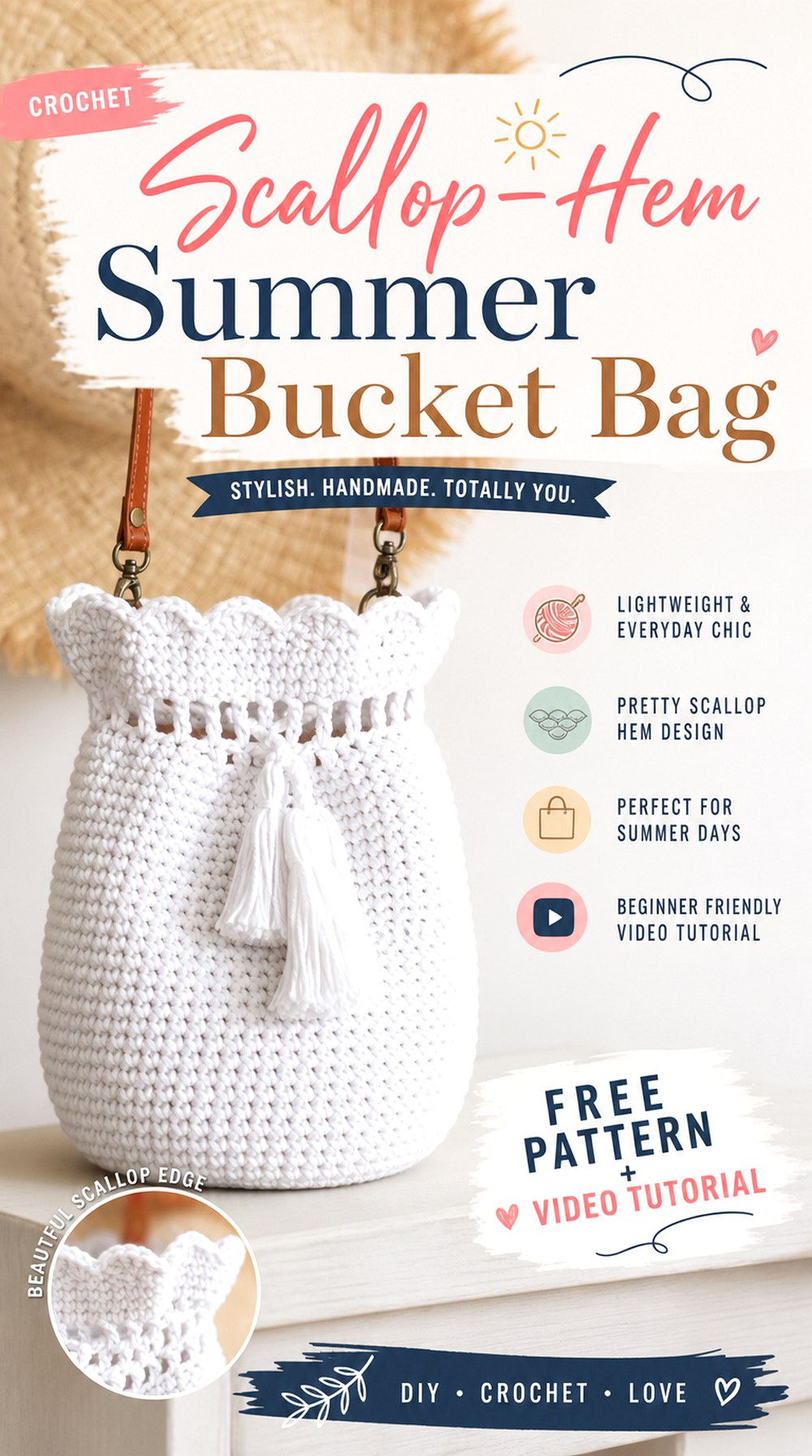
This bucket bag uses a scalloped lower edge rather than deep gathered tiers, creating movement with less volume. Chunky tassels introduce another decorative element, while the bucket silhouette keeps the main body simple enough for both details to remain visible. It is a useful alternative if you like the playful quality of ruffles but do not want several layers of extra fabric.
The finished style leans toward warm-weather accessorizing, yet the practical decision is still about proportion. Scallops, tassels, and a bucket opening all occupy visual space, so adding more embellishment can quickly make the lower edge feel crowded.
Scallops Add Movement Without Full Ruffle Bulk
A scalloped border gives you repeated curves but does not project from the bag in the same way as a deeply gathered frill. Choose this route when you want the suggestion of a ruffled edge while preserving a cleaner bag outline. It can also be a useful reference for adapting other simple bucket shapes without adding multiple full tiers.
Tassels and Scallops Need Visual Breathing Room
Two types of decorative movement can compete when they are placed too close together. If you alter tassel size, number, or placement, hold the finished bag upright before attaching everything permanently. The scalloped hem should still be readable as a deliberate edge rather than disappearing behind a curtain of extra decoration.
Bucket Depth Makes the Opening Worth Checking
A deep bucket is convenient only if you are comfortable reaching through its opening. If you plan to adapt the shape, check how the top edge, strap, and any closure affect access. A narrower opening may feel secure but can be frustrating if the bag is intended for objects you reach for frequently.
Original Tutorial and Creator Credit
Creator: forthefrills
Crochet Coquette Mini Ruffle Shoulder Bag
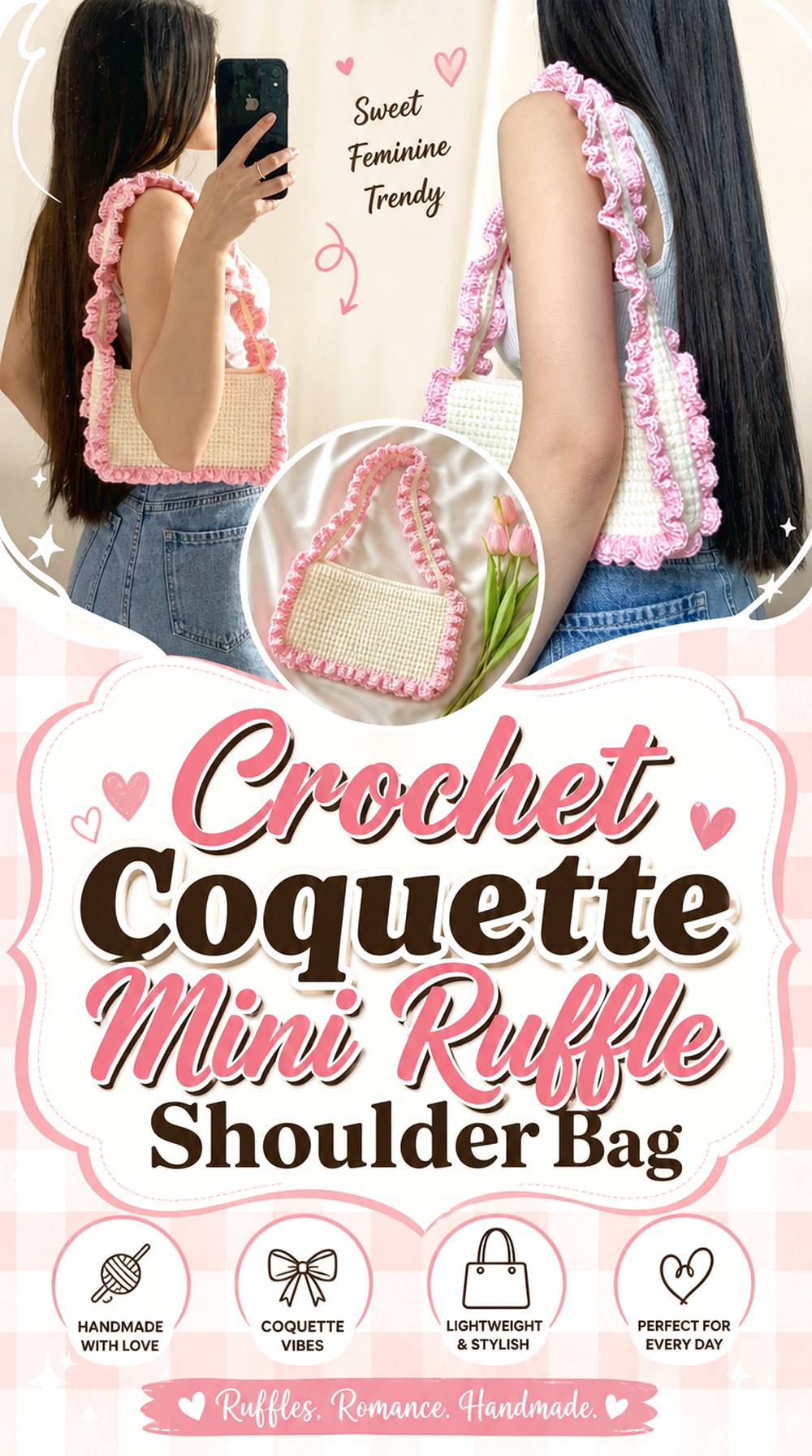
This mini shoulder bag concentrates the coquette-style ruffle look into a small accessory that sits close to the body. Its scale makes the trim feel prominent without requiring the multiple large tiers of a full tote. It is a practical direction when you want a decorative outfit bag for a limited number of essentials rather than a general-purpose carryall.
Small bags are less forgiving of poor proportions, though. A strap that feels too wide, a ruffle that projects too far, or an opening that becomes too narrow can dominate the entire design. Evaluate those relationships as a group instead of adjusting each feature separately.
Mini Scale Makes Strap Proportion Obvious
On a large tote, a slightly oversized strap can disappear into the overall silhouette. On a mini bag, it becomes a major visual element. If you change yarn weight or strap style, hold the unfinished strap against the body first and check whether it complements rather than overwhelms the small ruffled shape.
A Close-to-Body Bag Rewards a Flat Back
A shoulder bag may look attractive from the front but still need to sit comfortably against clothing. If you add extra bows, appliqués, or dimensional trim, concentrate them where they will not press against the body. Preserving a relatively smooth back can also reduce snagging when the bag moves against a cardigan or textured garment.
Original Tutorial and Creator Credit
Creator: crochet daniela
Crochet Raffia Ruffle Bucket Bag
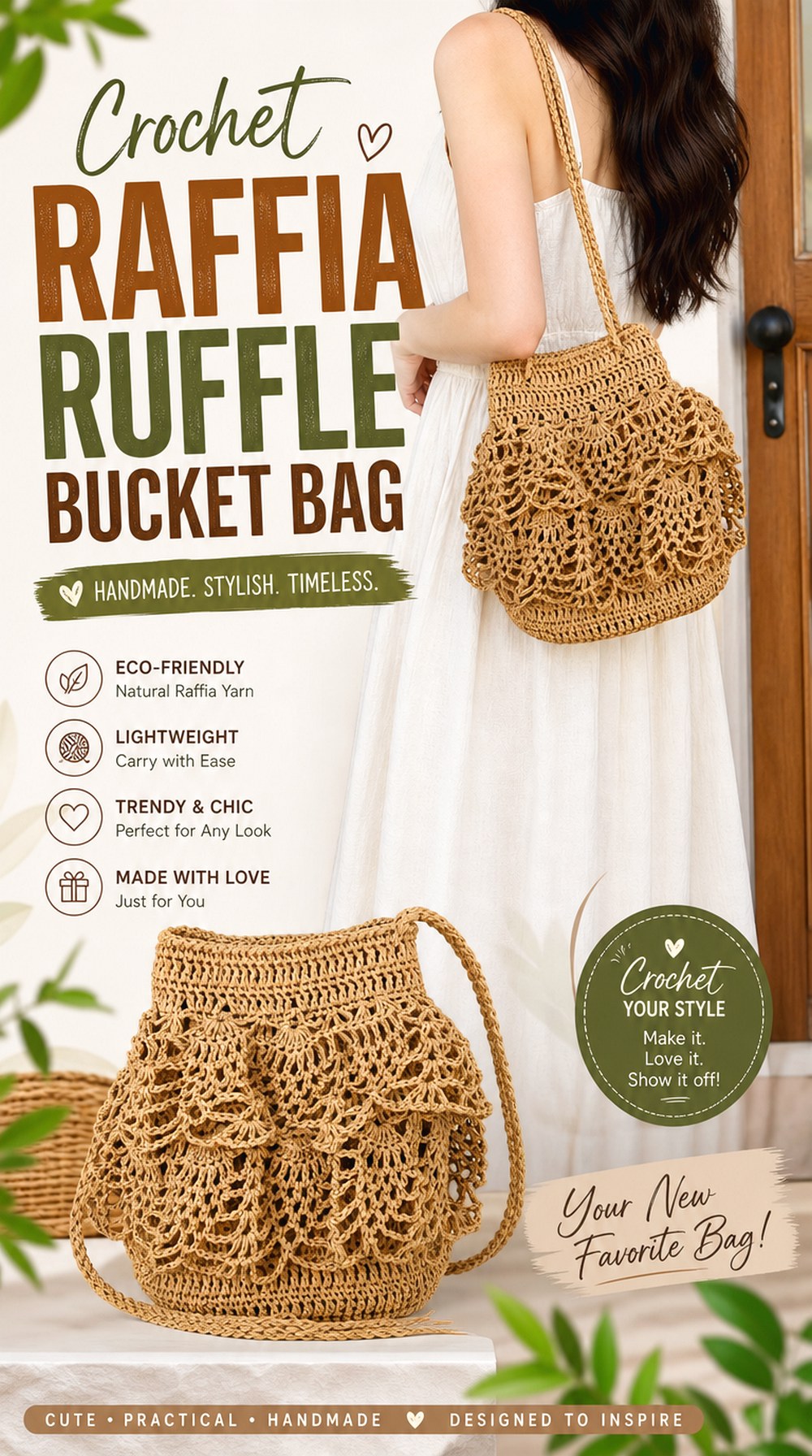
Raffia pushes a ruffle bag toward a more structured silhouette. Instead of soft folds collapsing against the body, the decorative layer can hold a clearer shape, which works especially well with a bucket base. That makes this project noticeably different from the fluffy or draping frill bags elsewhere in the roundup.
Choose it when you want ruffles that read as sculptural rather than fabric-like. The trade-off is that stiffer material can make tension differences and awkward curves more obvious. It is worth making a small sample before committing if you have only worked with soft yarn before.
Raffia Turns a Soft Ruffle Into a Sculptural Detail
A material with less drape changes the purpose of a ruffle. Instead of fluttering, each projection can hold its own outline. When adapting the design, avoid assuming that a soft yarn will recreate the same visual effect. If the crisp architecture is what attracted you, fiber behavior is part of the design rather than an interchangeable detail.
An Even Base Matters More With a Stiff Fiber
A structured bucket amplifies irregularities at the bottom because the material does not relax as readily into a new shape. Set the work down periodically and check whether the base rests as expected before building height. Correcting a distorted foundation early is easier than hoping a later ruffle will hide it.
Check Handle Flex Before Committing to Raffia
A firm material can feel very different in a handle than it does in the body. If the tutorial’s carrying method is crocheted in the same material, assess how it feels in your hand before making major length changes. For alternative hardware or straps, make sure the attachment areas remain compatible with the stiffer fabric.
Original Tutorial and Creator Credit
Creator: SquareCircleCrochet
Crochet Compact Ruffle Mini Handbag
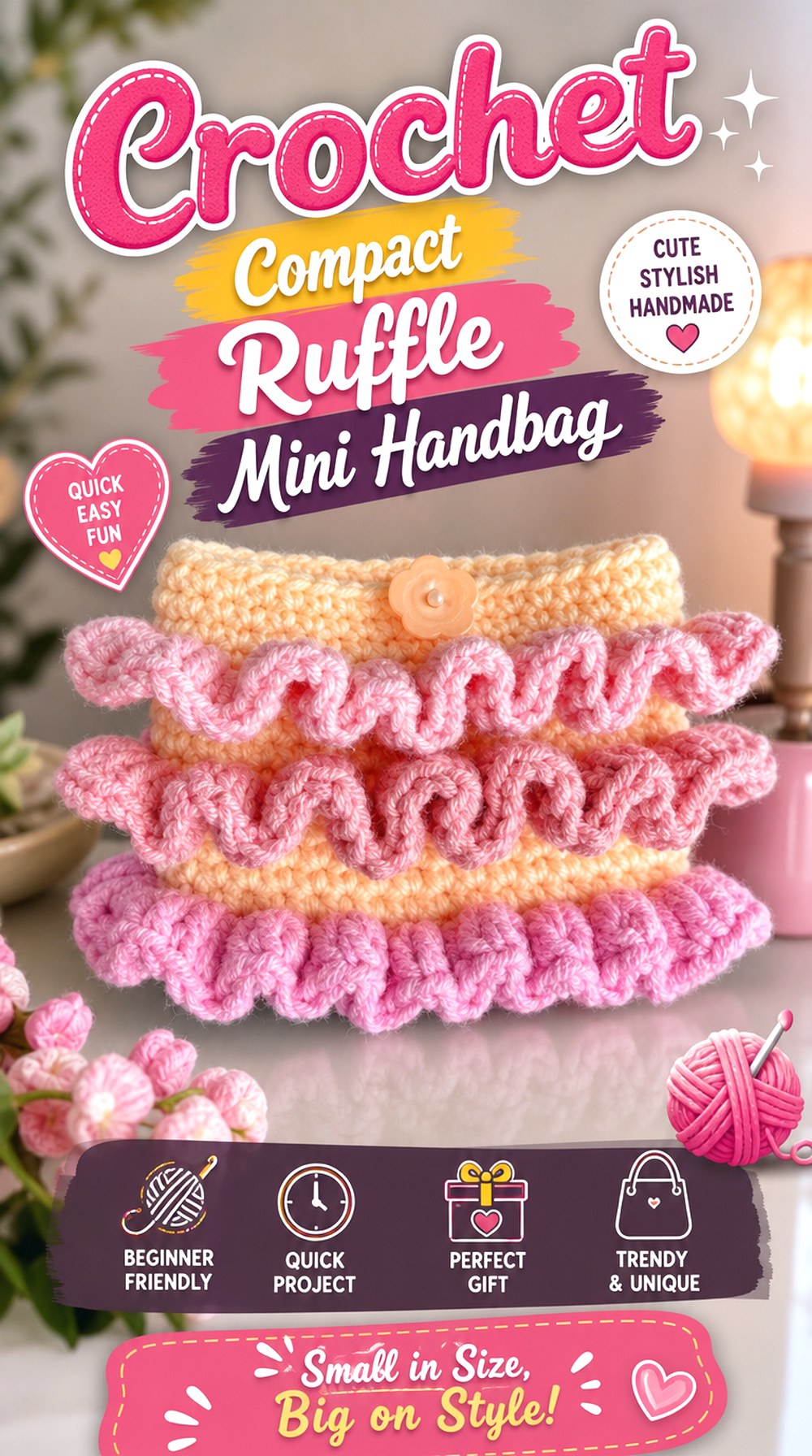
This mini handbag keeps the basic ruffle-bag idea straightforward: a compact body, prominent decorative trim, and a scale intended more for selected essentials than for tote-level capacity. It makes a useful contrast with the complex bucket and drawstring constructions because the silhouette lets the ruffle remain the obvious focal point.
A small handbag is also a good place to experiment with a statement color or stronger texture because the overall material commitment is more contained. Still, treat the opening as functional space. A visually oversized trim can reduce easy access even when the bag body itself seems roomy enough.
A Mini Bag Can Be Overwhelmed by Oversized Frills
Ruffle depth needs to make sense relative to the entire bag. If you substitute thicker yarn, the same construction can produce a much more dominant edge. Stop and view the bag upright before completing every decorative section. If the ruffle hides the body outline, decide whether that is an intentional statement or an unintended proportion change.
Test the Opening With the Items You Actually Carry
A mini handbag may be large enough on paper but inconvenient if the opening cannot accommodate a wallet, glasses case, or other rigid item. Before treating the decorative edge as finished, test the intended contents. The widest object often tells you more about usability than the bag’s total internal volume.
Original Tutorial and Creator Credit
Creator: Vicky Handmade
Crochet Sweetheart Scallop Edge Tote Bag

This tote uses repeated scallops to create a romantic edge without building the entire bag from projecting ruffle tiers. The straighter main body keeps it recognizable as a practical tote, while the curved trim supplies the softer visual character. It is one of the better choices in this list if you like ruffled styling but want the bag itself to remain relatively clean.
Because the decorative effect depends on repetition, consistency matters more than sheer volume. Uneven scallops are easier to notice along a straight tote edge, so pay attention to how the border settles once the bag hangs rather than judging it only on a flat surface.
A Scalloped Rim Keeps a Tote Lighter-Looking
Scallops create rhythm along an edge while leaving much more of the bag body exposed than layered ruffles do. This makes them a useful compromise for a tote you expect to use regularly. If you later add embellishments, let the scalloped line remain the main decorative feature rather than competing with several unrelated textures.
Straight Side Edges Reveal Uneven Finishing Quickly
A straightforward tote silhouette creates strong visual reference lines. If the border pulls one side upward or makes the top flare unevenly, it will be noticeable. Check the finished edge with the tote hanging naturally and make any tension or blocking adjustments appropriate to your yarn before attaching extra decoration.
Original Tutorial and Creator Credit
Creator: The Bumbling Busy Bee 🐝
Crochet Frilled Drawstring Gift Pouch
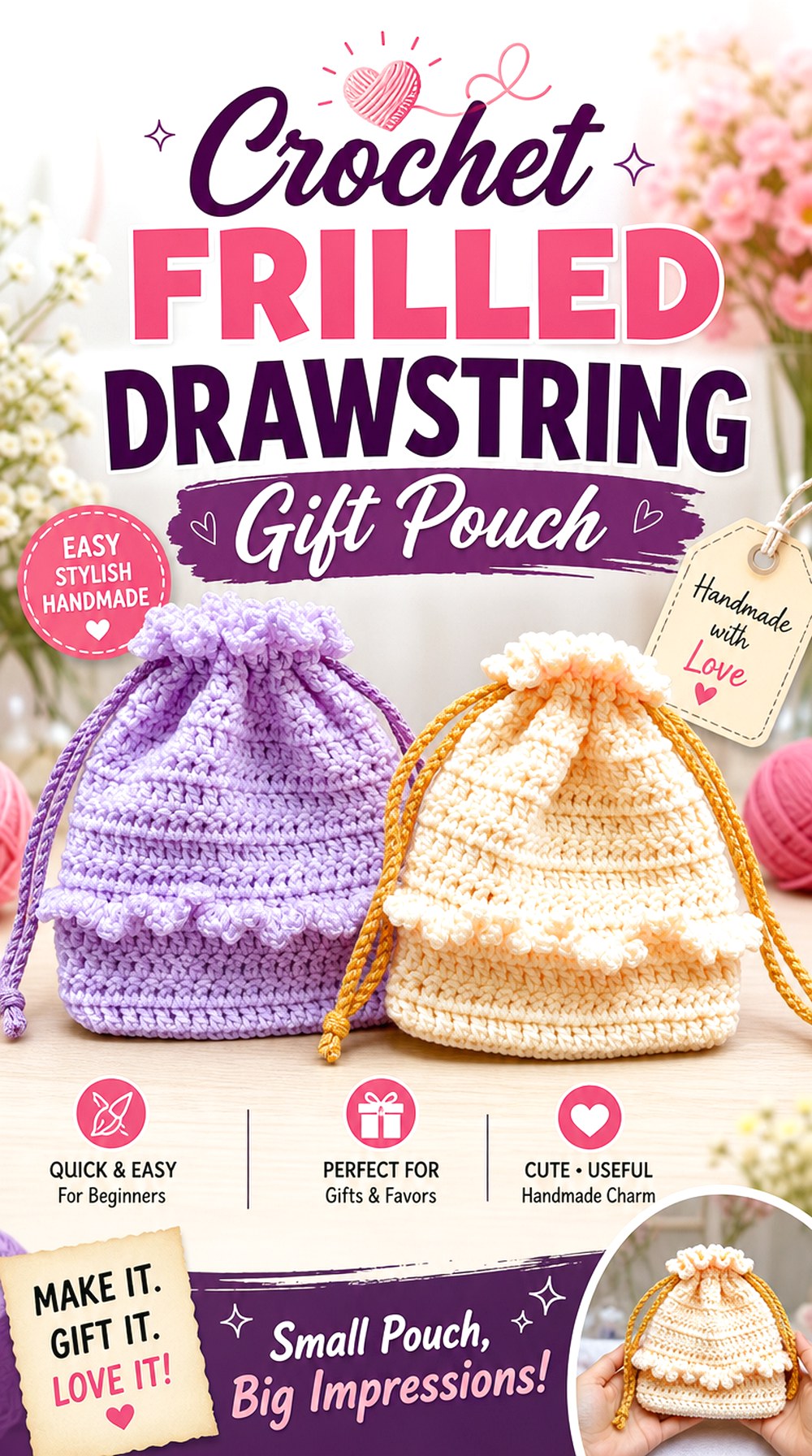
A drawstring pouch gives the frill a natural position around the gathered opening. Instead of adding ruffles over a large bag body, the decoration emphasizes the point where the pouch closes, creating a compact shape that can work for small gifts, accessories, or organization. The tutorial’s one-piece approach also distinguishes it from projects assembled from several separate panels.
This is a good direction if you want a small bag with a controlled opening but do not need a rigid structure. The key adaptation decision is leaving enough flexibility around the top for both the drawstring and frill to move freely.
A Drawstring Gives This Pouch a More Controlled Opening
Compared with an open mini tote, a drawstring lets the user reduce the size of the opening after filling the pouch. That makes the design better suited to loose small items. If you substitute a thicker cord, test the gathering action early; a cord that looks attractive may still be too bulky to slide comfortably through the intended channel.
One-Piece Construction Reduces Assembly Decisions
A construction with minimal separate assembly can be appealing when you would rather focus on shaping and finishing than aligning several panels. It also means proportion changes affect the same continuous piece, so alterations should be considered before you have progressed too far. Avoid enlarging only one area without considering how the opening and frill will relate to it.
Leave Space for the Frill to Spread
A ruffle crowded tightly against a drawstring may fold inward and obscure the opening. Once the cord is installed, test the pouch both open and gathered. The frill should still have enough room to sit visibly around the top instead of becoming trapped beneath the closure.
Original Tutorial and Creator Credit
Creator: Crafting With Caylene
Crochet Boho Ruffle Flap Sling Bag
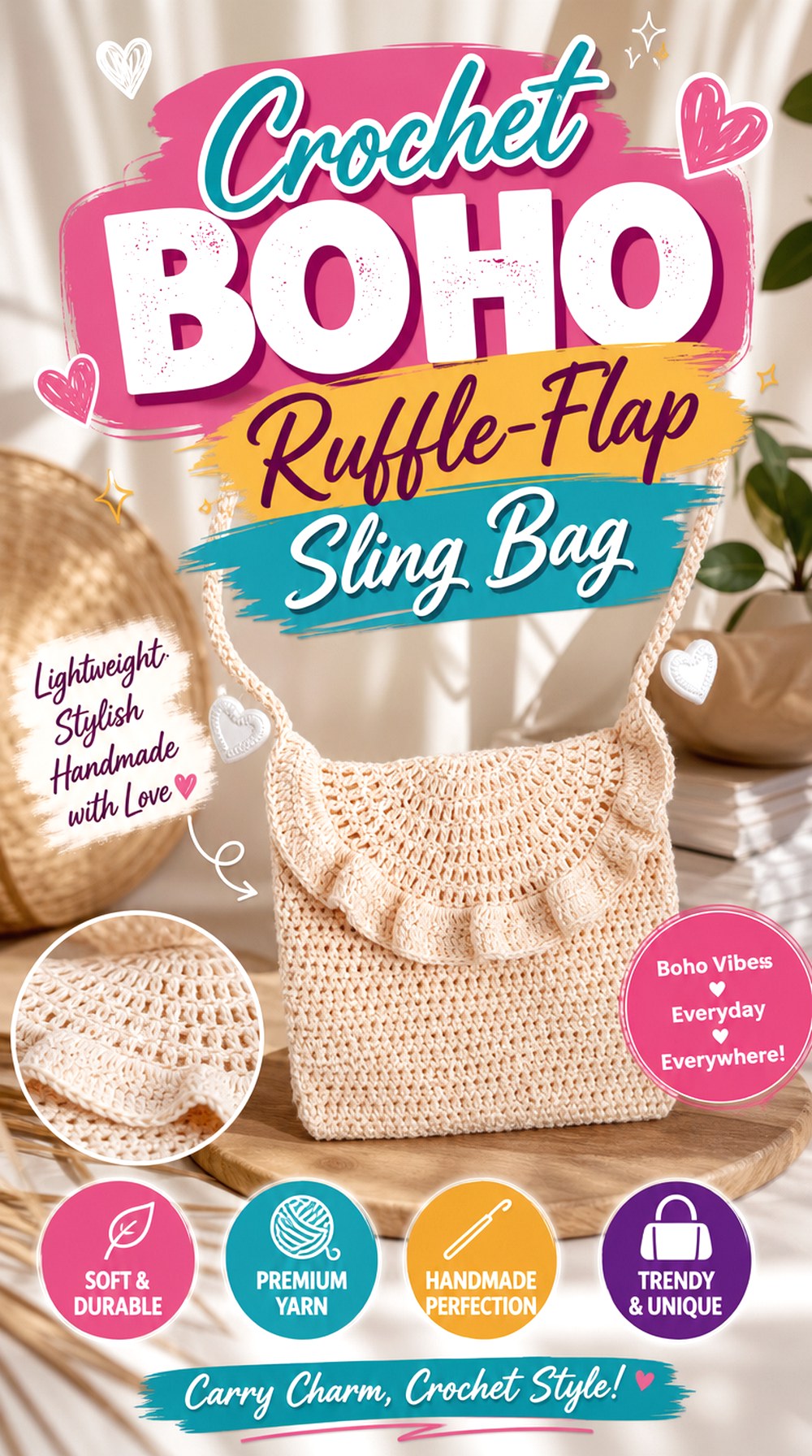
This sling-style purse shifts the ruffle away from horizontal body tiers and toward the flap, where the decorative edge becomes part of the front silhouette. The boho shape makes it a useful option for someone who wants a longer-wearing bag rather than a hand-carried mini purse. It also demonstrates how a frilly border can soften a more familiar crossbody form.
Because the flap is the focal area, any adaptation should preserve its ability to open cleanly. Strap length matters too: a decorative bag that sits well at the hip may look and feel very different if shortened to the waist or lengthened substantially.
The Flap Pulls Attention to the Front Edge
A ruffle placed around a flap frames the closure area rather than enlarging the entire bag. This is a practical choice when you want decorative texture but prefer a relatively smooth body. If you change colors, consider using contrast strategically around the flap instead of adding another competing accent somewhere else.
Sling Length Changes Where the Purse Lands on the Body
A long strap affects both comfort and appearance. Before finalizing an adapted strap, test the bag with the clothing layers you are likely to wear. A length that works over a thin shirt may position the bag differently over a jacket. Crochet stretch can add another variable, so judge the hanging position rather than only the unstretched measurement.
Boho Details Work Better When One Element Leads
Fringe, buttons, textured stitches, ruffles, and color changes can all suit a boho bag, but not every element needs equal emphasis. Let the flap edge remain the dominant detail if that is what attracted you to this version. Additional embellishment should support the silhouette rather than making the front visually difficult to read.
Original Tutorial and Creator Credit
Creator: Selina Veronique Crochet
Crochet Mesh Ruffle Market Tote
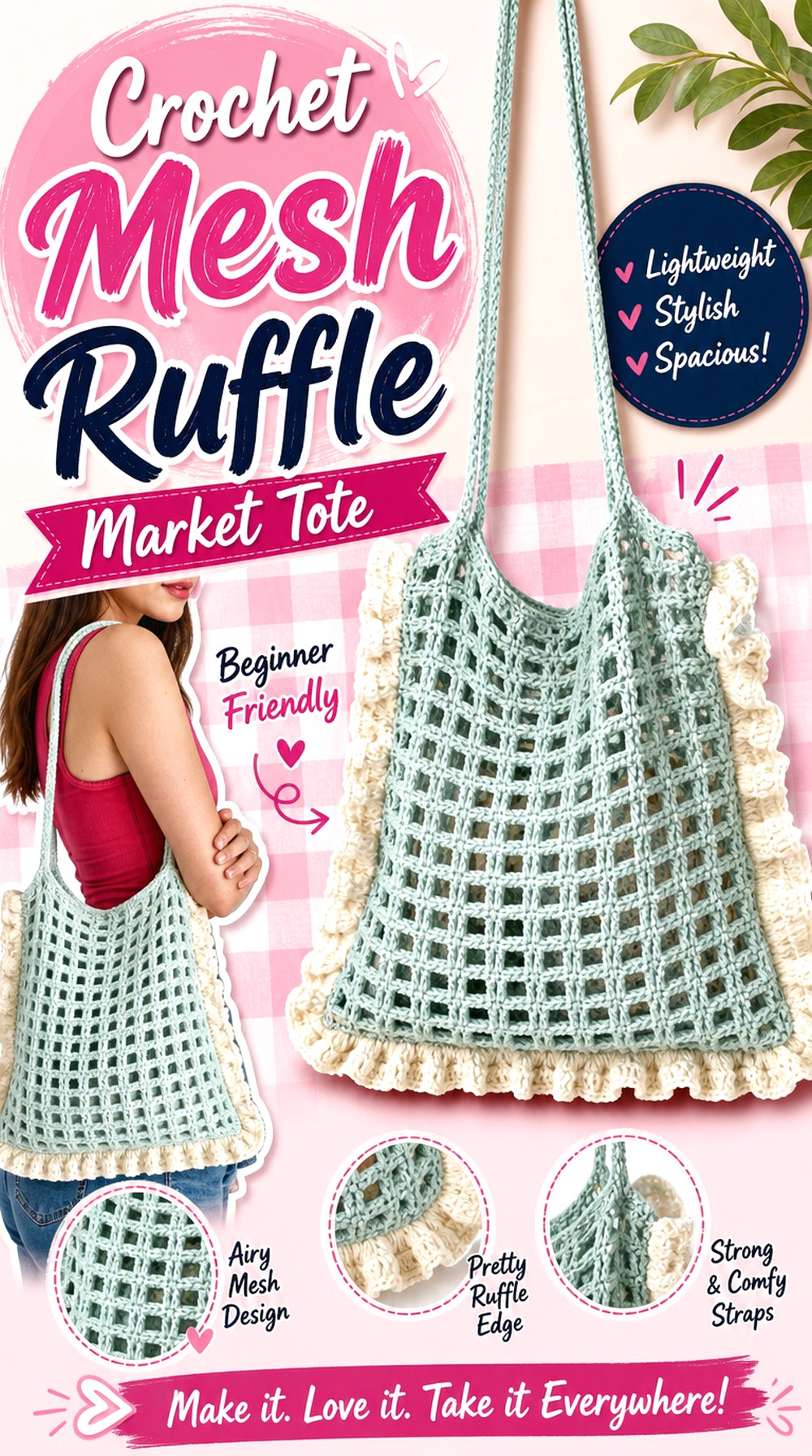
A mesh tote gives ruffles a light framework instead of placing them over a dense bag wall. The open fabric keeps the body visually airy while the frill supplies a more solid band of texture, producing a very different balance from the structured raffia or chunky-yarn options. This is a strong choice if you want a roomy-looking tote without a heavy visual block of crochet.
Openwork does introduce a practical trade-off: the contents remain more visible and very small objects may need containment. Consider whether the bag will be used for larger items or whether a removable pouch or lining better suits your routine.
Mesh Lowers Visual Weight but Exposes Small Contents
Open stitches can make a generously sized tote feel lighter in appearance, particularly when paired with a substantial ruffle. The same openness may be inconvenient for keys, pens, or other small items. Instead of automatically lining the bag, first decide what you intend to carry; your use may not require additional fabric at all.
A Stable Attachment Row Helps the Ruffle Read Cleanly
The point where a ruffle meets mesh deserves attention because open fabric can distort differently from a dense border. View the bag hanging before deciding whether the transition looks even. If the mesh is stretching noticeably at the attachment area, address that behavior before adding more decorative weight.
Add a Liner Only When the Open Fabric Conflicts With Use
A liner can improve privacy and containment, but it also changes the drape and visual transparency that make a mesh tote distinctive. If you choose to add one, decide whether you want a full liner, a removable inner pouch, or simply smaller organizers. Each option preserves a different amount of the original airy character.
Original Tutorial and Creator Credit
Creator: AmyCore Crochet
Crochet Simple Ruffle Carry Bag
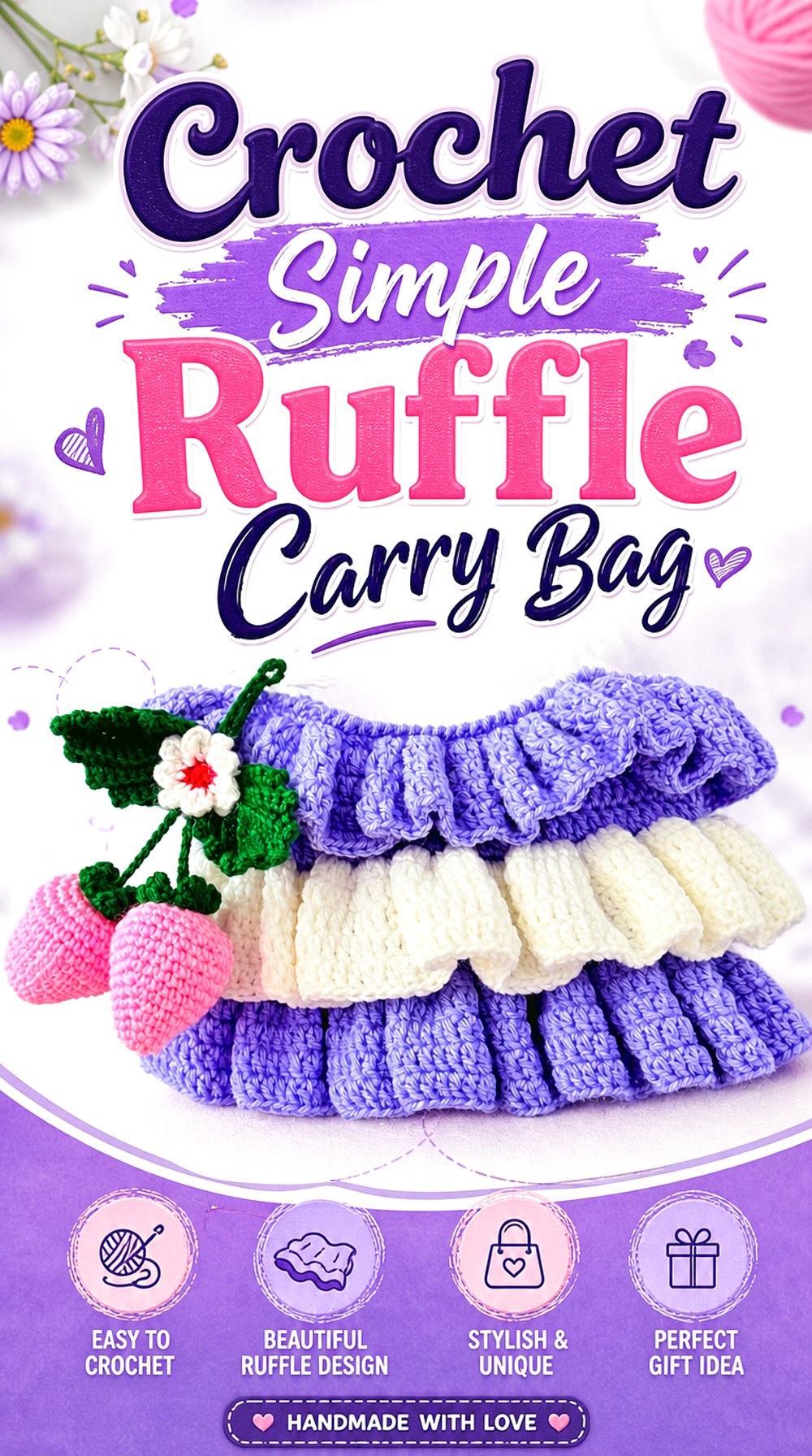
This project keeps the ruffle-bag concept uncomplicated, making the decorative trim the main identifying feature instead of combining it with elaborate hardware, pockets, or unusual fibers. That simplicity gives you a useful reference point among the more specialized designs in this collection.
It can also be a better starting concept when your priority is experimenting with color placement or ruffle prominence. Because the underlying silhouette is less visually busy, even a small change in trim color or depth will have a noticeable effect. Before adapting the design for everyday use, confirm the opening and carrying method suit the belongings you expect to put inside.
A Simple Body Lets the Ruffle Carry the Design
When there are fewer competing features, uneven trim becomes easier to notice—but successful ruffle placement becomes more effective too. If you want a two-color version, consider keeping the body quieter and letting the trim supply the strongest contrast. That preserves the simple silhouette instead of breaking it into too many separate visual sections.
Confirm the Opening Before Adding Any Closure
If you prefer a button, snap, zipper, or another closure, do not add it as an afterthought. First inspect where the ruffle sits relative to the top edge and where your hand naturally reaches into the bag. Decorative fabric can occupy the same space required for clean closure placement.
Original Tutorial and Creator Credit
Creator: Nancy And crochet
Crochet Oval Base Tiered Ruffle Shoulder Bag
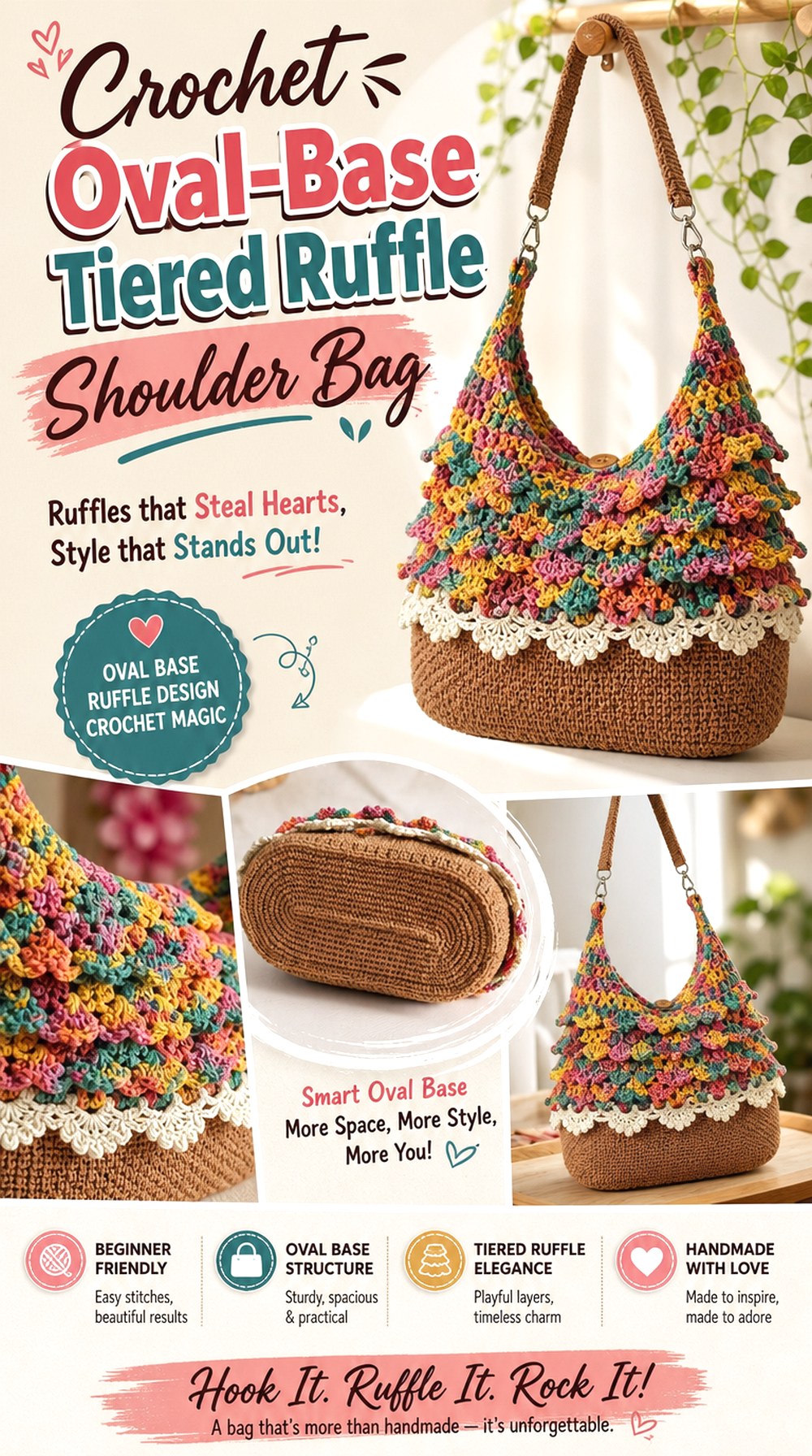
An oval base immediately changes this ruffled shoulder bag from the many flat rectangular options. The longer foundation creates a broader interior footprint, while tiered ruffles build outward from the body and emphasize its horizontal shape. It is a strong direction if you want a bag with noticeable layered volume rather than a single decorative edge.
The oval foundation and ruffle tiers also create two separate places where consistency matters. A skewed base can shift the whole silhouette, and uneven tension becomes increasingly visible when several horizontal frills are stacked one above another. Check the bag from the front and side as it develops.
An Oval Base Creates a Longer Interior Footprint
Compared with a circular bucket bottom, an oval foundation naturally spreads the bag along one axis. That can be useful for items that do not sit comfortably in a narrow round bag. If you alter the proportions, remember that the ruffle circumference and upper shape will also respond to that change rather than remaining visually identical.
Tiered Ruffles Magnify Small Tension Differences
Parallel layers create repeated horizontal reference lines. If one tier pulls tighter or flares much more than the others, the difference is easy to spot. Lay the work down occasionally, then also let it hang; a tier that appears even on the table may settle differently once gravity acts on several layers.
Shoulder Handles Need Stretch Awareness
A crocheted shoulder handle may lengthen when the bag is filled, particularly if the yarn has a lot of give. Test the carrying position with some temporary, reasonable contents before deciding that the unstretched length is correct. The goal is comfortable placement without letting the bag sink lower than intended.
Original Tutorial and Creator Credit
Creator: Kane Crochet
Crochet Ruffle Yarn Statement Purse
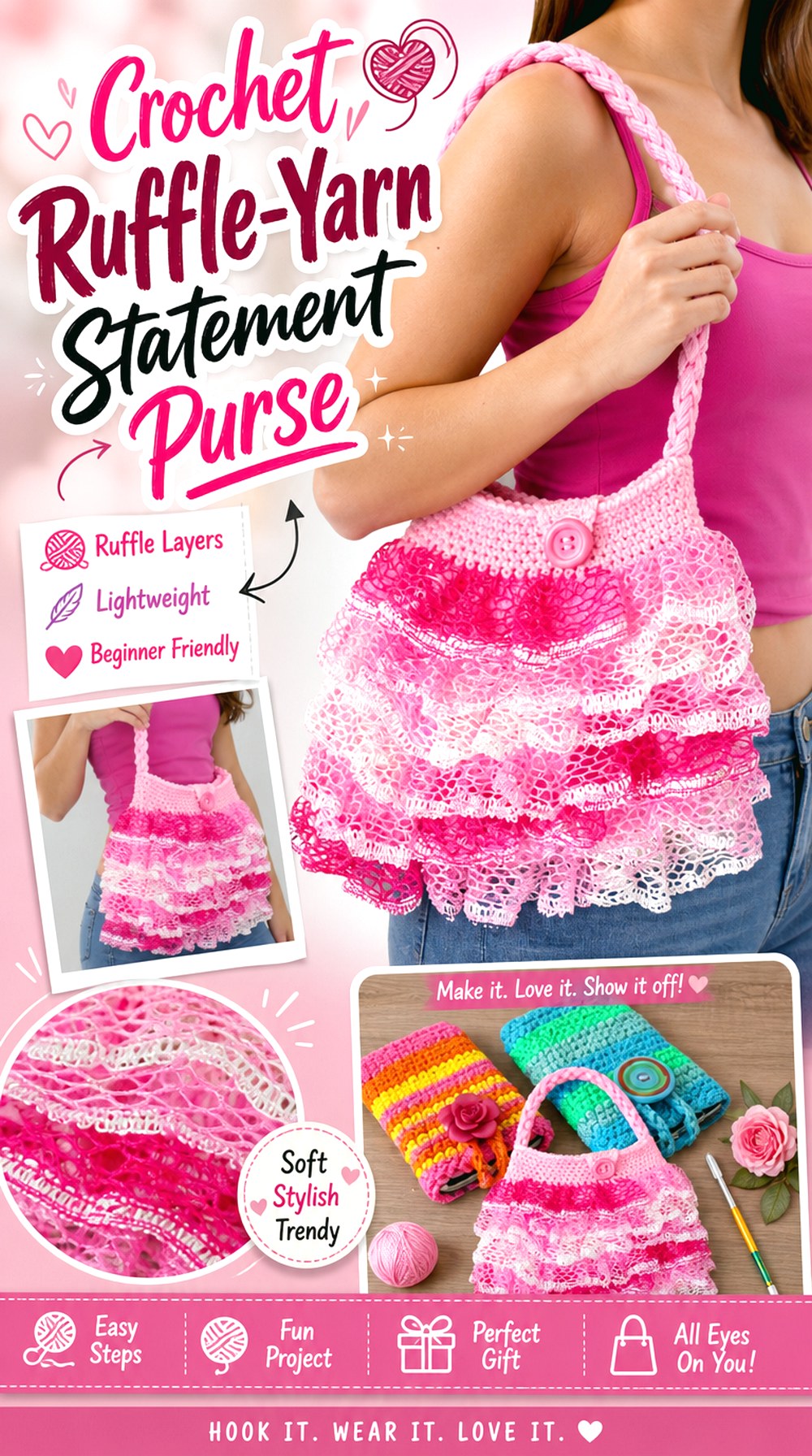
This purse gets its dramatic surface from specialized ruffle yarn rather than creating all the volume from ordinary crochet fabric. That makes it fundamentally different from most projects here. The source design is also lined and uses a braided strap, showing how an exuberant exterior can sit over a more supportive bag structure.
Choose this direction if the yarn itself is the feature you want to showcase. Before substituting a modern novelty yarn, compare how it is constructed and how it forms ruffles. Products sold under a similar decorative category do not necessarily behave identically when crocheted.
Novelty Ruffle Yarn Behaves Differently From Standard Yarn
Specialized mesh or tape-like ruffle yarn is designed to create volume in a way conventional yarn does not. Treat the tutorial as material-specific rather than assuming you can replace it one-for-one with ordinary worsted yarn. If using a different novelty product, experiment with a small section first to see how its edge, width, and spring affect the texture.
Keep the Supporting Bag Fabric Visually Present
When ruffle yarn is extremely full, it can hide the form underneath. That may be the intended effect, but you still need a recognizable opening and carrying structure. As you customize color or volume, make sure the purse does not become so visually dense that the top, lining, or strap connection is difficult to locate.
Check Decorative Yarn for Snag-Prone Loops
A highly textured surface can interact with jewelry, zippers, rough furniture, or other objects differently from smooth crochet. Before making it your daily bag, handle a sample in the way you expect to use the purse. If the decorative loops catch easily, reserve it for lighter or more occasional use.
Original Tutorial and Creator Credit
Creator: naztazia
Crochet Classic Ruffle Handbag
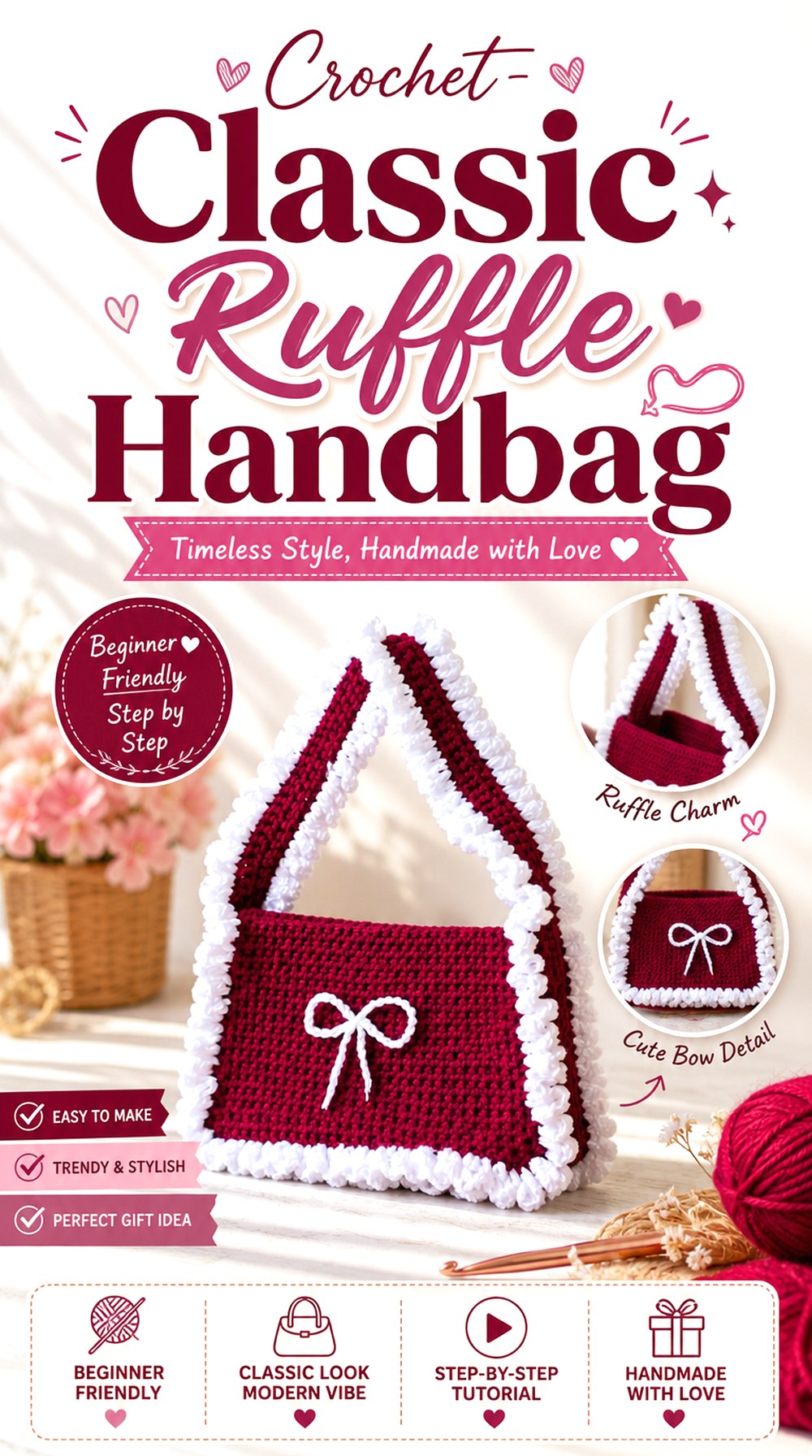
This handbag is a useful middle ground between highly specialized constructions. It keeps the familiar ruffled purse look without depending on novelty yarn, a mesh bucket opening, or a sculptural raffia body. That makes it suitable inspiration if you want the ruffle itself to define the project while leaving room for your own color planning.
The simpler outline also makes adaptation choices more visible. Strong contrast will emphasize every decorative row, while a single-color treatment lets texture do more of the work. Whichever route you choose, keep enough unobstructed space near the top for comfortable access rather than expanding the decorative treatment indefinitely.
Classic Proportions Make Custom Color Placement More Visible
A straightforward bag body acts like a neutral frame for the ruffle arrangement. If you want multiple colors, decide whether you are highlighting each tier individually or creating one broad color story. Repeated high-contrast changes can make the bag feel busier than expected, especially when the trim already creates strong shadow and texture.
Increase Ruffle Drama Without Sacrificing the Opening
It is tempting to add more frill when adapting a ruffle bag, but the uppermost decoration should not make the top difficult to reach. Hold the bag as you would use it and insert your hand through the opening before committing to additional volume. Function is a better stopping point than simply maximizing texture.
Original Tutorial and Creator Credit
Creator: Aqsa.crochet
Crochet Chunky Ruffle Shoulder Handbag
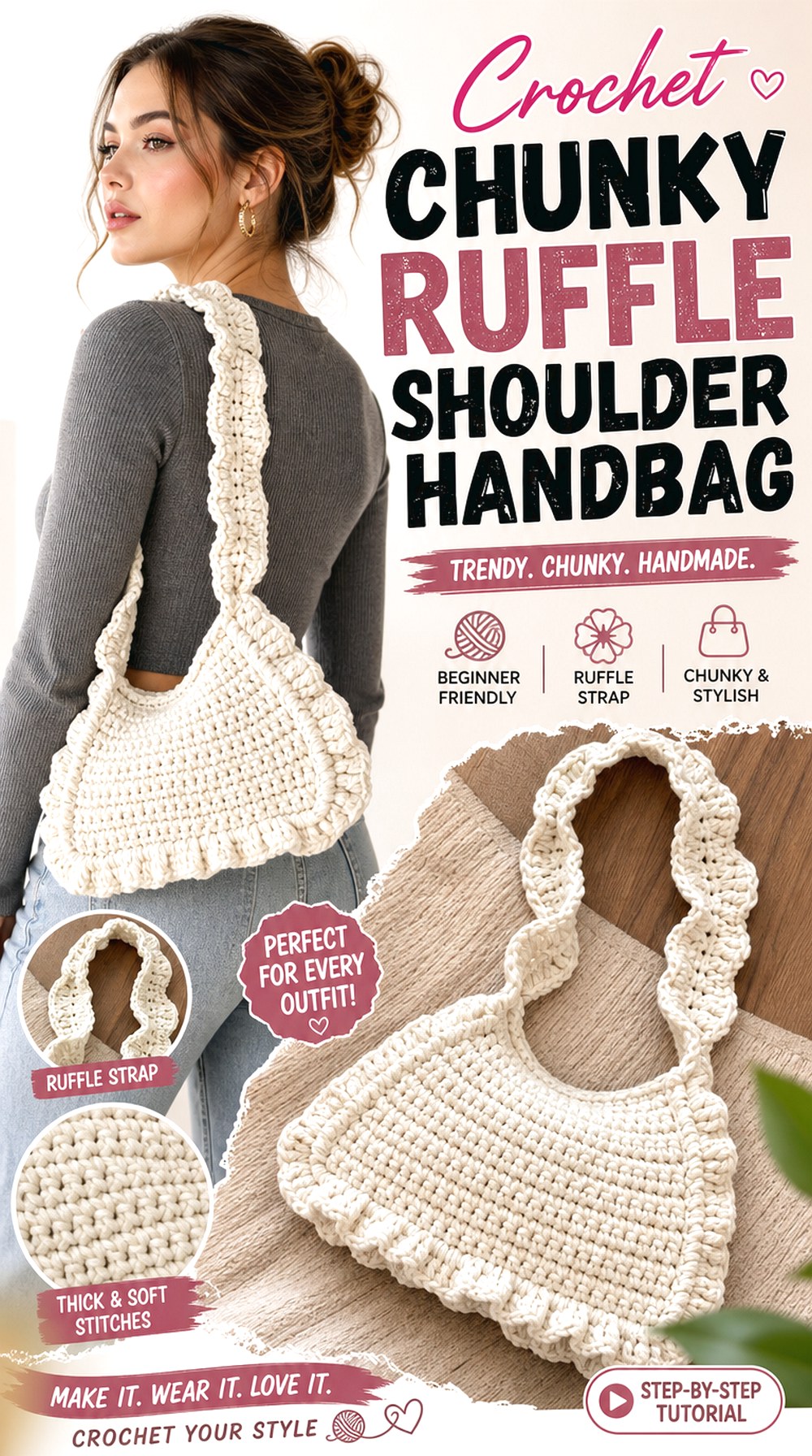
Chunkier yarn gives this shoulder-bag concept a more substantial outline than delicate frill purses. The body, panel construction, handle, and ruffles read as larger structural elements rather than fine embellishment. It is a good choice if you prefer bold crochet texture and want the bag to look intentionally handmade from a distance.
The trade-off is bulk. Thick yarn can change how panels meet, how a handle folds, and how much volume a ruffle gains. Do not judge individual pieces only while they are flat. Bring the main components together before final assembly and check whether their thickness still produces the shape you expected.
Chunky Yarn Makes the Silhouette More Architectural
Larger stitches and thicker fabric create stronger edges and deeper shadows. That can make the ruffles especially noticeable, but it also means a small tension change can affect the bag’s outline. If substituting yarn, compare the resulting fabric rather than assuming another “chunky” label will produce the same stiffness or drape.
Align the Panels Before Joining the Handle
When a bag is built from defined sections, uneven panel height or width can shift the handle and distort the opening. Pin or temporarily position the major components before permanent assembly. This checkpoint is especially valuable with thick fabric because forcing mismatched edges together can create a bulky, visibly uneven seam.
A Wide Crochet Handle Can Still Lengthen in Use
Width alone does not eliminate stretch. A broad handle made from an elastic stitch or fiber may still grow once the bag carries weight. Test the hanging position before deciding on an adapted length, and consider reinforcement only if it suits the intended construction and use.
Original Tutorial and Creator Credit
Creator: Kenikse Crochet
Crochet Scallop Stitch Small Pouch
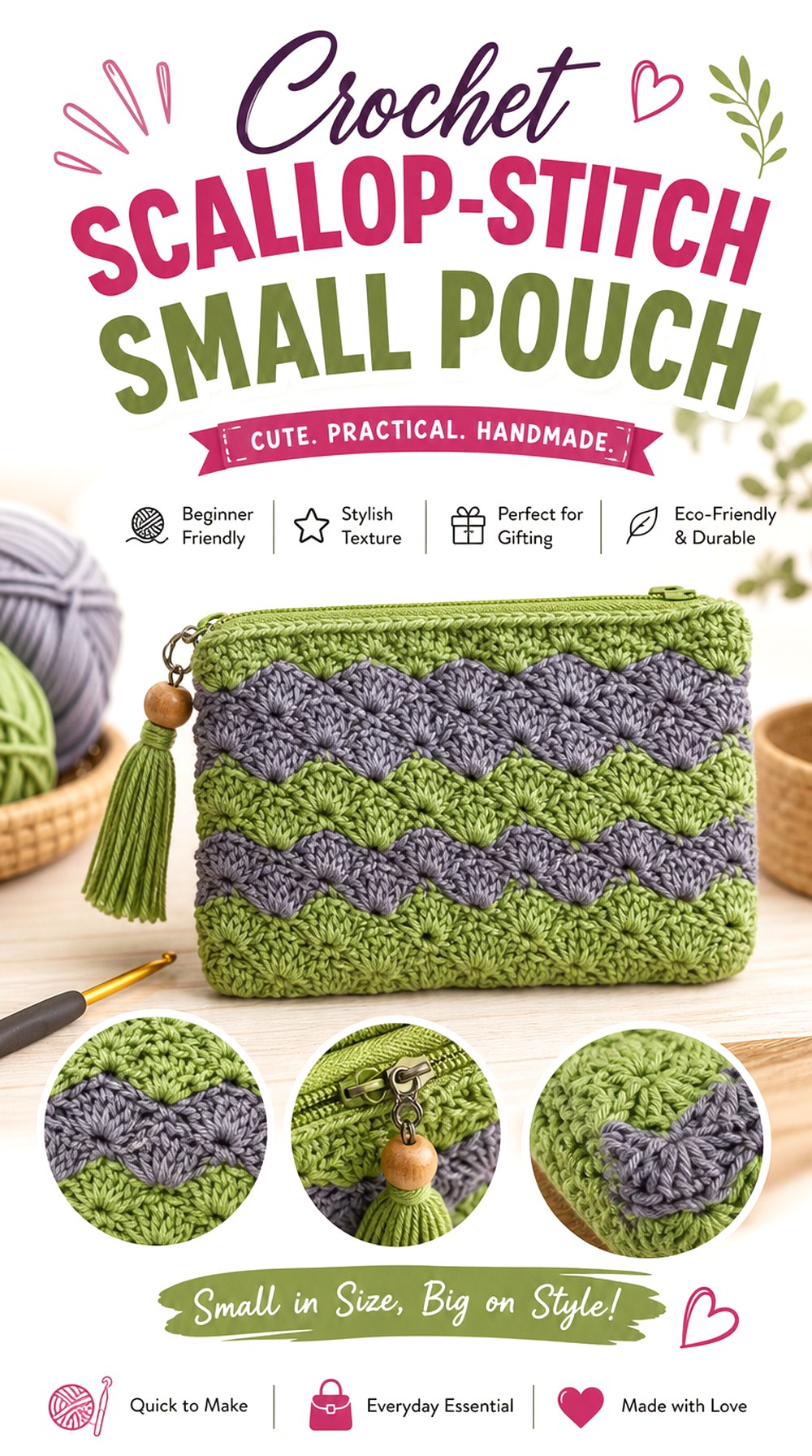
Instead of attaching a separate gathered frill, this pouch builds the decorative effect into a repeating scallop-stitch surface. That makes the texture feel integrated with the bag rather than layered over it. The small format also turns the project into a practical organizer or clutch-like pouch rather than another full shoulder bag.
Choose this variation when you like repeated curved texture but want a flatter profile than deep ruffles provide. Because the patterning covers more of the surface, stitch definition matters. A highly fuzzy yarn could hide the scallop shapes that give the pouch its character.
Scallop Stitch Builds Texture Across the Pouch Surface
The visual interest here comes from repetition across the fabric rather than one large edge treatment. That means yarn with clear stitch definition can help the curves remain readable. If you want a softer fiber, make a swatch and check the pattern from normal viewing distance rather than examining it only close up.
Decide on Closure Needs Before Using It Inside a Larger Bag
A small pouch tossed into a tote may turn or shift throughout the day. If the tutorial’s opening does not provide the security you want for tiny items, decide whether an appropriate closure can be incorporated without flattening the scalloped edge. Make that decision before adding finishing details around the top.
Original Tutorial and Creator Credit
Creator: CrochicaNBF
Crochet Round Layered Ruffle Purse
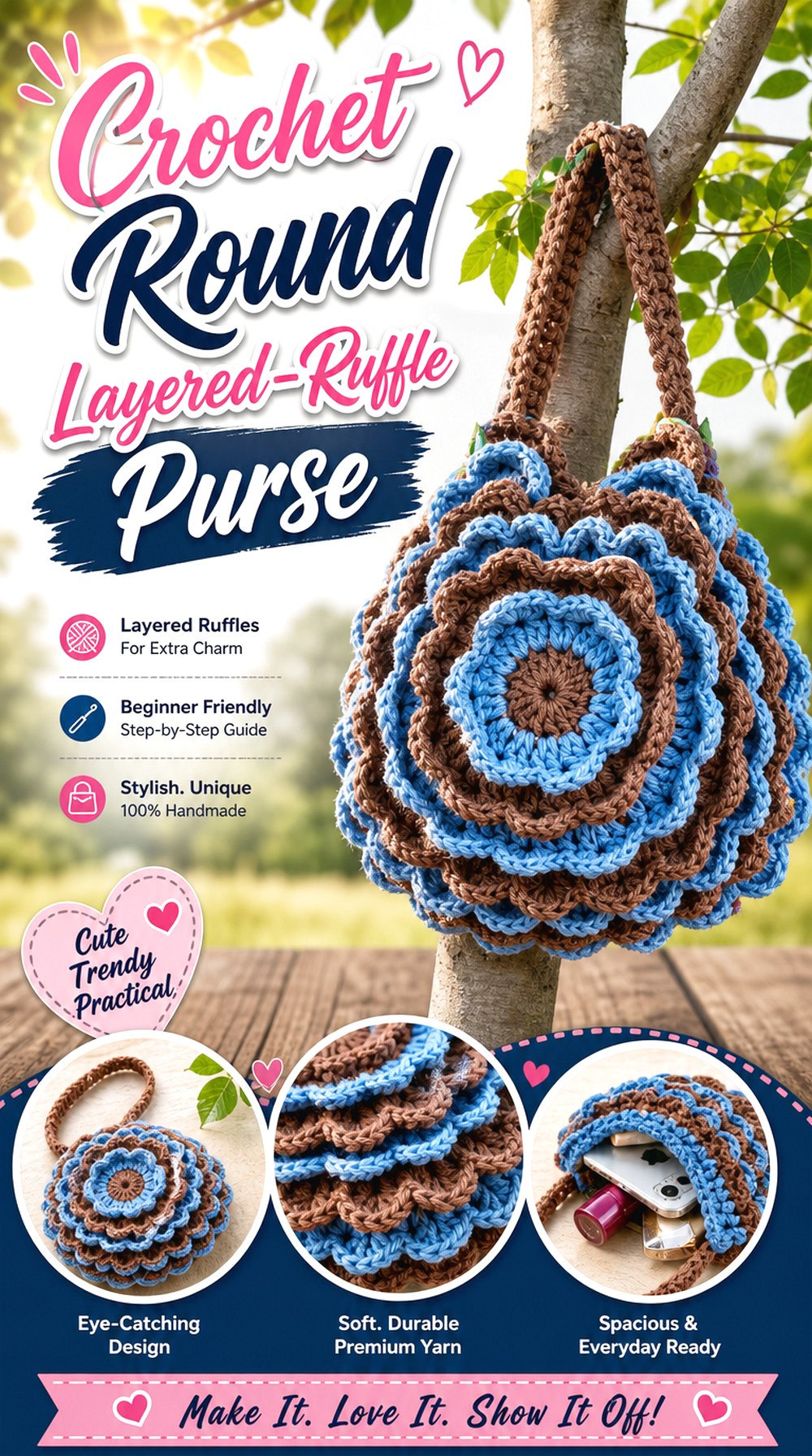
A round purse gives layered ruffles an entirely different framework. Rather than following long straight sides, the decoration works with a circular silhouette, producing a compact statement bag whose outline stays distinct from rectangular totes. The combination is particularly effective when you want the bag itself to look ornamental even before color or hardware is considered.
Circular designs need balance around the entire perimeter. If one area of the ruffle becomes denser or heavier, the asymmetry is easier to notice. The carrying attachment also deserves clear space so it does not pull awkwardly through the decorative layers.
Circular Shaping Separates This Purse From Flat Totes
A round outline changes both storage and appearance. Long rigid items may fit differently than they would in a rectangular pouch, while the symmetrical front provides a strong display area for texture. Choose the shape because it suits your intended use as well as because it looks distinctive.
Concentric Ruffles Can Add Thickness Quickly
Ruffles arranged around a compact circular form can stack visually and physically. If you use thicker yarn, pause after the first major decorative section and assess depth before continuing. The goal may be a dramatic purse, but additional layers should not make the bag awkward to hold or open.
Keep Strap Joins Out of the Ruffle’s Way
A strap connection hidden completely beneath dense trim may be difficult to inspect later. Where possible within the chosen construction, keep the attachment area identifiable and accessible. That lets you monitor stretching or looseness without having to pull apart decorative layers.
Original Tutorial and Creator Credit
Creator: Bag-O-Day Crochet
Crochet Chevron Ruffle Handbag
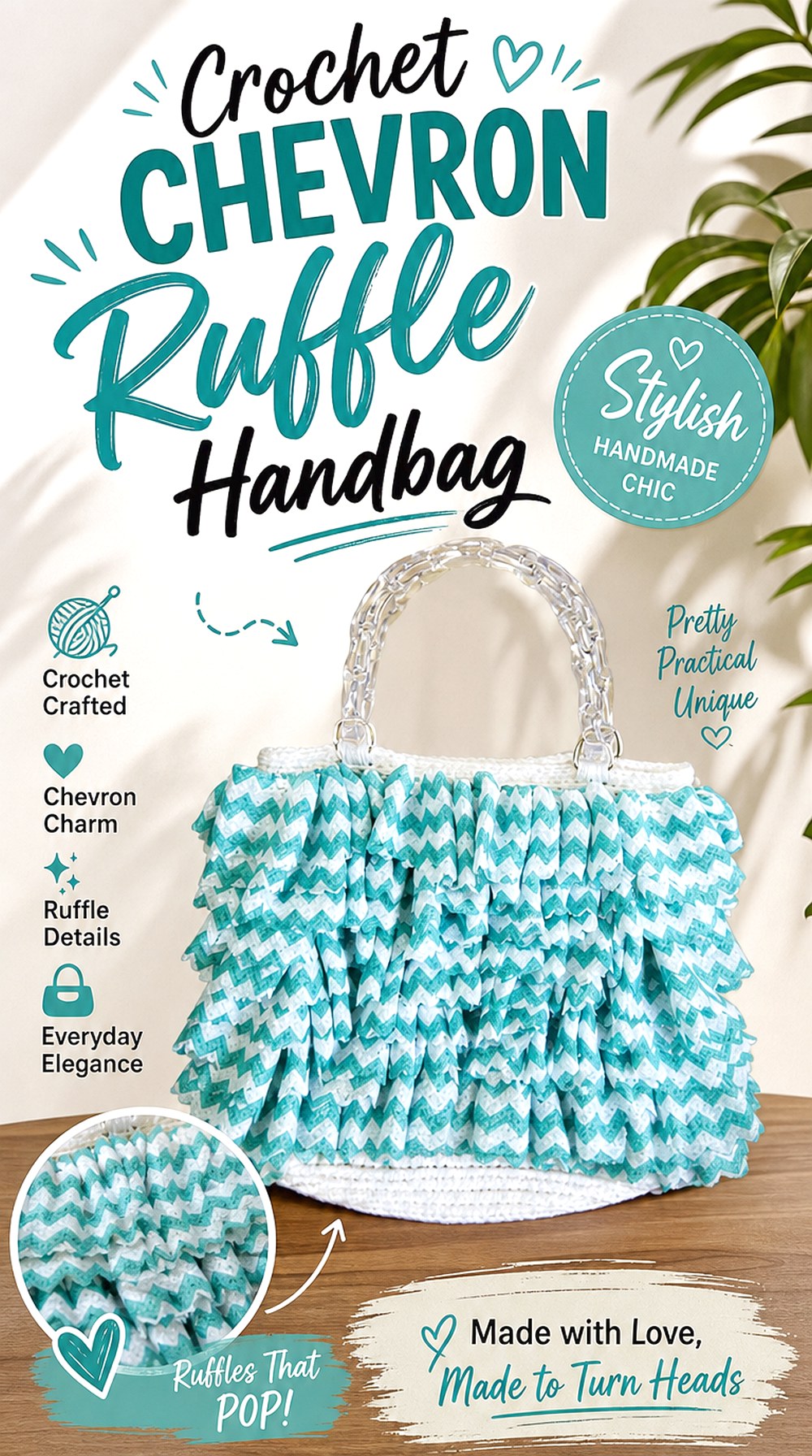
This handbag pairs two strong sources of movement: directional chevrons and ruffled texture. Even before the frills are considered, the zigzag pattern draws the eye across the bag, making this one of the more graphic options in the collection. It suits a maker who enjoys visible patterning and wants more than a plain body beneath the decorative trim.
Because both features are assertive, color planning becomes important. Too many high-contrast changes can obscure the chevron line or make the ruffles appear disconnected. Decide which element should dominate when the bag is viewed from several feet away.
Chevron Direction Adds Movement Before the Trim Does
Zigzags naturally guide the eye across the surface, while ruffles project outward. When combining them, check that the decorative layers do not cover the directional pattern you worked to create. If needed, keep stronger contrast in the chevron section and let the ruffle use a related rather than competing color.
Ribbon or Fabric Yarn Changes the Finished Bulk
The source design uses a distinctive thicker material presentation, which can make the crochet feel different from a soft standard yarn purse. If you substitute another yarn family, expect changes in edge definition, thickness, and movement. Sample enough fabric to see an actual chevron rather than judging from a few stitches.
Contrast Should Preserve the Chevron Line
With multicolor work, step back and look for the zigzag first. If the eye sees only disconnected color blocks, the directional feature is being lost. A more limited palette or repeated color rhythm can help the pattern remain legible while the ruffle provides the three-dimensional accent.
Original Tutorial and Creator Credit
Creator: Tanis Galik
Crochet Frou Frou Frill Bag
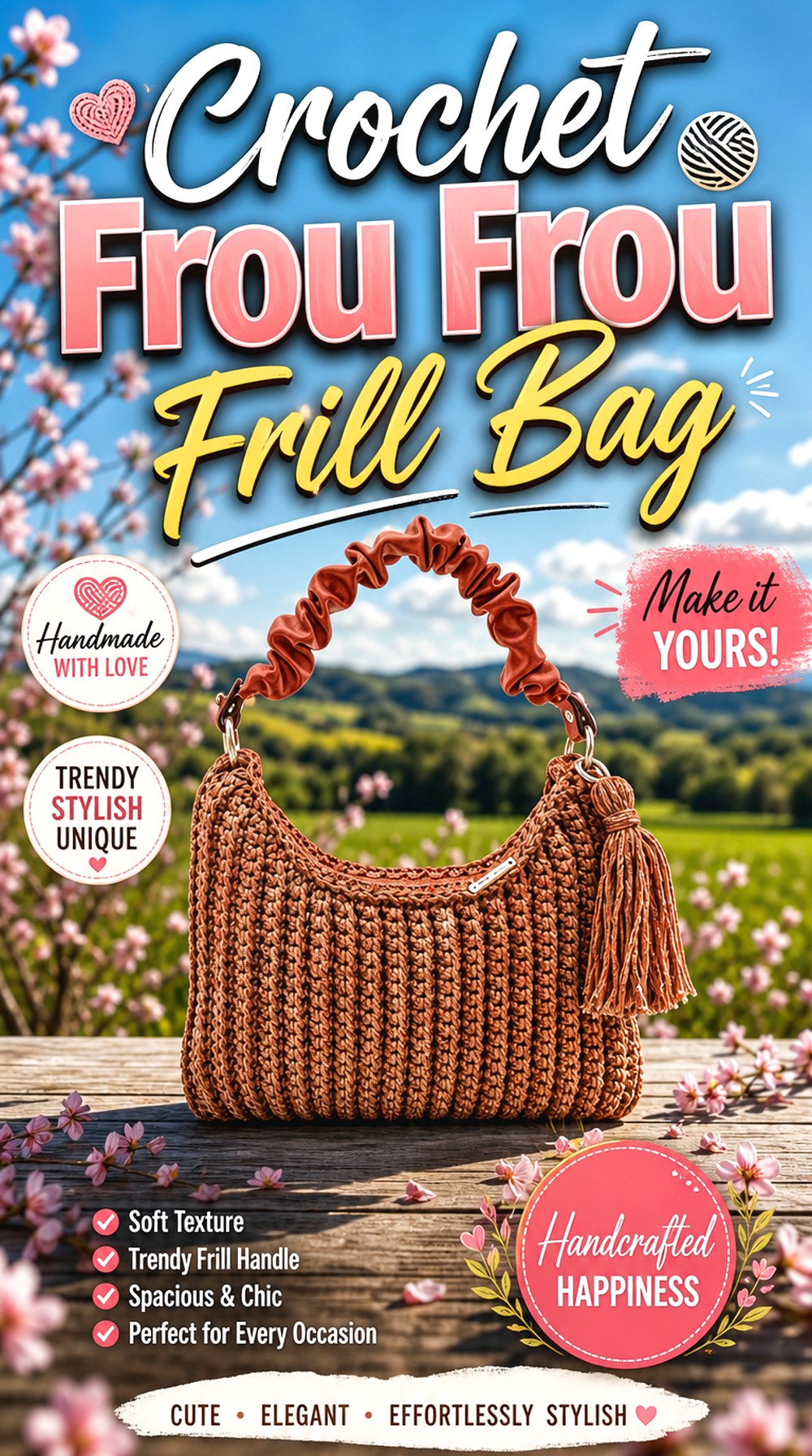
The “frou frou” look is about abundant decorative texture, so this bag makes the frill itself the personality of the design. Compared with the cleaner scallop-edge totes, it has a more playful and fashion-forward feel. It works well if your goal is a bag that functions as an outfit accessory rather than disappearing into a neutral wardrobe.
The important planning choice is maintaining a recognizable silhouette beneath all that texture. More frill is not automatically more effective. The bag still needs an obvious top, carrying point, and usable interior, especially if you adapt the proportions or use a thicker yarn.
Frou Frou Texture Needs a Readable Bag Outline
When several folds or frills occupy the same small surface, the basic bag shape can disappear. View your work from a distance after the decorative section begins. You should still be able to identify the top and sides quickly. If not, consider whether your yarn is creating more volume than the source material.
Match Handle Scale to the Frill Volume
A delicate handle can look intentional on a soft, compact frill bag, while a very thick handle may compete with the surface texture. Conversely, an extremely fine strap may look visually disconnected from a substantial body. Hold possible handle materials against the finished bag before committing to the final carrying treatment.
Original Tutorial and Creator Credit
Creator: handiBRAND
Crochet Cancan Frill Everyday Bag
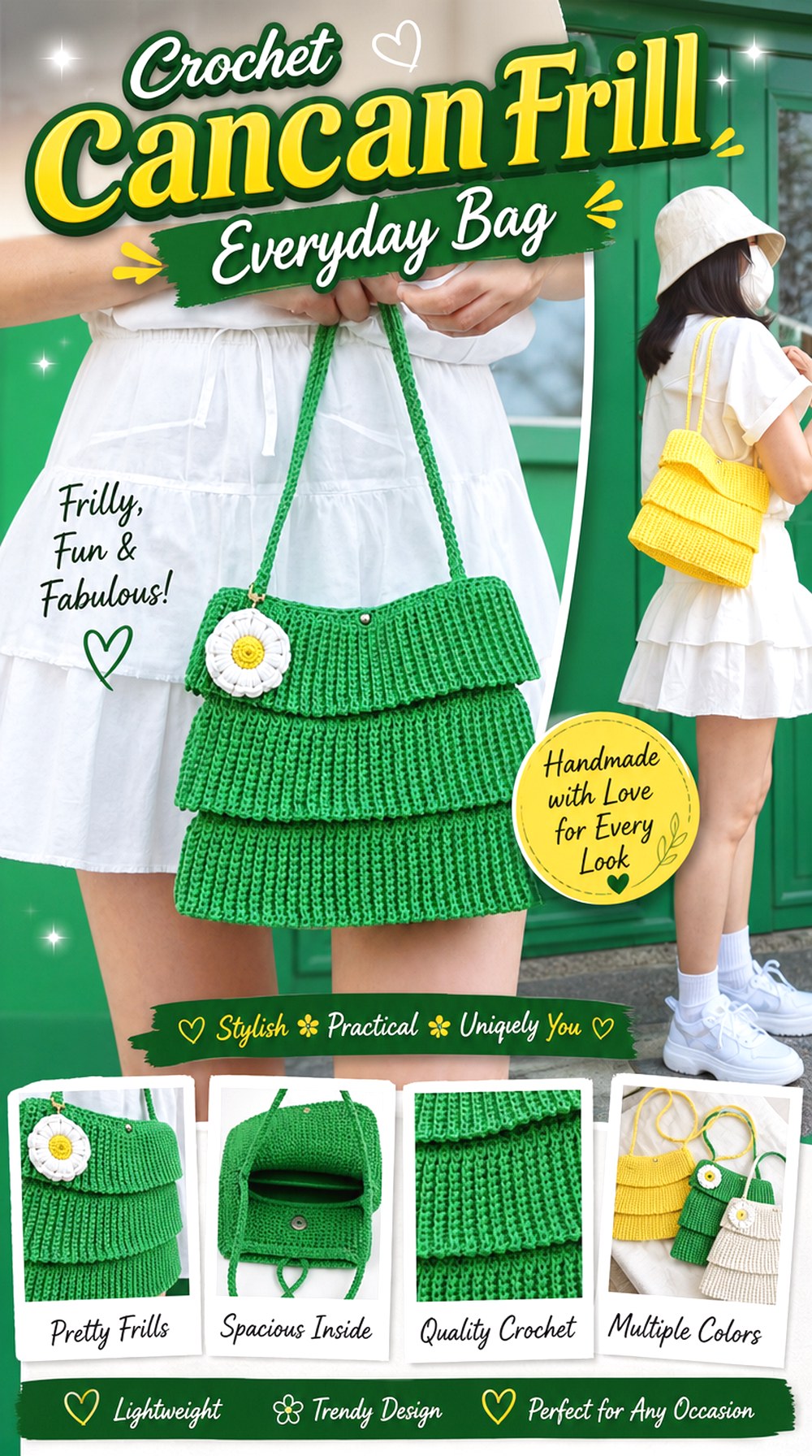
Cancan-style frills create the impression of stacked skirt layers around a bag, making this one of the most theatrical tiered options. The repeated horizontal volume produces a strong silhouette even when the color palette remains simple. It is a useful choice if the full ruffle look—not merely a decorative border—is what drew you to this category.
Repeated tiers also make consistency especially important. Each layer becomes a reference for the next, so differences in fullness or tension are more visible than they would be on a single-edge frill. Check how all tiers hang together rather than perfecting each one in isolation.
Cancan Layers Create a Skirt-Like Silhouette
The tiering adds width outward from the main body, so consider how you want the bag to sit beside you when carried. A very full version may be better as a statement accessory than a bag worn tightly under the arm. Let intended carry position influence how much additional volume you introduce.
Keep the Top Edge Reachable Beneath the Volume
The uppermost tier should frame the bag rather than hide where your hand needs to enter. Hold the bag naturally and practice reaching inside before treating the frills as finished. This simple check can reveal whether extra volume near the opening would be decorative or inconvenient.
Small Tension Changes Show Across Parallel Tiers
Several adjacent layers create strong horizontal repetition. If one ruffle is significantly tighter or looser, the difference becomes obvious. Compare the tiers while the bag is hanging, and address unwanted variation before adding final embellishments that could make corrections harder.
Original Tutorial and Creator Credit
Creator: 육퇴후공방 (knit JJ)
Crochet Pineapple Frill Round Handbag
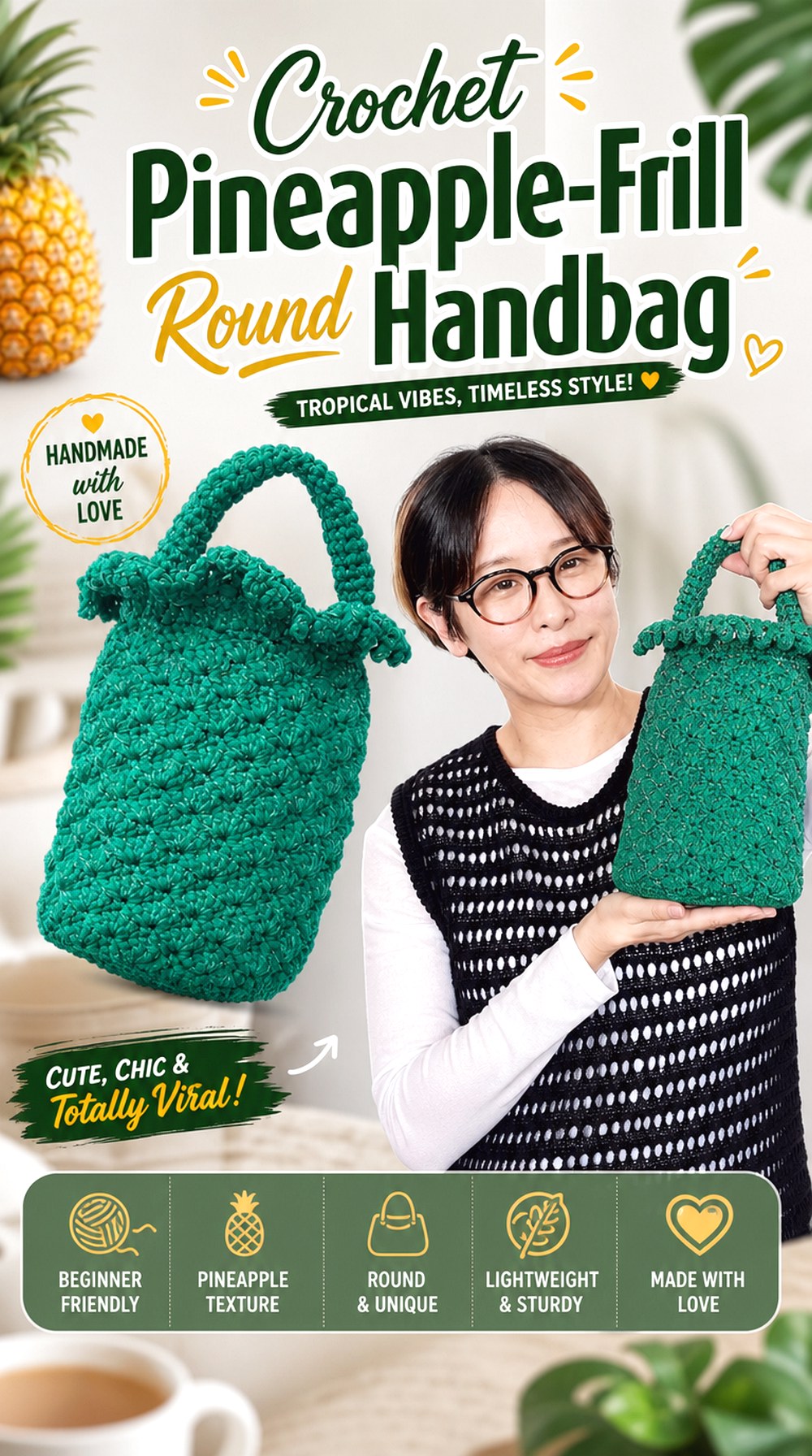
This round handbag combines a curved silhouette with pineapple-like frill texture, giving the surface a directional, dimensional appearance rather than simple horizontal bands. The shape provides enough depth for the texture to expand, making it visually different from both the round layered purse and straight-sided frill totes.
It is a good choice when you want the texture to suggest a motif or organic form rather than merely read as trim. Because the surface is busy, the handle and opening should remain easy to identify. Extra embellishments are unlikely to be necessary unless they serve a clear functional purpose.
Pineapple Frills Make the Surface Directional
Unlike a uniform gathered edge, pineapple-inspired texture can lead the eye through repeated shaped sections. If you introduce multiple colors, consider whether they clarify that direction or break it apart. A restrained palette can let the sculptural structure remain the main attraction.
Rounded Depth Gives the Texture Room to Expand
Dimensional frills need physical space, and a rounded bag offers it. If you flatten or narrow the body significantly during adaptation, the same texture may appear crowded. Evaluate the relationship between bag depth and surface projection before deciding that a slimmer silhouette will automatically look neater.
Check Handle Placement Against the Widest Point
On a rounded bag, the widest section may sit below the handle attachments. Hold the unfinished piece up and make sure the carrying setup lets the body hang naturally instead of folding inward. This matters especially when the textured surface makes the sides more substantial.
Original Tutorial and Creator Credit
Creator: キーティキーティキーティ
Crochet Refined Ruffle Tote Bag
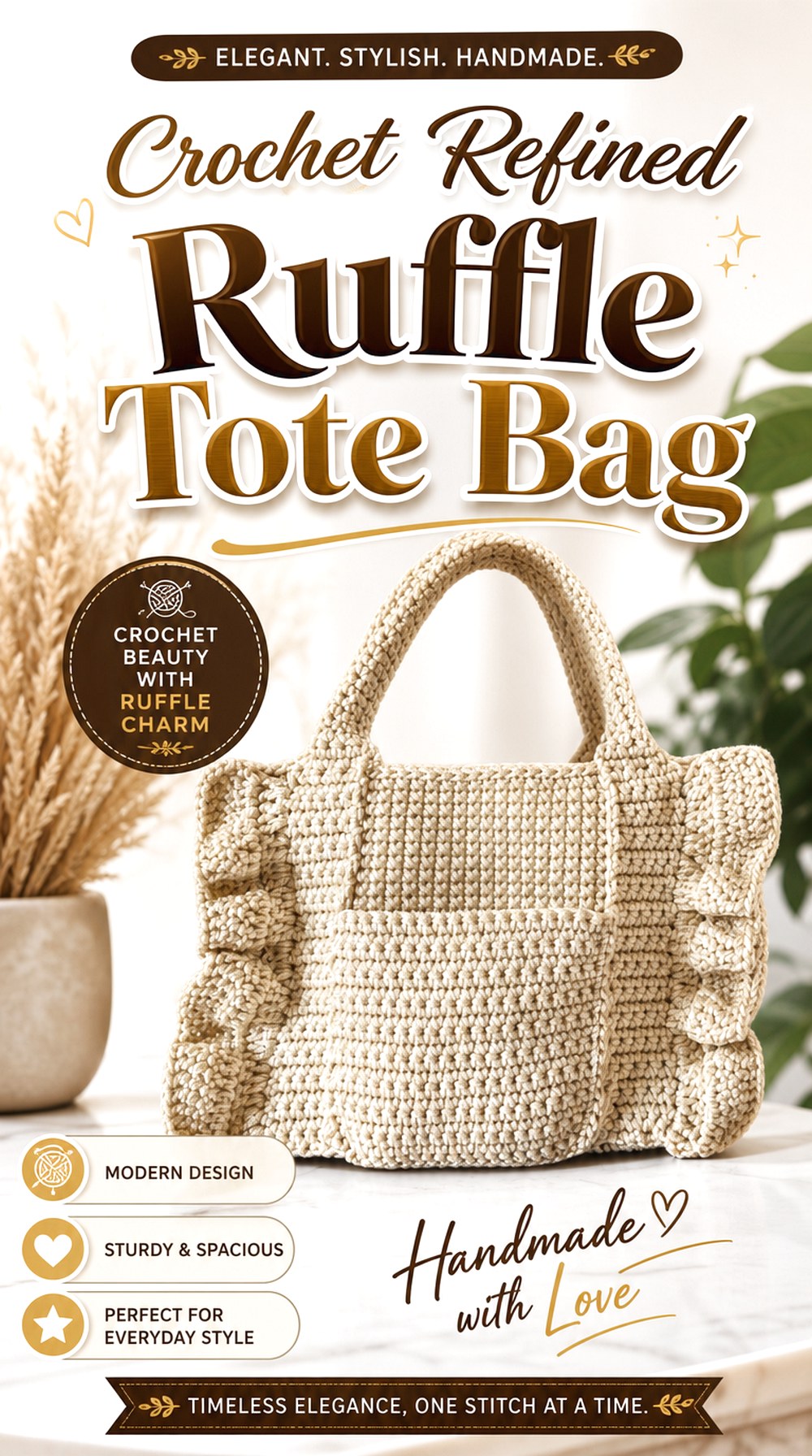
This tote takes a more restrained approach to ruffles, making it a useful option for readers who like feminine texture but do not want the full cancan or frou-frou effect. The tote proportions remain easy to read, while the trim adds softness rather than completely transforming the shape.
That balance makes finishing especially important. With fewer exaggerated elements to distract the eye, the transition from the main bag fabric into the ruffle becomes more noticeable. If you alter yarn or color, keep the edges crisp enough that the design still feels deliberate rather than simply unfinished or overly loose.
A Restrained Ruffle Can Look More Tailored
Ruffles do not have to be extremely full to create a noticeable change in silhouette. A controlled decorative edge may fit more easily into an everyday wardrobe and is less likely to dominate the carrying shape. If subtlety is your goal, focus on even repetition rather than adding more volume.
Tote Proportions Decide How Prominent the Trim Feels
The same ruffle depth can look delicate on a large tote and dramatic on a small one. If you resize the body, reassess the trim visually rather than enlarging every detail automatically. Proportional adaptation often looks more cohesive than mechanically scaling each part by the same amount.
Crisp Finishing Matters Where Ruffle Meets Body
The attachment area is a natural focal line. Loose ends, uneven tension, or a wavy foundation can make an otherwise polished tote feel less intentional. Inspect that transition from both the outside and opening side before completing the final finishing work.
Original Tutorial and Creator Credit
Creator: CROSSOVER 大人のかぎ針編み部
Crochet Adjustable Strap Frill Bag
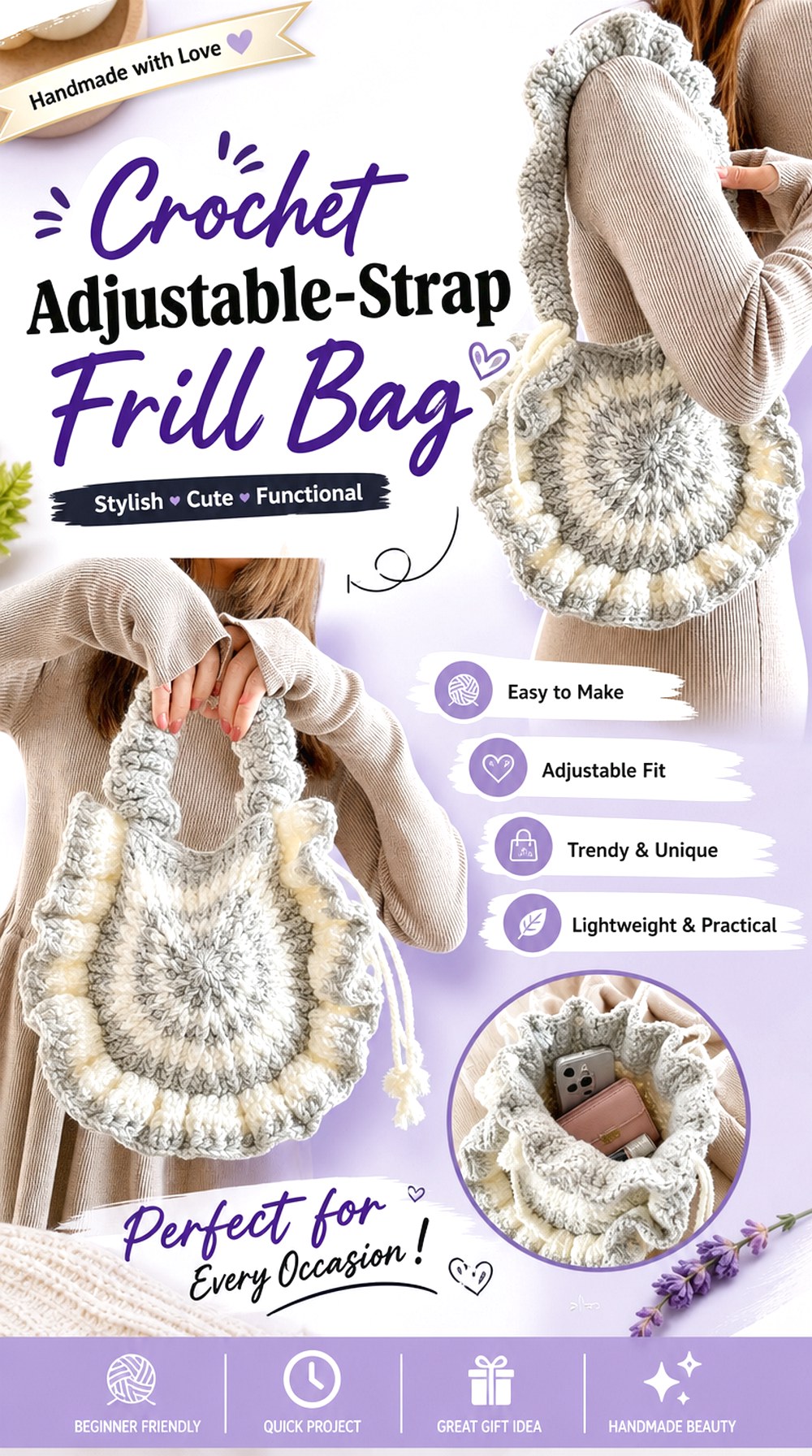
An adjustable handle changes this frill bag from a fixed-position accessory into a more flexible carrying option. Depending on the available range and hardware, changing the strap can alter where the bag sits against clothing and how much the ruffled surface is compressed by the body. That functional difference makes it worth considering separately from simple fixed-handle shoulder bags.
This design is especially relevant if you switch between different clothing layers or prefer more than one carrying position. The strap should be planned as part of the bag rather than treated as an accessory added after the decorative body is finished.
Adjustable Length Changes How the Frill Sits Against Clothing
A bag worn high under the arm may flatten its ruffle more than the same bag hanging lower. Test several positions before choosing your favorite. If preserving maximum frill volume matters, you may prefer a carry length that leaves the textured body more room to hang freely.
Set the Longest Carry Position Before Finalizing the Strap
When customizing an adjustable setup, think first about the longest position you realistically need. A strap that cannot reach that point cannot be corrected merely through buckle adjustment. At the same time, excess length needs somewhere to sit neatly, so avoid adding surplus without considering how it will look when shortened.
Keep the Opening Reachable at Both Strap Lengths
Changing carry height can affect how easily you reach the top. Test the bag in each intended position and make sure the ruffle, strap, and opening do not overlap awkwardly. A versatile strap is only useful when the bag remains practical at the positions you actually use.
Original Tutorial and Creator Credit
Creator: .ゆくれあ.
Crochet Gathered Ruffle Handbag
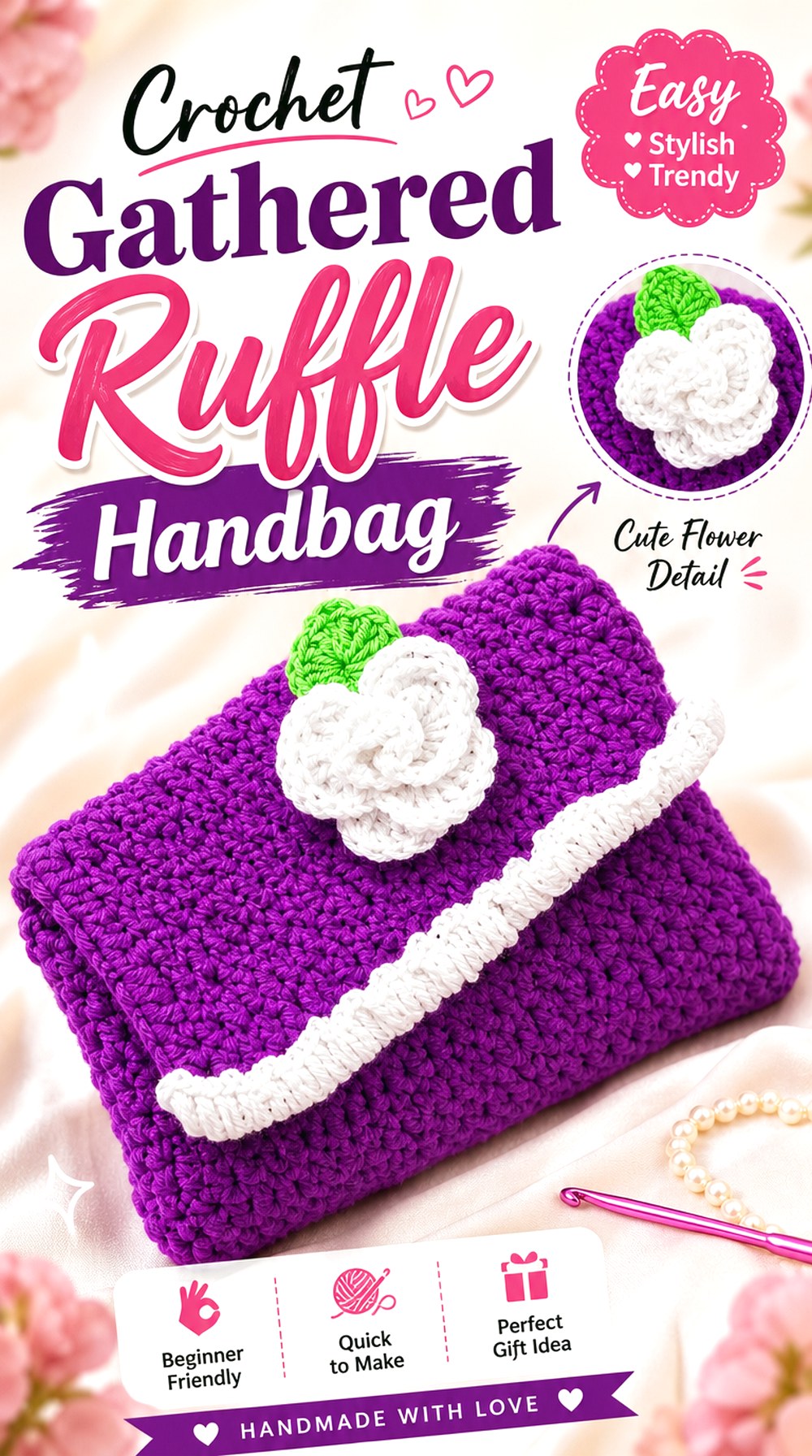
This handbag emphasizes gathered, pleated-looking volume, giving the front a fuller surface than a simple scallop border. The construction is a useful reference if you want a pronounced ruffle effect but prefer the recognizable proportions of a conventional handbag instead of a round or bucket form.
A concentrated gathered section naturally draws attention, so the rest of the bag does not need equal visual complexity. This is a design where a controlled handle area and straightforward finishing can help the texture look intentional. When changing yarn, judge how easily it gathers; stiff and very soft fibers can produce noticeably different silhouettes.
Gathered Texture Creates a Fuller Front
A gathered ruffle projects outward and casts more shadow than a flat decorative border. If you increase yarn thickness, the effect may become much stronger than expected. Check the bag in profile as well as from the front, because side depth reveals whether the fullness feels balanced with the underlying body.
A Dense Ruffle Needs a Calm Handle Zone
Keeping the carrying area visually simpler gives the hand a clear place to grip and prevents every part of the design from competing. If you add decorative handles, charms, or bows, do so only after viewing the completed ruffle. The bag may already have all the visual emphasis it needs.
Original Tutorial and Creator Credit
Creator: Creative Annu
Crochet Ruffled Clutch Purse
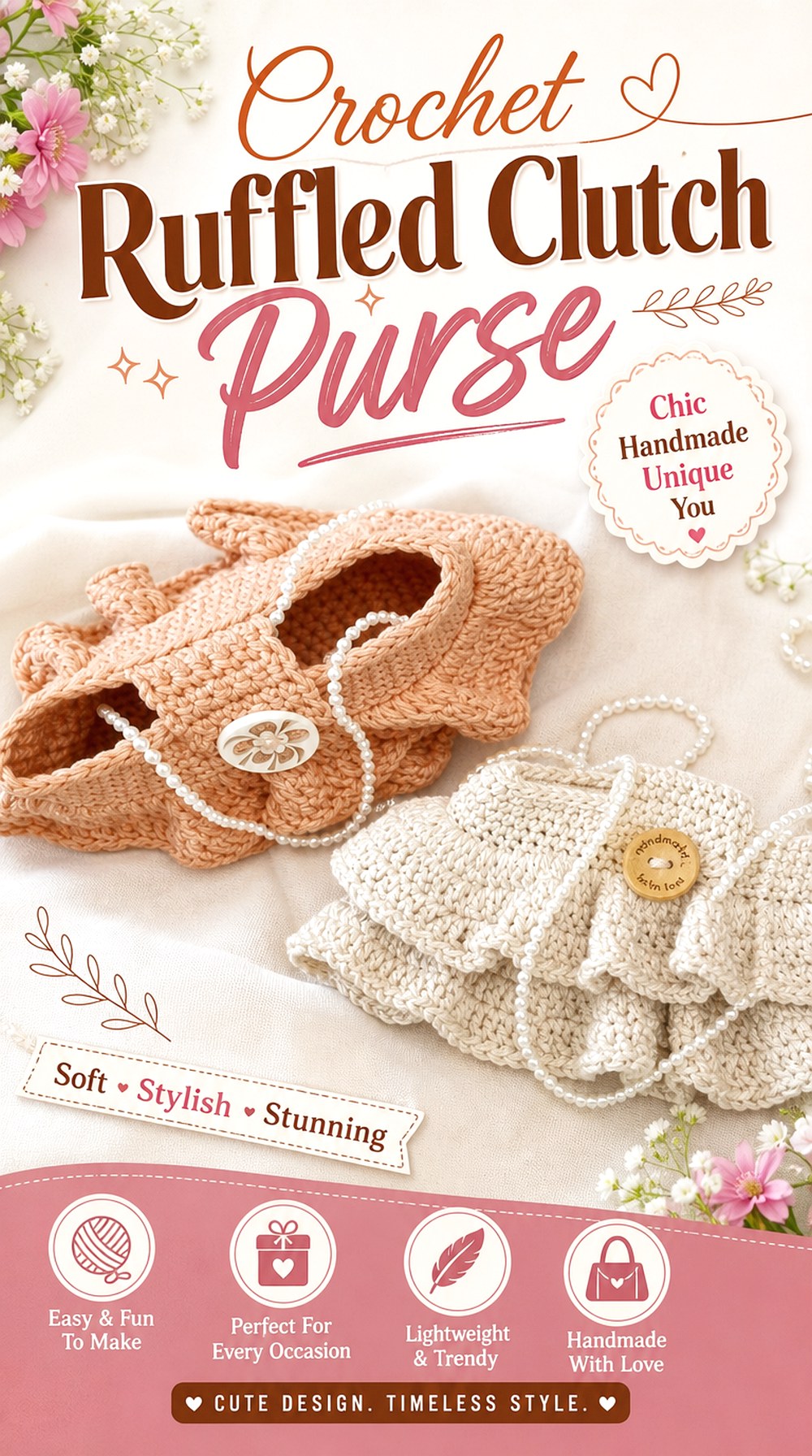
Removing a long strap changes the entire balance of a ruffle bag. This clutch-style purse keeps the textured decoration in hand, making it suitable for occasions when you only need a compact accessory and do not want a shoulder or crossbody strap interrupting the silhouette. It is one of the clearest alternatives in the collection for someone who likes ruffles but dislikes crochet-strap stretch.
A clutch still needs practical grip and closure placement. Large frills may look attractive in photographs but become inconvenient if they sit exactly where the hand naturally holds the purse. Treat the hand position as part of the design.
Clutch Use Removes One Major Stretch Problem
Without a long crocheted shoulder strap carrying the load, you do not have the same concern about gradual strap lengthening. Instead, focus on whether the body keeps its intended shape when held. A soft clutch may fold pleasantly, while a more structured version needs enough support to avoid collapsing around the contents.
Keep the Ruffled Edge Clear of the Hand Grip
Hold the unfinished purse in the position that feels natural. If your fingers crush the main decorative edge every time, consider whether the trim placement or intended carrying orientation needs adjustment. A ruffle that can move freely will retain its visual effect better during actual use.
Place Any Closure Before Adding Extra Trim
Closure hardware or a crocheted fastening needs unobstructed fabric around it. Decide where that functional element belongs before extending the ruffle into the same area. This helps avoid a finished purse that looks attractive but requires digging through trim every time it is opened.
Original Tutorial and Creator Credit
Creator: Marie-Thérèse_scrap_crochet
Crochet Ruffle Trim Project Tote
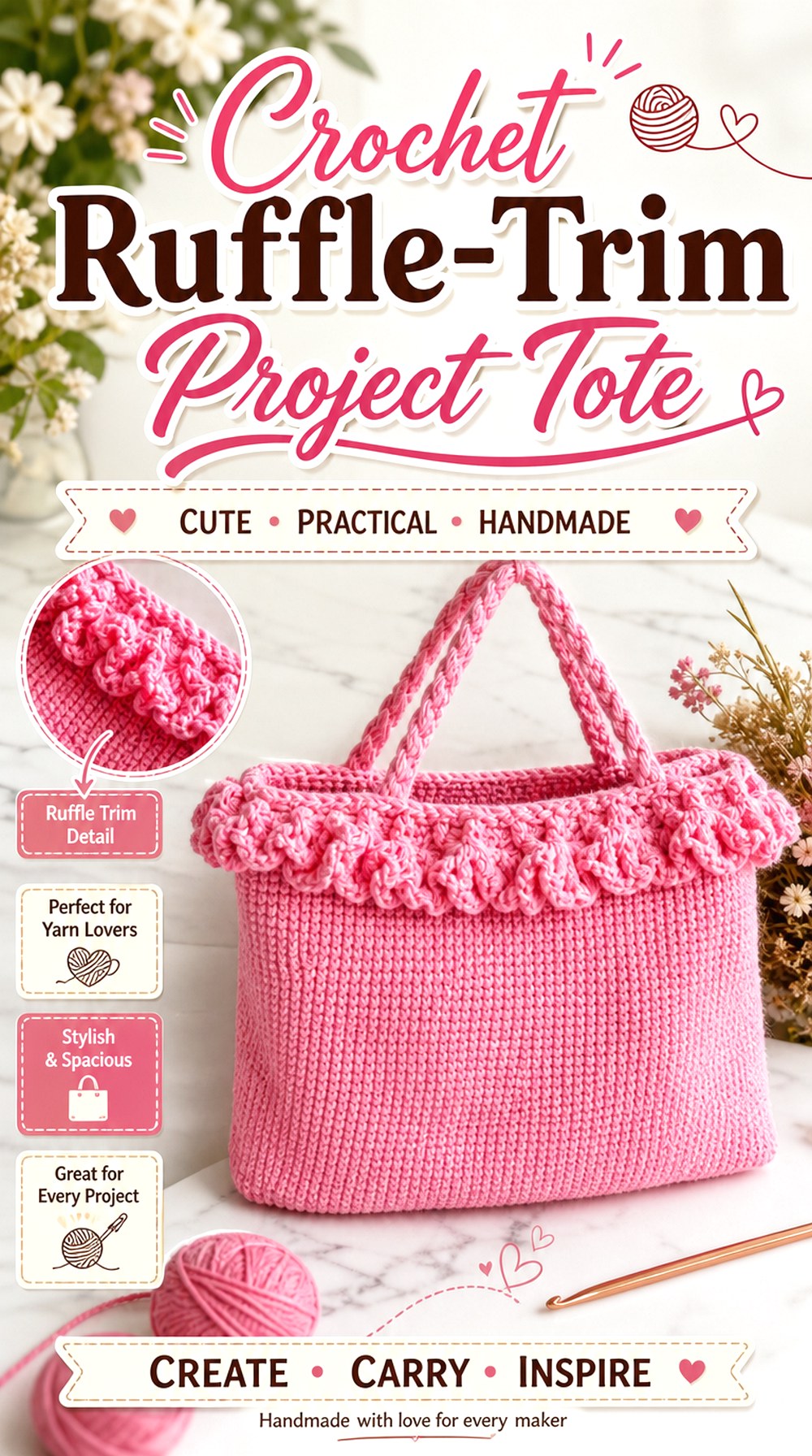
This tote places ruffle trim on a practical bag intended to hold small yarn projects, giving the decorative detail a clear functional setting. Unlike the tiny coquette bags or formal-looking clutch, it is designed around carrying craft materials and has two short straps. That makes it a useful final option for anyone who wants ruffles on something meant to move between a chair, desk, or crafting space.
For project-bag use, the opening deserves priority. Working yarn may travel in and out repeatedly, so decorative trim should not create a snagging obstacle. The best adaptation is one that keeps the ruffle visible while preserving uncomplicated access.
Project-Bag Use Rewards a Wide Unfussy Opening
A working project may include yarn, hooks, notions, and partially completed fabric. An opening that looks elegant but is difficult to reach through quickly can become annoying. Before adding an optional closure, consider whether you actually want the bag sealed or whether open access better matches how it will be used.
Trim Should Not Catch the Working Yarn
If yarn will feed directly from the bag, run a strand across the finished edge and see whether it moves smoothly. Highly textured picots, loose loops, or rough embellishments can become snag points. You do not have to remove the ruffle; simply make sure its position does not interfere with the normal path of the working yarn.
Two Short Handles Keep the Bag Easy to Move
Short paired handles suit the job of lifting a project bag from one workspace to another without introducing a long strap that can tangle with yarn. If you change their length, think about storage too. Very long handles may fall into the bag and mix with the project when it is set down.
How to Choose the Right Crochet Ruffle Bag Style
For maximum texture, start with the cancan, round layered, oval-base tiered, or frou frou bags; their ruffles define most of the silhouette. If you prefer a cleaner everyday outline, the scallop tote, refined tote, flap sling bag, or ruffle-trim project tote keeps decoration more controlled.
For small essentials, the phone carrier, button-flap pouch, drawstring pouch, mini handbag, and clutch avoid the bulk of a full tote. The raffia bucket bag is the most natural choice when a firmer, sculptural appearance appeals to you, while the mesh tote and sheer frill handbag move in the opposite direction with lighter-looking fabric. If closure matters most, compare the drawstring, flap, button, and open-top options before choosing by ruffle style alone.
Conclusion
The most useful way to choose among these 30 crochet ruffle bag ideas is to start with function, then decide how much texture you want. A small pouch or phone bag keeps the ruffle decorative and contained. Bucket and shoulder bags provide more room for dimensional tiers, while scalloped totes offer movement with less bulk. Raffia creates a firmer look, mesh keeps the body visually light, and novelty ruffle yarn puts the material itself at center stage.
Once you have chosen the shape, check the opening, carrying method, and material behavior before making major adaptations. Use the original tutorials linked above for each creator’s exact construction details rather than assuming one ruffle-bag method will transfer directly to another.
Frequently Asked Questions
What yarn qualities help a crochet ruffle bag keep its shape?
Look at both the bag body and the ruffle. A firmer yarn can give the body clearer structure and make decorative edges stand outward, while a softer yarn generally creates more drape. Neither is automatically better. Choose according to the silhouette you want. If substituting yarn, make a sample large enough to assess fabric behavior; the label alone cannot tell you exactly how a crocheted bag will hang.
Should a crochet ruffle bag be lined?
A lining can be useful when the crochet fabric is open, when small objects need better containment, or when you want to reduce how much the contents distort the exterior. It is not mandatory for every design. A sheer mesh tote, decorative clutch, and dense project bag have different needs. Check whether the selected tutorial includes lining before assuming it is part of the original construction.
Why can crochet bag straps stretch?
Crocheted fabric can lengthen under sustained weight, and long straps make that change particularly noticeable. Fiber type, stitch structure, strap width, length, and what you carry all influence the result. Test the bag with reasonable intended contents before deciding the carry position is correct. If stretch would be a problem, investigate an appropriate reinforcement or a compatible non-crochet strap rather than relying on appearance alone.
Are scallop-edged bags the same as fully ruffled bags?
Not exactly. Scallops usually create repeated curves along an edge or across a textured fabric, while a gathered ruffle projects farther from its attachment line and creates more fullness. Both can produce a frilly, romantic look, which is why this collection includes a few scallop variations. Choose scallops when you want decorative movement with a flatter profile and full ruffles when dimensional volume is the main goal.
Where should I put ruffles if I want less bulk?
Keep them to a flap, top edge, lower hem, or one controlled band rather than covering the entire body in tiers. This preserves more of the bag’s basic silhouette and can keep the opening and strap attachments clearer. A scalloped border is another lower-volume alternative. Before adding more trim, hold the bag in its intended carrying position; that makes it easier to judge whether additional fullness actually improves the design.
Can I resize a crochet ruffle bag tutorial for a different purpose?
Sometimes, but avoid changing only the body dimensions and assuming every other feature will remain proportional. A larger body may need different-looking handles, ruffle depth, closure placement, or structural support. For a phone bag, measure the actual device; for a tote, consider the intended contents and opening. Treat any resizing as an adaptation exercise and use the original creator’s tutorial for the underlying construction rather than inventing unsupported stitch counts.