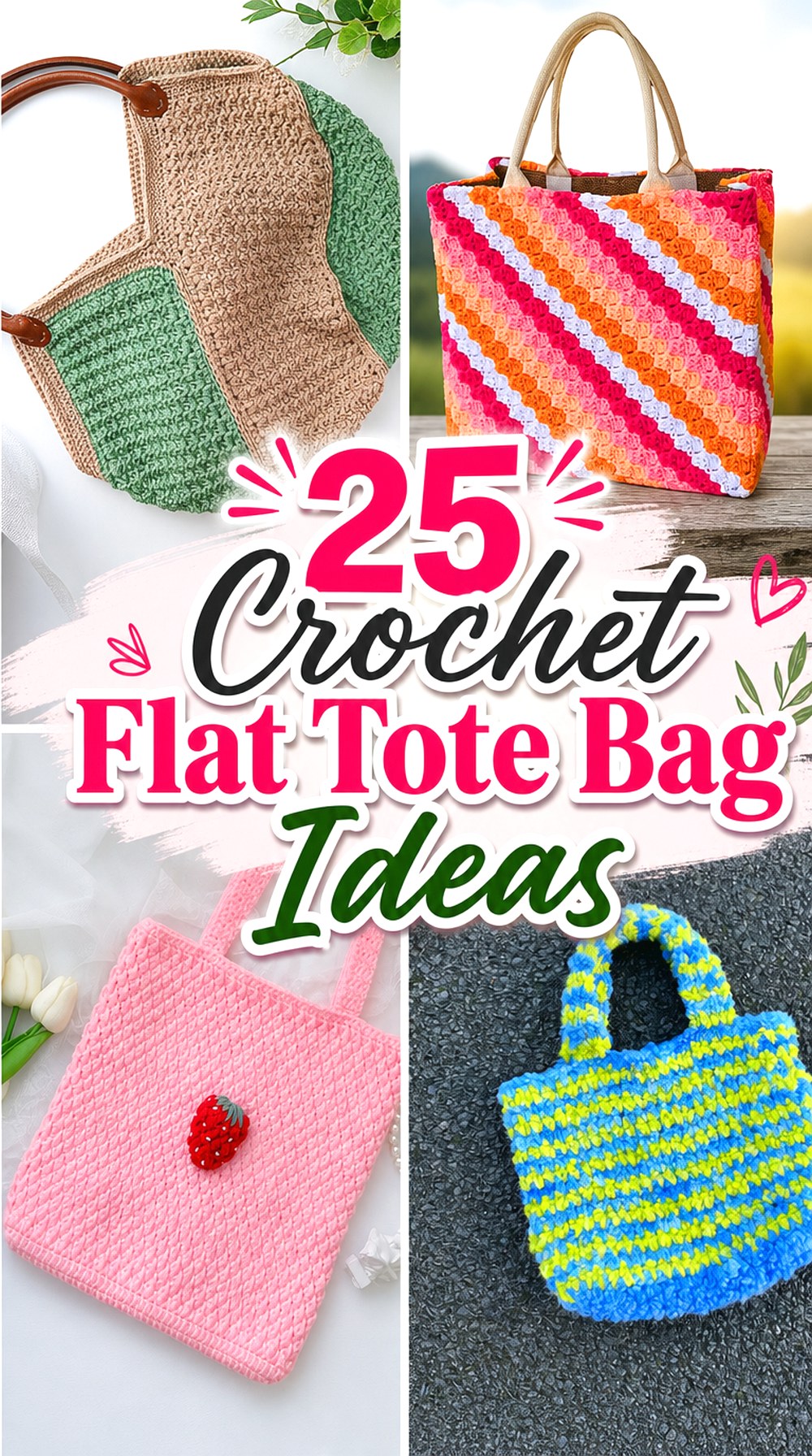

A flat crochet tote can be much more than two plain rectangles with handles. The shape works with dense everyday fabric, open mesh, granny-square panels, tapestry colorwork, chunky yarn, cord, stripes, and decorative motifs. Some of the totes below lie almost completely flat when empty, while others add a shallow base or a little extra depth without becoming bulky.
This collection focuses on differences that affect how the finished bag actually works: fabric density, stretch, handle construction, motif placement, lining, structure, and opening style. That makes it easier to choose a tutorial for the look and function you want rather than choosing by color alone. Each project points back to an original creator tutorial for the exact construction details.
Quick List
- Crochet Checkerboard Flat Tote
- Crochet Close-Mesh Market Tote
- Crochet Modern Stripe Shoulder Tote
- Crochet Flower Granny Square Panel Tote
- Crochet Strawberry Accent Tote
- Crochet Two-Square Lined Tote
- Crochet Chunky Compact Everyday Tote
- Crochet Classic Flat Everyday Tote
- Crochet Daisy Smile Square Tote
- Crochet Rope-Texture Slim Tote
- Crochet T-Shirt Yarn Flat Tote
- Crochet Shell-Texture Market Tote
- Crochet Oversize Two-Stitch Tote
- Crochet Minimal Everyday Tote
- Crochet Patchwork Flat Tote
- Crochet Tunisian Color-Block Tote
- Crochet C2C Covered Canvas Tote
- Crochet Structured Cord Tote
- Crochet Sea-Shell Puff Market Tote
- Crochet Finger-Crochet Market Tote
- Crochet Filet Sunflower Flat Tote
- Crochet Dense Single-Crochet Tote
- Crochet Two-Tone Nylon Flat Tote
- Crochet Tapestry Moon Mini Tote
- Crochet Double-Strand Hobo Tote
What Makes a Flat Crochet Tote Hold Its Shape
A flat silhouette does not automatically mean a firm bag. Dense crochet generally keeps small items from poking through and can create a cleaner outline, but a soft or elastic yarn may still allow the fabric to lengthen when the bag is loaded. Mesh behaves differently: the open fabric is useful when expansion is desirable, yet the finished tote may look much narrower when empty than when filled.
Panel construction gives you another variable. Two similarly sized panels can produce a crisp front and back, especially when they are blocked before joining. A one-piece tote eliminates some seams but transfers more of the load directly through the body. For any design, look closely at the transition between the bag and its handles. That area often matters more to long-term shape than a decorative stitch in the center of the panel.
Match Yarn and Fabric Density to the Bag’s Job
There is no single ideal tote-bag yarn. Cotton, rope, cord, T-shirt yarn, wool blends, acrylic, and other fibers create noticeably different fabric even when the finished outline is similar. Less-elastic materials can help a tote retain a defined silhouette, while softer yarn can be useful when a collapsible, comfortable shoulder bag is the goal.
Stitch density matters just as much. A close fabric offers more visual coverage and may reduce the need for lining when carrying larger objects, although small items can still work their way through gaps. Openwork mesh intentionally sacrifices coverage for expansion and a lighter look. If you substitute yarn, compare your finished fabric with the tutorial rather than assuming the same hook or stitch arrangement will behave identically. A stiffer, thicker substitute can also change handle comfort and make seams noticeably bulkier.
Check the Panels, Opening, and Handles Before Committing
For motif and panel totes, blocked dimensions are more useful than the dimensions of freshly crocheted pieces. As a planning example, four blocked motifs measuring 4.5 inches across would span about 18 inches before joins, edging, seams, or any added side construction are considered. That simple check can prevent a motif tote from becoming much wider than expected.
Handle placement deserves the same attention. Closely spaced handles can pull the opening inward, while wider placement leaves more of the top edge unsupported. Long straps also experience more leverage and may stretch more noticeably than short hand-carry handles. If you know you want a lining, pocket, zipper, or magnetic closure, inspect the tutorial’s top edge early. A clean, stable opening is usually easier to adapt than a highly elastic edge that changes shape when the bag is filled.
Crochet Checkerboard Flat Tote

Large checkerboard blocks turn a straightforward tote silhouette into graphic colorwork without relying on appliqués or sewn-on decorations. MitchesGetStitches demonstrates a bag with a defined base, a checkerboard body, and handles that continue the clean overall shape. The visual interest comes from repeated color changes, so the tote works especially well when you want the fabric itself to be the statement rather than adding hardware or dimensional motifs.
Compared with a striped tote, this design creates stronger vertical and horizontal divisions. That makes consistent color tension important because uneven blocks are more noticeable in a geometric grid.
Keep the Checks Square Before Worrying About Bag Size
Checkerboard colorwork is unforgiving of changing tension. If one color is worked more tightly than the other, the blocks can begin to narrow or pull the fabric sideways even when the stitch count is correct. Compare the width and height of several completed blocks as the fabric grows. Correcting tension early is more useful than trying to force a visibly skewed panel flat during finishing.
Handle Placement Should Respect the Grid
A strong checkerboard layout gives the eye clear alignment points, so handles that appear noticeably off-center can distract from the finished design. Before final attachment or completion, fold the tote flat and compare both handle positions against the center of the colorwork. This visual check is especially useful when the top edge contains multiple color sections that can make simple stitch-count positioning harder to judge at a glance.
Crochet Close Mesh Market Tote
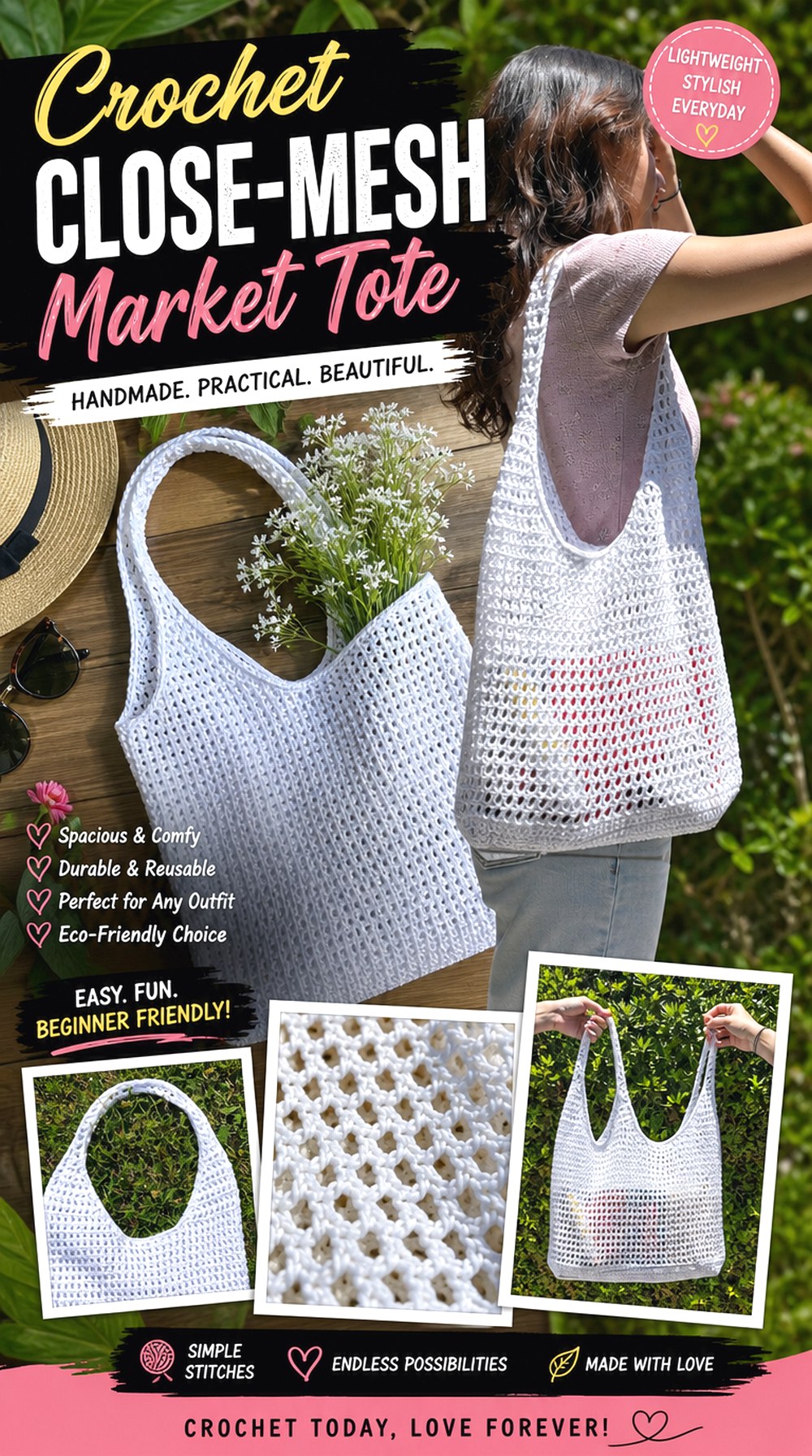
This tote offers the flexibility of mesh without the extremely large openings found in some produce bags. VivCrochets works the project in one piece from an oval base through the mesh body and into the straps, creating a streamlined bag with relatively little separate assembly. The finished profile stays simple enough for everyday carrying while still allowing the body to expand when filled.
Choose this direction when you want a flatter, lighter-looking tote rather than a dense handbag-style fabric. It is also a useful contrast to granny-square constructions because there are no individual motifs to size, arrange, or join.
Smaller Mesh Openings Change What Feels Practical
Not all mesh totes perform the same way. A closer mesh gives more visual coverage and reduces the size of the spaces through which objects can protrude, although it still will not behave like solid fabric. Think about what you expect to carry before deciding whether the openness suits you. Loose notions, pens, or very small objects may still call for an inner pouch even when the mesh looks relatively compact.
Watch How the Oval Base Controls Expansion
Because this version starts from an oval base rather than two flat rectangles, the bottom gives the bag some capacity while the overall silhouette remains slim. If you alter the yarn or scale, pay attention to how that base lies before continuing upward. A base that ruffles or cups unexpectedly can affect the body, so it is better to address tension there than hope the weight of the finished tote will correct it.
Original Tutorial and Creator Credit
Creator: VivCrochets
Crochet Modern Stripe Shoulder Tote
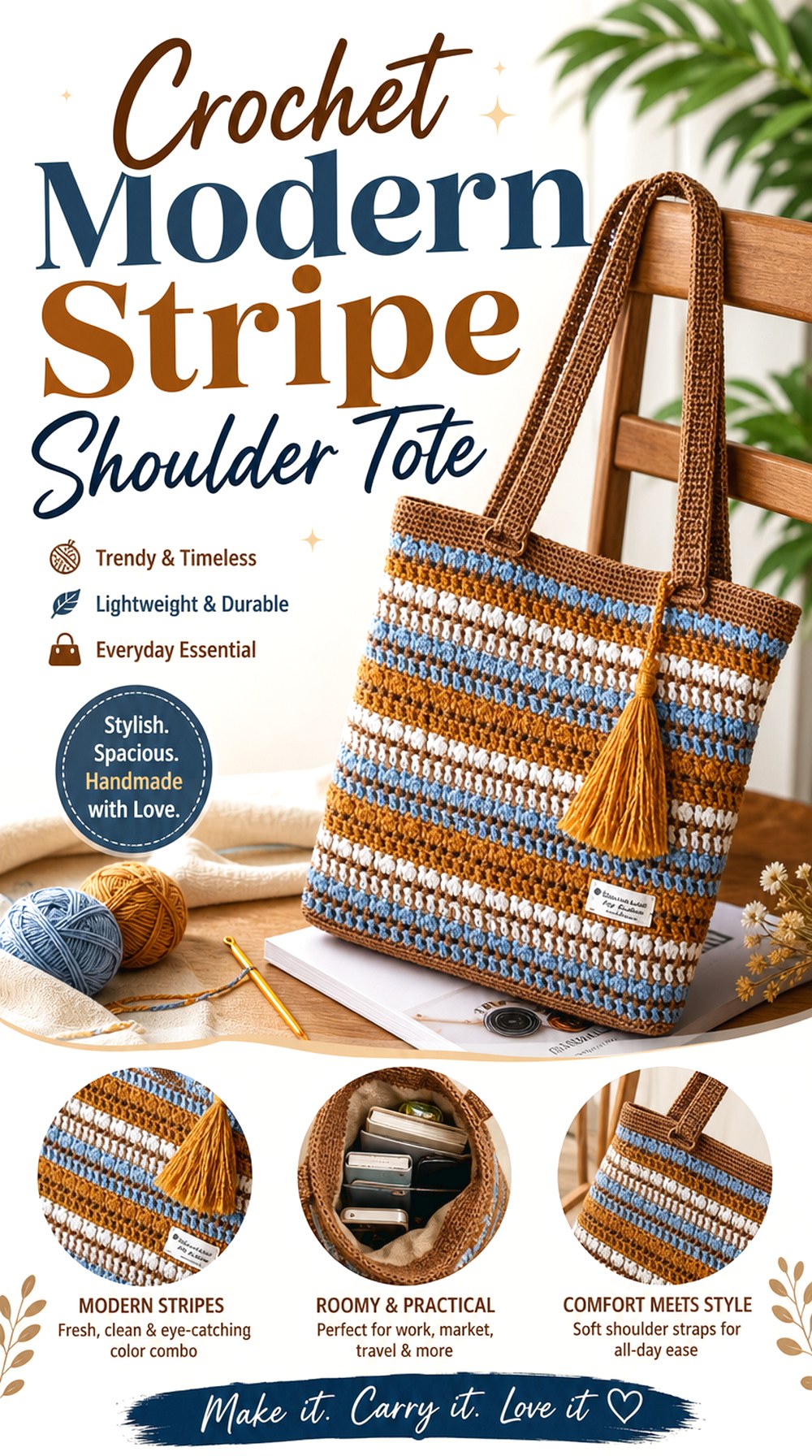
Long horizontal stripes make this tote feel clean and graphic without the extra joining involved in patchwork. Febe Andrian Crochet demonstrates an elongated striped bag with a shoulder strap, giving it a different proportion from shorter hand-carry totes. The tall shape creates useful visual space for contrasting bands, while the simple rectangular appearance keeps the focus on color placement.
This is a good route when you like colorwork but do not want to manage a checkerboard grid or dozens of motifs. Changing the stripe sequence can alter the look substantially without changing the basic character of the bag.
Stripe Width Can Change the Apparent Proportions
Wide bands tend to emphasize the tote’s width, while narrower repeated stripes can make the body appear longer. Before choosing colors, sketch the sequence as simple horizontal bars or arrange yarn strands in order. That quick planning step can prevent the final color from landing awkwardly at the opening and helps you decide whether the handles should continue a main color or contrast with the body.
A Longer Shoulder Strap Needs Its Own Stretch Check
A shoulder tote places different demands on its strap than a short handled bag. Make a small sample in the intended strap fabric and pull it lengthwise to see how readily it elongates. If the fabric stretches substantially by hand, expect the effect to become more noticeable when the tote is loaded. Reinforcement can be considered if keeping the original strap length is important.
Original Tutorial and Creator Credit
Creator: Febe Andrian Crochet
Crochet Flower Granny Square Panel Tote

Flower granny squares give this tote a clearly modular construction. Jo to the World Creations demonstrates floral squares joined into the bag before adding finishing around the top and straps. Because the motifs remain visible as distinct units, the finished tote has more texture and layout interest than a solid panel bag while still retaining a familiar flat front-and-back shape.
This concept is especially adaptable for crocheters who already enjoy making motifs. The key planning issue is not simply choosing flowers you like; compatible square dimensions and border structure matter if you intend to substitute another floral square.
Block Every Flower Square to the Same Target
A motif can contain the correct stitch sequence and still finish slightly larger or smaller because of tension. Those small differences multiply once several squares are joined. Compare blocked dimensions, corner shape, and border depth before assembly. If one group of motifs consistently differs, correct that issue first instead of stretching individual squares into alignment during joining.
Let the Join Become Part of the Design
With floral motifs, the joining color can either disappear into the background or create a visible grid around every square. Decide which effect you want before joining. A high-contrast join emphasizes each flower separately, while a similar border-and-join color can make multiple squares read as one larger panel. This decision often changes the finished look more dramatically than changing one flower-center color.
Original Tutorial and Creator Credit
Creator: Jo to the World Creations
Crochet Strawberry Accent Tote

Tiny strawberry details give this tote a dimensional, playful surface instead of relying only on flat color changes. Vivi Crochet’s tutorial shows a textured bag decorated with strawberry accents and finished with separate straps. The embellishments make the design noticeably different from filet or tapestry motifs because they sit on the surface and create additional depth.
This idea suits a decorative everyday tote where the front panel can be the focal point. If you prefer a cleaner back, the strawberry treatment could also inspire selective placement rather than covering every visible area, provided you make your own adaptation rather than changing the tutorial blindly.
Plan Strawberry Placement Around Natural Wear Areas
Raised details near the bottom corners or directly under a frequently gripped area may experience more rubbing than motifs positioned on the center of a flat panel. Lay the unfinished bag against your body or hold it in its expected carrying position before deciding where additional embellishments belong. That practical check can produce a decorative layout that also makes sense for regular handling.
Surface Details Make Finishing More Important
Dimensional motifs create extra yarn ends and attachment points that deserve attention because the tote will bend, move, and rub against clothing. Inspect the reverse side before considering the panel finished. If the inside will remain unlined, neat and secure finishing becomes especially important so loose ends do not snag on the contents.
Original Tutorial and Creator Credit
Creator: Vivi Crochet 🌷
Crochet Two Square Lined Tote
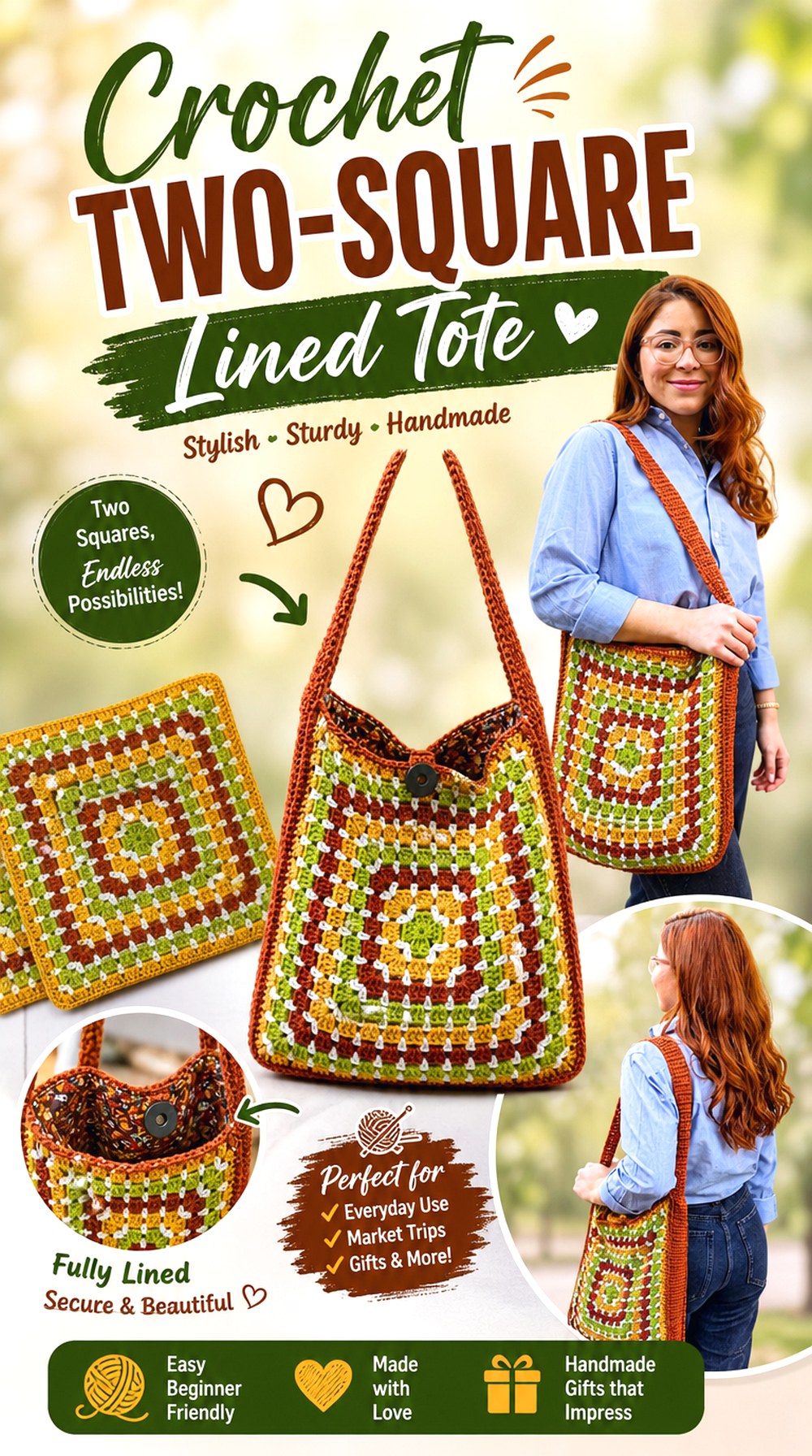
Brunaticality takes a panel-based approach built around two large crochet squares, with a separate band connecting the sides and bottom. The tutorial also includes a fabric lining, pocket, and magnetic closure, which makes this one of the most finishing-focused options in the collection. Those additions distinguish it from open market bags and simple unlined rectangles.
The large-square construction is worth considering when you want a strong central motif or texture without joining many small granny squares. It also makes the front and back easy to compare before assembly because both primary panels can be laid flat together.
Matching Two Large Panels Is Easier Before Assembly
Place the blocked squares directly on top of one another and compare the corners and outer edges. A difference that seems minor when the panels are separate can cause puckering once both are attached to the same connecting band. If one square needs adjustment, do it before the bag sides are constructed. This is also the right time to confirm that both motifs face the intended direction.
A Connecting Band Adds More Capacity Than a Flat Seam
A separate strip around the sides and bottom changes the tote from a nearly envelope-flat bag into a shallower boxlike shape. Consider whether that extra depth supports your intended use. It can accommodate thicker contents, but it also changes how the tote hangs against the body and makes accurate corner alignment more important.
Lining and Closure Can Change the Finished Behavior
A fabric lining helps separate the crochet shell from the contents, while a magnetic closure adds a defined point at the opening. Because both features interact with the top edge, check the crochet fabric before installing them. If the opening is stretched or uneven, adding hardware will not correct the underlying shape. Stabilize and square the crochet portion first.
Original Tutorial and Creator Credit
Creator: Brunaticality
Crochet Chunky Compact Everyday Tote
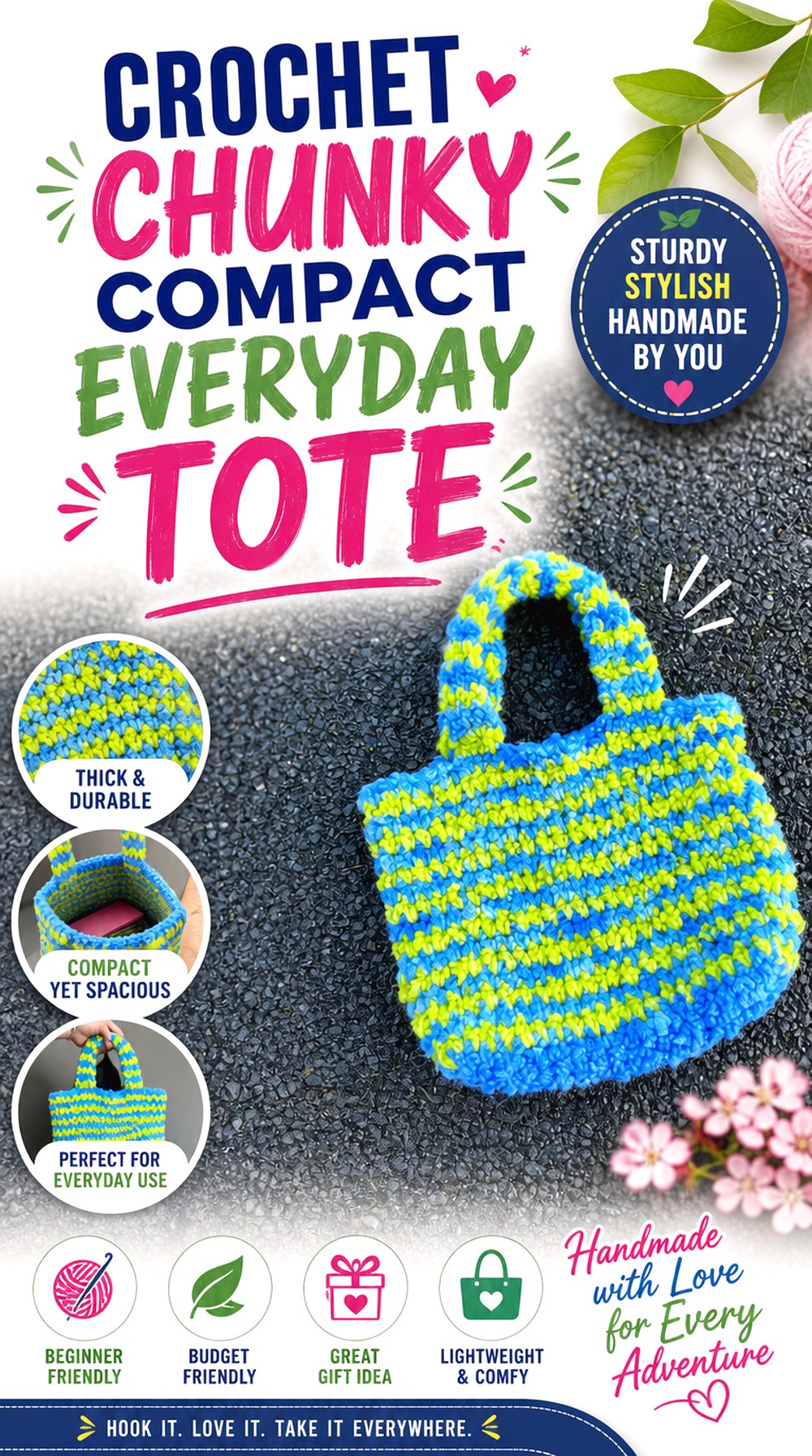
Kenikse Crochet demonstrates a compact everyday tote made with a chunky yarn, producing a bolder fabric than the finer cord and worsted-weight examples in this collection. Thick stitches make the silhouette visually substantial even when the bag itself is relatively simple, and the integrated handle area keeps the finished design uncluttered.
This type of tote can be appealing when you want the scale of the crochet itself to be visible. It also offers an important planning contrast: increasing yarn thickness does not simply make a regular tote faster or larger. It changes seam bulk, handle thickness, flexibility, and how much the fabric bends.
Chunkier Fabric Can Make Edges Feel Heavier
Thick yarn creates substantial edge stitches, so any joined or folded area deserves a quick comfort check. Pay particular attention to the handle opening and upper edge, where multiple layers can feel bulky in the hand. If substituting another chunky yarn, compare softness and compression as well as label weight; two thick yarns can produce very different handle comfort.
Compact Proportions Keep the Chunky Texture Balanced
Large stitches can visually overwhelm a very small design or make a very large tote feel heavy. Before scaling this style, make a meaningful swatch and compare stitch size with the bag proportions you want. If you enlarge the body dramatically, remember that the extra fabric itself also adds weight before anything is placed inside.
Original Tutorial and Creator Credit
Creator: Kenikse Crochet
Crochet Classic Flat Everyday Tote
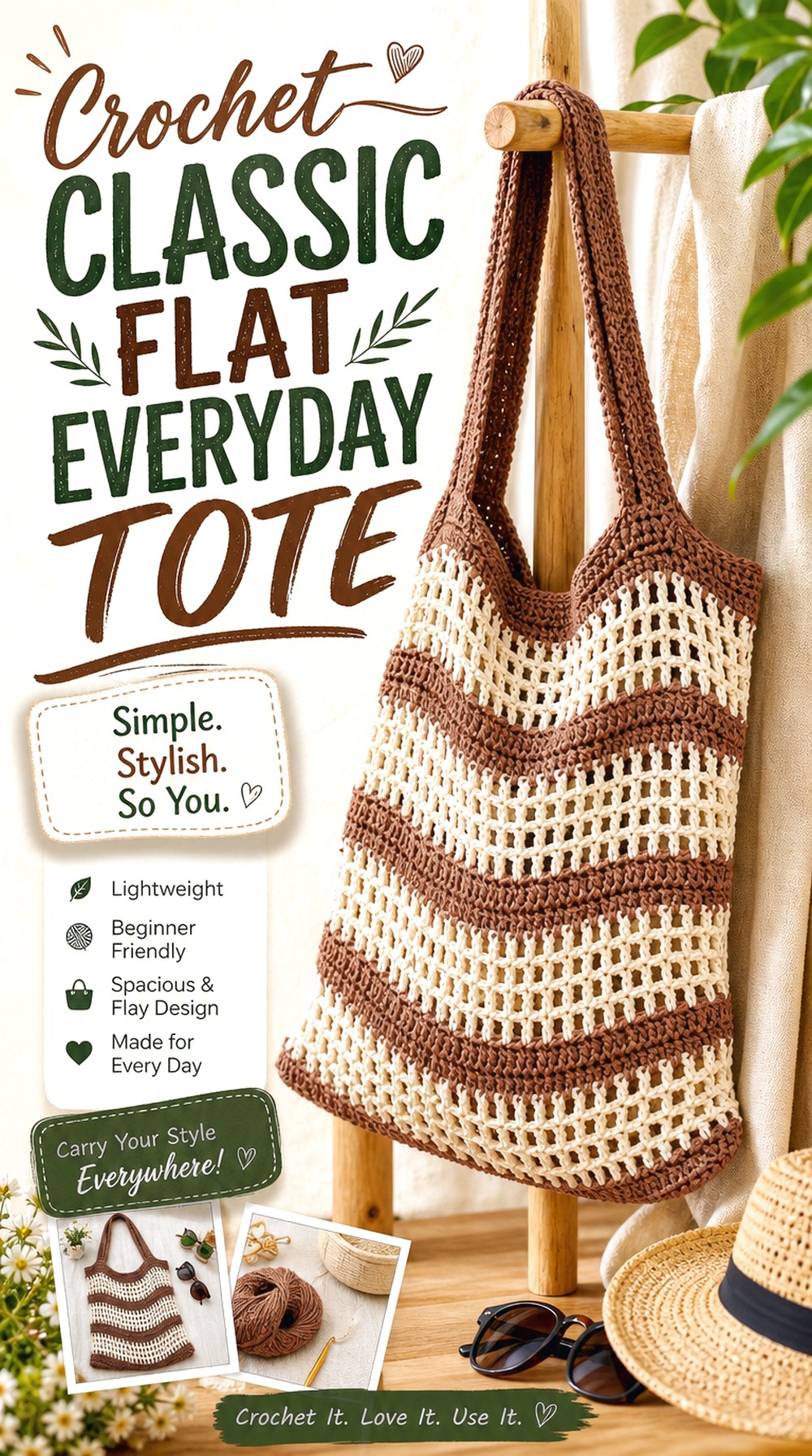
CJ Design’s tote keeps the emphasis on a familiar, unfussy bag silhouette rather than large motifs or novelty decoration. That makes it a useful reference point among more specialized options: you can focus on fabric, proportions, and finishing instead of managing complex surface design.
A simple tote can also be easier to coordinate with everyday clothing because there is less visual competition from the bag itself. For customization, consider changing one element at a time—such as the body color, handle contrast, or upper edging—so you can judge how that alteration affects the clean shape.
Plain Fabric Makes Uneven Edges More Noticeable
When there is no strong motif to distract the eye, the top edge and side lines become important design features. Periodically fold the bag flat and compare the two sides. If one side is beginning to lengthen, investigate tension or stitch placement rather than relying on a final border to disguise the difference.
Decide Early Whether the Tote Needs an Interior Layer
A classic solid tote can work with or without lining depending on fabric density and intended contents. Hold a finished fabric section up to the light and gently stretch it. That tells you more than simply looking at the unstretched stitches. If gaps widen considerably, a lining or small internal pouch may make sense for the way you plan to use the bag.
Original Tutorial and Creator Credit
Creator: CJ Design
Crochet Daisy Smile Square Tote
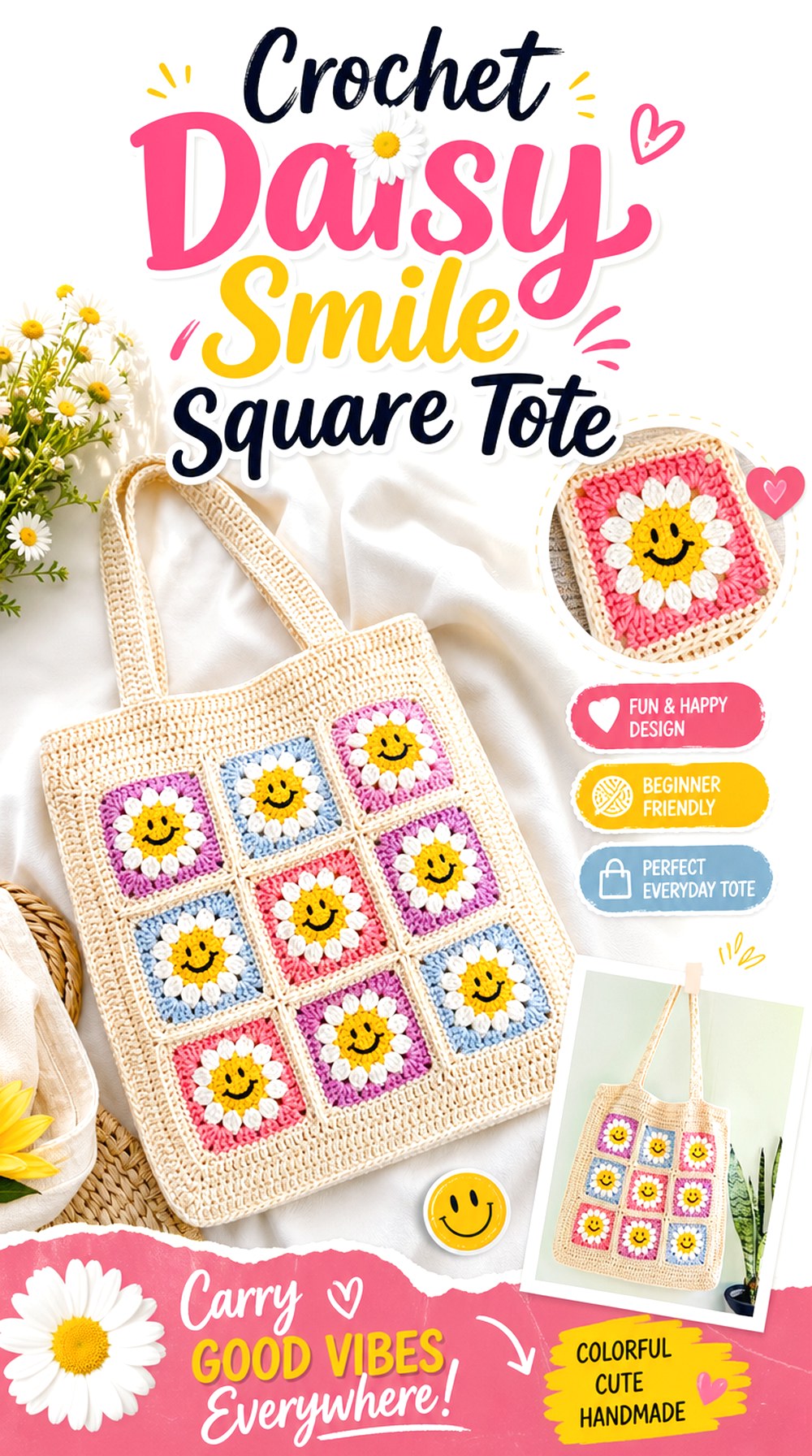
This Chenda DIY design combines daisy imagery with smile details in joined crochet squares, giving the tote a playful graphic identity. Individual motifs form the visible bag surface, followed by finishing at the opening and strap. It is a much more character-driven option than a plain granny square tote and works well when you want each block to function almost like a small illustration.
Because the motifs carry recognizable imagery, orientation becomes more important here than it is with a rotationally symmetrical granny square. Check every panel before joining so no face or flower ends up unintentionally turned.
Lay Out Every Face Before the First Join
Arrange all completed squares in the exact front-and-back layout and photograph the arrangement before assembly. This gives you a simple reference when individual pieces are picked up and turned. It is especially helpful with directional smile motifs, where an upside-down square may not be obvious until several joins have already been completed.
Keep the Border From Competing With the Motifs
The square designs already contain considerable visual information. A highly contrasting outer edge can add another strong frame, while a quieter border lets the daisies and smiles remain dominant. Place a strand of the proposed edging yarn around the arranged motifs before crocheting it. That quick preview often makes the color decision clearer.
Original Tutorial and Creator Credit
Creator: Chenda DIY
Crochet Rope Texture Slim Tote
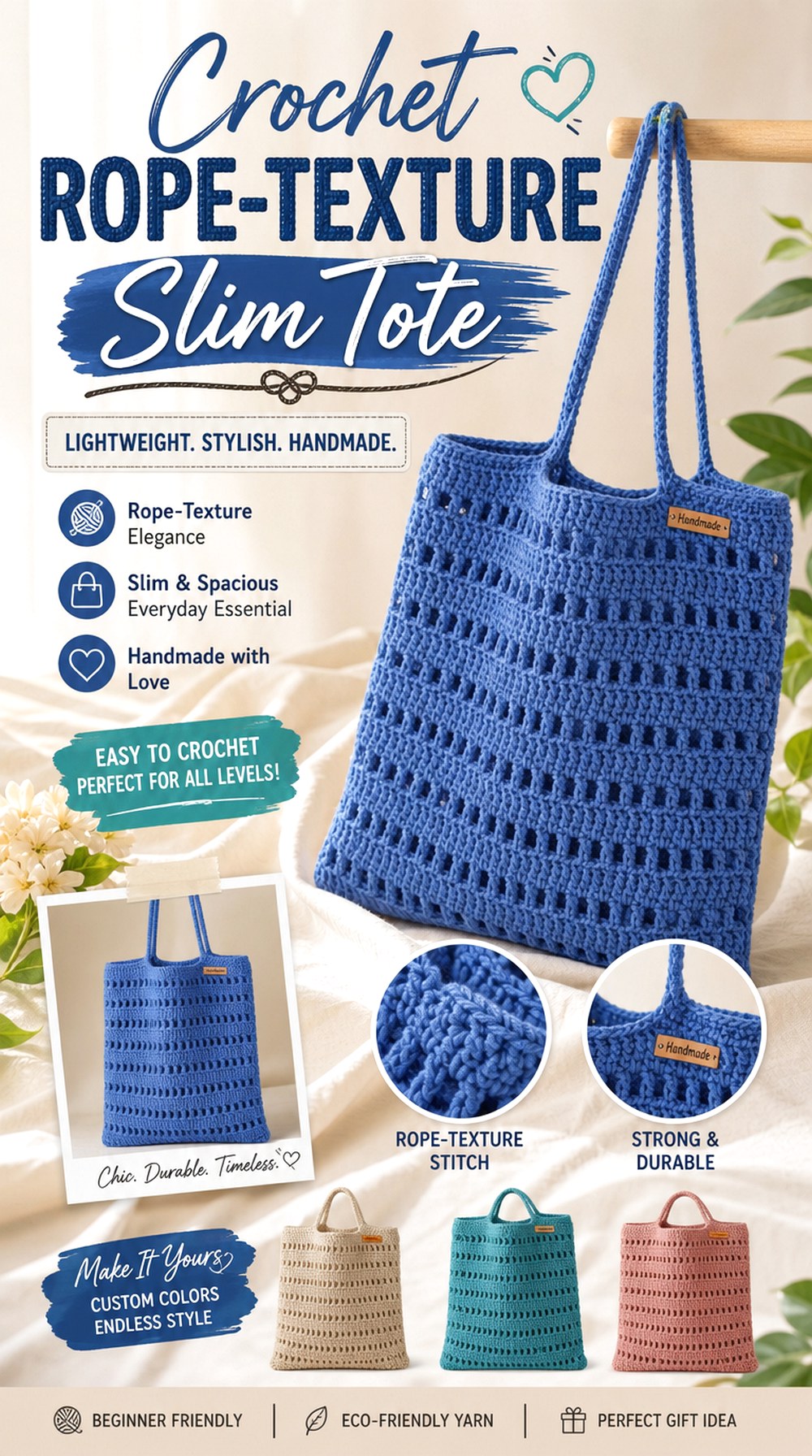
ViVi Berry Crochet uses cotton rope in this tote tutorial, creating a firmer-looking fabric and more pronounced stitch definition than a soft yarn tote. The shape remains straightforward and slim, so the rope texture becomes one of the main visual features instead of being hidden beneath complicated colorwork.
A rope-based tote can suit someone who prefers a cleaner, more structured appearance, but rope also changes the physical feel of crochet. It may be less forgiving at tight bends and can make thick handle areas feel substantial, so substitutions should be judged by the fabric produced rather than by diameter alone.
Rope Makes Stitch Consistency Easy to See
A smooth cord or rope tends to reveal the outline of individual stitches clearly. That can produce a polished surface, but it also means abrupt tension changes are easier to spot. Check the first several inches of fabric from a normal viewing distance. If the rows appear wavy or the edges tighten, adjust before investing in the full panel.
Test the Handle Where It Actually Meets Your Hand
A firm material that feels comfortable as a flat swatch can feel very different when several stitches are concentrated into a handle. Bend a sample strip and hold it with the amount of pressure you would use to carry a bag. If it feels too rigid, the solution may involve material choice or handle design rather than simply making the strap longer.
Original Tutorial and Creator Credit
Creator: ViVi Berry Crochet
Crochet T Shirt Yarn Flat Tote
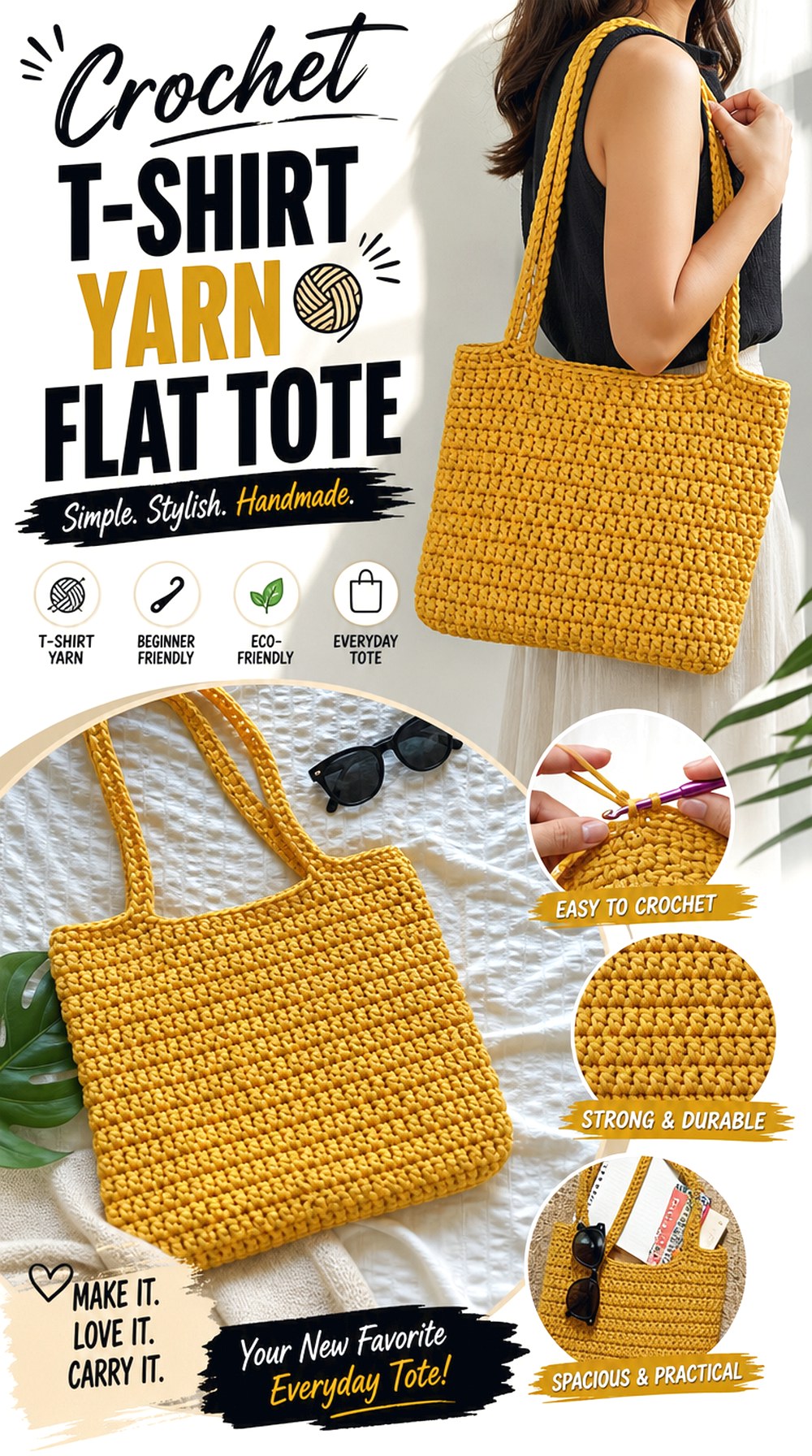
T-shirt yarn gives this Alice’s Crochet Corner tote a thick, fabric-like appearance that stands apart from conventional plied yarn. The material makes the crochet visibly substantial and creates a casual bag with bold stitch scale. The tutorial covers the bag from its base through the body and handles, along with guidance related to size and strap adjustment.
Because T-shirt yarn can vary in thickness and elasticity, this is a project where copying a hook size without comparing fabric may be particularly unhelpful. The material itself is a major part of the finished result.
T-Shirt Yarn Weight Adds Up Quickly
A thick textile yarn can make a satisfying, substantial bag, but the fabric may already have noticeable weight before you fill it. If you plan to enlarge the tote, crochet a representative section first and physically handle it rather than estimating from appearance. A dramatic increase in panel area can change how comfortable the finished bag feels on the shoulder or in the hand.
The Strap Should Suit the Material, Not Just the Look
Stretchy T-shirt yarn can behave differently in a long narrow strap than in the wider bag body. Before extending the handle dramatically, pull a sample length under steady tension and see whether it rebounds. If it continues to lengthen, a shorter handle or reinforcement may better preserve the proportions you originally liked.
Original Tutorial and Creator Credit
Creator: Alice’s Crochet Corner
Crochet Shell Texture Market Tote
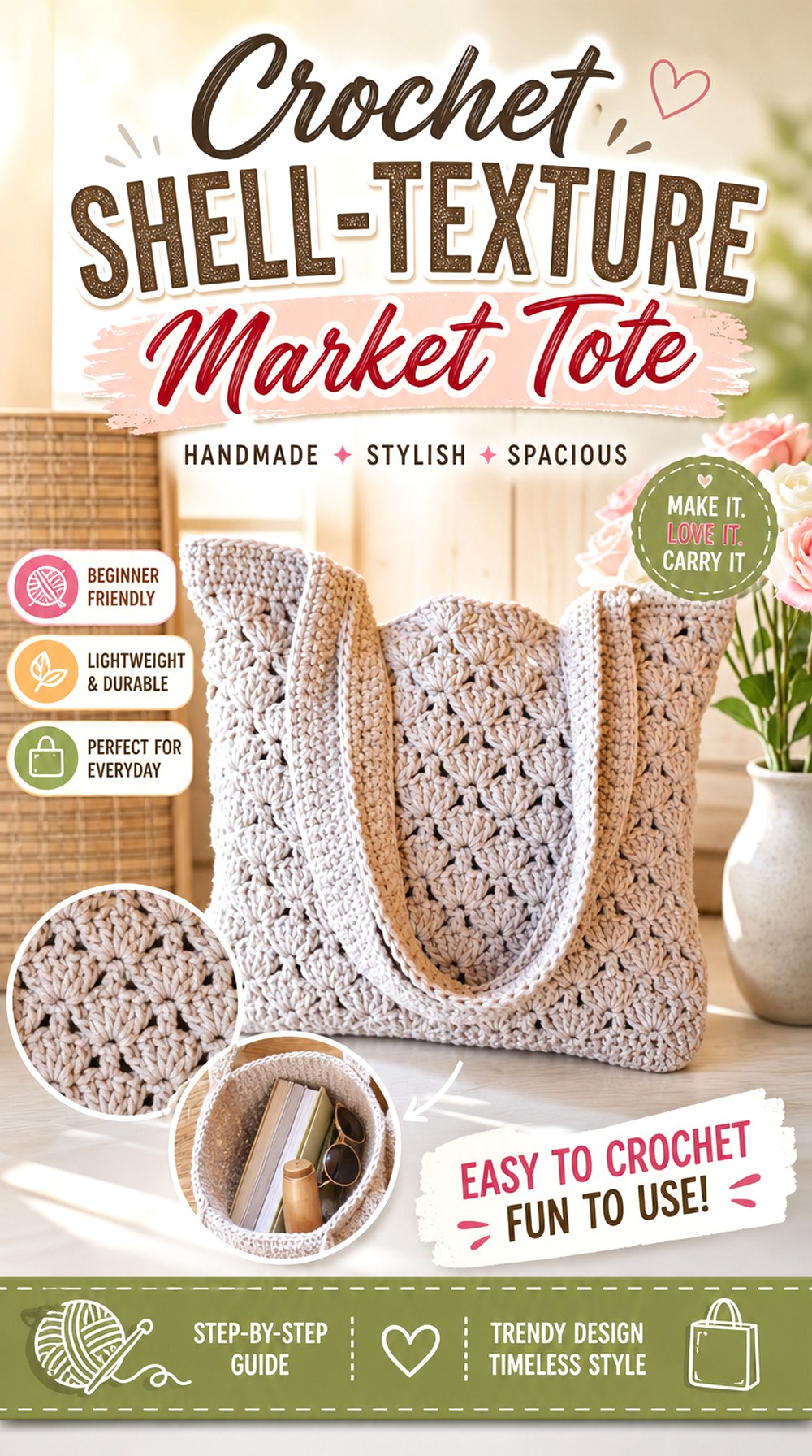
Instead of a plain mesh grid, Kristines Crochets uses shell-based texture to give this market tote decorative openness. The repeating shell shapes create more visual rhythm than simple chain mesh while preserving the lighter character associated with a market bag.
This style is a useful middle ground when a solid tote feels too dense but an extremely open produce bag looks too utilitarian. The textured fabric also makes color changes optional; even a single yarn color can show substantial pattern because the stitch structure supplies the visual variation.
Shell Openings Need to Match the Intended Contents
Decorative openwork is attractive because of its negative space, but those openings also define what the bag can comfortably contain. Stretch a sample to approximate how it will behave when loaded. If the spaces become larger than expected, plan to use the tote for larger items or pair smaller belongings with an internal pouch rather than expecting openwork to perform like solid fabric.
Preserve the Shell Rhythm at the Side Lines
Repeated texture can expose a gradual stitch-count error quickly because the motifs stop lining up. Watch the side profile as well as the front. If shell groups begin to drift, identify the cause while only a small area needs correction. Maintaining the repeat consistently is what gives the finished flat tote its intentional, balanced appearance.
Original Tutorial and Creator Credit
Creator: Kristines Crochets
Crochet Oversize Two Stitch Tote
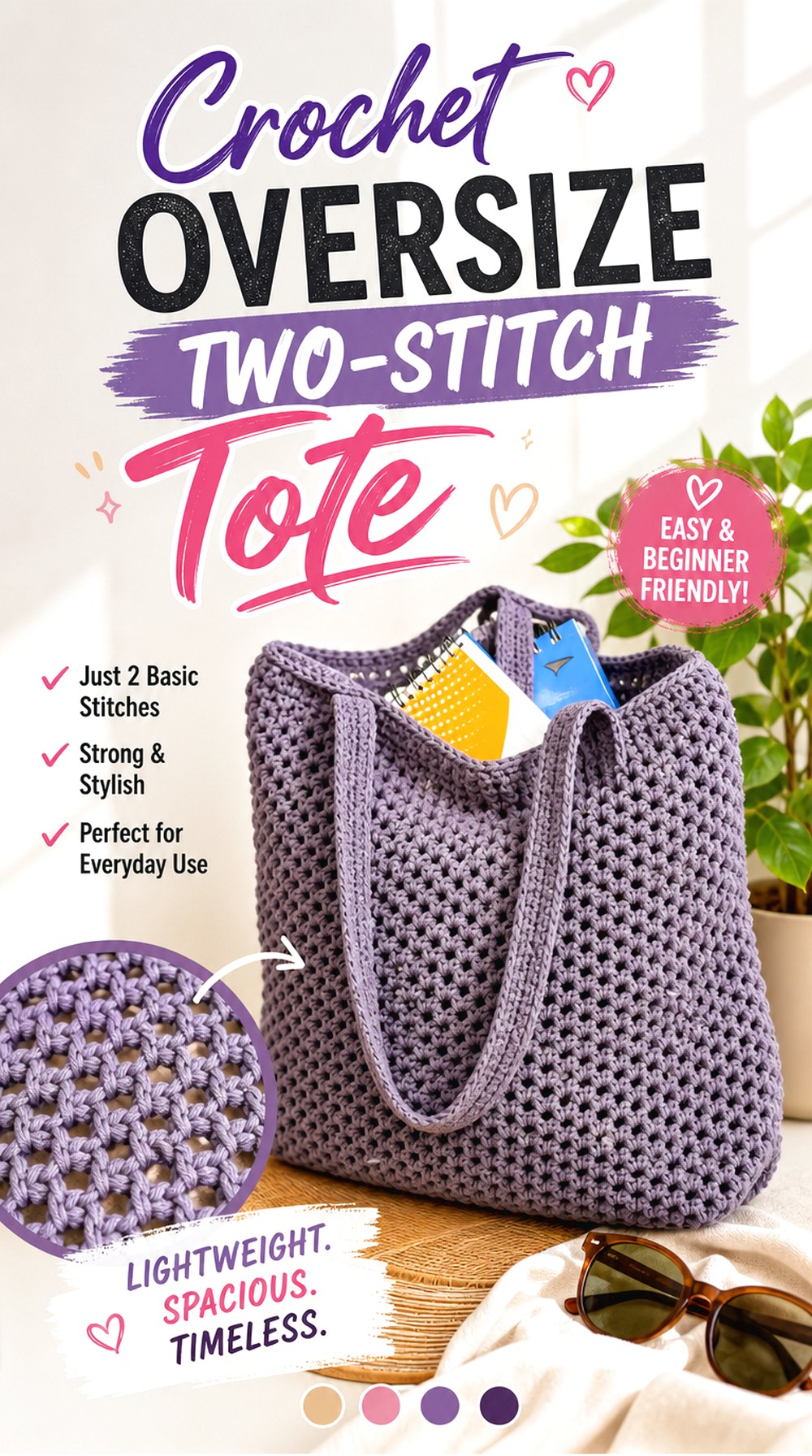
Handmade By Mei demonstrates a larger tote built around two basic crochet stitches, giving this project a scale-first identity rather than a motif-first one. The roomy finished form provides a different option from compact mini totes and narrow shoulder bags, while the restrained stitch vocabulary keeps the surface visually cohesive.
An oversize tote deserves different planning because a larger panel means more fabric weight, a wider opening, and greater leverage on the handles. If you adapt the proportions, think about the bag as a loaded object rather than simply a larger rectangle.
Large Panels Magnify Small Tension Changes
A slight difference between the beginning and end of a small swatch may not seem important. Repeated across a wide tote, the same drift can create noticeably slanted sides. Measure or fold the fabric periodically as it grows. The goal is not to chase microscopic differences, but to catch a consistent trend before it affects the overall silhouette.
A Wider Opening May Need More Support
As the tote becomes wider, the section of top edge between handle attachment points also increases. That unsupported span can sag when the bag is loaded. When planning modifications, inspect how the tutorial treats the upper edge and handle transition. If you increase width substantially, consider whether the opening needs its own reinforcement or finishing strategy.
Original Tutorial and Creator Credit
Creator: Handmade By Mei
Crochet Minimal Everyday Tote
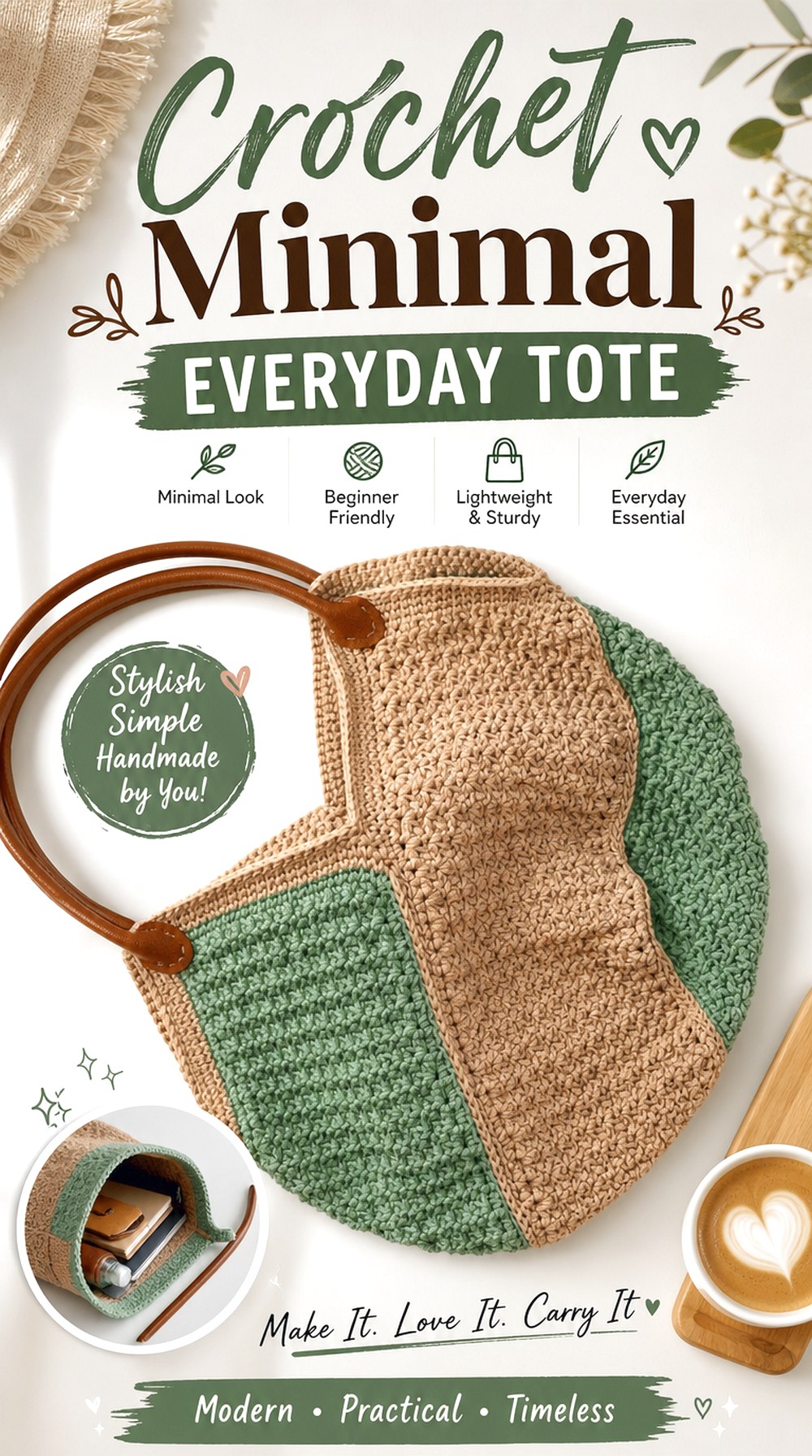
Sirin’s Crochet keeps this tote focused on a clean everyday form. Without a major pictorial motif or complicated patchwork layout, the finished bag can work as a neutral foundation for experimenting with yarn color, subtle texture, or a contrasting handle while still preserving a simple silhouette.
This is the kind of project to consider if highly decorative bags feel difficult to coordinate with your wardrobe. It also gives you fewer visual elements to manage, which means finishing quality—straight edges, balanced handles, and an even opening—has more influence on the final appearance.
Minimal Design Rewards Careful Edge Finishing
In a plain tote, the eye naturally follows the outline. Before declaring the bag finished, lay it completely flat and look at the top edge, lower corners, and both side profiles from a distance. A small amount of blocking may refine minor unevenness, but obvious structural distortion should be corrected in the crochet itself rather than hidden beneath decorative edging.
Use Contrast Where It Has a Purpose
A minimalist design does not have to be monochrome. A contrasting handle, top band, or narrow accent can create a clear focal point without turning the bag into full colorwork. Keep the contrast concentrated in one structural area so it helps define the silhouette instead of making several unrelated parts compete for attention.
Original Tutorial and Creator Credit
Creator: Sirin’s Crochet
Crochet Patchwork Flat Tote
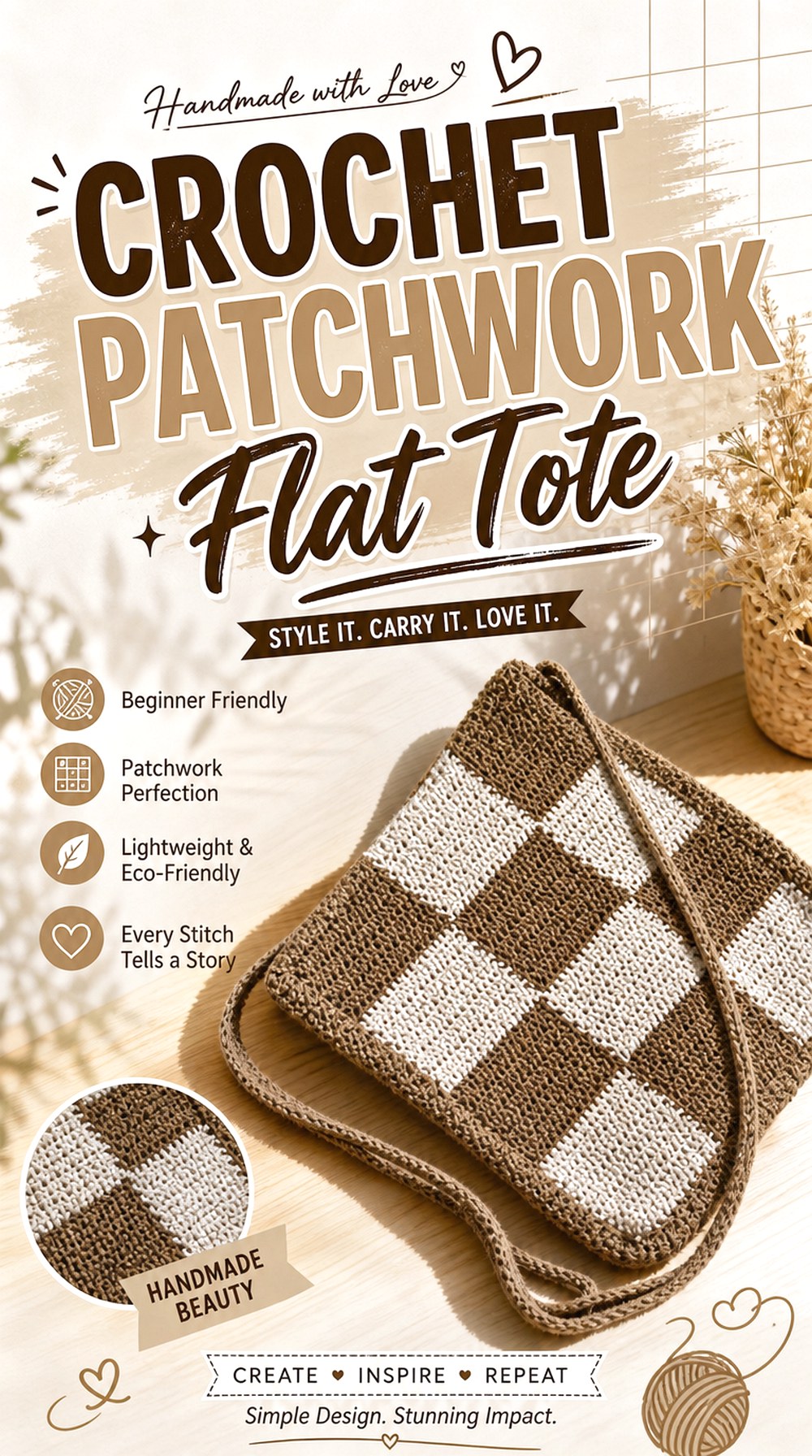
Dream Crochet’s patchwork tote divides the bag surface into distinct blocks, giving it a pieced appearance without limiting the design to one repeating floral or classic granny motif. Patchwork is particularly useful for combining multiple colors in controlled areas because each section has its own visual boundary.
This idea works well when you want a tote to feel intentionally mixed rather than perfectly uniform. At the same time, patchwork needs a plan: too many equally strong colors or textures can make the final bag read as scattered rather than balanced.
Build the Color Layout Before Joining Anything
Arrange the completed or planned blocks as one full front panel, then step back from the layout. Check whether the darkest or brightest areas are all clustered on one side. Moving a single block may create better balance without changing any crochet. A phone photo converted mentally—or with your device—to grayscale can also help reveal whether one area has much more visual weight.
Patchwork Seams Affect Both Sides of the Tote
Every join creates structure as well as a visible line. Decide whether you want those lines to be subtle or part of the design. Whichever approach you choose, inspect the inside before finishing because bulky joins can catch contents and make a flat panel feel less smooth. A lining is one option, but tidy joins are useful even when a lining is planned.
Original Tutorial and Creator Credit
Creator: Dream Crochet
Crochet Tunisian Color Block Tote

TL Yarn Crafts brings Tunisian crochet into the collection with the Kensington Tote, a chunky purse-style bag made largely in one piece and featuring color blocking. The technique creates a fabric with a different visual character from standard single crochet, while the strong blocks of color keep the overall appearance modern and graphic.
This tote is worth considering if you want the bag to double as a technique-learning project. It is also more construction-focused than a decorative appliqué tote: fabric behavior, curling tendencies, color transitions, and finishing all contribute to the final shape.
Tunisian Fabric Deserves a Flatness Check
Some Tunisian fabrics naturally want to curl, particularly before finishing or blocking. Do not judge the eventual tote shape solely from an early strip of fabric lying on the table. Follow the creator’s construction closely, and when making adaptations, test a meaningful swatch so you know how your yarn behaves after the same type of finishing you intend to use.
Color Blocking Can Define the Bag’s Architecture
Unlike narrow stripes, large color sections can visually divide the body from the handle area or emphasize a specific panel. When choosing substitute colors, compare value as well as hue. Two colors that are different but similarly light can create a subtle block effect; a light-and-dark pairing will make the divisions much stronger.
One-Piece Construction Reduces Joins but Not Load Stress
Fewer seams can give a cleaner appearance, yet the fabric still carries the weight of the contents through the handle and upper body. Inspect those transition zones as you work. If you substitute a more elastic yarn, the lack of a separate structural seam does not prevent the bag from stretching.
Original Tutorial and Creator Credit
Creator: TL Yarn Crafts
Crochet C2C Covered Canvas Tote
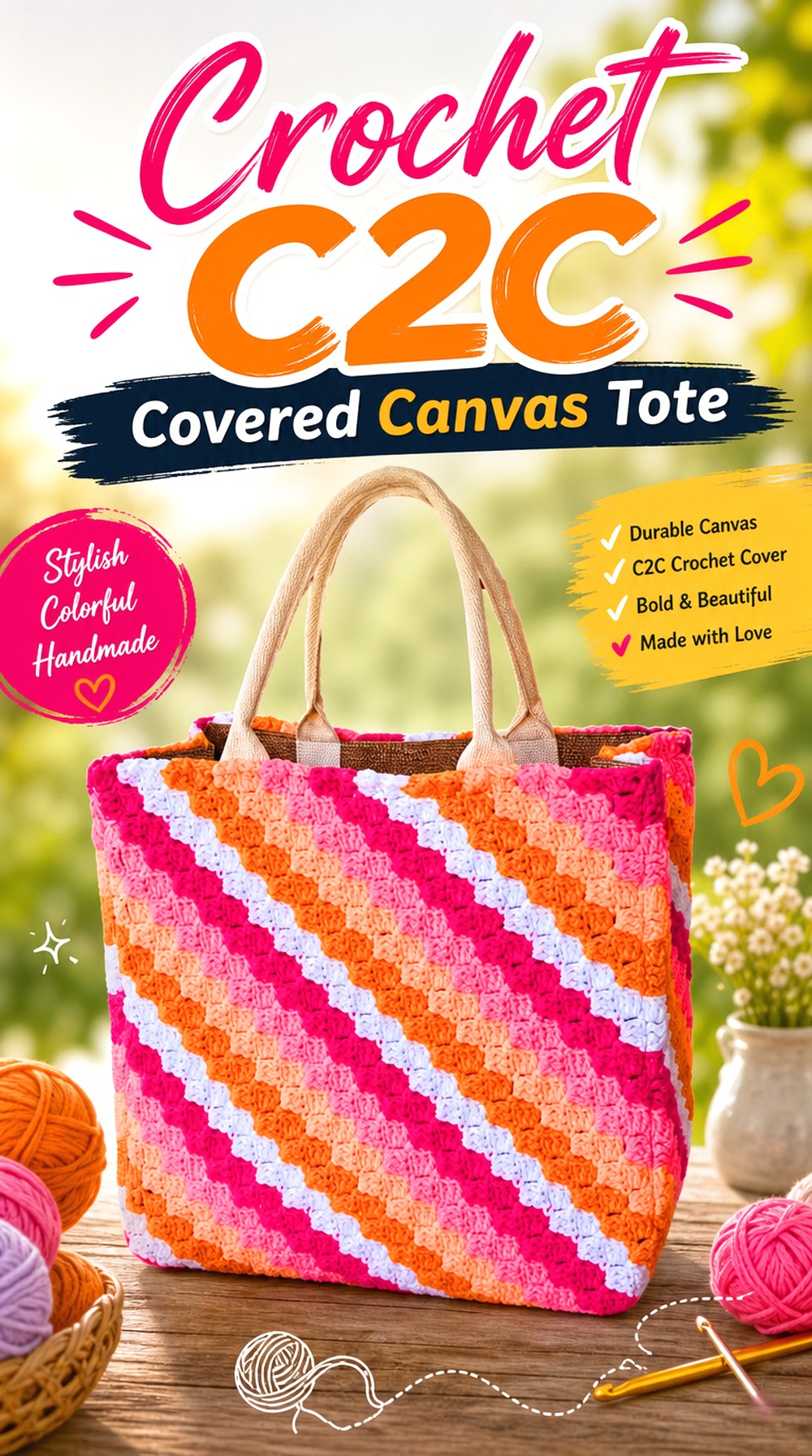
This Secret Yarnery project takes a different route from every fully crocheted bag here: corner-to-corner crochet panels are used to cover an existing plain tote. The original bag remains the functional interior structure while crochet changes the outside appearance. That makes it a useful option for someone who wants the look of a crochet tote without asking the crochet fabric alone to provide all of the support.
It is important to recognize the distinction before choosing this idea. If your goal is a tote made entirely from yarn, another project will fit better. If you want to customize an existing fabric bag, this approach has clear advantages.
Measure the Existing Tote, Not an Idealized Rectangle
A purchased tote may taper slightly, have boxed corners, or curve near the opening. Lay it flat and measure the actual area you want the crochet to cover. A panel based only on the bag’s advertised dimensions can end up too wide, too short, or awkward around the handles.
C2C Direction Becomes a Visible Design Feature
Corner-to-corner fabric creates diagonal visual movement. Think about whether both sides should mirror one another or point in the same direction before attaching the panels. This matters especially if you add stripes or a graphic color arrangement because reversing one panel can make the two sides feel intentionally mirrored—or accidentally mismatched.
The Canvas Interior Solves a Different Problem Than Lining
Because the existing tote remains inside, it provides an interior surface and much of the load-bearing structure. That is different from sewing a lightweight lining into a crochet shell after construction. If you adapt the idea, make sure the crochet cover is attached securely enough for normal handling without assuming it needs to carry the bag’s contents independently.
Original Tutorial and Creator Credit
Creator: Secret Yarnery
Crochet Structured Cord Tote
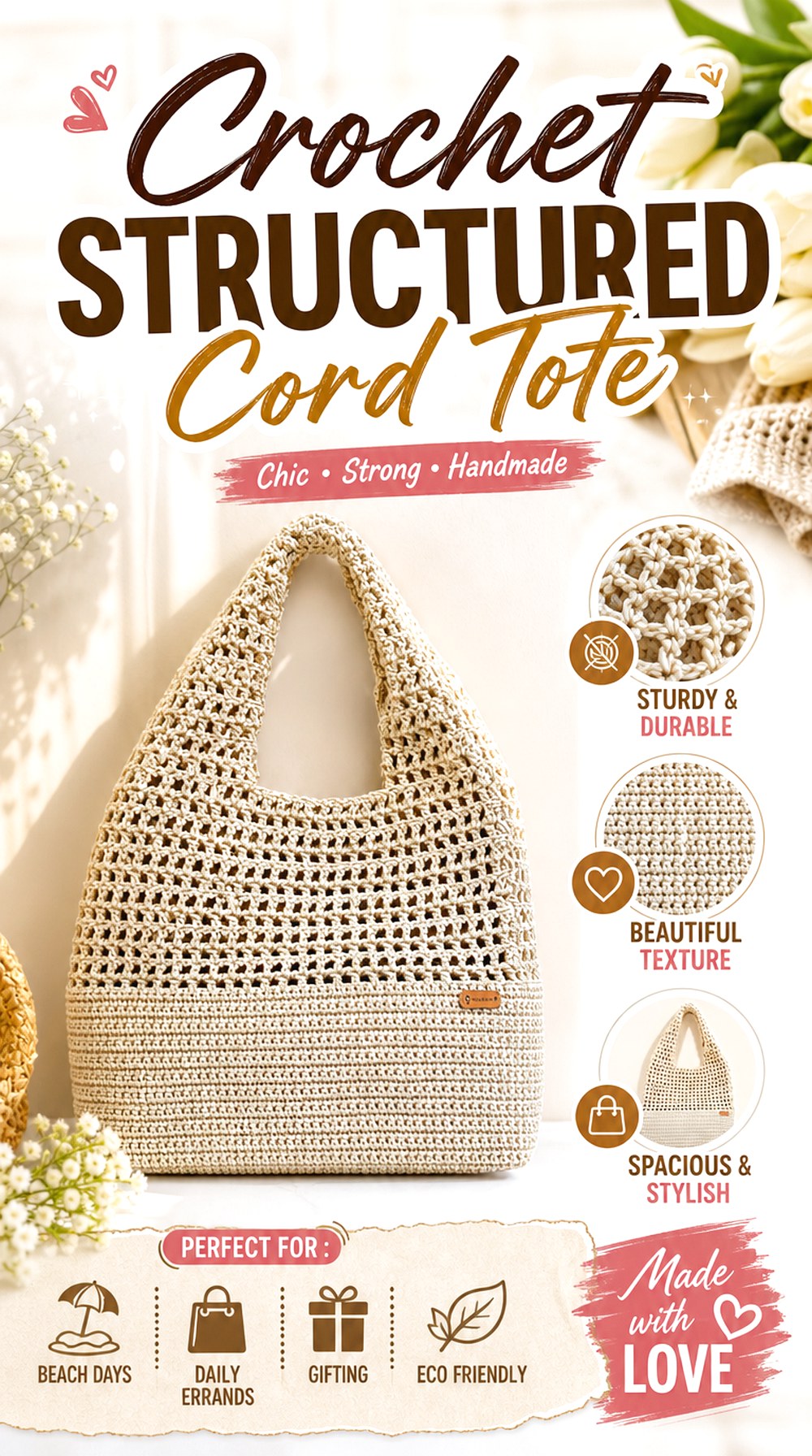
Faz Crochê demonstrates a tote made with nautical or polypropylene cord, producing a firmer, more defined bag than soft market-mesh designs. The tutorial’s finished bag includes some depth and a clasp, so it is best understood as a structured flat-profile tote rather than a completely envelope-flat bag.
This design makes sense when shape retention matters more than collapsibility. Cord can create crisp stitch definition and a strong outline, although the same properties can make the fabric less flexible and the handles firmer than those worked in soft yarn.
Shallow Depth Changes How a “Flat” Tote Packs
Even a modest base depth allows the bag to accommodate thicker objects without forcing the front and back panels apart as dramatically. The trade-off is that the tote will not collapse as completely flat as a simple two-panel version. Choose this structure if usable internal volume matters more than having the smallest possible stored profile.
A Clasp Needs a Stable Top Edge
Any closure works best when both sides of the opening meet consistently. Before adding hardware, place the empty bag upright or flat and confirm that the top edge is balanced rather than twisting. A closure should bring two stable areas together; it should not be expected to pull an uneven opening into alignment.
Original Tutorial and Creator Credit
Creator: Faz Crochê
Crochet Sea Shell Puff Market Tote
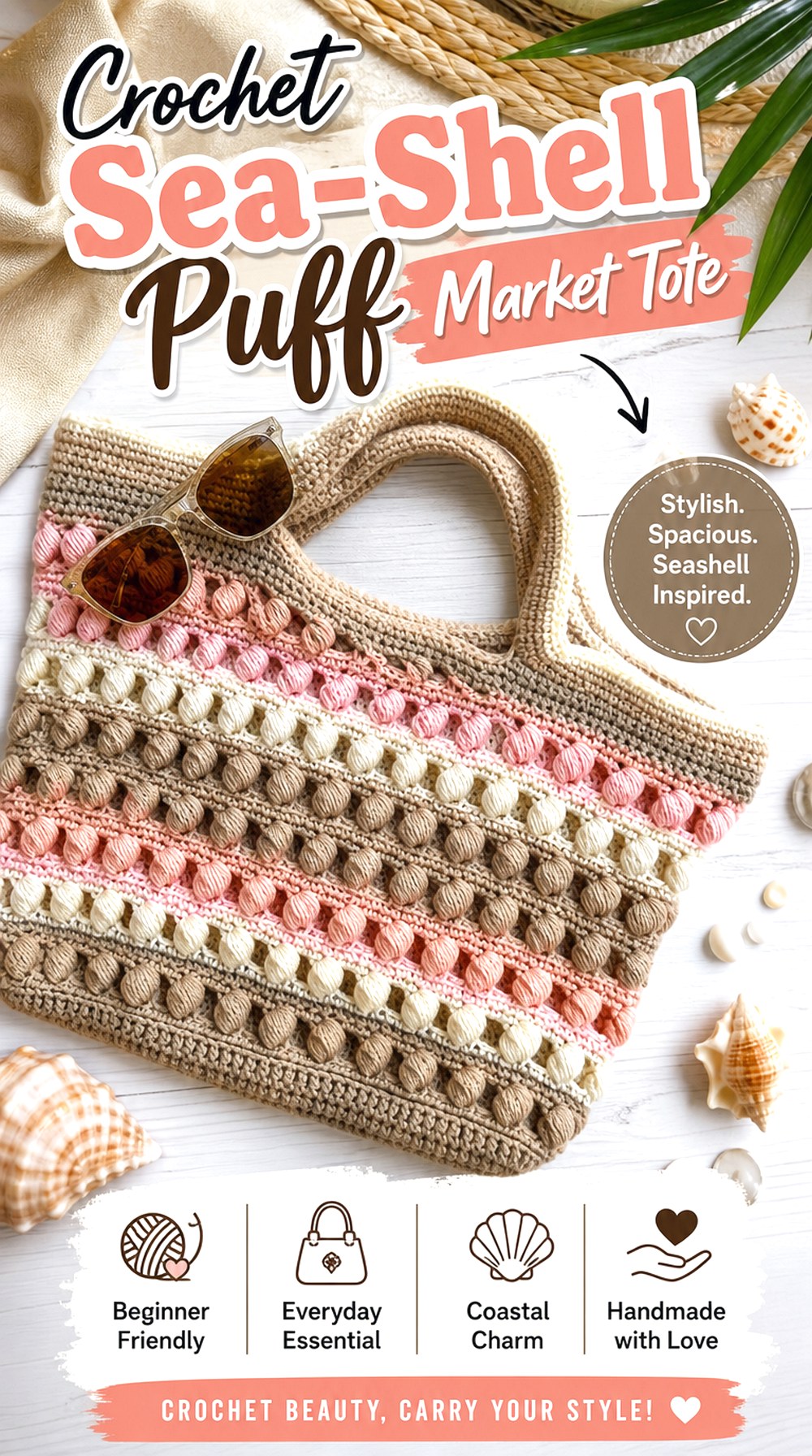
Nana’s Crafty Home | Tonya Bush uses raised sea-shell-inspired puff texture to turn a market tote into a strongly tactile design. The dimensional stitch pattern gives the surface much more depth than ordinary mesh, making the bag decorative even without multiple motif panels.
This is an appealing direction if you enjoy texture more than complex color changes. It also highlights an important material trade-off: pronounced texture generally uses more fabric depth than a flat stitch surface, so the yarn’s definition and the way the puffs recover after handling can influence the finished appearance.
Give Raised Shells Enough Stitch Definition
A very fuzzy yarn can soften the outline of dimensional stitches until much of the shell effect disappears. If texture is the reason you chose this tote, make a sample and view it in normal lighting before committing. The best substitute is not necessarily the smoothest yarn available, but it should let the raised shapes remain recognizable at the intended scale.
Avoid Crushing the Texture During Finishing
Blocking should refine shape without flattening the feature that makes the fabric distinctive. Use a finishing method appropriate to the chosen fiber and treat the raised areas gently. When storing the finished tote, folding it loosely rather than pressing heavy objects on top can also help keep dimensional stitchwork from looking unnecessarily compressed.
Original Tutorial and Creator Credit
Creator: Nana’s Crafty Home | Tonya Bush
Crochet Finger Crochet Market Tote
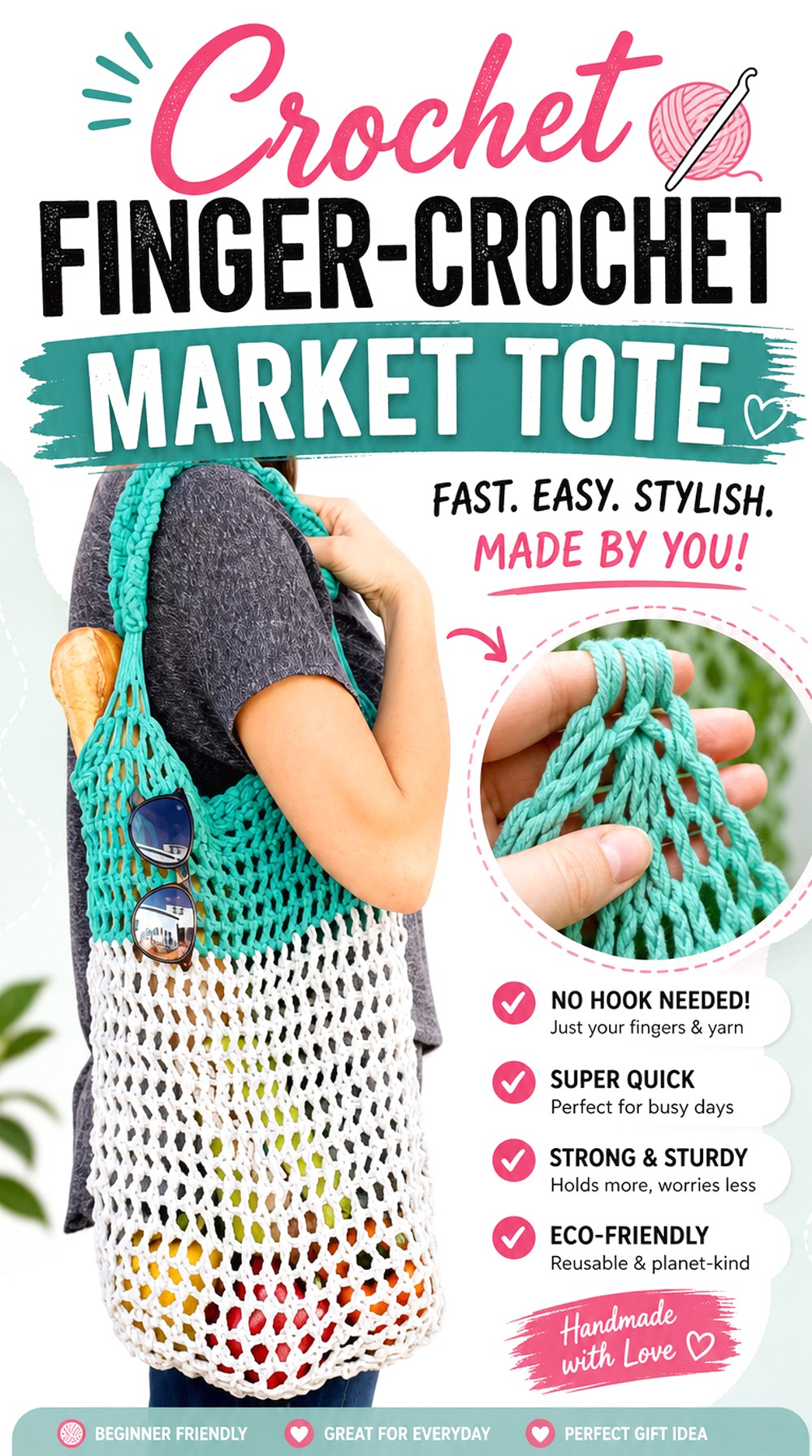
Make & Do Crew removes the traditional crochet hook from the main technique and demonstrates a market tote made with finger crochet. The resulting bag has an intentionally oversized, loose stitch scale that looks very different from fine mesh or compact single crochet.
This project is less about achieving a dense handbag fabric and more about exploiting large-scale loops for a casual market-bag effect. Because the method and stitch scale are unusual, it is worth treating the creator’s finished proportions as a complete design rather than assuming a conventional tote can simply be enlarged with your fingers.
Large Loops Make Contents Part of the Visual Equation
Very open fabric allows more of what is inside the tote to show through. That can suit produce, towels, yarn, or other larger objects, but small loose contents may require another container inside. Think of the openness as a functional characteristic, not merely a decorative stitch choice.
Finger Tension Replaces Hook-Sizing Consistency
Without a hook acting as a fixed sizing tool, your hands control loop dimensions more directly. Compare your loops periodically rather than waiting until the bag is finished. If the fabric becomes progressively looser as your hands relax, the tote can widen or lengthen unexpectedly even when the construction itself remains correct.
Original Tutorial and Creator Credit
Creator: Make & Do Crew
Crochet Filet Sunflower Flat Tote

August Craft & Crochet uses a sunflower pattern worked into the tote fabric rather than attaching a separate dimensional flower. That gives the design a flatter graphic surface and makes it meaningfully different from the flower granny-square and strawberry-accent options. The sunflower appears through patterned open and solid areas, letting negative space become part of the image.
This style works particularly well when you want a recognizable motif without adding bulky appliqués. The main challenge is maintaining the grid cleanly enough for the image to remain legible.
The Sunflower Depends on Grid Consistency
Filet-style imagery works because filled and open areas stay in predictable positions. A skipped space or misplaced group can affect more than one row of the visual design. Check the developing motif periodically from a little distance. The sunflower outline is often easier to assess as an image than by staring at individual stitches close up.
Contrast Can Come From Light, Not Just Color
Openwork motifs become more or less visible depending on what is behind them. A single-color sunflower tote may show the pattern clearly against contrasting clothing or a lining, while the same bag can look subtler against a similar background. Consider that changing backdrop effect before deciding that the motif needs extra color.
Original Tutorial and Creator Credit
Creator: August Craft & Crochet
Crochet Dense Single Crochet Tote
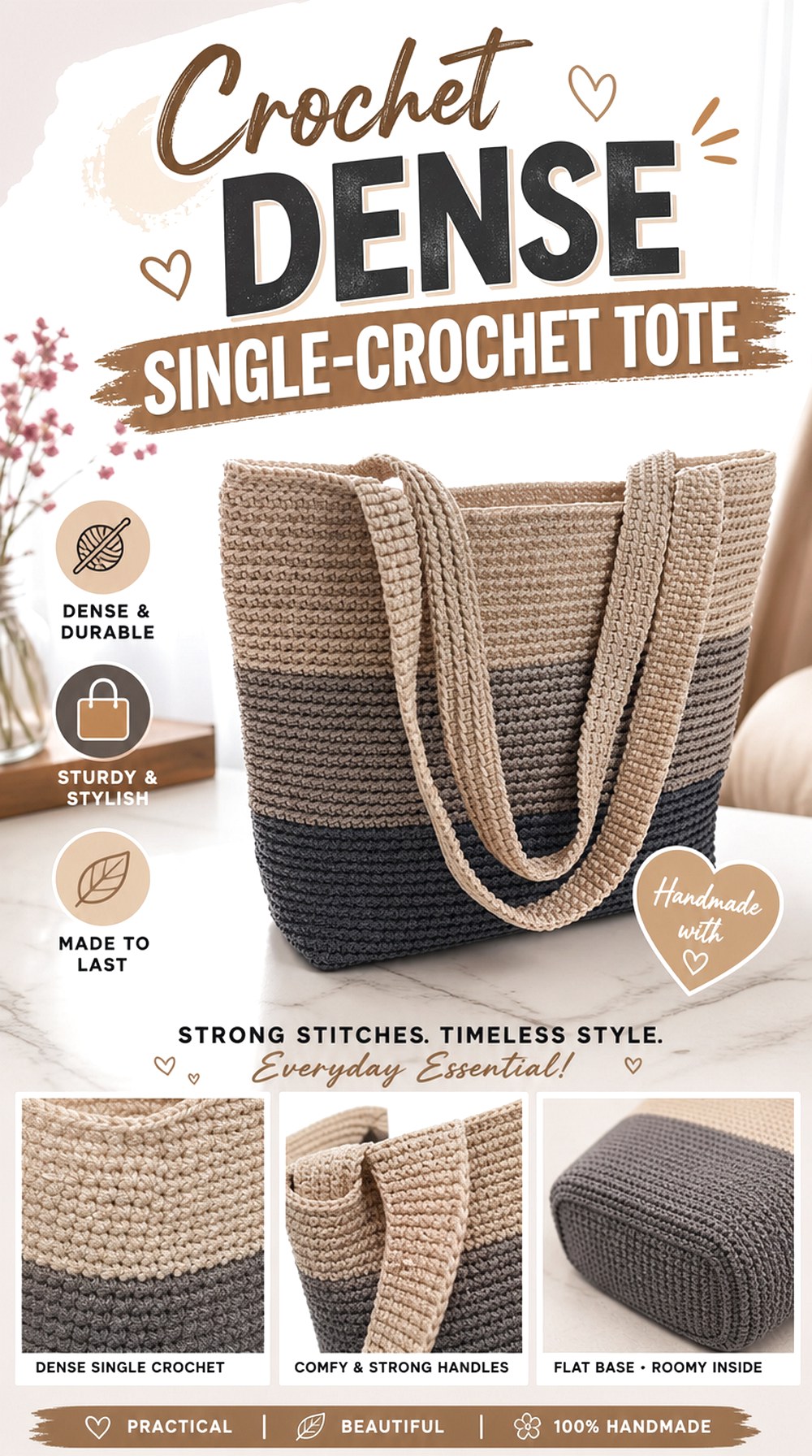
Chompu Handicrafts demonstrates a tote centered on basic single-crochet fabric, resulting in a dense, clean surface without openwork or joined motifs. This makes the project useful for readers who value a relatively closed fabric and want stitch consistency to provide the finished texture.
A dense tote can visually resemble a structured bag even when the yarn itself is flexible. It also creates an excellent background for subtle customization because there is no existing motif competing with a contrasting top edge, small tag, lining, or carefully chosen handle color.
Dense Fabric Still Needs a Stretch Test
Small stitches reduce large visible gaps, but they do not automatically eliminate elongation. Fiber elasticity and the direction of the fabric still matter. Pull a substantial swatch vertically and horizontally and watch how quickly it returns to shape. That tells you whether reinforcement may be useful for the handle or upper edge.
Consistent Tension Becomes the Surface Design
With simple single crochet, every stitch contributes to the visible texture. Uneven tension can produce horizontal bands even when the color never changes. Rather than tightening deliberately to make the bag “stronger,” aim for repeatable fabric that feels comfortable to work and compare it with the density shown in the tutorial.
Original Tutorial and Creator Credit
Creator: Chompu Handicrafts
Crochet Two Tone Nylon Flat Tote
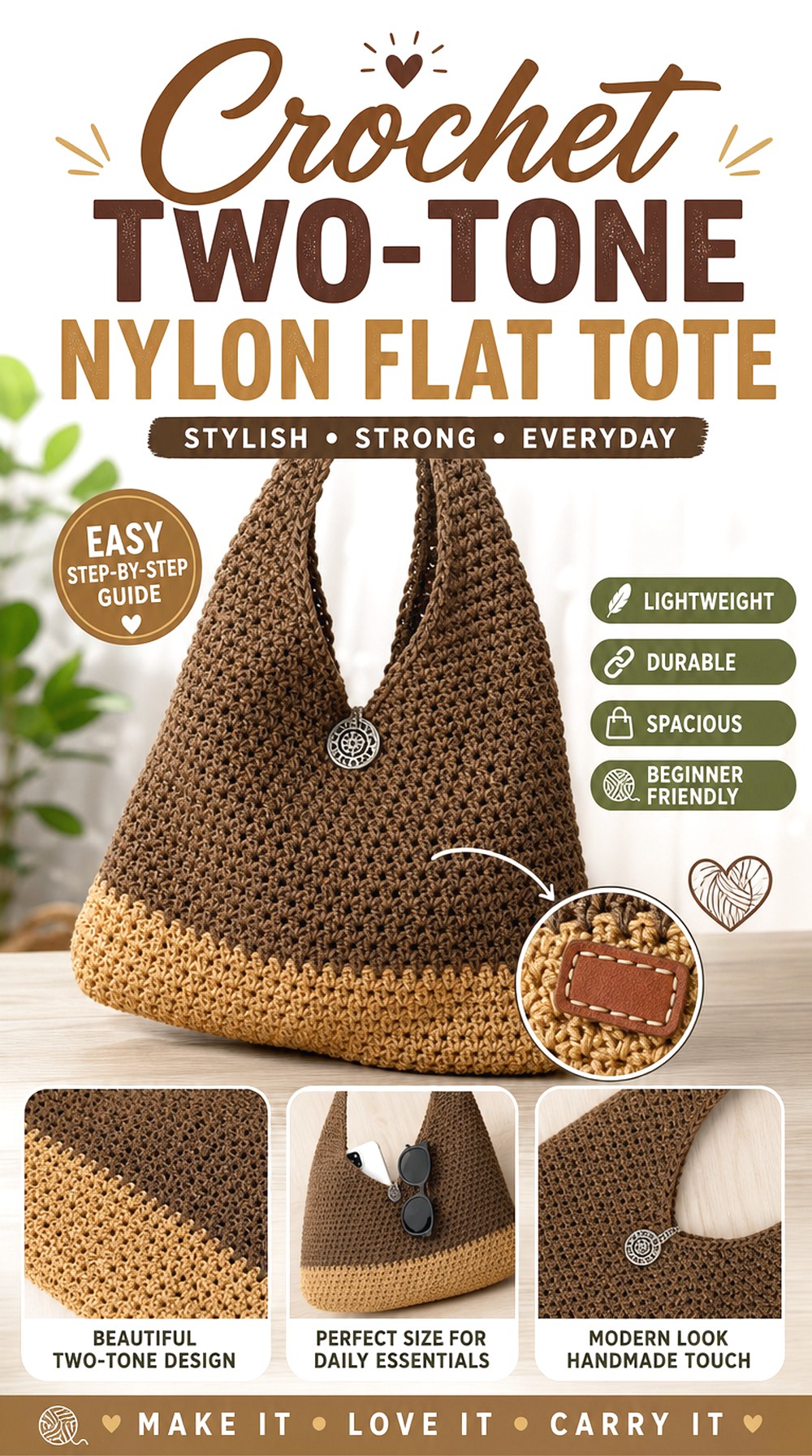
SANG DEWI CRAFT demonstrates a tote made with two colors of nylon yarn, giving the bag a crisp two-tone look in a relatively compact, structured form. The tutorial covers the base, patterned body, and strap, so the color relationship extends through the overall bag rather than appearing as a separate appliqué.
This is a useful option for someone who wants clear color contrast without a busy multicolor palette. Nylon also creates a different hand from soft wool or cotton, so choosing it should be a deliberate material decision rather than simply a color substitution.
Two Colors Need a Deliberate Dominant Role
If both shades receive equal visual weight, the bag can read as a strong two-color graphic. If one appears mainly in smaller areas, the second becomes an accent instead. Decide which effect you prefer before buying or substituting yarn. Photographing the two strands side by side can also reveal whether their contrast is as strong as it seemed under store lighting.
Firm Synthetic Yarn Can Change Handle Feel
A smooth nylon yarn may produce clear stitches and resist fuzzing differently from soft spun yarn, but the handle can also feel firmer. If adapting the length or width, judge comfort with the actual material rather than copying proportions from a tote made with a softer fiber. A narrow rigid strap and a broad soft strap can behave very differently.
Original Tutorial and Creator Credit
Creator: SANG DEWI CRAFT
Crochet Tapestry Moon Mini Tote
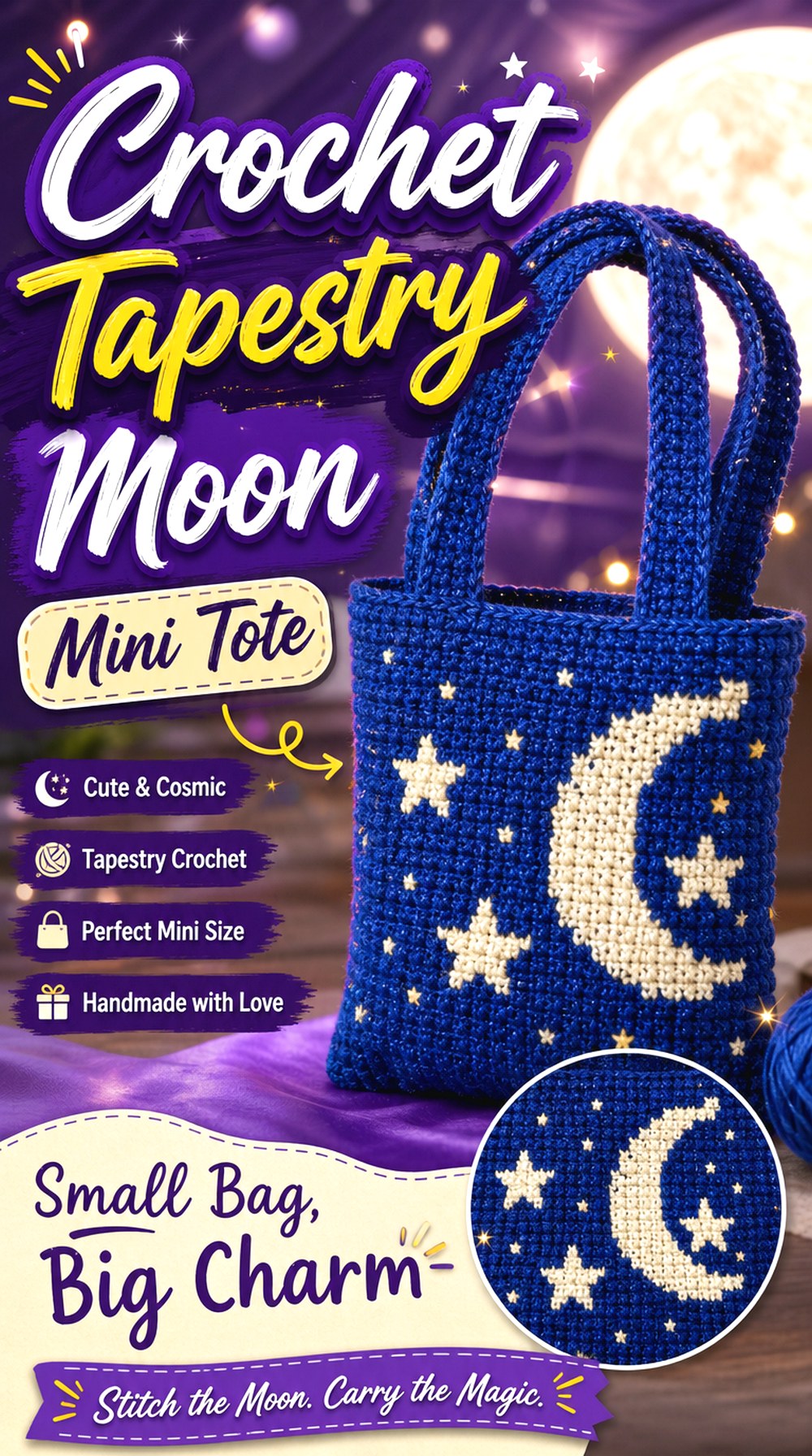
Cactus Lady Creation’s Triple Moon Goddess purse brings pictorial tapestry crochet into a small tote format. Rather than repeating checks or stripes, the front surface carries a recognizable moon-inspired graphic. The tutorial also incorporates Tunisian simple stitch in the strap, adding another technique to a design already centered on colorwork.
The smaller scale makes the graphic feel prominent because it occupies a large share of the visible bag. This is a strong choice when the tote itself is meant to function as an accessory or statement piece rather than a neutral carryall.
Tapestry Colorwork Rewards Controlled Yarn Management
Several working strands can affect tension even when the chart placement is correct. Watch the fabric around color changes for puckering or unusually thick areas. The goal is for the picture to lie as naturally as the surrounding fabric. If carried yarn is pulled too tightly, the motif can contract and distort the flat panel.
Judge the Motif From Normal Viewing Distance
Pictorial crochet may look abstract when viewed stitch by stitch. Pause periodically and hold the panel farther away to see whether the moon shapes read clearly. This also helps catch a misplaced color section earlier because the eye recognizes the image as a whole rather than analyzing individual stitches.
The Strap Uses a Different Fabric Logic
The tutorial’s use of Tunisian simple stitch for the strap means the handle should not be evaluated exactly like the tapestry body. Different techniques can stretch and curl differently. Treat the transition as a construction checkpoint: make sure the strap sits comfortably and aligns with the bag before completing all finishing.
Original Tutorial and Creator Credit
Creator: Cactus Lady Creation
Crochet Double Strand Hobo Tote
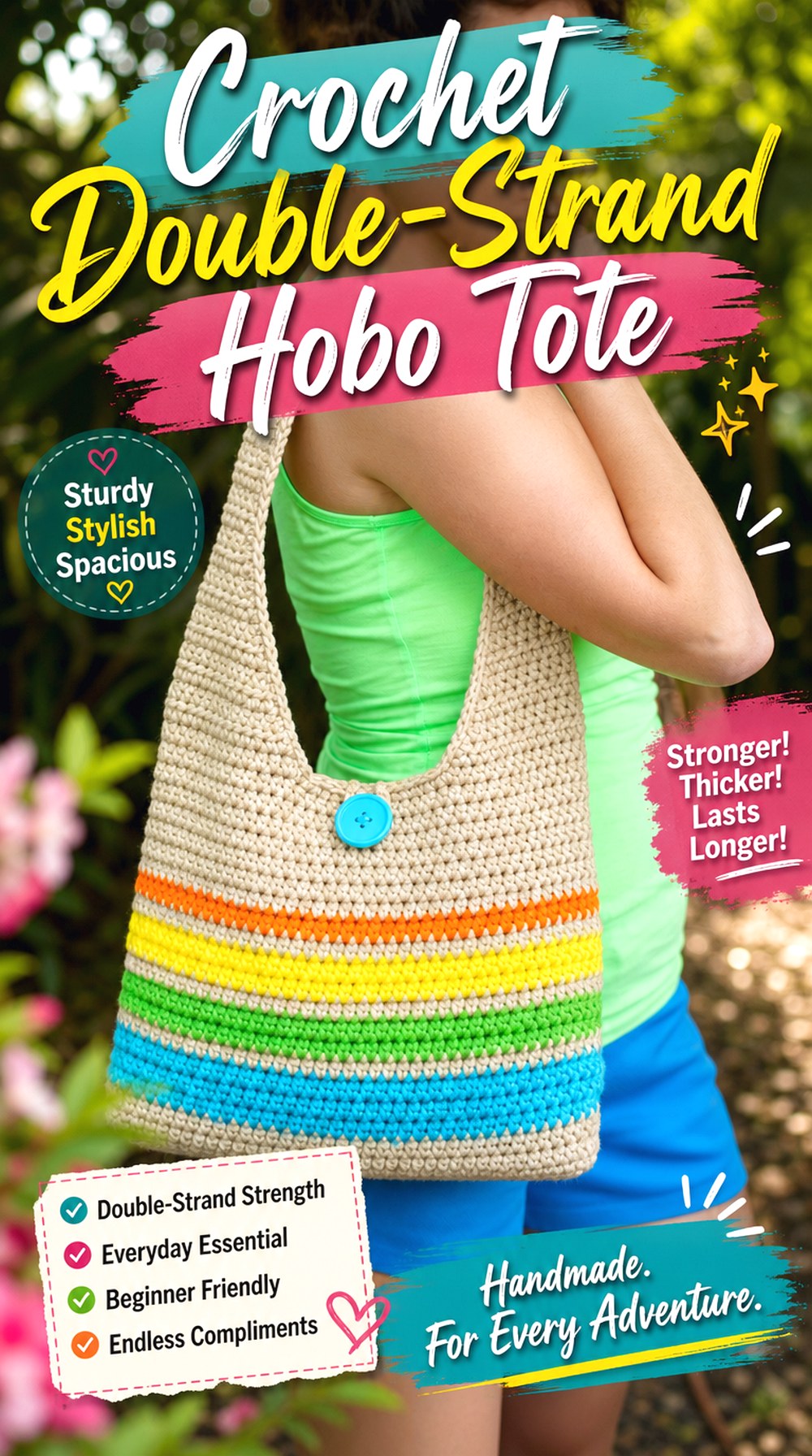
Naztazia’s tote uses two strands of worsted-weight yarn held together and has a relaxed hobo or shoulder-tote character rather than a rigid rectangular outline. The design can also incorporate stripes, making it a softer counterpoint to cord, rope, and tightly structured flat totes. Naztazia provides a direct YouTube help video for the project.
Choose this direction when you prefer a tote that collapses and drapes rather than holding crisp corners. The doubled yarn creates a thicker fabric, but the overall shape is still meant to feel more relaxed than a boxy constructed bag.
Double Strands Change More Than Thickness
Holding two strands together increases the visual scale of the fabric and can alter drape, weight, and color blending. If you substitute one very thick yarn for two thinner strands, do not assume the fabric will be identical. A swatch can reveal whether the replacement feels too rigid or too loose for the relaxed shoulder-bag shape.
A Hobo Shape Benefits From Controlled Drape
For this silhouette, some softness is part of the appeal. Making the fabric dramatically stiffer may remove the relaxed curve that distinguishes it from a rectangular tote. When choosing yarn, decide whether you want the original slouchy character or an intentionally firmer reinterpretation, then evaluate your fabric against that goal rather than assuming firmer is always better.
How to Choose Between These Flat Tote Styles
For the cleanest structured look, the rope, cord, dense single-crochet, or two-square lined designs put more emphasis on shape and coverage. The checkerboard, patchwork, daisy, flower, tapestry moon, and filet sunflower totes make the bag surface the focal point, so they suit readers who enjoy planning motifs or color placement.
For a lighter bag that can expand, compare the close-mesh, shell-texture, and finger-crochet options. The chunky, T-shirt-yarn, and doubled-yarn projects move in the opposite direction by making the stitches themselves larger and more substantial. If minimizing assembly matters most, one-piece constructions deserve closer attention. If you want complete control over front and back decoration or easy lining access, panel-based totes generally provide more opportunities to plan everything flat before joining.
Conclusion
The right flat crochet tote depends less on the prettiest color combination and more on how you want the finished bag to behave. Choose mesh or shell fabric when expansion and openness appeal to you; dense crochet, rope, or cord when a cleaner structure matters; and granny squares, tapestry, checkerboard, or filet work when the surface design should carry the personality.
Panel construction is especially useful for planned motifs and lining, while one-piece bags reduce joining and create a different flow from base to handle. Once you have chosen the construction that matches your needs, use the original tutorials linked above for the creators’ exact stitches, counts, assembly, and finishing details.
Frequently Asked Questions
What yarn qualities help a flat crochet tote keep its shape?
Look at elasticity, thickness, surface texture, and the density of the fabric the yarn produces rather than choosing by fiber name alone. A less-elastic yarn can help maintain a defined shape, but very firm yarn may make handles or seams uncomfortable. Softer yarn can create a pleasant shoulder bag but may stretch more. Crochet a useful-sized swatch, pull it in both directions, and see how well it returns to shape.
Should a flat crochet tote be lined?
Not necessarily. Lining becomes more useful when the crochet has visible gaps, the contents include small objects, you want an interior pocket, or you prefer the inside of the bag to have a separate finished surface. Open market totes are often intentionally unlined because expansion is part of their function. If you plan to line a bag, decide early so the lining and top-edge treatment can be coordinated.
How can I keep two crochet tote panels the same size?
Work both panels with the same yarn, hook, and tension, then compare them during construction rather than only after they are finished. Blocking both pieces to the same intended dimensions can help stabilize minor differences. If one panel is consistently wider or longer, identify the tension or stitch-count issue before joining. Seaming two noticeably mismatched panels usually transfers the problem into puckered edges or uneven corners.
Why do crochet tote handles stretch even when the bag body looks firm?
A strap is narrow and carries much of the load along its length, so yarn elasticity becomes more noticeable there than across a wide bag panel. Longer straps can magnify the effect. Stitch direction, fiber, strap width, and reinforcement all influence the result. Before extending a tutorial’s handle substantially, test a sample strip under tension so you can see whether the fabric rebounds or continues to lengthen.
Can I replace an open mesh stitch with solid crochet in the same tote?
Not as a simple one-for-one substitution. Solid fabric and mesh can have very different stitch gauges, row heights, weight, stretch, and yarn requirements. Replacing the fabric may alter the bag circumference, height, base relationship, and handle placement. If you want a denser version, treat it as a design adaptation and work from measured dimensions rather than assuming the original stitch counts will produce the same tote.
Is a granny-square tote easier to resize than a one-piece tote?
It can be easier to visualize because blocked motifs give you measurable units, but resizing is not automatic. Adding a full square may change the tote by several inches, and changing the motif itself can affect joining compatibility. One-piece totes can sometimes be adjusted more gradually. For either approach, compare blocked dimensions, intended opening width, strap placement, and the final proportions before committing to the larger or smaller version.